Help us get this right
Does this portrait look right for Corieltauvi?
Nobody has judged this one yet. You would be the first.
Corieltauvi Erotic
The English East Midlands: Leicestershire, Lincolnshire, Nottinghamshire, Rutland and parts of Derbyshire and Northamptonshire, England
Common Brittonic (Celtic, Indo-European), with Latin in use under Roman rule
Polytheistic British Celtic practice centered on open-air shrines and votive deposition, later syncretized with Roman cult
One of the Iron Age Britons; formerly known in error as the Coritani, and possibly a federation of smaller groups rather than a single tribe
About Corieltauvi People
The Corieltauvi were a Celtic people of the English East Midlands in the last few centuries before the Roman conquest, and a civitas of Roman Britain after it; their descendants are simply the modern population of Leicestershire, Lincolnshire, Nottinghamshire and the country around them. Their land was the middle Trent valley, the Lincolnshire Wolds, the limestone ridge running north toward the Humber, and the wet margins of the Fens. Unlike the peoples of the south and west, they built few hillforts, and Burrough Hill is the striking exception. Most Corieltauvian life happened in open farmsteads and ditched enclosures spread over good arable soil, which says something about how secure they felt.
For most of the twentieth century they were called the Coritani, a name taken from a corrupt manuscript reading of Ptolemy. A bronze plaque found at Thistleton in Rutland carried the correct form, and by the 1980s scholarship had restored it. The correction is worth knowing: almost every older book about them is filed under the wrong name.
Their coins are the best evidence for how they governed themselves. Corieltauvian issues often carry two names rather than one, pairs such as AVN and COST or VEP and CORF, usually read as joint or successive rulers, and taken by many as a sign that this was a coalition of smaller groups rather than one dynasty. The tribal name itself looks like a compound of two elements, which fits that reading. Old Sleaford has produced coin mold fragments in the thousands, enough to mark it as a working mint.
The find that most changed the picture is the Hallaton treasure, excavated in Leicestershire from 2000: over five thousand coins deposited at an open hilltop shrine, the bones of hundreds of pigs eaten on the spot, and a Roman cavalry parade helmet buried around the time of the conquest. It shows a religion of feasting and deliberate offering, conducted outdoors rather than inside a building. When Rome arrived in the 40s AD the Corieltauvi appear to have submitted without a recorded fight. They were administered as a civitas from Ratae Corieltauvorum, now Leicester, while Lindum, now Lincoln, was made a colonia for army veterans and run separately. The name faded into provincial Roman Britain, then into Mercia, then into the Danelaw, whose Five Boroughs sit almost exactly on the old territory.
Related ethnic groups
Groups that share Corieltauvi's homeland, region, language, or religious tradition. These are likely candidates for comparative phenotype reference.
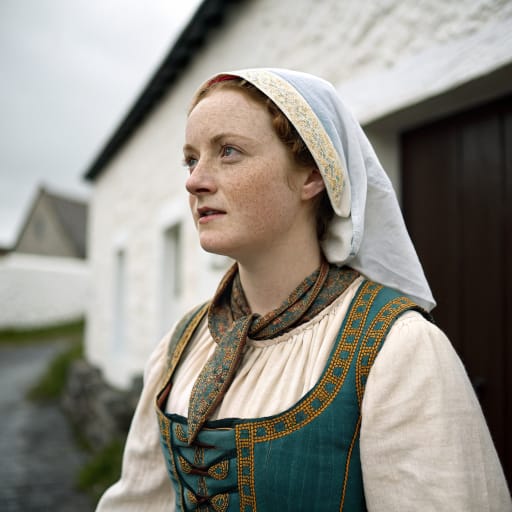
Irish
same region (Northern Europe)
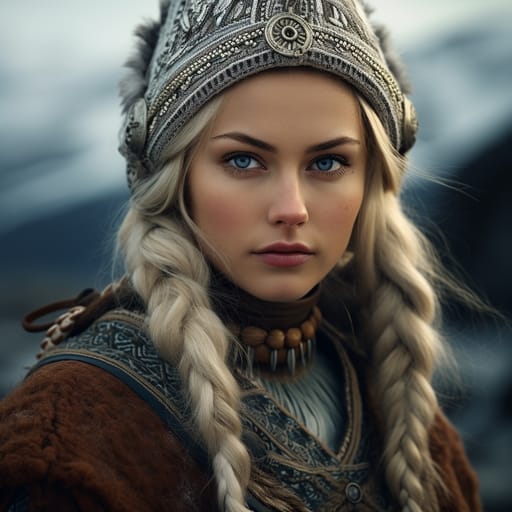
Icelanders
same region (Northern Europe)
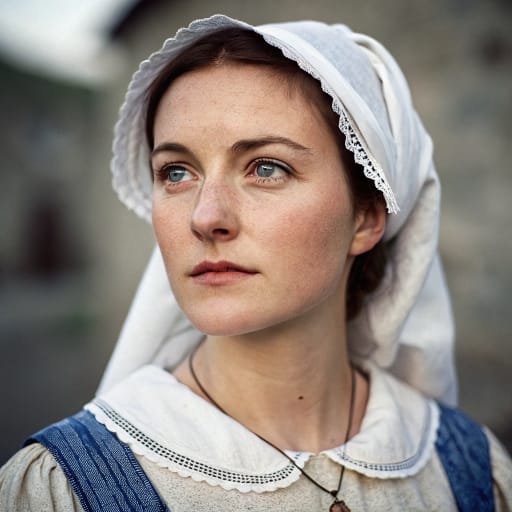
Welsh
same region (Northern Europe)
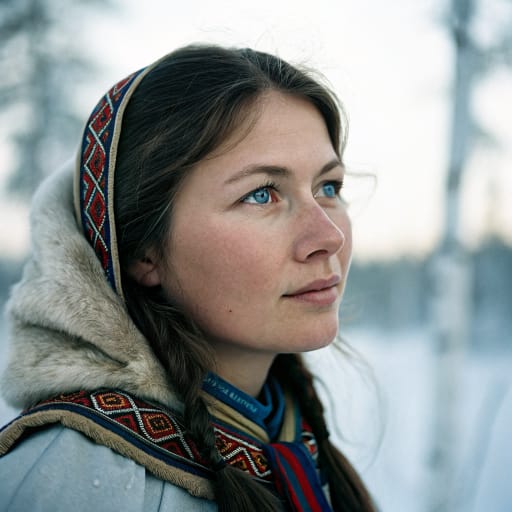
Sámi
same region (Northern Europe)
Võros
same region (Northern Europe)
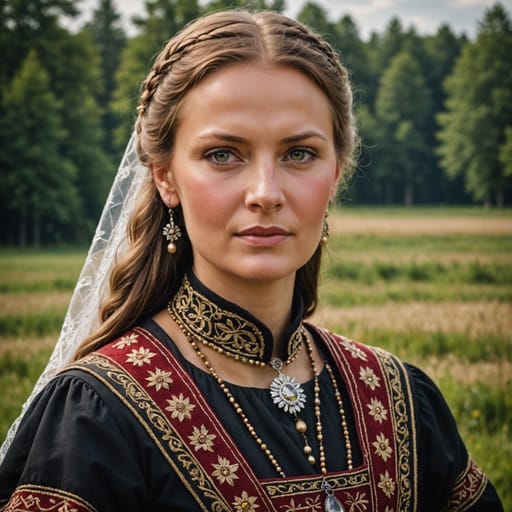
Polish Latvia
same region (Northern Europe)
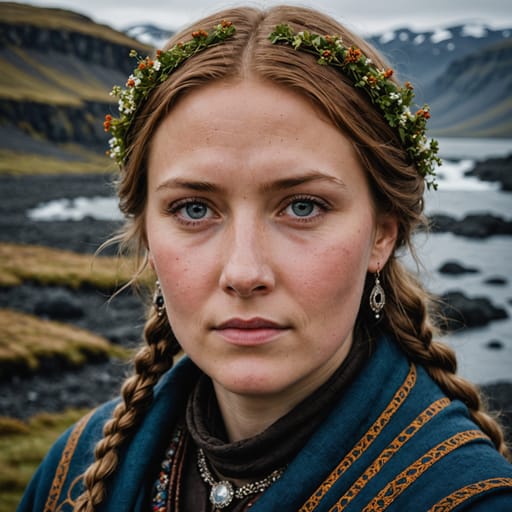
Icelandic Immigrant Other
same region (Northern Europe)
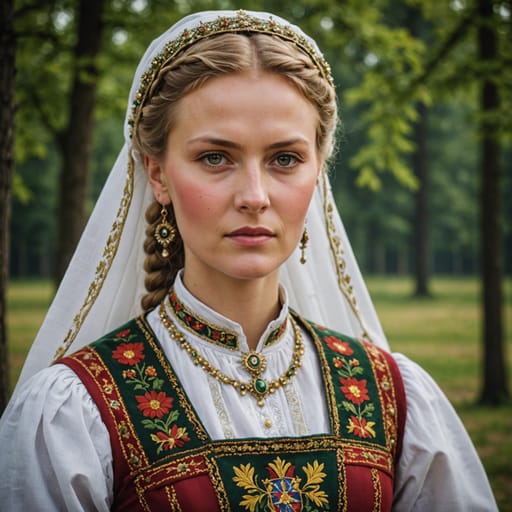
Lithuania Other
same region (Northern Europe)
Typical Corieltauvi Phenotypes
Reference for AI generation: hair, eyes, skin, facial structure, build
Corieltauvi Body & Anatomy Reference
Per-feature anatomical profile for AI nude generation: Northern European / Germanic-Scandinavian phenotype
Corieltauvi Boobs & Breasts
The typical Corieltauvi bust is medium-to-large cup, full, high projection, in line with the wider Northern European / Germanic-Scandinavian pattern. Areolas usually fall in the 32-48mm range, with light-pink to medium-pink areolar pigmentation against the fair skin tone. Compared with the smaller East Asian bust, Corieltauvi breasts sit forward and are generally full and projecting, often the largest cup-size band in regional comparisons. A faithful AI render of Corieltauvi tits keeps that shape and areola size.
Corieltauvi Ass & Hips
Butt shape among Corieltauvi women: medium-to-full, moderate-to-high projection, over medium-to-wide iliac crests. This follows Northern European / Germanic-Scandinavian ancestry and looks quite unlike the slim East Asian narrow-hip profile. An accurate Corieltauvi ass in adult AI imagery keeps both the silhouette and the overall build (mesomorph with taller stature; ectomorph-to-mesomorph split) instead of a generic average.
Corieltauvi Vagina & Pussy
Vulvar anatomy among Corieltauvi women: light-pink to medium-pink labial pigmentation, varied labia minora projection. Pubic hair tends to be fine-to-medium wavy texture, often lighter-pigmented (blond to dark-brown), in the usual inverted-triangle pattern. Both follow Northern European / Germanic-Scandinavian pigmentation, which is why Corieltauvi pussy renders should not fall back on a pale, sparse Western template.
Corieltauvi Dicks & Penis
The Corieltauvi cock profile, from Northern European / Germanic-Scandinavian anthropometric data: regional mean ~13-14cm erect; moderate-to-above-average girth; light-pink to light-brown shaft pigmentation. Pubic hair has a fine-to-medium wavy texture and forms the usual inverted-V pattern. Whether Corieltauvi men are circumcised follows religious and cultural practice rather than phenotype.
Corieltauvi Body, Curves & Build
Build and curves among Corieltauvi women follow the Northern European / Germanic-Scandinavian pattern: mesomorph with taller stature; ectomorph-to-mesomorph split, mean adult female BMI 24-27. Proportions matter as much as skin tone, so Corieltauvi figures should keep their regional height and limb ratios.
Corieltauvi Skin Tone & Hair Texture
The Corieltauvi skin range is fair (Fitzpatrick I-III), and hair tends to be straight-to-wavy 1A-2B, blond to medium-brown common. That combination marks the Northern European / Germanic-Scandinavian phenotype, and skin tone is the trait AI generators most often get wrong for Corieltauvi women.
Explore phenotype categories
Structured taxonomy with peer-reviewed scales · 22 anatomical categories
Erotic Poses & Sex Positions
From the pose catalog: 219 named positions with reference skeletons
Frequently asked questions about Corieltauvi people
Where is the Corieltauvi homeland?
The Corieltauvi homeland is The English East Midlands: Leicestershire, Lincolnshire, Nottinghamshire, Rutland and parts of Derbyshire and Northamptonshire, England in Northern Europe.
What language do Corieltauvi people speak?
Corieltauvi people primarily speak Common Brittonic (Celtic, Indo-European), with Latin in use under Roman rule.
What religion do Corieltauvi people practice?
The predominant religion among Corieltauvi people is Polytheistic British Celtic practice centered on open-air shrines and votive deposition, later syncretized with Roman cult.






Make your own Corieltauvi images
Five a day, free, no credits to buy. The studio starts from this group's phenotype data, so you can set body type, pose and style and keep the traits accurate.
Start with Corieltauvi