Help us get this right
Does this portrait look right for Anglo-Irish?
Nobody has judged this one yet. You would be the first.
Anglo-Irish Erotic
Ireland, historically on landed estates across the island and in Dublin; many families moved to Great Britain after independence in 1922
English (Indo-European, Germanic), historically with a distinctive upper-class Hiberno-English accent; some also learned Irish (Indo-European, Celtic)
Mainly Church of Ireland (Anglican); smaller numbers of Presbyterians, Methodists and other Protestants, and some Catholics
Descendants of the Protestant Ascendancy and later Protestant settlers; part of the wider Irish Protestant population, distinct from the largely Catholic Old English and from the Ulster Scots
About Anglo-Irish People
The Anglo-Irish have always lived in a double position: too Irish to pass as English in London, too English to pass as Irish at home. Most descend from the Protestant settlers, soldiers, officials and landowners who came to Ireland between the Tudor plantations and the Williamite settlement at the end of the seventeenth century. Their descendants became the Protestant Ascendancy, the class that owned most of the land, ran the courts and filled the Dublin parliament for most of the eighteenth century. Brendan Behan's jibe that an Anglo-Irishman is a Protestant with a horse stuck because it was close to the truth. This was a gentry built around the Big House, the high wall around the estate, the hunt and the family pew in the local Church of Ireland.
Religion was the dividing line. The Church of Ireland was the established church until 1871, and for generations the Penal Laws had limited how Catholics could own land and kept them out of public office and most professions. Some Anglo-Irish families were Presbyterian or Methodist and a few were Catholic, but being Anglican was the mark of the class. They spoke English with an accent that sounded English to Irish ears and Irish to English ones. They also supplied a remarkable share of the British Army's officers and the Empire's administrators. The Duke of Wellington was born in Dublin.
The odd thing is that this small minority wrote much of what the world reads as Irish literature. Swift, Burke, Goldsmith, Wilde, Stoker, Yeats, Shaw, Synge, Elizabeth Bowen and Beckett all came out of Protestant Ireland. Yeats, Lady Gregory and Douglas Hyde were central to the Gaelic Revival, which helped make the cultural case for independence. Protestant nationalists from Wolfe Tone to Charles Stewart Parnell also pushed against the political order their own class had built.
The twentieth century ended the Ascendancy as a ruling class. Land Acts moved estates into the hands of tenant farmers, and between 1920 and 1923 well over two hundred country houses were burned. Many families left for England after independence. Those who stayed became a small minority in the new state, still visible in Church of Ireland parishes, a few Protestant boarding schools and the Big Houses that survive as hotels, heritage sites or working farms. Today the label says as much about family history and outlook as about ancestry, and many of the people it describes would simply call themselves Irish.
Related ethnic groups
Groups that share Anglo-Irish's homeland, region, language, or religious tradition. These are likely candidates for comparative phenotype reference.
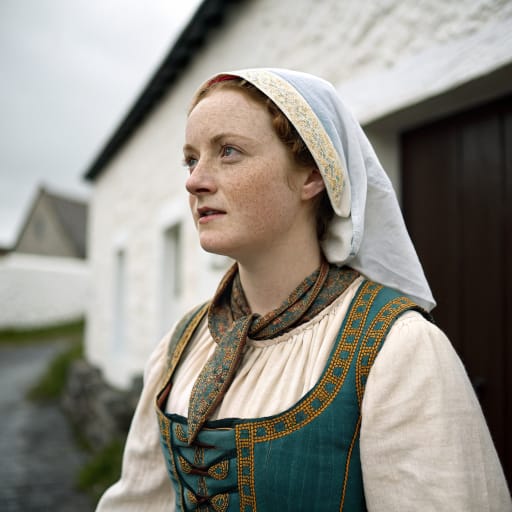
Irish
same region (Northern Europe)
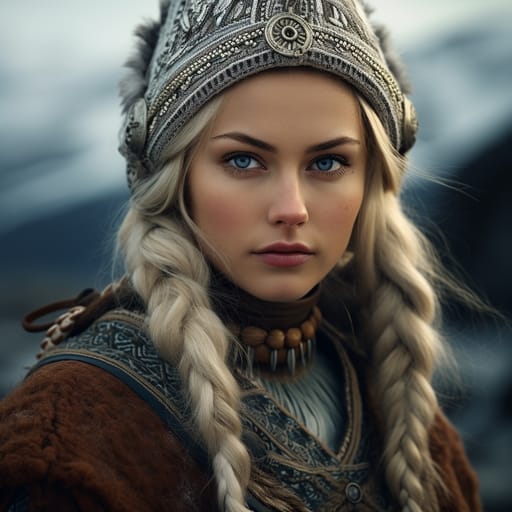
Icelanders
same region (Northern Europe)
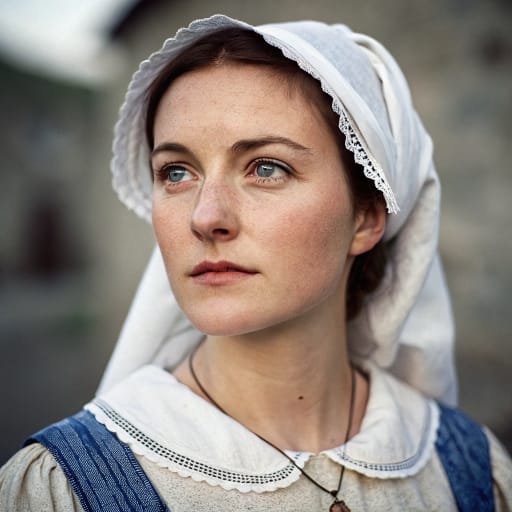
Welsh
same region (Northern Europe)
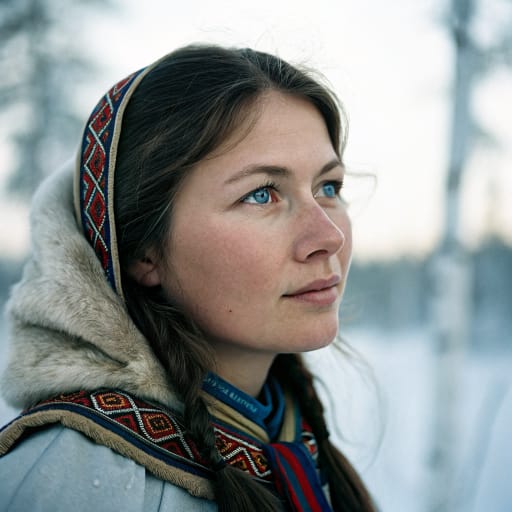
Sámi
same region (Northern Europe)
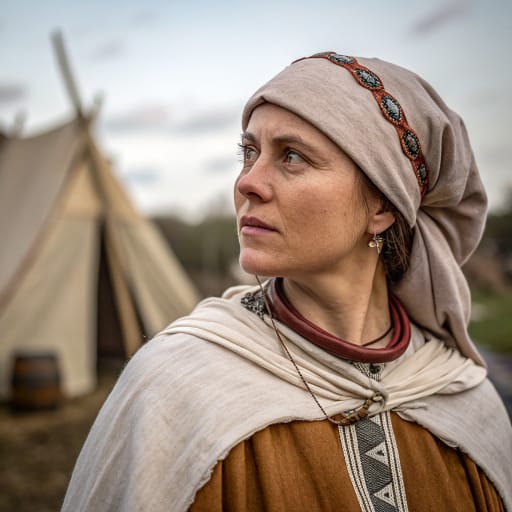
Corieltauvi
same region (Northern Europe)
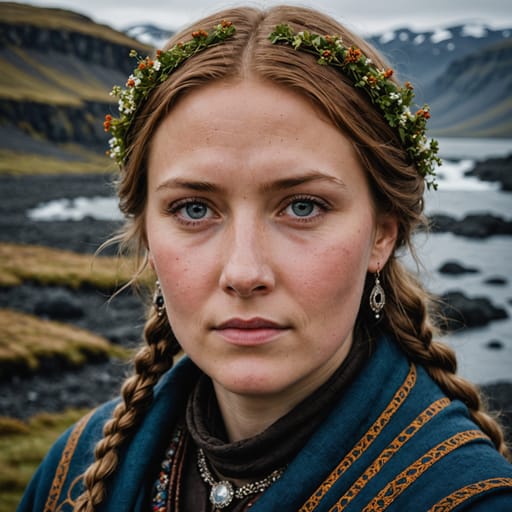
Icelandic Immigrant Other
same region (Northern Europe)
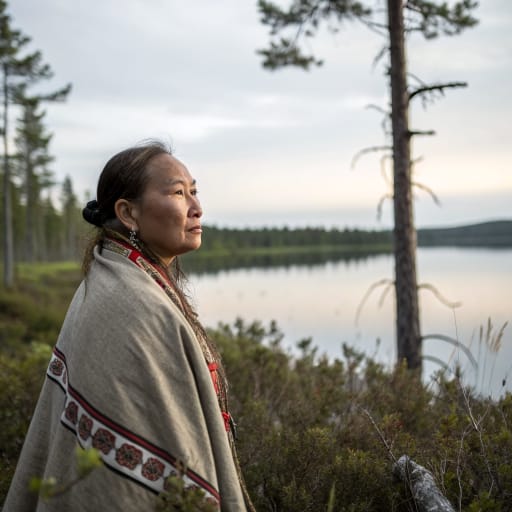
Inari Sami
same region (Northern Europe)
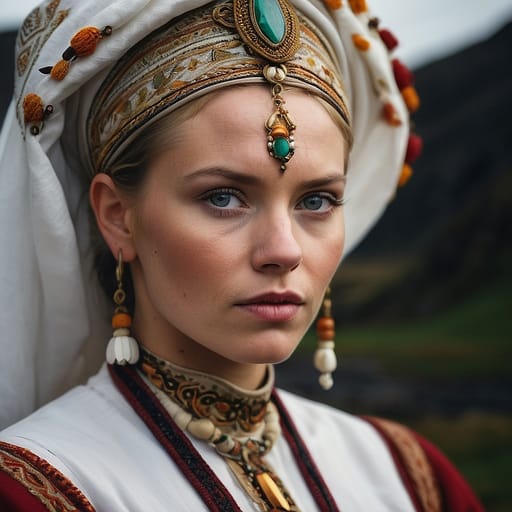
White Other Ireland
same region (Northern Europe)
Typical Anglo-Irish Phenotypes
Reference for AI generation: hair, eyes, skin, facial structure, build
Anglo-Irish Body & Anatomy Reference
Per-feature anatomical profile for AI nude generation: Northern European / Germanic-Scandinavian phenotype
Anglo-Irish Boobs & Breasts
The typical Anglo-Irish bust is medium-to-large cup, full, high projection, in line with the wider Northern European / Germanic-Scandinavian pattern. Areolas usually fall in the 32-48mm range, with light-pink to medium-pink areolar pigmentation against the fair skin tone. Compared with the smaller East Asian bust, Anglo-Irish breasts sit forward and are generally full and projecting, often the largest cup-size band in regional comparisons. A faithful AI render of Anglo-Irish tits keeps that shape and areola size.
Anglo-Irish Ass & Hips
Butt shape among Anglo-Irish women: medium-to-full, moderate-to-high projection, over medium-to-wide iliac crests. This follows Northern European / Germanic-Scandinavian ancestry and looks quite unlike the slim East Asian narrow-hip profile. An accurate Anglo-Irish ass in adult AI imagery keeps both the silhouette and the overall build (mesomorph with taller stature; ectomorph-to-mesomorph split) instead of a generic average.
Anglo-Irish Vagina & Pussy
Vulvar anatomy among Anglo-Irish women: light-pink to medium-pink labial pigmentation, varied labia minora projection. Pubic hair tends to be fine-to-medium wavy texture, often lighter-pigmented (blond to dark-brown), in the usual inverted-triangle pattern. Both follow Northern European / Germanic-Scandinavian pigmentation, which is why Anglo-Irish pussy renders should not fall back on a pale, sparse Western template.
Anglo-Irish Dicks & Penis
The Anglo-Irish cock profile, from Northern European / Germanic-Scandinavian anthropometric data: regional mean ~13-14cm erect; moderate-to-above-average girth; light-pink to light-brown shaft pigmentation. Pubic hair has a fine-to-medium wavy texture and forms the usual inverted-V pattern. Whether Anglo-Irish men are circumcised follows religious and cultural practice rather than phenotype.
Anglo-Irish Body, Curves & Build
Build and curves among Anglo-Irish women follow the Northern European / Germanic-Scandinavian pattern: mesomorph with taller stature; ectomorph-to-mesomorph split, mean adult female BMI 24-27. Proportions matter as much as skin tone, so Anglo-Irish figures should keep their regional height and limb ratios.
Anglo-Irish Skin Tone & Hair Texture
The Anglo-Irish skin range is fair (Fitzpatrick I-III), and hair tends to be straight-to-wavy 1A-2B, blond to medium-brown common. That combination marks the Northern European / Germanic-Scandinavian phenotype, and skin tone is the trait AI generators most often get wrong for Anglo-Irish women.
Explore phenotype categories
Structured taxonomy with peer-reviewed scales · 22 anatomical categories
Erotic Poses & Sex Positions
From the pose catalog: 219 named positions with reference skeletons
Frequently asked questions about Anglo-Irish people
Where is the Anglo-Irish homeland?
The Anglo-Irish homeland is Ireland, historically on landed estates across the island and in Dublin; many families moved to Great Britain after independence in 1922 in Northern Europe.
What language do Anglo-Irish people speak?
Anglo-Irish people primarily speak English (Indo-European, Germanic), historically with a distinctive upper-class Hiberno-English accent; some also learned Irish (Indo-European, Celtic).
What religion do Anglo-Irish people practice?
The predominant religion among Anglo-Irish people is Mainly Church of Ireland (Anglican); smaller numbers of Presbyterians, Methodists and other Protestants, and some Catholics.






Make your own Anglo-Irish images
Five a day, free, no credits to buy. The studio starts from this group's phenotype data, so you can set body type, pose and style and keep the traits accurate.
Start with Anglo-Irish