Help us get this right
Does this portrait look right for Sámi?
One tap. It takes a second and it is recorded.
3 say it looks right, 0 say it looks off.
Sámi Erotic
Christianity / Protestantism
Inari Sami, Kildin Sami, Lule Sami, Northern Sami, Pite Sami, Skolt Sami, Southern Sami, Ter Sami, Ume Sami
About Sámi People
The Sámi are the indigenous people of Sápmi, a region that stretches across the northern reaches of Norway, Sweden, and Finland and into Russia's Kola Peninsula. They are the only people recognized as indigenous within the European Union, and their territory predates every modern border drawn across it. What identifies the Sámi as Sámi is not a single flag or a single capital but a shared relationship to a particular kind of country — high latitude, long winters, reindeer herds moving between coast and inland — and the cluster of languages and customs that grew out of living in it.
The Sámi languages belong to the Uralic family, which makes them distant relatives of Finnish and Estonian and unrelated to the Scandinavian languages spoken around them. There are nine living Sámi languages, several of them mutually unintelligible: Northern Sámi is by far the largest, spoken by tens of thousands, while Ter Sámi and Pite Sámi have been pushed to the brink with only a handful of speakers left. The internal differences track geography — a Southern Sámi speaker and a Skolt Sámi speaker do not simply have different accents; they speak separate languages shaped by centuries of regional life.
Reindeer herding remains the cultural anchor, even though only a minority of Sámi today are herders by trade. The herding year structures vocabulary, kinship arrangements, and a calendar of eight seasons rather than four. The joik, a vocal tradition that is sung about a person, place, or animal rather than about a subject in the conventional sense, is one of the oldest continuous music traditions in Europe and was suppressed for generations as pagan before its recent revival. Most Sámi today are nominally Lutheran, often through the austere Laestadian movement that swept the north in the nineteenth century, though older animist threads have never fully disappeared and resurface in attitudes toward land, weather, and the dead.
The twentieth century left deep marks: forced assimilation policies in all four countries, boarding schools that punished Sámi-language use, and the Alta dam protests of the late 1970s that became the catalyst for modern Sámi political organization. There are now Sámi parliaments in Norway, Sweden, and Finland — advisory rather than sovereign, but a recognition that the people who were there first are still there.
Related ethnic groups
Groups that share Sámi's homeland, region, language, or religious tradition. These are likely candidates for comparative phenotype reference.
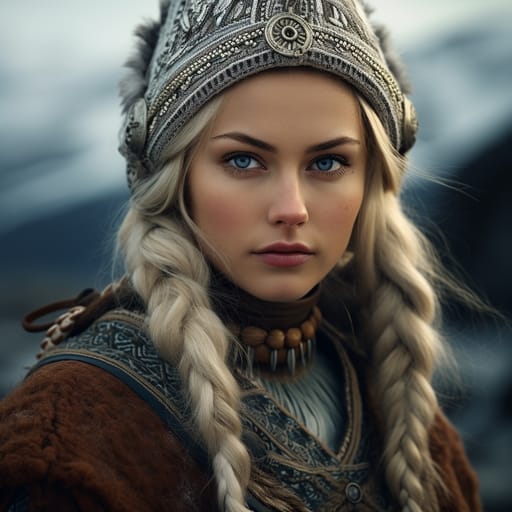

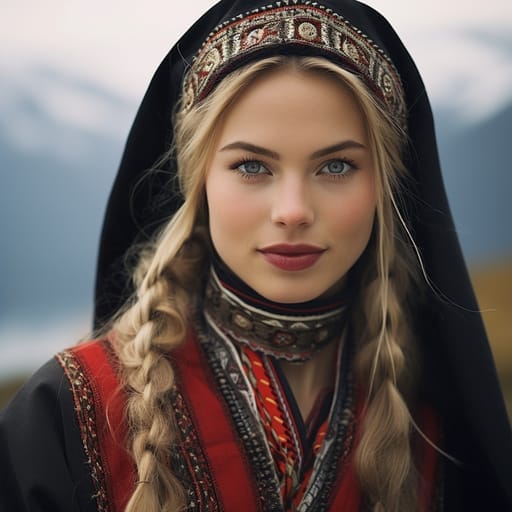
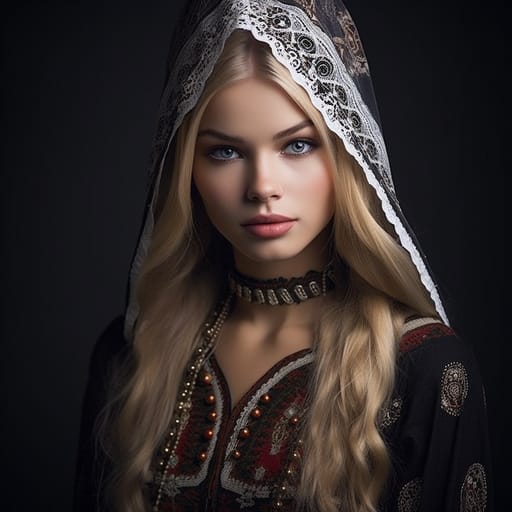


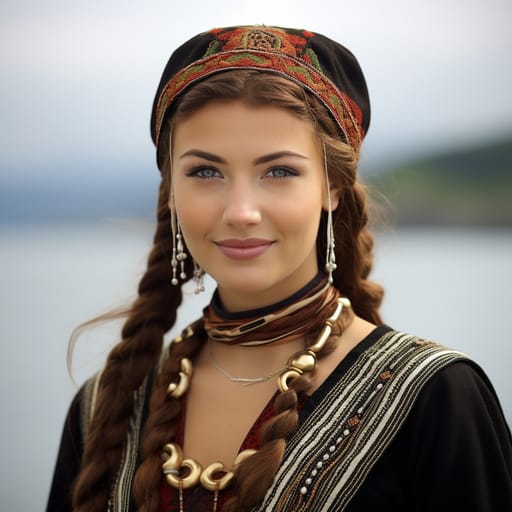
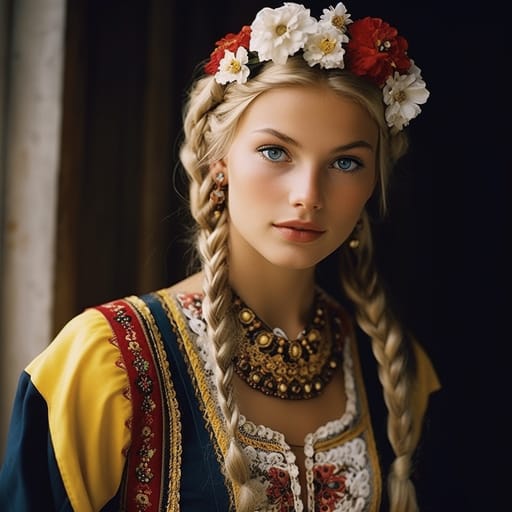
Typical Sámi Phenotypes
Reference for AI generation: hair, eyes, skin, facial structure, build
The Sámi phenotype reflects an old Uralic-speaking population that sits genetically apart from neighboring Scandinavians and Finns, with a distinctive combination of features that doesn't quite line up with either northern European or East Asian reference points. Hair is most often medium to dark brown, occasionally near-black, with notable amounts of dark blonde and ash blonde — pure black is uncommon, and the bright Scandinavian blonde is rarer here than in the surrounding Norwegian or Swedish populations. Texture runs straight to gently wavy, fine to medium, and graying tends to come early. Eyes are predominantly blue, gray, and gray-green, with brown more common toward the eastern Skolt, Kildin, and Ter ranges; a soft, partial epicanthic fold appears in a meaningful minority and gives many faces a slightly almond-set look without being a defining feature.
Skin tone sits in Fitzpatrick II–III — pale with neutral to cool undertones, prone to wind-burn and weathering rather than deep tanning, and often showing a faint ruddiness across the cheekbones from sub-Arctic exposure. Facial structure is the most distinctive register: relatively broad, flat midfaces, prominent and laterally placed cheekbones, a short nose with a low-to-medium bridge and rounded tip, modest alar width, and a small, often slightly receding chin. Lips run thin to medium. Brow ridges are subtle, and the overall facial impression reads softer and more rounded than the angular Nordic stereotype around them.
Build is compact. Sámi populations are among the shortest in Europe, with men typically in the 165–172 cm range and women correspondingly smaller; limbs are proportionally short relative to torso — a cold-climate signature — and frames tend toward sturdy and broad-shouldered rather than slender. Sub-group variation is mild but real: Northern Sámi (think Mari Boine, Nils Gaup) carry the classic profile most strongly, Southern and Ume Sámi blend toward Scandinavian features, and the eastern Skolt, Kildin, and Ter branches show stronger Uralic and occasional Samoyedic influence — darker hair, browner eyes, more pronounced epicanthic folds.
Sámi Body & Anatomy Reference
Per-feature anatomical profile for AI nude generation: Northern European / Germanic-Scandinavian phenotype
Sámi Boobs & Breasts
Sámi tits and boobs run medium-to-large cup, full, high projection, the classic Northern European / Germanic-Scandinavian bust profile. Sámi nipples and areolas show light-pink to medium-pink areolar pigmentation against the fair skin tone, with areolar diameter typically in the 32-48mm range and forward-set positioning rather than the smaller East Asian bust. Sámi breasts trend full and projecting, often the largest cup-size band in regional comparisons, a function of the mesomorph with taller stature; ectomorph-to-mesomorph split body habitus and the mean adult female BMI 24-27. For anatomically accurate AI-generated Sámi nudes the render preserves the medium-to-large cup, full, high projection shape, 32-48mm areolas with light-pink to medium-pink pigmentation, and the torso proportions of the Northern European / Germanic-Scandinavian phenotype.
Sámi Ass & Hips
Sámi hips and butt usually read as medium-to-full, moderate-to-high projection. The skeletal base is medium-to-wide iliac crests, the Northern European / Germanic-Scandinavian pattern. Set against the slim East Asian narrow-hip profile, the difference is easy to see, and the hip-to-waist ratio is often what identifies Sámi women in photos.
Sámi Vagina & Pussy
Expect light-pink to medium-pink labial pigmentation, varied labia minora projection on Sámi women, in keeping with Northern European / Germanic-Scandinavian ancestry. The pubic hair is fine-to-medium wavy texture, often lighter-pigmented (blond to dark-brown). Coloring should run evenly from the fair skin of the thighs to the labia, and Sámi nude imagery should keep the hair's fine-to-medium wavy texture.
Sámi Dicks & Penis
Sámi dick and penile anatomy in adult AI generation should anchor on the regional reference data: regional mean ~13-14cm erect, moderate-to-above-average girth, and light-pink to light-brown shaft pigmentation. The Sámi cock profile reflects the Northern European / Germanic-Scandinavian population's anthropometric measurements. The shaft pigmentation should track the surrounding fair skin tone, and the pubic hair should keep its fine-to-medium wavy texture in the typical inverted-V escutcheon.
Sámi Body, Curves & Build
Sámi body type: mesomorph with taller stature; ectomorph-to-mesomorph split, with mean adult female BMI 24-27. This is the typical Northern European / Germanic-Scandinavian build. Height range, shoulder-to-hip ratio and fat distribution all follow from it, which is what an accurate Sámi nude body should show.
Sámi Skin Tone & Hair Texture
Sámi skin tone falls in the fair (Fitzpatrick I-III) band, the surface signal most often miscalibrated by generic AI nude generators. Sámi hair texture is typically straight-to-wavy 1A-2B, blond to medium-brown common, characteristic of the Northern European / Germanic-Scandinavian phenotype. In Sámi nude renders the skin should hold that band consistently across the body.
Data depth
73/100Coverage of image-grounded phenotype observations · drives AI generation diversity
- Sample size
- 37/40· 44 images
- Image quality
- 26/30· 52% high
- Confidence
- 10/20· mean 0.69
- Source diversity
- 0/10· wikipedia
- ·Wikipedia-only source, not population-representative
Observed Distribution: Image Sample
Empirical observations from analyzed photographs · supplementary signal, not population truth
Sample: 44 images analyzed (44 wikipedia). Quality: 23 high, 17 medium, 3 low, 1 very_low. Avg analyzer confidence: 0.69.
Skin tone (Fitzpatrick): II (82%), III (7%), unclear (11%)
Hair color: gray/white (30%), black (20%), light/medium brown (16%), dark brown (14%), blonde (9%), other (2%), brown (2%), unclear (7%)
Hair texture: straight (70%), wavy (11%), curly (7%), bald (2%), covered (7%), unclear (2%)
Eye color: blue (36%), hazel (11%), dark brown (9%), green (5%), brown (2%), unclear (36%)
Epicanthic fold: 7% present, 82% absent, 2% partial, 9% unclear
Caveats: Sample is 100% Wikipedia notable people, which skews toward male, public-life, and modern figures, not population-representative.
Last aggregated: May 7, 2026
Explore phenotype categories
Structured taxonomy with peer-reviewed scales · 22 anatomical categories
- SkinFitzpatrick I to VI, undertone, pigmentation
- EyesColor, shape, eyelid, epicanthic fold
- Head hairColor, Andre Walker texture, hairline
- Body shapeHeath-Carter somatotype, WHR, frame
- NoseBridge, tip, nostril, alar width
- Lips & mouthVolume, Cupid’s bow, philtrum
Measured in Sámi portraits
Notable Sámi People
100 reference figures, sourced from Wikipedia
- Nina Afanasyeva, born 1939), Russian-Sámi politician and language activist
- Aikia Aikianpoika, 1591-1671), Finnish Sámi shaman
- Matti Aikio, 1872-1929) early Norwegian Sámi writer
- Pekka Aikio, born 1944), Finnish Sami politician, president of the Sámi Parliament of Finland
- Amoc, born 1984), Finnish Sámi rapper
- Agneta Andersson, born 1958), Swedish Sámi sculptor and educator
- Karen Anette Anti, born 1972), Norwegian Sámi politician
- Aleksandra Andreevna Antonova, 1932-2014), Russian, Kildin Sámi teacher, writer, poet, translator
- Quiwe Baarsen, died 1627), Norwegian Sámi shaman
- Astrid Båhl, born 1959), Norwegian Sámi artist, designed the Sami flag
- Samuel Balto, 1861-1921), Norwegian Sámi director
- Katarina Barruk, born 1994), Swedish Sámi singer who performs in the Ume Sami language
- Ellen-Sylvia Blind, 1925-2009), Swedish Sámi writer
- Mari Boine, born 1956), musician, Norwegian Sámi
- Jan Egil Brekke, born 1974), Norwegian footballer[citation needed]
- Leif Arne Brekke, born 1977), Norwegian footballer[citation needed]
- Fred Buljo, born 1988), Norwegian Sámi rapper
- Ella Holm Bull, 1929-2006), Southern Sámi teacher and writer
- Milla Clementsdotter, 1812-1892), Swedish Southern Sámi Christian advocate
- Maja Dunfjeld, born 1947), Norwegian South Sámi duodji expert
- Monica Edmondson, born 1963), Swedish Sámi glass artist
- Hanne Grete Einarsen, born 1966), Norwegian Sámi artist
- Berit Marie Eira, born 1968), Norwegian Sámi reindeer herder and politician
- Berit Oskal Eira, born 1951), Norwegian Sámi politician
- Sandra Andersen Eira, born 1986), Norwegian Sámi politician
- Edel Hætta Eriksen, 1921-2023), Norwegian Sámi schoolteacher and politician
- Elisabeth Erke, born 1962), Norwegian Sámi educator and politician
- Erik Eskilsson, fl. 1687), Swedish Sámi accused of blasphemy
- Jon Henrik Fjällgren, born 1987), Swedish Sámi singer and yoiker
- Frode Fjellheim, born 1959), Norwegian Sámi yoiker and musician
- Anders Fjellner, 1795-1876), Swedish Sámi priest and poet
- Ketil Flatnose, 9th century), Norwegian Sámi hersir
- Per Fokstad, 1890-1973), Norwegian Sámi teacher and politician
- Stig Gælok, born 1961), Norwegian Sámi poet and children's book writer
- Ailo Gaup, 1944-2014), Norwegian Sámi writer
- Ingor Ánte Áilo Gaup, born 1960), Norwegian Sámi actor, composer and folk musician
- Johanne Gaup, born 1950), Norwegian Sámi politician
- Mikkel Gaup, born 1968), Norwegian Sámi actor
- Nils Gaup, born 1955), Norwegian Sámi film director
- Hans Guttorm, 1927-2013), Norwegian Sámi politician
- Per Willy Guttormsen, born 1942), Norwegian Sámi speed skater and politician
- Aslak Hætta, 1824-1854), a leader of the Kautokeino Rebellion
- Barbro-Lill Hætta-Jacobsen, born 1972), Norwegian Sámi politician
- Ellen Inga O. Hætta, born 1953), Norwegian Sámi politician and educator
- Lars Hætta, 1834-1896), Norwegian Sámi reindeer herder and translator
- Mattis Hætta, born 1959), Norwegian Sámi singer
- Hallbjorn Halftroll, 9th century), Norwegian Sámi hersir
- Mette Henriette, born 1990), Norwegian Sámi artist, Saxophonist and composer
- Reidar Hirsti, 1925-2001), Norwegian Sámi newspaper editor and politician
- Sami Hyppia, Finnish footballer[citation needed]
- Mariela Idivuoma, born 1976), Swedish Sámi journalist and festival host
- Ella Marie Hætta Isaksen, born 1998), Norwegian Sámi singer
- Signe Iversen, born 1956), Sámi language consultant and children's writer from Norway
- Anna Jacobsen, 1924-2004), Norwegian Sámi writer, translator and publisher
- Sofija Efimovna Jakimovič, 1940-2006), Kildin Sámi folklorist and author
- Iver Jåks, 1932-2007), Norwegian Sámi artist
- Ellinor Jåma, born 1979), Sámi politician representing Åarjel-Saemiej Gielh
- Sofia Jannok, born 1982), Swedish Sámi artist, singer and radio host
- Jonne Järvelä, born 1974), Finnish vocalist and guitarist
- Nils Jernsletten, 1934-2012), Norwegian Sámi academic and newspaper editor
- Jonas Johansen, born 1985), Norwegian Sámi footballer
- Nils Jonsson, 1804-1870), also known as Lapp-Nils, Swedish Sámi violinist and composer
- Siri Broch Johansen, born 1967), Norwegian Sámi singer and educator
- Agnete Johnsen, born 1994), Norwegian Sámi singer
- Tore Johnsen, born 1969), Norwegian Sámi priest and Sami church leader
- Annelise Josefsen, born 1949), Norwegian Sámi artist
- Inga Juuso, 1945-2014), Norwegian Sámi singer and actress
- Per Isak Juuso, born 1953), Swedish Sámi artisan and teacher
- Ragnhild Vassvik Kalstad, born 1966), Norwegian Sámi politician
- Aili Keskitalo, born 1968), Norwegian Sámi politician
- Asa Kitok, 1894-1986), Swedish Sámi birch-root artisan
- Isalill Kolpus, born 1990), Norwegian Sámi comedian
- Finn Hågen Krogh, born 1990), Norwegian cross-country skier of Sámi descent
- Elin Kåven, born 1979), Sami music artist
- Elin Anna Labba, born 1980), Swedish-born Sámi journalist and author
- Ann-Helén Laestadius, born 1971), Swedish Sámi journalist and children's novelist
- Hildá Länsman, born 1993), Finnish Sámi singer
- Vieno Länsman, died 2024), Finnish Sámi politician and reindeer herder
- Lars Levi Læstadius, 1800-1861), Swedish-born priest of Sámi descent
- Eirik Lamøy, born 1984), Norwegian footballer
- Anders Larsen, 1870-1949), Norwegian Sámi teacher, journalist and writer
- Vibeke Larsen, born 1971), Norwegian Sámi politician
- Kristina Katarina Larsdotter, 1819-1854), also Stor-Stina, exceptionally tall Swedish Sámi
- Rauni Magga Lukkari, born 1943), Northern Sámi poet and translator
- Gustav Lund, 1862-1912), Norwegian Sámi sled preacher and editor
- Rika Maja, 1661-1757), Swedish Sámi shaman
- Margareta, c.1369-c.1425), Swedish Sámi missionary
- Randi Marainen, born 1953), Norwegian-born Swedish Sámi silversmith
- Britta Marakatt-Labba, born 1951), Swedish Sámi textile artist
- Lajla Mattsson Magga, born 1942), Swedish-born Norwegian Sámi teacher, children's writer and lexico…
- Ole Henrik Magga, born 1947), Norwegian Sámi linguist and politician
- Hans Ragnar Mathisen, born 1945), Norwegian Sámi artist and writer
- Maxida Märak, born 1988), Swedish Sámi yoik singer, musician, actress and rights activist
- Espen Minde, born 1983), Norwegian footballer[citation needed]
- Maria Magdalena Mathsdotter, 1835-1873), Swedish Sámi founder of Sami schools
- Matti Morottaja, born 1942), Finnish Sámi politician and writer
- Silje Karine Muotka, born 1975), Norwegian Sámi politician
- Marit Myrvoll, born 1953), Sámi social anthropologist, museum director
- Marja Bål Nango, born 1988), Norwegian Sámi filmmaker
- Lars Nilsson, died 1693), Swedish Sámi shaman
Erotic Poses & Sex Positions
From the pose catalog: 219 named positions with reference skeletons
Frequently asked questions about Sámi people
Where is the Sámi homeland?
The Sámi homeland is Sápmi (Norway, Sweden, Finland, Russia) in Northern Europe.
What language do Sámi people speak?
Sámi people primarily speak Uralic / Sami.
What religion do Sámi people practice?
The predominant religion among Sámi people is Christianity / Protestantism.






Make your own Sámi images
Five a day, free, no credits to buy. The studio starts from this group's phenotype data, so you can set body type, pose and style and keep the traits accurate.
Start with Sámi