Help us get this right
Does this portrait look right for Welsh?
One tap. It takes a second and it is recorded.
1 says it looks right, 0 say it looks off.
Welsh Erotic
Wales (United Kingdom)
Christianity / Protestantism
significant populations in Argentina, the United States, Canada, and Australia.
About Welsh People
The Welsh are a Celtic people whose identity has, for most of recorded history, been defined against a larger neighbour. Wales itself is a peninsula on the western flank of the island of Britain — uplands, narrow valleys, a long coastline, and a border with England that has been politically settled since 1536 but culturally never quite is. What holds the Welsh together as Welsh is not statehood (Wales has no parliament older than 1999) but an unbroken thread of language, hymn, and historical memory.
That language, Cymraeg, is the oldest living literary tongue in Europe north of the Greek world. It sits in the Brittonic branch of Celtic, a cousin to Cornish and Breton rather than to Irish or Scots Gaelic, and it survived where its siblings nearly died because nineteenth-century Welsh life was organised around the chapel and the chapel was organised around Welsh-language preaching. Roughly one in five people in Wales speak it today, with the densest concentrations in the rural north and west — the area sometimes called Y Fro Gymraeg. English-speaking Welsh identity is no less Welsh; this is one of the points outsiders most often miss.
Religion in Wales is Christian and historically Protestant, but the shape of it matters. The defining tradition is Nonconformist — Methodist, Baptist, Congregationalist — rather than Anglican, and the great revivals of the eighteenth and nineteenth centuries produced a culture saturated in chapel hymnody, four-part singing, and a moral seriousness that fed straight into the trade union and Labour movements of the South Wales coalfield. The chapels themselves are mostly emptying now, but the choral tradition they built has outlived them.
The diaspora is older and stranger than people expect. Welsh-speaking communities took root in Pennsylvania and Ohio in the seventeenth and eighteenth centuries, in the slate quarries of Vermont, in Australian goldfields — and most distinctively in Y Wladfa, the Welsh colony established in Patagonia in 1865, where Welsh is still spoken in Chubut Province alongside Spanish. There are sub-regional identities at home too: the agricultural north, the industrial south shaped by coal and steel, the Marches along the English border, and the traditionally English-speaking enclave of south Pembrokeshire known as Little England beyond Wales. The eisteddfod — a competitive festival of poetry and music with roots in the medieval bardic tradition and a modern form codified in the nineteenth century — remains the closest thing the culture has to a national institution.
Related ethnic groups
Groups that share Welsh's homeland, region, language, or religious tradition. These are likely candidates for comparative phenotype reference.
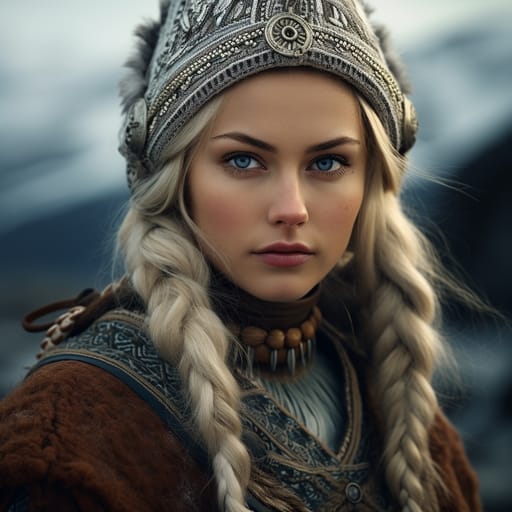
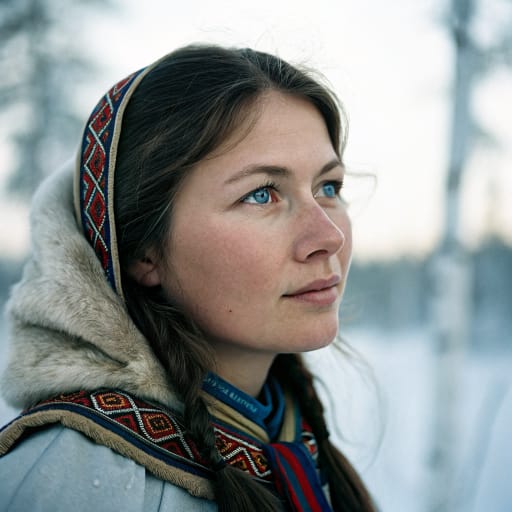
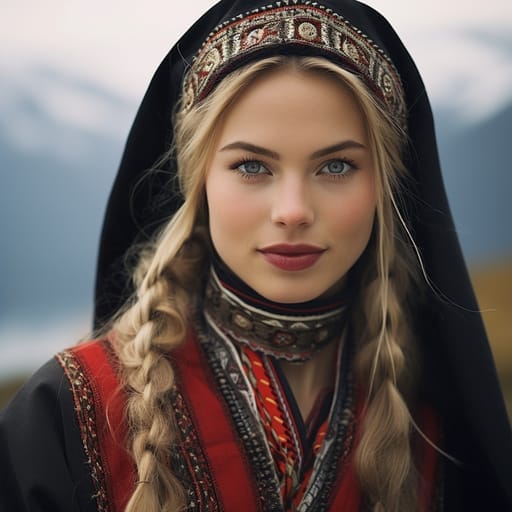
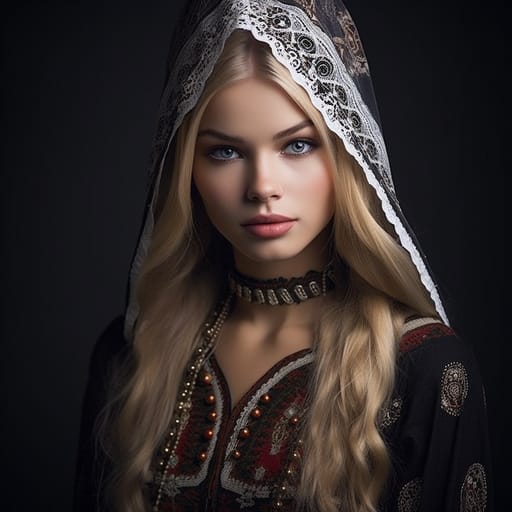
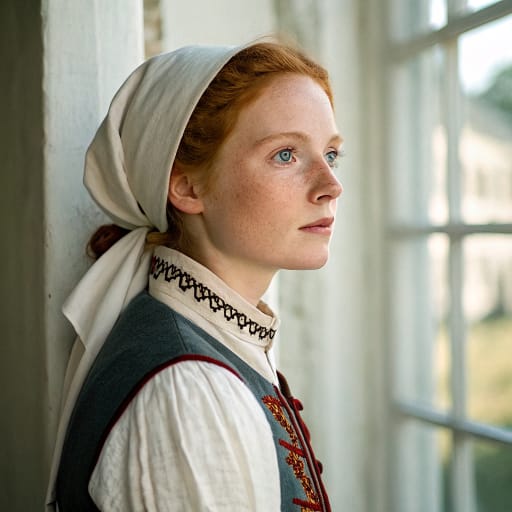
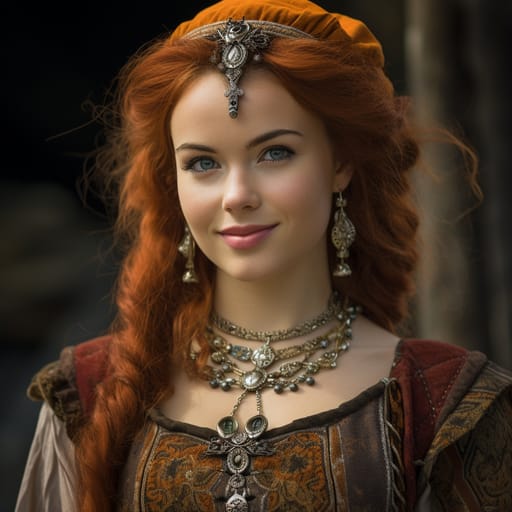
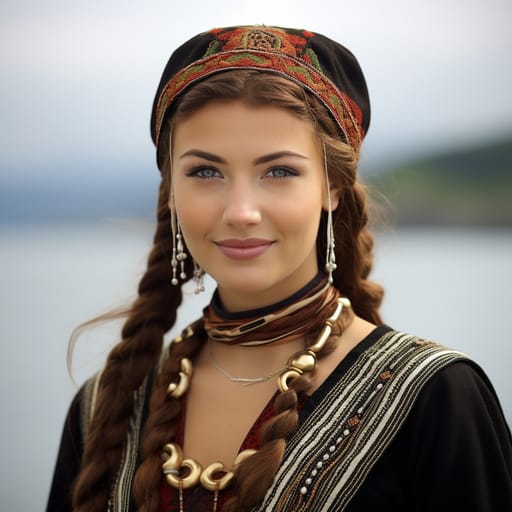
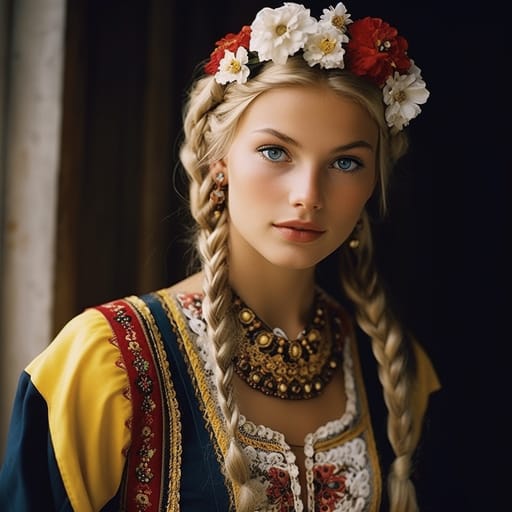
Geographic Distribution: Welsh populations across 1 country
Each row is ranked by the group's share of that country's population, with the source citation drawn from published census and demographic surveys. Click through for the full per-country phenotype profile.
| Country | Share | Source |
|---|---|---|
| United Kingdom | 4.6% | ONS 2021 Census; Welsh (~4.6%, ~3.1M+); concentrated in Wales |
Typical Welsh Phenotypes
Reference for AI generation: hair, eyes, skin, facial structure, build
Welsh phenotype sits inside the broader Insular Celtic range but trends darker and more compact than its Irish or Scottish neighbors — enough that the older anthropological literature treated "the Welsh type" as a distinct cluster within Britain. Hair runs heavily to dark brown and near-black, with a substantial minority in mid-brown and ash tones; pure blond is uncommon in adults, and red occurs at roughly 6–10%, lower than Scotland or Ireland but well above continental European baselines. Texture is overwhelmingly straight to gently wavy, fine to medium in diameter, and tends to hold pigment late — graying often arrives later than in Northern European populations.
Eyes are the giveaway. Blue and grey-blue dominate, but a notable share of Welsh carry true mid-brown or hazel eyes paired with the same dark hair — the so-called "dark Welsh" pattern seen in Anthony Hopkins or Richard Burton. No epicanthic fold; eye shape tends to be moderately deep-set under a defined but not heavy brow.
Skin is Fitzpatrick I–II almost universally, with cool pink or neutral undertones rather than the olive cast common in Mediterranean Europe. Freckling is frequent, and tanning capacity is poor — most Welsh burn before they brown. The face tends to be shorter and rounder than the long Anglo-Saxon oval, with a straight or slightly concave nose bridge of moderate width, narrow alar base, and a defined philtrum. Lips are medium in fullness, often with a pronounced cupid's bow. Cheekbones sit moderately high; the jaw is square but not heavy.
Build is famously compact. Welsh men average roughly 175–177 cm, shorter than the English by 2–3 cm, with a tendency toward stocky, broad-shouldered frames and short-to-medium limb length relative to torso. Women trend petite with similar proportions. Argentine Welsh communities in Patagonia have retained the phenotype with striking fidelity — the dark-haired, fair-skinned, blue-eyed Y Wladfa descendants read as visibly Welsh rather than Latin American, even after five generations.
Welsh Body & Anatomy Reference
Northern European / Germanic-Scandinavian phenotype: anatomy reference for AI nude generation
Welsh Boobs & Breasts
Bust reference for Welsh women: medium-to-large cup, full, high projection, which is typical of Northern European / Germanic-Scandinavian ancestry. Areolas measure about 32-48mm across, with light-pink to medium-pink pigmentation. Body type (mesomorph with taller stature; ectomorph-to-mesomorph split) shapes the bust as well, so Welsh tits are usually full and projecting, often the largest cup-size band in regional comparisons. In AI imagery, keep the forward-set shape rather than drifting toward the smaller East Asian bust.
Welsh Ass & Hips
The Welsh ass is typically medium-to-full, moderate-to-high projection, which sets it apart from the slim East Asian narrow-hip profile. Underneath, the pelvis shows medium-to-wide iliac crests, part of the Northern European / Germanic-Scandinavian skeletal pattern. For Welsh butt pics and AI renders, match that silhouette and the overall build (mesomorph with taller stature; ectomorph-to-mesomorph split).
Welsh Vagina & Pussy
Welsh pussy and vulvar anatomy presents light-pink to medium-pink labial pigmentation, varied labia minora projection, consistent with the Northern European / Germanic-Scandinavian phenotype's pigmentation pattern. Welsh pubic hair is typically fine-to-medium wavy texture, often lighter-pigmented (blond to dark-brown), in the inverted-triangle pattern. For anatomically accurate Welsh pussy renders the labial coloration should match the surrounding fair skin tone with a continuous gradient, and the hair should keep its fine-to-medium wavy texture.
Welsh Dicks & Penis
Welsh dicks follow the Northern European / Germanic-Scandinavian reference data: regional mean ~13-14cm erect; moderate-to-above-average girth; light-pink to light-brown shaft pigmentation. Shaft color should track the fair skin tone with a smooth change toward the glans, and Welsh pubic hair keeps its fine-to-medium wavy texture.
Welsh Body, Curves & Build
Welsh body type and overall build presents as mesomorph with taller stature; ectomorph-to-mesomorph split, with mean adult female BMI 24-27: the characteristic Northern European / Germanic-Scandinavian habitus. Welsh curves and proportions should keep the regional skeletal frame (height, shoulder-to-hip ratio, limb proportions) rather than a generic mesomorph default.
Welsh Skin Tone & Hair Texture
Welsh skin sits in the fair (Fitzpatrick I-III) band. Hair is typically straight-to-wavy 1A-2B, blond to medium-brown common, in keeping with the Northern European / Germanic-Scandinavian phenotype. In nude renders the skin should stay one even tone from face to body, and body, pubic and head hair should match.
Data depth
82/100Coverage of image-grounded phenotype observations · drives AI generation diversity
- Sample size
- 40/40· 66 images
- Image quality
- 27/30· 55% high
- Confidence
- 15/20· mean 0.77
- Source diversity
- 0/10· wikipedia
- ·Wikipedia-only source, not population-representative
Observed Distribution: Image Sample
Empirical observations from analyzed photographs · supplementary signal, not population truth
Sample: 66 images analyzed (66 wikipedia). Quality: 36 high, 26 medium, 4 low, 0 very_low. Avg analyzer confidence: 0.77.
Skin tone (Fitzpatrick): I (2%), II (94%), III (3%), V (2%)
Hair color: gray/white (38%), black (27%), light/medium brown (12%), dark brown (11%), blonde (9%), red/auburn (2%), unclear (2%)
Hair texture: straight (42%), wavy (39%), curly (11%), bald (2%), shaved (5%), covered (2%)
Eye color: blue (36%), dark brown (18%), hazel (18%), brown (3%), green (2%), unclear (23%)
Epicanthic fold: 0% present, 97% absent, 3% unclear
Caveats: Sample is 100% Wikipedia notable people, which skews toward male, public-life, and modern figures, not population-representative.
Last aggregated: May 7, 2026
Explore phenotype categories
Structured taxonomy with peer-reviewed scales · 22 anatomical categories
- SkinFitzpatrick I to VI, undertone, pigmentation
- EyesColor, shape, eyelid, epicanthic fold
- Head hairColor, Andre Walker texture, hairline
- Body shapeHeath-Carter somatotype, WHR, frame
- NoseBridge, tip, nostril, alar width
- Lips & mouthVolume, Cupid’s bow, philtrum
Measured in Welsh portraits
Notable Welsh People
100 reference figures, sourced from Wikipedia
- Cypriot, Turkish) · (Greek)
- Keith Allen, born 1953)
- Bennett Arron, born 1973), also comedian and writer
- Stanley Baker, 1927-1976)
- Aneurin Barnard, born 1987)
- Hywel Bennett, 1944-2017)
- David Bower, born 1969)
- Rob Brydon, born 1965)
- Richard Burton, 1925-1984)
- Boyd Clack, born 1951), also writer and musician
- Morfydd Clark, born 1989)
- Richard Ian Cox, born 1973), also comedian and radio host
- Gabrielle Creevy, born 1996)
- Timothy Dalton, born 1946)
- Charles Danby, 1858-1906)
- Hannah Daniel, born 1986)
- Josie d'Arby, born 1973), also presenter
- Gareth David-Lloyd, born 1981)
- Garnon Davies, born 1982)
- Geraint Wyn Davies, born 1957)
- Phoebe Davies, 1864-1912)
- Richard Davies, 1926-2015)
- Ryan Davies, 1937-1977)
- Windsor Davies, 1930-2019)
- Lauren Drew, born 1993)
- Robert East, born 1943)
- Aimee-Ffion Edwards, born 1987)
- Maudie Edwards, 1906-1991)
- Taron Egerton, born 1989)
- Tom Ellis, born 1978)
- Peg Entwistle, 1908-1932)
- Clifford Evans, 1912-1985)
- Luke Evans, born 1979)
- Pam Ferris, born 1948)
- Huw Garmon, born 1966)
- Colin George, 1929-2016)
- Matthew Gravelle, born 1976)
- Danny Grehan, born 1965)
- Hugh Griffith, 1912-1980)
- Kenneth Griffith, 1921-2006)
- Ioan Gruffudd, born 1973)
- Edmund Gwenn, 1875-1958)
- Mike Gwilym, born 1949)
- Robert Gwilym, born 1956)
- Lyn Harding, 1867-1952)
- Doris Hare, 1905-2000)
- Mali Harries, born 1976)
- Richard Harrington, born 1975)
- Georgia Henshaw, born 1993)
- Anthony Hopkins, born 1937)
- Donald Houston, 1923-1991)
- Glyn Houston, 1926-2019)
- Aneirin Hughes, born 1958)
- Gareth Hughes, 1894-1965)
- Nerys Hughes, born 1941)
- Rhys Ifans, born 1968)
- Emrys James, 1928-1989)
- Hywel John, born c.1970), more notable as a playwright
- Margaret John, 1926-2011)
- Glynis Johns, 1923-2024)
- Mervyn Johns, 1899-1992)
- Gary Jones, born 1958)
- Mark Lewis Jones, born 1964)
- Ruth Jones, born 1967)
- Terry Jones, 1942-2020)
- Eddie Ladd, also contemporary dancer
- Kate Lamb, born 1988)
- Helen Lederer, born 1954)
- Gwilym Lee, born 1983)
- Desmond Llewelyn, 1914-1999)
- Bernard Lloyd, 1934-2018)
- Philip Madoc, 1934-2012)
- Ruth Madoc, 1943-2022)
- Steven Meo, born 1977)
- Ray Milland, 1907-1986)
- Elizabeth Morgan, born 1930)
- Eve Myles, born 1978)
- Kimberley Nixon, born 1985)
- Jonny Owen, born 1971)
- Kai Owen, born 1975)
- John Owen-Jones, born 1971)
- Joanna Page, born 1978)
- Siân Phillips, born 1934)
- Tom Price, born 1980)
- Jonathan Pryce, born 1947)
- Ian Puleston-Davies, born 1959)
- Angharad Rees, 1949-2012)
- Roger Rees, 1944-2015)
- Iwan Rheon, born 1985)
- Steffan Rhodri, born 1967)
- Ieuan Rhys, born 1961)
- Matthew Rhys, born 1974)
- Paul Rhys, born 1963)
- John Rhys-Davies, born 1944)
- Ieuan Rhys Williams, 1909-1973)
- Rachel Roberts, 1927-1980)
- Matt Ryan, born 1981)
- Michael Sheen, born 1969)
- Sarah Siddons, 1755-1831)
- William Simons, 1940-2019)
Erotic Poses & Sex Positions
From the pose catalog: 219 named positions with reference skeletons
Frequently asked questions about Welsh people
Where is the Welsh homeland?
The Welsh homeland is Wales (United Kingdom) in Northern Europe.
What countries do Welsh people live in?
Welsh populations are documented across 1 country: United Kingdom.
What language do Welsh people speak?
Welsh people primarily speak Indo-European / Celtic / Welsh.
What religion do Welsh people practice?
The predominant religion among Welsh people is Christianity / Protestantism.






Make your own Welsh images
Five a day, free, no credits to buy. The studio starts from this group's phenotype data, so you can set body type, pose and style and keep the traits accurate.
Start with Welsh