Help us get this right
Does this portrait look right for Silures?
Nobody has judged this one yet. You would be the first.
Silures Erotic
Southeast Wales, United Kingdom: roughly modern Glamorgan, Monmouthshire and southern Powys, perhaps with some adjoining land
Common Brittonic (Celtic, Indo-European), with Latin used under Roman rule
Celtic polytheism, blended with Roman cults after the conquest; Christianity took hold in late Roman and post-Roman times
One of the Brittonic peoples of Iron Age Britain, alongside the Ordovices, Demetae and Dobunni; organized under Rome as the civitas Silurum
About Silures People
The Silures were an Iron Age people of southeast Wales who lived there before and through the Roman conquest of the first century AD. Rome absorbed them but did not wipe them out. Their land became a Roman civil district, then the early medieval kingdoms of Gwent and Glywysing, and its people are part of the Welsh population of the region today. The written record remembers them mostly for being stubborn. Tacitus, the Roman historian who tells us most of what we know about them, describes a people who could not be changed by either harshness or mercy.
They spoke Brittonic, the Celtic language of Iron Age Britain that later developed into Welsh, Cornish and Breton, and they shared it with the peoples around them: the Ordovices to the north, the Demetae to the west and the Dobunni to the east. Their country was easy to defend, with wooded valleys, steep uplands and hillforts. Llanmelin, near Caerwent, is often suggested as one of their main centers before the Romans came. Tacitus wrote that many Silures had dark complexions and curly hair, and he guessed they had come from Spain, an idea modern scholars generally reject. Their religion was the Celtic polytheism found across Britain, and after the conquest it blended with Roman worship: a statue base at Caerwent is dedicated to Mars under the Celtic names Lenus and Ocelus Vellaunus.
The long resistance
When Rome invaded in 43 AD, the British leader Caratacus was driven out of southeast England and found allies among the Silures, who let him use their hills as a base for war. His defeat and capture around 51 AD did not end the fighting in Silurian country. The Silures kept raiding, attacked troops building forts on their land, beat a legion in battle and wore out the governor Ostorius Scapula. He reportedly said their very name should be wiped out, and he died in office before the war was won. They were not finally brought under control until the 70s AD, under the governor Julius Frontinus.
Rome then built the legionary fortress of Isca at Caerleon, right on their doorstep, and gave them a town of their own, Venta Silurum, at Caerwent. An inscription there from the early third century records a decree by the council of the civitas Silurum, which shows the old enemy now running its own affairs as a Roman community. Their name has outlived them. Gwent takes its name from Venta, and geologists still use the Silurian period, which Roderick Murchison named after the tribe in 1835.
Related ethnic groups
Groups that share Silures's homeland, region, language, or religious tradition. These are likely candidates for comparative phenotype reference.
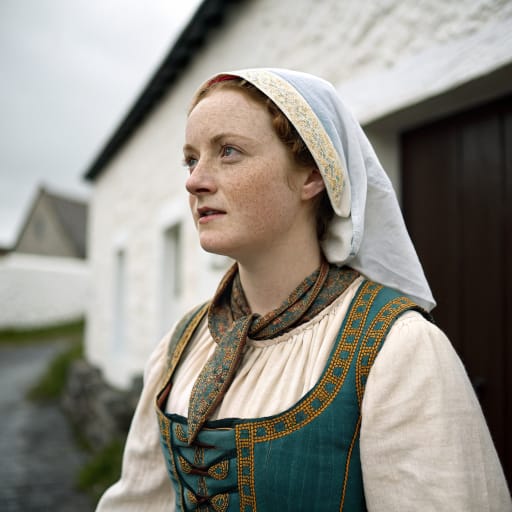
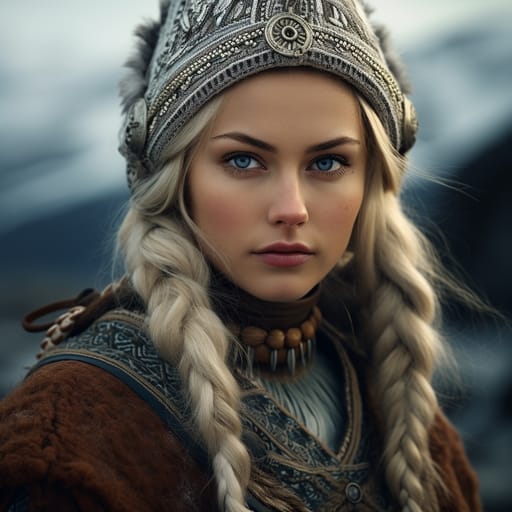
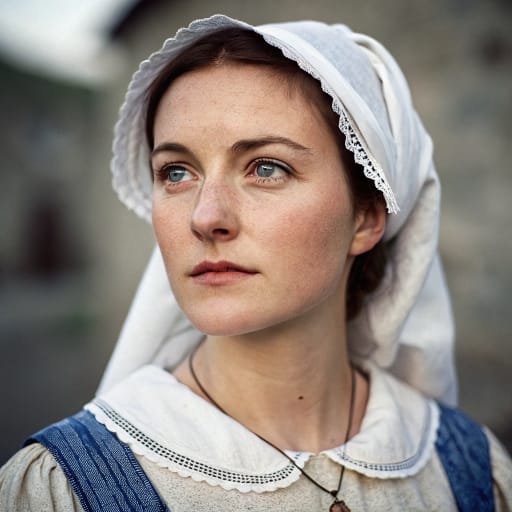
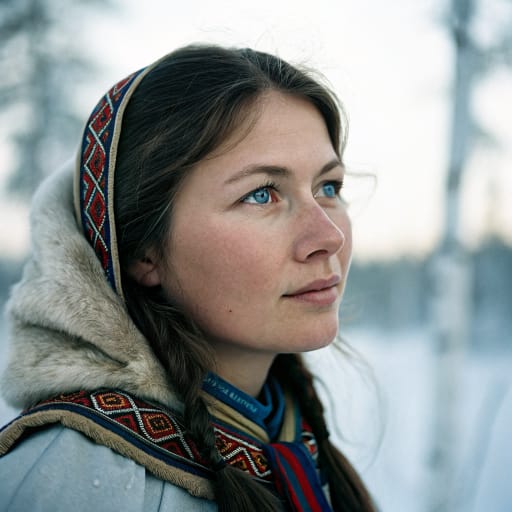
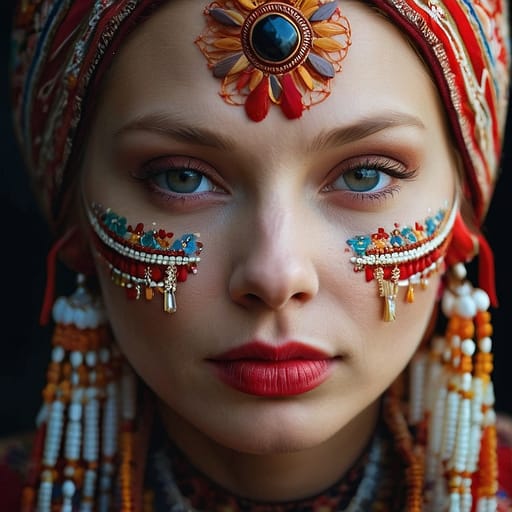
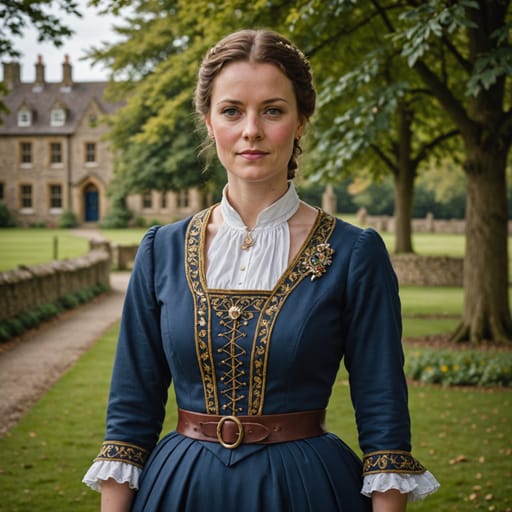
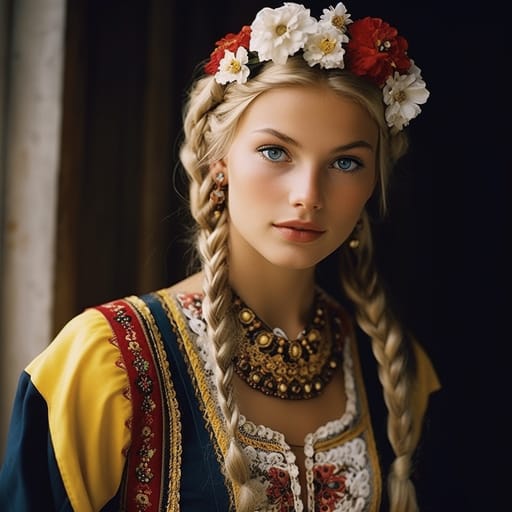
Typical Silures Phenotypes
Reference for AI generation: hair, eyes, skin, facial structure, build
Silures Body & Anatomy Reference
Anatomy by feature, Northern European / Germanic-Scandinavian phenotype
Silures Boobs & Breasts
Bust reference for Silures women: medium-to-large cup, full, high projection, which is typical of Northern European / Germanic-Scandinavian ancestry. Areolas measure about 32-48mm across, with light-pink to medium-pink pigmentation. Body type (mesomorph with taller stature; ectomorph-to-mesomorph split) shapes the bust as well, so Silures tits are usually full and projecting, often the largest cup-size band in regional comparisons. In AI imagery, keep the forward-set shape rather than drifting toward the smaller East Asian bust.
Silures Ass & Hips
The Silures ass is typically medium-to-full, moderate-to-high projection, which sets it apart from the slim East Asian narrow-hip profile. Underneath, the pelvis shows medium-to-wide iliac crests, part of the Northern European / Germanic-Scandinavian skeletal pattern. For Silures butt pics and AI renders, match that silhouette and the overall build (mesomorph with taller stature; ectomorph-to-mesomorph split).
Silures Vagina & Pussy
Silures pussy and vulvar anatomy presents light-pink to medium-pink labial pigmentation, varied labia minora projection, consistent with the Northern European / Germanic-Scandinavian phenotype's pigmentation pattern. Silures pubic hair is typically fine-to-medium wavy texture, often lighter-pigmented (blond to dark-brown), in the inverted-triangle pattern. For anatomically accurate Silures pussy renders the labial coloration should match the surrounding fair skin tone with a continuous gradient, and the hair should keep its fine-to-medium wavy texture.
Silures Dicks & Penis
Silures dicks follow the Northern European / Germanic-Scandinavian reference data: regional mean ~13-14cm erect; moderate-to-above-average girth; light-pink to light-brown shaft pigmentation. Shaft color should track the fair skin tone with a smooth change toward the glans, and Silures pubic hair keeps its fine-to-medium wavy texture.
Silures Body, Curves & Build
Silures body type and overall build presents as mesomorph with taller stature; ectomorph-to-mesomorph split, with mean adult female BMI 24-27: the characteristic Northern European / Germanic-Scandinavian habitus. Silures curves and proportions should keep the regional skeletal frame (height, shoulder-to-hip ratio, limb proportions) rather than a generic mesomorph default.
Silures Skin Tone & Hair Texture
Silures skin sits in the fair (Fitzpatrick I-III) band. Hair is typically straight-to-wavy 1A-2B, blond to medium-brown common, in keeping with the Northern European / Germanic-Scandinavian phenotype. In nude renders the skin should stay one even tone from face to body, and body, pubic and head hair should match.
Explore phenotype categories
Structured taxonomy with peer-reviewed scales · 22 anatomical categories
Erotic Poses & Sex Positions
From the pose catalog: 219 named positions with reference skeletons
Frequently asked questions about Silures people
Where is the Silures homeland?
The Silures homeland is Southeast Wales, United Kingdom: roughly modern Glamorgan, Monmouthshire and southern Powys, perhaps with some adjoining land in Northern Europe.
What language do Silures people speak?
Silures people primarily speak Common Brittonic (Celtic, Indo-European), with Latin used under Roman rule.
What religion do Silures people practice?
The predominant religion among Silures people is Celtic polytheism, blended with Roman cults after the conquest; Christianity took hold in late Roman and post-Roman times.






Make your own Silures images
Five a day, free, no credits to buy. The studio starts from this group's phenotype data, so you can set body type, pose and style and keep the traits accurate.
Start with Silures