No portrait yet
Saeki Erotic
Said to originate in eastern Honshu (Kanto and Tohoku); resettled by the Yamato court in Harima, Sanuki, Iyo, Aki and Awa provinces of western Japan
Unrecorded; if of Emishi origin, possibly an Ainu-related language or a divergent Japonic dialect; assimilated to Old Japanese (Japonic)
Unrecorded native beliefs; absorbed into kami worship and, later, Buddhism
Generally regarded as resettled Emishi; organized as the Saeki-be under the provincial Saeki no Atai and the central Saeki no Muraji, a branch of the Otomo clan
About Saeki People
The Saeki were a people of ancient Japan, eastern captives whom the Yamato court resettled in the western provinces, probably around the fifth and sixth centuries, and who had dissolved into the general Japanese population by the Nara period, leaving behind a surname, a few place names and a strange origin story. That story is in the Nihon Shoki, which sets it in the legendary reign of Emperor Keiko. Emishi prisoners taken in the eastern campaigns credited to Yamato Takeru were presented to the shrine at Ise, where they proved so loud, day and night, that the priestess sent them on to the court. Moved to the foot of Mount Mimoro, they cut down the trees on the sacred mountain and terrorized the villagers. The emperor finally ordered them out of the home provinces altogether, and they became the Saeki-be of Harima, Sanuki, Iyo, Aki and Awa.
Whatever really happened, the account reads like a court explaining a deportation policy after the fact. It does tell us how the Saeki were seen: outsiders from the unconquered northeast, defined by their refusal to behave. Even the name carries that charge. Early etymologies tie it to words for making noise or for blocking the way, meaning people who obstruct the sovereign's orders. The Hitachi Fudoki uses the word the same way, recalling "Saeki of the mountains and Saeki of the fields" as pit-dwelling locals who resisted the newcomers in eastern Japan. What they spoke is unrecorded. If they were Emishi, it may have been a language related to Ainu or a divergent form of Japanese; the question is open.
The court turned that reputation into a job. The Saeki-be were organized as a hereditary service group, supervised locally by families titled Saeki no Atai and at the center by the Saeki no Muraji, a branch of the Otomo military clan. Alongside the Otomo they guarded the palace gates, one of which long carried the Saeki name. In time the guards became indistinguishable from the people they guarded, and once the seventh-century reforms dismantled the service-group system the Saeki survived mostly as a name.
It is a durable name. The monk Kukai, founder of Shingon Buddhism, was born in 774 into the Saeki family of Sanuki. Saeki no Imaemishi, whose personal name contains the word Emishi, oversaw the building of Todai-ji in the eighth century. A Saeki family served for centuries as hereditary priests of Itsukushima Shrine, which tradition says a Saeki founded in 593, and the old Saeki District of Aki lives on as a ward of modern Hiroshima.
Related ethnic groups
Groups that share Saeki's homeland, region, language, or religious tradition. These are likely candidates for comparative phenotype reference.
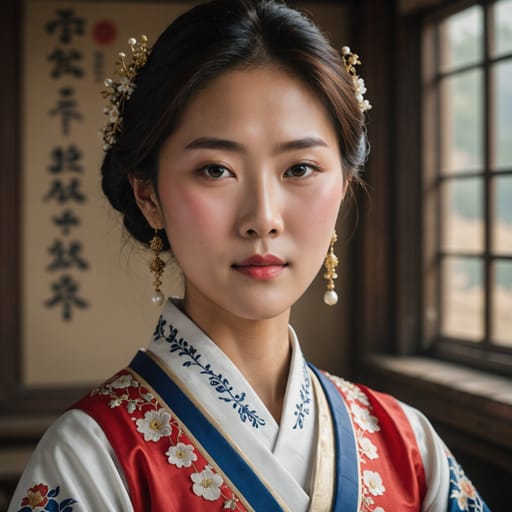
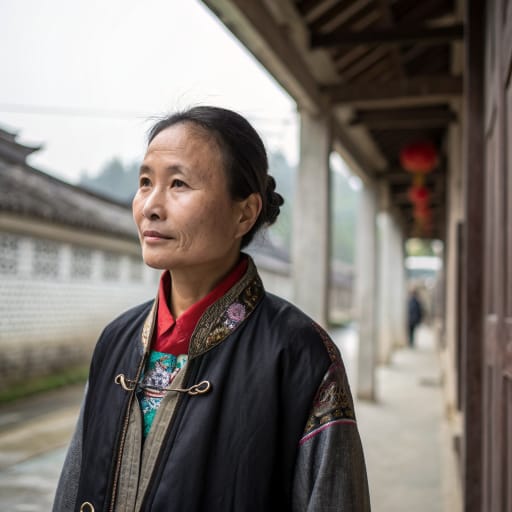
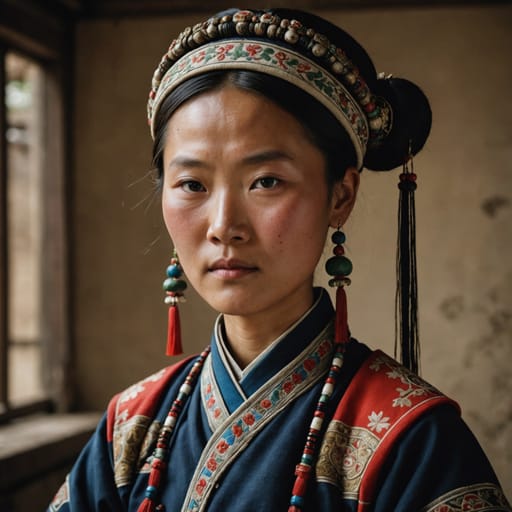
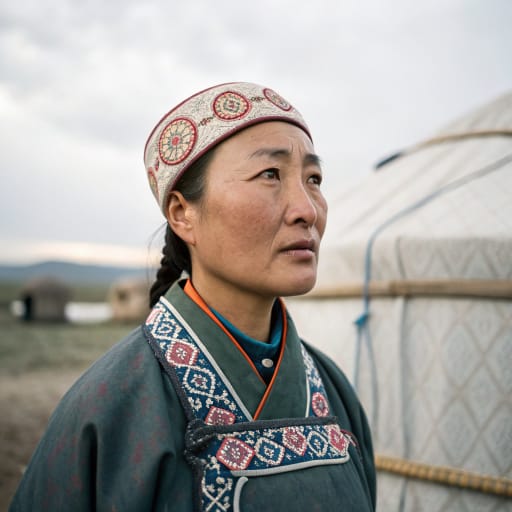
Typical Saeki Phenotypes
Reference for AI generation: hair, eyes, skin, facial structure, build
Saeki Body & Anatomy Reference
Per-feature anatomical profile for AI nude generation: East Asian Sinitic / Mongoloid phenotype
Saeki Boobs & Breasts
Bust reference for Saeki women: small-to-medium cup, modest projection, which is typical of East Asian Sinitic / Mongoloid ancestry. Areolas measure about 26-36mm across, with light-pink to medium-brown pigmentation. Body type (ectomorph-to-mesomorph, lean frame) shapes the bust as well, so Saeki tits are usually firm and modestly projecting; smaller cup size than the South Asian or Western Asian average. In AI imagery, keep the forward-set shape rather than drifting toward the fuller South Asian or Levantine bust profile.
Saeki Ass & Hips
The Saeki ass is typically small-to-medium, modest projection, narrower hip profile, which sets it apart from the fuller projected glutes of the West African or Polynesian phenotype. Underneath, the pelvis shows narrower iliac crests, less gluteal-femoral fat deposition, part of the East Asian Sinitic / Mongoloid skeletal pattern. For Saeki butt pics and AI renders, match that silhouette and the overall build (ectomorph-to-mesomorph, lean frame).
Saeki Vagina & Pussy
Saeki pussy and vulvar anatomy presents light-pink to medium-brown labial pigmentation, smaller labia minora, consistent with the East Asian Sinitic / Mongoloid phenotype's pigmentation pattern. Saeki pubic hair is typically straight fine texture, sparser distribution than the South Asian norm, in the inverted-triangle pattern. For anatomically accurate Saeki pussy renders the labial coloration should match the surrounding light to medium skin tone with a continuous gradient, and the hair should keep its straight fine texture.
Saeki Dicks & Penis
Saeki dicks follow the East Asian Sinitic / Mongoloid reference data: regional mean ~11-12cm erect; moderate girth; light-brown shaft pigmentation. Shaft color should track the light to medium skin tone with a smooth change toward the glans, and Saeki pubic hair keeps its straight fine texture.
Saeki Body, Curves & Build
Saeki body type and overall build presents as ectomorph-to-mesomorph, lean frame, with mean adult female BMI 20-23: the characteristic East Asian Sinitic / Mongoloid habitus. Saeki curves and proportions should keep the regional skeletal frame (height, shoulder-to-hip ratio, limb proportions) rather than a generic mesomorph default.
Saeki Skin Tone & Hair Texture
Saeki skin sits in the light to medium (Fitzpatrick II-IV) band. Hair is typically straight 1A, fine-to-medium, predominantly black, in keeping with the East Asian Sinitic / Mongoloid phenotype. In nude renders the skin should stay one even tone from face to body, and body, pubic and head hair should match.
Explore phenotype categories
Structured taxonomy with peer-reviewed scales · 22 anatomical categories
Erotic Poses & Sex Positions
From the pose catalog: 219 named positions with reference skeletons
Frequently asked questions about Saeki people
Where is the Saeki homeland?
The Saeki homeland is Said to originate in eastern Honshu (Kanto and Tohoku); resettled by the Yamato court in Harima, Sanuki, Iyo, Aki and Awa provinces of western Japan in East Asia.
What language do Saeki people speak?
Saeki people primarily speak Unrecorded; if of Emishi origin, possibly an Ainu-related language or a divergent Japonic dialect; assimilated to Old Japanese (Japonic).
What religion do Saeki people practice?
The predominant religion among Saeki people is Unrecorded native beliefs; absorbed into kami worship and, later, Buddhism.






Make your own Saeki images
Five a day, free, no credits to buy. The studio starts from this group's phenotype data, so you can set body type, pose and style and keep the traits accurate.
Start with Saeki