No portrait yet
Petun Erotic
The Blue Mountain and Niagara Escarpment country south of Nottawasaga Bay, in present-day Gray and Simcoe counties, Ontario, Canada
Petun, a Northern Iroquoian language very close to Wendat (Iroquoian); it fed into the later Wyandot language
Iroquoian practice centered on dreams, feasts and clan ceremony; partial Catholic conversion under a Jesuit mission from 1639
Northern Iroquoian; two divisions, the Wolves and the Deer; ancestral, together with the Wendat, to the Wyandot
About Petun People
The Petun were an Iroquoian farming people of the hill country south of Georgian Bay, in what is now Ontario, and they ended as an independent nation in the winter of 1649, when Iroquois war parties burned their principal town and the survivors fled west. The people themselves did not disappear. Over the following decades they merged with Wendat refugees to become the Wyandot, whose nations today are seated in Oklahoma, Kansas, Michigan and Ontario. The name most readers know them by is not their own: French traders called them Petun, borrowing a Brazilian word for tobacco, because they grew far more of it than they could use and traded the surplus north to peoples whose growing season was too short for a crop of their own. They called themselves Tionontati, a word pointing at the hills they lived among.
Those hills are the Niagara Escarpment where it rises above Nottawasaga Bay, near present-day Collingwood. The Petun set palisaded villages of bark longhouses on the high ground, cleared fields of corn, beans and squash around them, and moved the whole settlement every generation or so as soil and firewood gave out. They were organized in two divisions, the Wolves and the Deer. Their language was close enough to Wendat that the two peoples understood one another, but they were politically separate and not always on good terms: the Wendat confederacy sat between them and the French and kept it that way, so Petun tobacco and furs reached Quebec through Wendat hands.
Jesuits arrived in 1639 and 1640 and worked the villages for a decade with thin results, during years when smallpox and other imported epidemics were cutting the population hard. On December 7, 1649, with most of the fighting men away, a Haudenosaunee force destroyed the town of Etharita and killed the priest Charles Garnier there. The rest of the Petun abandoned the country within the year, spent a bad winter alongside Huron refugees on an island in Georgian Bay, then moved west in stages: Mackinac, Green Bay, the far end of Lake Superior, back east to Detroit, and eventually the Sandusky country of Ohio. Nineteenth century American removal policy pushed that combined people on to Kansas and then Indian Territory. The nation ended in one winter; the line did not.
Related ethnic groups
Groups that share Petun's homeland, region, language, or religious tradition. These are likely candidates for comparative phenotype reference.
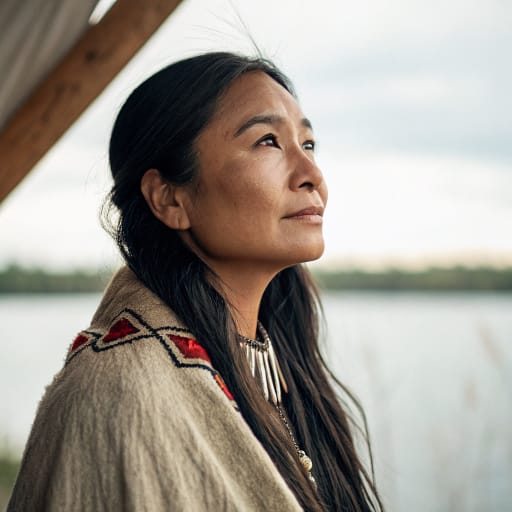
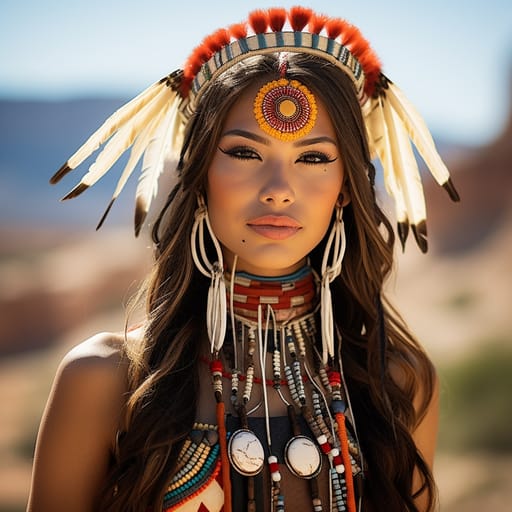
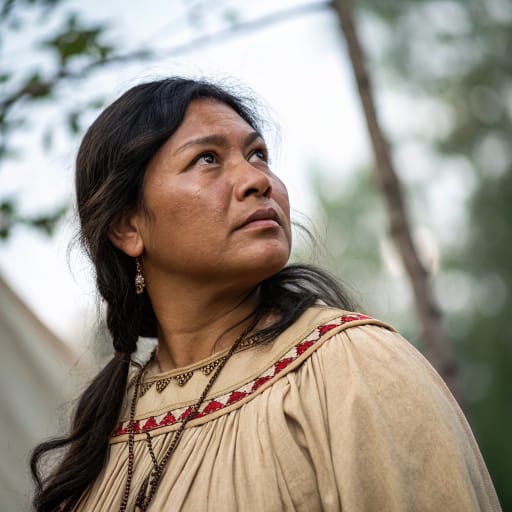
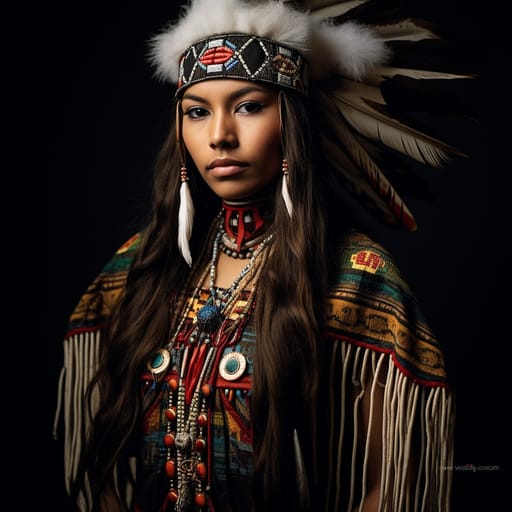
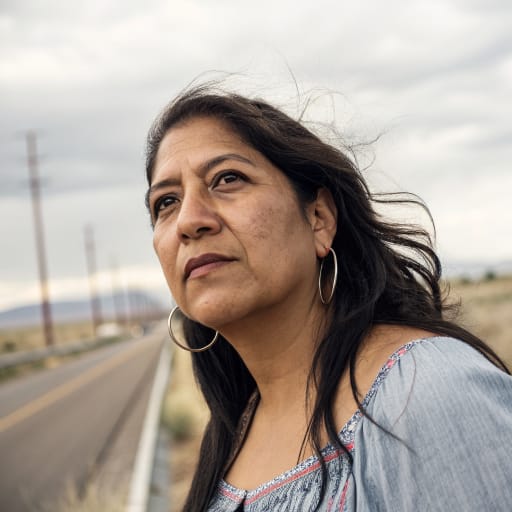
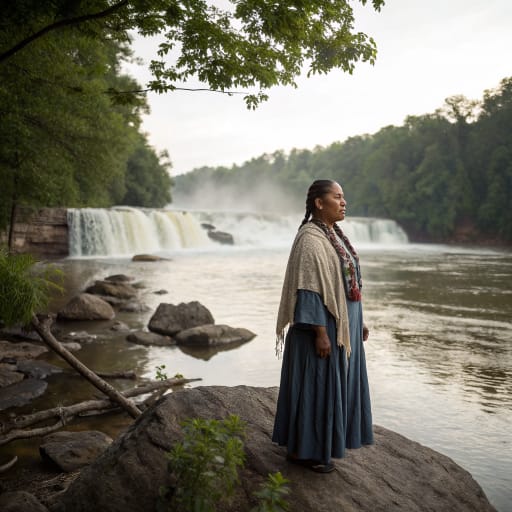
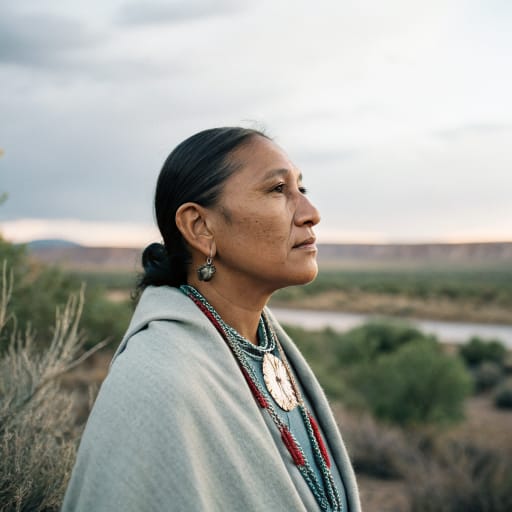
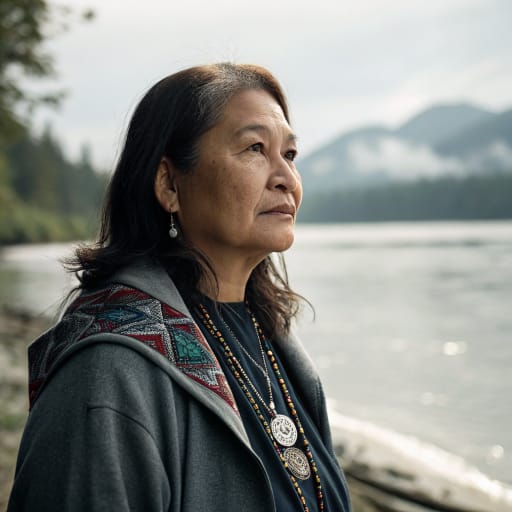
Typical Petun Phenotypes
Reference for AI generation: hair, eyes, skin, facial structure, build
Petun Body & Anatomy Reference
Per-feature anatomical profile for AI nude generation: Indigenous Northern American / Algonquian-Iroquoian phenotype
Petun Boobs & Breasts
Petun boobs follow the Indigenous Northern American / Algonquian-Iroquoian profile: medium cup, moderate projection. Areolar diameter is usually 30-44mm, and the coloring is medium-brown areolar pigmentation against the copper-to-medium-brown skin tone. Breast shape tracks body composition (mesomorph, broader frame in northern Indigenous populations, mean adult female BMI 25-28), so Petun breasts tend to be full and moderate projection. Expect a forward-set shape, not the smaller East Asian bust.
Petun Ass & Hips
Petun ass and hip morphology presents as medium, moderate-to-full projection, distinctly different from the slim East Asian narrow-hip profile. The Petun pelvic profile shows medium iliac crests, anchored in the Indigenous Northern American / Algonquian-Iroquoian skeletal pattern. Petun butt shots in adult AI imagery should render the medium, moderate-to-full projection silhouette with the overall build (mesomorph, broader frame in northern Indigenous populations) and the fat distribution typical of the Indigenous Northern American / Algonquian-Iroquoian phenotype.
Petun Vagina & Pussy
Petun pussy anatomy typically shows medium-brown labial pigmentation. Pubic hair is usually straight medium-coarse texture. In AI-generated Petun nudes, labial color should blend into the copper to medium-brown skin with a gradual transition, and the hair should keep its straight medium-coarse texture.
Petun Dicks & Penis
Penis reference for Petun men: regional mean ~13cm erect, moderate girth. Coloring: medium-brown shaft pigmentation. An accurate Petun cock in AI imagery matches the surrounding copper to medium-brown skin rather than a generic porn default. Circumcision depends on religion and custom, not ancestry.
Petun Body, Curves & Build
The Petun figure is generally mesomorph, broader frame in northern Indigenous populations, with mean adult female BMI 25-28, characteristic of Indigenous Northern American / Algonquian-Iroquoian ancestry. AI image tools tend to flatten regional body types into a few stock shapes; here the Petun build is kept as its own reference.
Petun Skin Tone & Hair Texture
Skin: copper to medium-brown (Fitzpatrick III-V). Hair: straight 1A, dark-brown to black, often thick and dense. Both are typical of Indigenous Northern American / Algonquian-Iroquoian ancestry. The most common mistake in AI nudes of Petun women is a body rendered lighter than the face.
Explore phenotype categories
Structured taxonomy with peer-reviewed scales · 22 anatomical categories
Erotic Poses & Sex Positions
From the pose catalog: 219 named positions with reference skeletons
Frequently asked questions about Petun people
Where is the Petun homeland?
The Petun homeland is The Blue Mountain and Niagara Escarpment country south of Nottawasaga Bay, in present-day Gray and Simcoe counties, Ontario, Canada in North America.
What language do Petun people speak?
Petun people primarily speak Petun, a Northern Iroquoian language very close to Wendat (Iroquoian); it fed into the later Wyandot language.
What religion do Petun people practice?
The predominant religion among Petun people is Iroquoian practice centered on dreams, feasts and clan ceremony; partial Catholic conversion under a Jesuit mission from 1639.






Make your own Petun images
Five a day, free, no credits to buy. The studio starts from this group's phenotype data, so you can set body type, pose and style and keep the traits accurate.
Start with Petun