No portrait yet
Pari Erotic
Lafon Hill and the surrounding plains, Lafon County, Eastern Equatoria, South Sudan; displaced communities in Juba, Torit and refugee settlements in Kenya.
Päri, also called Lokoro (Northern Luo, Western Nilotic, Nilo-Saharan), closely related to Anuak; Juba Arabic and English as contact languages.
Traditional religion centered on jwok and a hereditary rain chief, alongside Christianity (Catholic and Protestant).
A Northern Luo people within the Western Nilotic family, closest to the Anuak; historically organized in six villages around Lafon Hill, with clans of mixed origin.
About Pari People
The Pari are the people of one hill. Lafon, a lone rocky outcrop rising from the flat plains of Eastern Equatoria in South Sudan, has been their home for generations, and for most of that time nearly the whole population lived packed into six villages terraced around its base. They call themselves Jo-Pari. Their neighbors, and older maps, call them Lokoro. They number in the tens of thousands, small even by South Sudanese standards, and they are a linguistic island: Päri is a Luo language, closest to Anuak, while almost everyone around them, the Lotuko, Lopit and Lokoya among them, speaks Eastern Nilotic languages from a different branch of the family. Pari oral tradition explains the oddity by pointing northeast, toward Anuak country near the Ethiopian border, as the place the core clans walked away from.
Living surrounded has left marks. The Pari took their political system from those neighbors: a ruling age grade of mature men, the mojomiji, runs village affairs, settles disputes, organizes defense and collective hunts, and after roughly a decade hands power to the next generation in a formal and often tense transfer. Alongside them stands a hereditary rain chief, responsible for the thing that matters most on a plain that swings between flood and drought. The office carries real risk. In 1984, after repeated rain failure, the mojomiji killed the reigning rain queen, an event that became a well-known case in the anthropology of the region. Sorghum is the staple, cattle and goats are wealth, and the dry season sends men out to hunt and to fish the shrinking pools and swamps.
The second Sudanese civil war broke the old pattern. In 1993 fighting between rival rebel factions burned the villages at Lafon, and the Pari scattered to settlements across the plain, to Juba and Torit, and to refugee camps across the border in Kenya. Many have since returned, but the single dense hill town is no longer the whole of Pari life. Christianity, Catholic and Protestant, has spread widely and sits beside older practice centered on jwok, the Luo word for divinity and spirit power, and on the rain chief. Young Pari today are as likely to be in a Juba classroom as a cattle camp, yet age-set membership still decides who a man stands with and who speaks for the village.
Related ethnic groups
Groups that share Pari's homeland, region, language, or religious tradition. These are likely candidates for comparative phenotype reference.
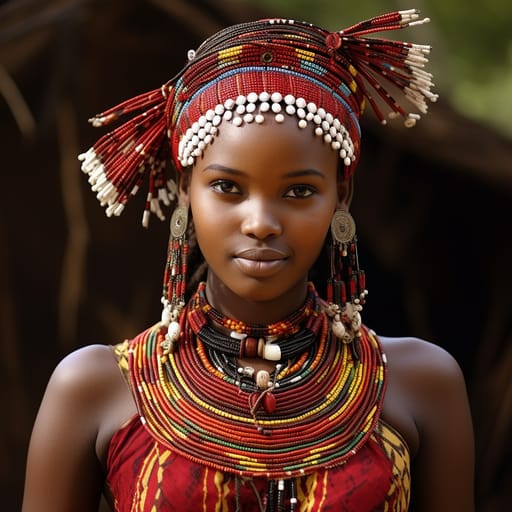
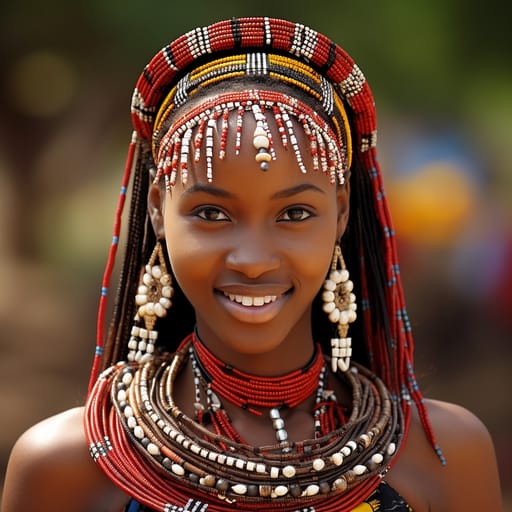
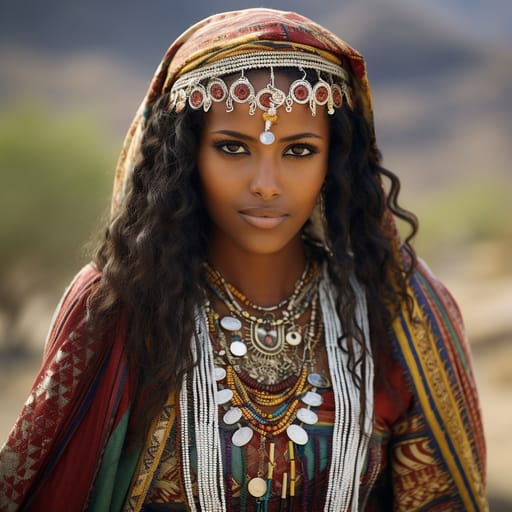
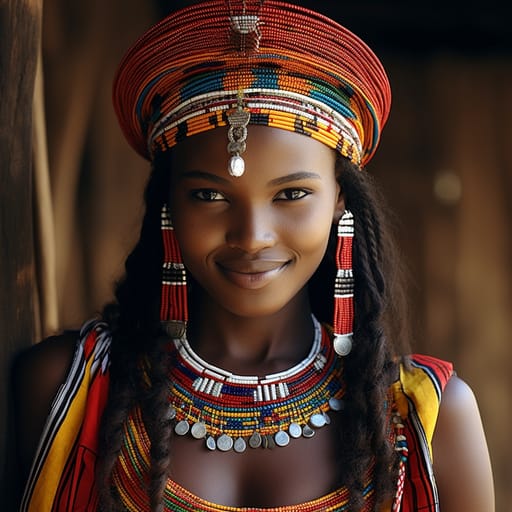
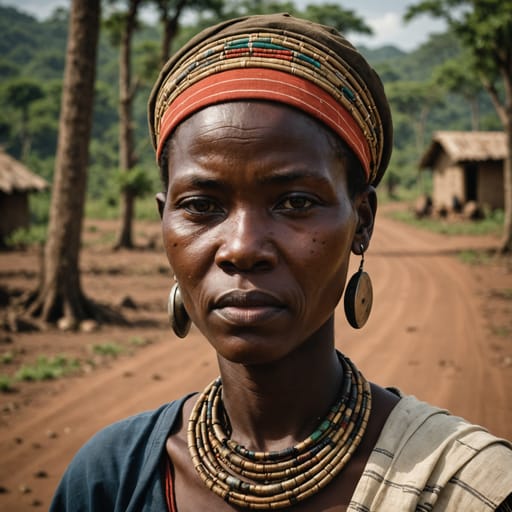
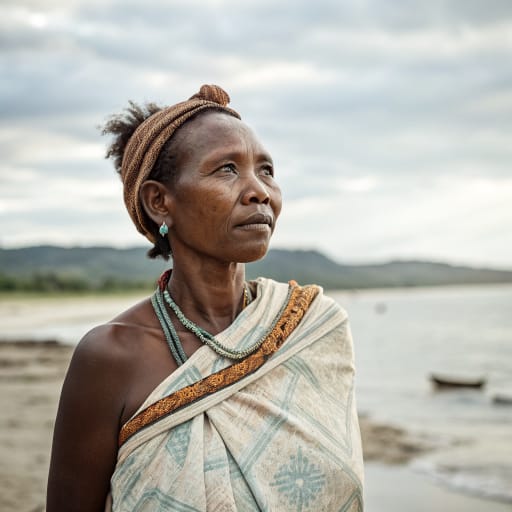
Typical Pari Phenotypes
Reference for AI generation: hair, eyes, skin, facial structure, build
Pari Body & Anatomy Reference
Per-feature anatomical profile for AI nude generation: Cushitic / Nilo-Cushitic East African phenotype
Pari Boobs & Breasts
Pari tits and boobs run small-to-medium-cup, high-set, conical, the classic Cushitic / Nilo-Cushitic East African bust profile. Pari nipples and areolas show moderate-to-high areolar pigmentation against the brown-to-deep-brown skin tone, with areolar diameter typically in the 28-38mm range and forward-set positioning rather than the lateral spread of the West African phenotype. Pari breasts trend firmer and less projecting than the African-American or West African norm, a function of the lean ectomorph-to-mesomorph body habitus and the mean adult female BMI 19-22. For anatomically accurate AI-generated Pari nudes the render preserves the small-to-medium-cup, high-set, conical shape, 28-38mm areolas with moderate-to-high pigmentation, and the torso proportions of the Cushitic / Nilo-Cushitic East African phenotype.
Pari Ass & Hips
Pari hips and butt usually read as small-to-medium, high-set, rounded. The skeletal base is narrow-to-medium iliac crests, longer torso-to-leg ratio, the Cushitic / Nilo-Cushitic East African pattern. Set against the wide-set heavy-projection West African or African-American norm, the difference is easy to see, and the hip-to-waist ratio is often what identifies Pari women in photos.
Pari Vagina & Pussy
Expect brown-to-deep-brown labial pigmentation, narrow-to-medium labia minora projection on Pari women, in keeping with Cushitic / Nilo-Cushitic East African ancestry. The pubic hair is tightly-coiled coarse texture, densely distributed. Coloring should run evenly from the brown to deep brown skin of the thighs to the labia, and Pari nude imagery should keep the hair's tightly-coiled coarse texture.
Pari Dicks & Penis
Pari dick and penile anatomy in adult AI generation should anchor on the regional reference data: regional mean ~13.5cm erect, moderate girth, ~12cm circumference, and deeper-pigmented than the West African norm. The Pari cock profile reflects the Cushitic / Nilo-Cushitic East African population's anthropometric measurements. The shaft pigmentation should track the surrounding brown to deep brown skin tone, and the pubic hair should keep its tightly-coiled coarse texture in the typical inverted-V escutcheon.
Pari Body, Curves & Build
Pari body type: lean ectomorph-to-mesomorph, with mean adult female BMI 19-22. This is the typical Cushitic / Nilo-Cushitic East African build. Height range, shoulder-to-hip ratio and fat distribution all follow from it, which is what an accurate Pari nude body should show.
Pari Skin Tone & Hair Texture
Pari skin tone falls in the brown to deep brown (Fitzpatrick V-VI) band, the surface signal most often miscalibrated by generic AI nude generators. Pari hair texture is typically tight 4A-4C coil, often worn natural or in braided/twisted protective styles, characteristic of the Cushitic / Nilo-Cushitic East African phenotype. In Pari nude renders the skin should hold that band consistently across the body.
Explore phenotype categories
Structured taxonomy with peer-reviewed scales · 22 anatomical categories
Erotic Poses & Sex Positions
From the pose catalog: 219 named positions with reference skeletons
Frequently asked questions about Pari people
Where is the Pari homeland?
The Pari homeland is Lafon Hill and the surrounding plains, Lafon County, Eastern Equatoria, South Sudan; displaced communities in Juba, Torit and refugee settlements in Kenya. in Eastern Africa.
What language do Pari people speak?
Pari people primarily speak Päri, also called Lokoro (Northern Luo, Western Nilotic, Nilo-Saharan), closely related to Anuak; Juba Arabic and English as contact languages..
What religion do Pari people practice?
The predominant religion among Pari people is Traditional religion centered on jwok and a hereditary rain chief, alongside Christianity (Catholic and Protestant)..






Make your own Pari images
Five a day, free, no credits to buy. The studio starts from this group's phenotype data, so you can set body type, pose and style and keep the traits accurate.
Start with Pari