Help us get this right
Does this portrait look right for Oromo?
One tap. It takes a second and it is recorded.
2 say it looks right, 1 says it looks off.
Oromo Erotic
Oromia (Ethiopia), Kenya
Islam / Sunni Islam
Boran, Barentoo, Salale, Macha, Arsi, Wollo
About Oromo People
The Oromo are the largest ethnic group in Ethiopia and one of the largest in the Horn of Africa, somewhere north of forty million people spread across Oromia and into northern Kenya. Their language, Afaan Oromoo, sits in the Cushitic branch of Afroasiatic, related to Somali and Afar but mutually unintelligible with Amharic, the Semitic language of the Ethiopian state they have shared, often uneasily, for over a century. Until 1991 it was banned from official use; today it is written in a Latin-based script called Qubee, a deliberate break from the Ge'ez alphabet used for Amharic and Tigrinya, and that orthographic choice still carries political weight.
The major branches — Boran and Barentoo at the broadest level, then Macha, Arsi, Wollo, Salale and others — correspond loosely to geography and dialect rather than to hard borders. Religion is mixed in a way that complicates simple labels: a majority are Sunni Muslim, particularly in the south and east, but there are sizeable Orthodox Christian and Protestant populations, especially among the Macha in the west, and the older indigenous tradition of Waaqeffanna — monotheistic worship of Waaqa, the sky god — persists, sometimes alongside the world religions rather than displaced by them.
What sets the Oromo apart culturally is the Gadaa system, an indigenous form of governance that rotates power through age-grades on roughly eight-year cycles. Men move together through life stages with defined responsibilities — warriors, then elected leaders, then ritual elders — and the ruling generation hands over peacefully at the end of its term. UNESCO recognized it as intangible cultural heritage in 2016. Among the Boran in particular, Gadaa still functions as a parallel customary authority, settling disputes and guiding pastoral life on the arid plateaus of southern Ethiopia and northern Kenya.
Oromo history runs against the Ethiopian grain. The sixteenth-century expansions out of the southern highlands reshaped the region, and the late nineteenth-century conquests by Menelik II folded Oromo lands into the Abyssinian empire under conditions that produced lasting resentment. That tension drives much of contemporary Ethiopian politics: the protests that brought down the previous government in 2018 began in Oromia, and Prime Minister Abiy Ahmed is himself Oromo, though the relationship between his administration and Oromo nationalist movements has remained fractious. Coffee, which the world drinks daily, was first cultivated in the Oromo highlands of Kaffa and Sidamo — the etymology runs through the region itself.
Related ethnic groups
Groups that share Oromo's homeland, region, language, or religious tradition. These are likely candidates for comparative phenotype reference.
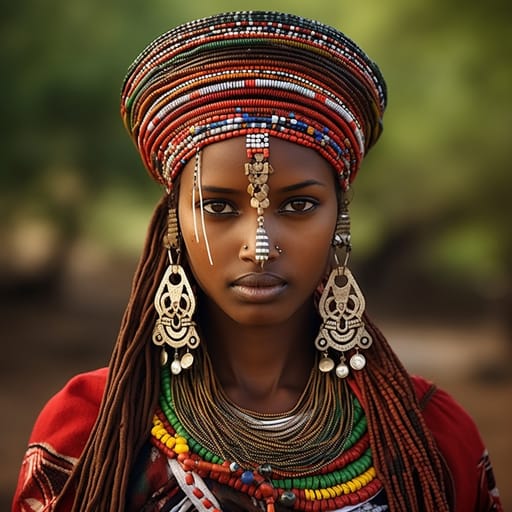
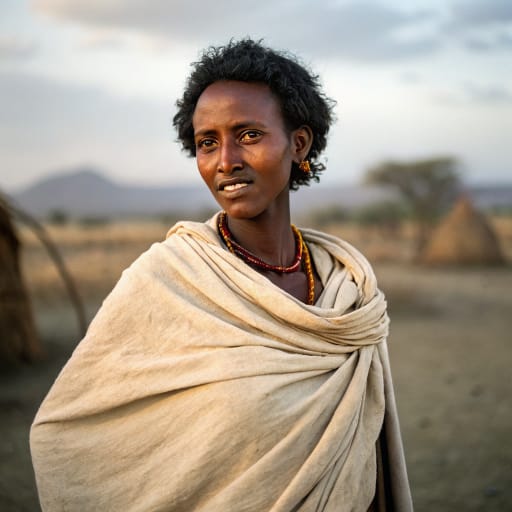
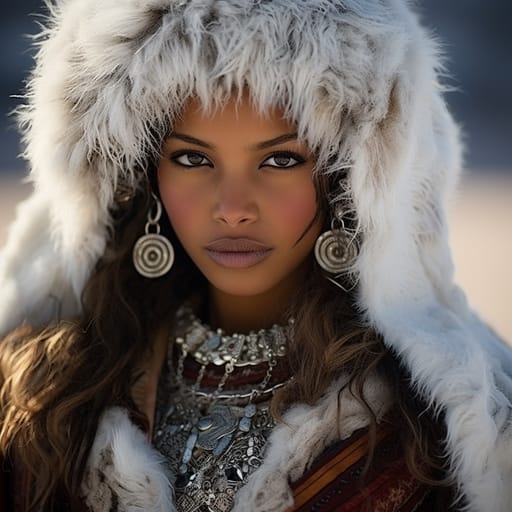
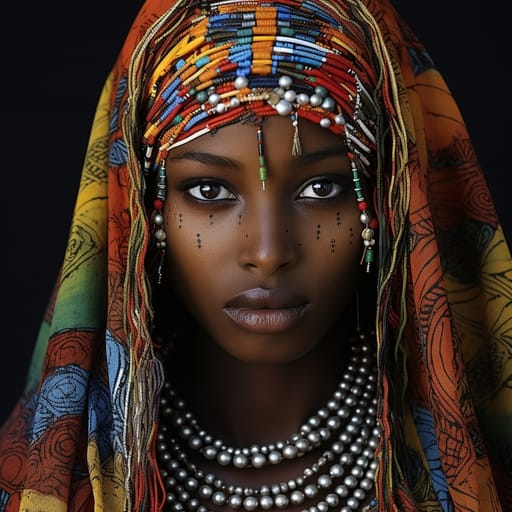
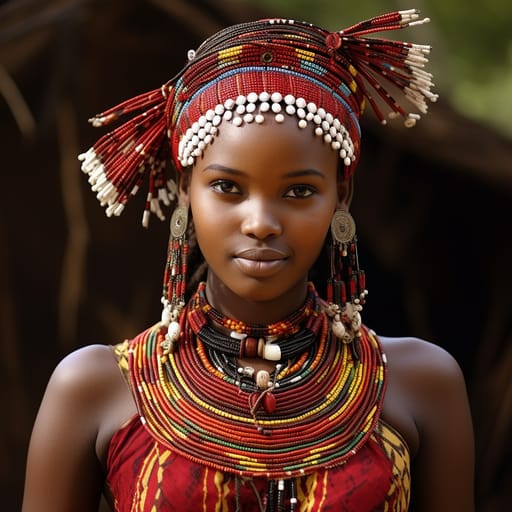
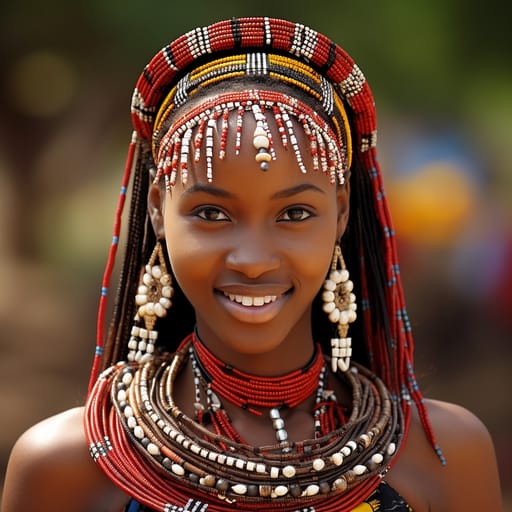
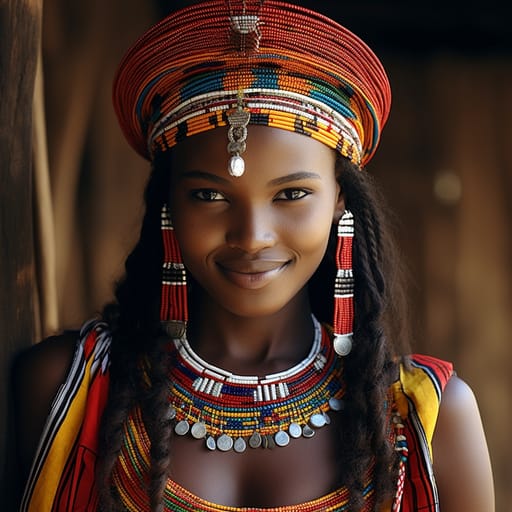
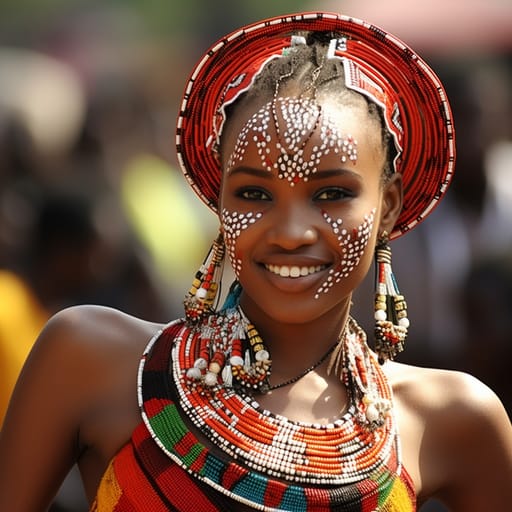
Geographic Distribution: Oromo populations across 1 country
Each row is ranked by the group's share of that country's population, with the source citation drawn from published census and demographic surveys. Click through for the full per-country phenotype profile.
| Country | Share | Source |
|---|---|---|
| Ethiopia | 34.5% | Ethiopia 2007 Census plus subsequent estimates; Oromo (~34.5%, ~46M+ of ~130M+ total). Cushitic source population. The largest ethnic group in Ethiopia. Concentrated in Oromia regional state |
Typical Oromo Phenotypes
Reference for AI generation: hair, eyes, skin, facial structure, build
The Oromo phenotype sits at the Cushitic crossroads of the Horn of Africa — a face built on long, narrow proportions rather than the broader features common further south or west. Skull morphology tends toward dolichocephaly, with a high forehead, a narrow nose carrying a straight or slightly aquiline bridge, and lips that are full but rarely everted. Cheekbones are prominent without being broad, and the jawline tapers cleanly. Compared to Nilotic neighbors, the overall structure reads as more chiseled and angular; compared to Amhara and Tigray, slightly broader through the cheek and a touch fuller in the lip.
Skin tone covers a wide band — Fitzpatrick IV through VI — with warm reddish-brown and copper undertones being characteristic and distinct from the cooler, deeper browns common in West African groups. Lowland Boran and Arsi pastoralists trend darker from sun exposure on the savanna; highland Macha and Wollo populations are often noticeably lighter, sometimes landing in a tawny olive-brown.
Hair is typically Type 3C to 4A — tight curls or coils, but looser and with more defined ringlet structure than the very tight Type 4B/4C textures of equatorial Africa. Color is near-universally dark brown to black. Eye color is overwhelmingly dark brown; the eye opening is almond-shaped, often with a slight upward outer canthal tilt, and there is no epicanthic fold. Lashes are dense.
Build is the group's most documented distinguishing trait: long-limbed, narrow-hipped, low body fat, with an exceptionally high ratio of leg-to-torso length and slender ankles and wrists. This is the body that produces the world's deepest concentration of elite distance runners — Kenenisa Bekele, Tirunesh Dibaba, Derartu Tulu, Abebe Bikila. Average male stature runs roughly 170–178 cm, with women typically 160–168 cm. Shoulders are narrow relative to height, musculature lean and stringy rather than bulky. Boran tend tallest; Arsi and Wollo run a bit shorter and stockier in the highlands.
Data depth
0/100Coverage of image-grounded phenotype observations · drives AI generation diversity
- Sample size
- 0/40· 0 images
- Image quality
- 0/30· 0% high
- Confidence
- 0/20
- Source diversity
- 0/10
- ·No image observations yet
Explore phenotype categories
Structured taxonomy with peer-reviewed scales · 22 anatomical categories
Notable Oromo People
31 reference figures, sourced from Wikipedia
- Bakri Sapalo, Historian and Artist
- Elias Melka, Songwriter and Producer
- Hachalu Hundessa, Singer-songwriter
- Lemma Guya, Painter
- Shantam Shubissa, Singer-songwriter
- Thomas Gobena, Musician
- Mohammed Hassen, Historian
- Yadesa Bojia, Graphic Designer and Artist
- Abebe Bikila, Athlete
- Almaz Ayana, Athlete
- Derartu Tulu, Athlete
- Fatuma Roba, Athlete
- Feyisa Lilesa, Athlete
- Kenenisa Bekele, Athlete
- Sifan Hassan, Athlete
- Tirunesh Dibaba, Athlete
- Worku Bikila, born 1968), long distance runner
- Tokmac Nguen, Oromo Mother)
- Abebech Gobena, humanitarian
- Agitu Ideo Gudeta, Farmer, entrepreneur, environmentalist
- Girma Wake, business executive
- Juneidi Basha, businessman
- HabteGiyorgis Dinagde Botera, Governor (disputed)
- Abiy Ahmed Ali, Prime Minister of Ethiopia
- Girma Wolde-Giorgis, President of Ethiopia
- Jawar Mohammed, Activist and member of OFC
- Lemma Megersa, Ethiopian Minister of Defense
- Mulatu Teshome, President of Ethiopia
- Negasso Gidada, President of Ethiopia
- Solomon Areda, Harvard Alumni, Judge of United Nations Dispute Tribunal and Deputy chief jus…
- Haile Selassie, oromo mother)
Erotic Poses & Sex Positions
From the pose catalog: 219 named positions with reference skeletons
Frequently asked questions about Oromo people
Where is the Oromo homeland?
The Oromo homeland is Oromia (Ethiopia), Kenya in Eastern Africa.
What countries do Oromo people live in?
Oromo populations are documented across 1 country: Ethiopia.
What language do Oromo people speak?
Oromo people primarily speak Afroasiatic / Cushitic / Oromo.
What religion do Oromo people practice?
The predominant religion among Oromo people is Islam / Sunni Islam.






Make your own Oromo images
Five a day, free, no credits to buy. The studio starts from this group's phenotype data, so you can set body type, pose and style and keep the traits accurate.
Start with Oromo