Help us get this right
Does this portrait look right for Oroko?
Nobody has judged this one yet. You would be the first.
Oroko Erotic
Ndian and Meme divisions of the Southwest Region, Cameroon, from the Rio del Rey creeks through the Rumpi Hills toward Kumba
Oroko (Niger-Congo, Bantu, Sawabantu group); Cameroonian Pidgin English and English widely used
Predominantly Christian (Presbyterian, Catholic, Baptist), with ancestral and traditional beliefs still present
Clans include Bakundu, Balondo, Balue, Mbonge, Ekombe, Ngolo and Batanga; part of the wider Sawa coastal peoples of Cameroon
About Oroko People
The Oroko are a group of related clans in the forest and creek country of Cameroon's Southwest Region, held together by one language and one shared name. Ask someone where they come from and the first answer may be Bakundu, Balondo, Balue, Mbonge, Ekombe, Ngolo or Batanga. Each clan has its own villages, its own chiefs and its own local pride. Oroko is the larger identity those clans claim together, especially when the subject is culture, politics or land. Their territory runs across Ndian and Meme divisions. It starts at the mangrove waterways of the Rio del Rey near the Nigerian border, climbs through the Rumpi Hills and reaches east toward the busy market town of Kumba. It is wet, heavily forested ground, and Korup National Park lies in the same division.
The Oroko language belongs to the Sawabantu branch of Bantu. That is the same coastal group that includes Duala and Mokpwe, the language of the Bakweri. The link ties the Oroko to the Sawa, the coastal peoples of Cameroon who count one another as kin. Oroko dialects largely follow clan lines. Neighbors to the north and west speak Ejagham and other languages that are much more distantly related. In daily life, Cameroonian Pidgin English is the language of the market and the motor park, and English runs the schools and offices, a result of the region's British colonial past. Most Oroko are Christian, mainly Presbyterian, Catholic and Baptist, and church life matters in villages and towns alike. Older ideas have not gone away, though. Respect for ancestors, for the authority of chiefs and elders, and for the spirits of forest and water still shows at funerals, in land disputes and at traditional ceremonies.
Modern Oroko history is a string of outsiders laying claim to their ground. Germany took the coast in the 1880s. After the First World War the area passed to Britain, which ran it from Nigeria as part of Southern Cameroons until the 1961 plebiscite joined it to Cameroon. Plantations came with colonial rule. Oil palm and rubber estates in Ndian and Meme drew workers from the Northwest grassfields and from Nigeria. That is why many Oroko towns are now thoroughly mixed, and why the question of who counts as native still stirs local politics. Since 2017 the Anglophone crisis has hit both divisions hard. Fighting between separatist groups and the army has pushed rural families out toward Kumba, Limbe and Douala, and it has put the everyday life of many Oroko villages in doubt.
Related ethnic groups
Groups that share Oroko's homeland, region, language, or religious tradition. These are likely candidates for comparative phenotype reference.
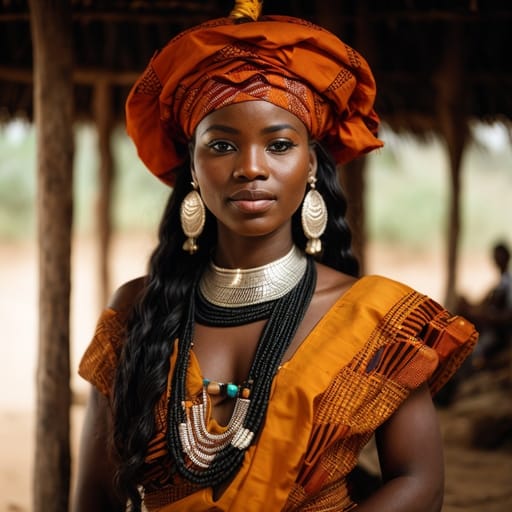
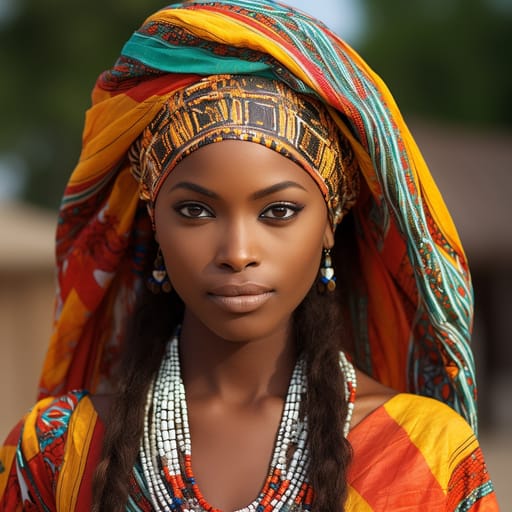
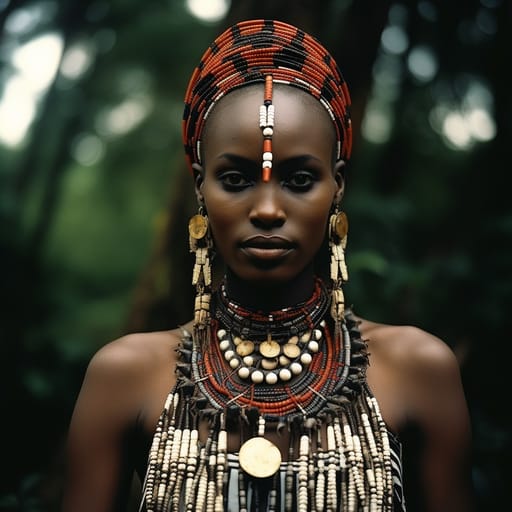
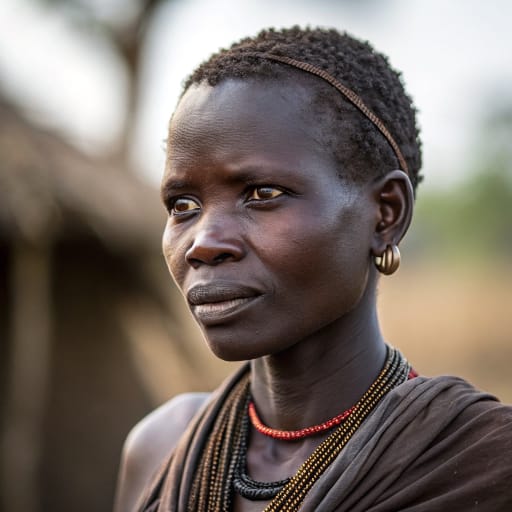
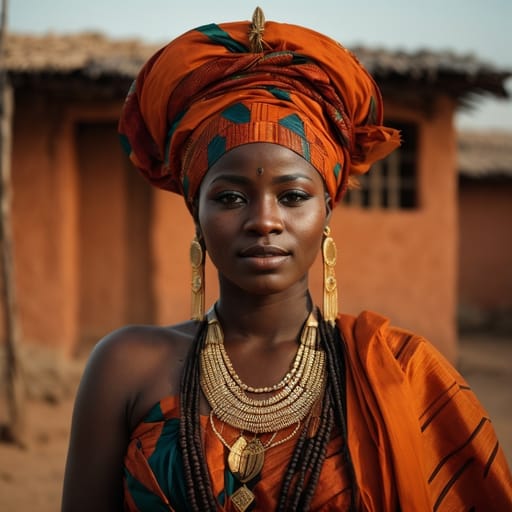
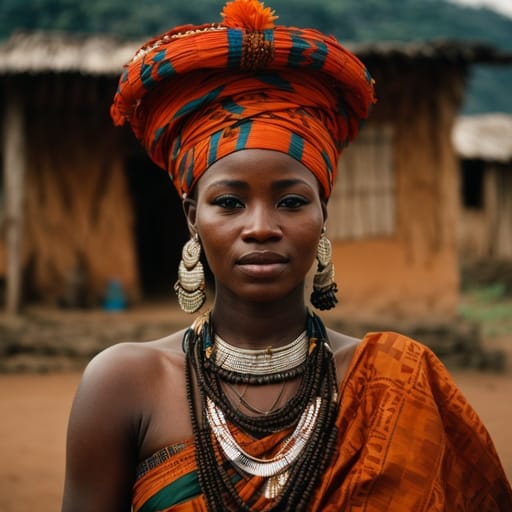
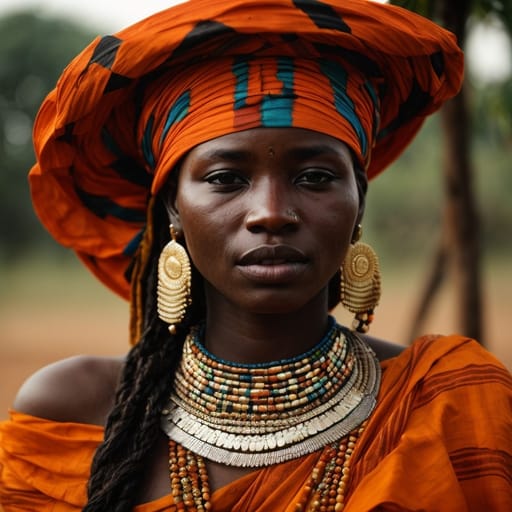
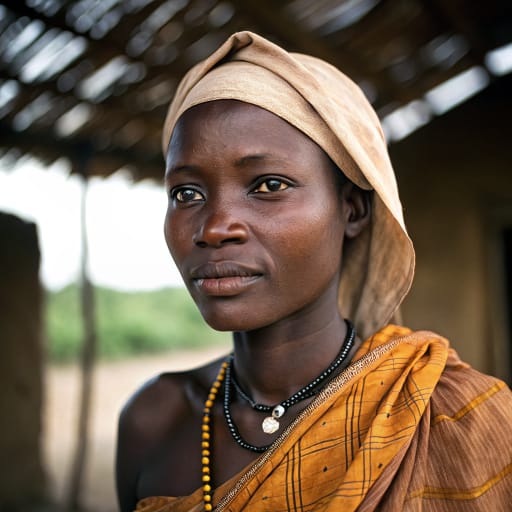
Typical Oroko Phenotypes
Reference for AI generation: hair, eyes, skin, facial structure, build
Oroko Body & Anatomy Reference
Anatomy by feature, Bantu / Central African Niger-Congo phenotype
Oroko Boobs & Breasts
Oroko tits and boobs run medium-to-large cup, full, projecting, the classic Bantu / Central African Niger-Congo bust profile. Oroko nipples and areolas show deep-brown areolar pigmentation against the deep-brown skin tone, with areolar diameter typically in the 32-48mm range and forward-set positioning rather than the smaller East African conical profile. Oroko breasts trend fuller projection than East African; comparable to West African norm, a function of the mesomorph with strong gluteal-femoral fat deposition body habitus and the mean adult female BMI 23-26. For anatomically accurate AI-generated Oroko nudes the render preserves the medium-to-large cup, full, projecting shape, 32-48mm areolas with deep-brown pigmentation, and the torso proportions of the Bantu / Central African Niger-Congo phenotype.
Oroko Ass & Hips
Oroko hips and butt usually read as full, projected, wide-set glutes. The skeletal base is broad iliac crests, gynoid pelvic pattern, the Bantu / Central African Niger-Congo pattern. Set against the slim narrow-hip Cushitic East African profile, the difference is easy to see, and the hip-to-waist ratio is often what identifies Oroko women in photos.
Oroko Vagina & Pussy
Expect deep-brown labial pigmentation, fuller labia minora on Oroko women, in keeping with Bantu / Central African Niger-Congo ancestry. The pubic hair is tightly-coiled coarse texture, dense distribution. Coloring should run evenly from the deep-brown skin of the thighs to the labia, and Oroko nude imagery should keep the hair's tightly-coiled coarse texture.
Oroko Dicks & Penis
Oroko dick and penile anatomy in adult AI generation should anchor on the regional reference data: regional mean ~14cm erect, above-average girth, and deep-brown shaft pigmentation. The Oroko cock profile reflects the Bantu / Central African Niger-Congo population's anthropometric measurements. The shaft pigmentation should track the surrounding deep-brown skin tone, and the pubic hair should keep its tightly-coiled coarse texture in the typical inverted-V escutcheon.
Oroko Body, Curves & Build
Oroko body type: mesomorph with strong gluteal-femoral fat deposition, with mean adult female BMI 23-26. This is the typical Bantu / Central African Niger-Congo build. Height range, shoulder-to-hip ratio and fat distribution all follow from it, which is what an accurate Oroko nude body should show.
Oroko Skin Tone & Hair Texture
Oroko skin tone falls in the deep-brown (Fitzpatrick VI) band, the surface signal most often miscalibrated by generic AI nude generators. Oroko hair texture is typically tight 4A-4C coil, characteristic of the Bantu / Central African Niger-Congo phenotype. In Oroko nude renders the skin should hold that band consistently across the body.
Explore phenotype categories
Structured taxonomy with peer-reviewed scales · 22 anatomical categories
Erotic Poses & Sex Positions
From the pose catalog: 219 named positions with reference skeletons
Frequently asked questions about Oroko people
Where is the Oroko homeland?
The Oroko homeland is Ndian and Meme divisions of the Southwest Region, Cameroon, from the Rio del Rey creeks through the Rumpi Hills toward Kumba in Central Africa.
What language do Oroko people speak?
Oroko people primarily speak Oroko (Niger-Congo, Bantu, Sawabantu group); Cameroonian Pidgin English and English widely used.
What religion do Oroko people practice?
The predominant religion among Oroko people is Predominantly Christian (Presbyterian, Catholic, Baptist), with ancestral and traditional beliefs still present.






Make your own Oroko images
Five a day, free, no credits to buy. The studio starts from this group's phenotype data, so you can set body type, pose and style and keep the traits accurate.
Start with Oroko