No portrait yet
Odawa Erotic
Northern Lower Peninsula of Michigan, United States, and Manitoulin Island and the Georgian Bay shore of Ontario, Canada, with a removed branch in northeastern Oklahoma
Ottawa (Odawa) dialect of Ojibwe, also called Nishnaabemwin (Algonquian), and English
Roman Catholic and other Christian denominations, alongside traditional Anishinaabe spirituality including the Midewiwin
Anishinaabe, one of the Council of Three Fires with the Ojibwe and Potawatomi. Bands include the Little Traverse Bay Bands, Grand Traverse Band and Little River Band in Michigan, Wiikwemkoong on Manitoulin Island, and the Ottawa Tribe of Oklahoma.
About Odawa People
The Odawa are the traders of the upper Great Lakes. Their name comes from an Anishinaabe word for trading, and for centuries that was their role: the people who moved corn, furs, copper, tobacco and medicines between the nations of Lake Huron and Lake Michigan, and later between those nations and the French at Montreal. The Ottawa River and Canada's capital carry their name because the river was their trade route east, not because they lived there. They are one of the three Anishinaabe peoples of the Council of Three Fires, alongside the Ojibwe and Potawatomi, with whom they share language, clan system and much of their oral history. Their heartland is Manitoulin Island and the north shore of Georgian Bay in Ontario, and across the water the Straits of Mackinac and the northern Lower Peninsula of Michigan, especially the coast around Little Traverse Bay that they call Waganakising, the land of the crooked tree. A smaller branch, pushed out of Ohio in the 1830s, now lives in northeastern Oklahoma.
The language is the Ottawa dialect of Ojibwe, an Algonquian tongue. It is set apart from other Ojibwe speech by heavy vowel syncope: unstressed short vowels drop out, which compresses words and makes Odawa sound clipped even to Ojibwe listeners from farther west. It is still spoken at Wiikwemkoong on Manitoulin, and the Michigan bands run immersion programs to bring it back. Catholicism runs deep, particularly in Michigan, where a Jesuit mission took root at L'Arbre Croche near present-day Cross Village in the 1740s. Today many Odawa families move between Mass, the Midewiwin lodge and the pow wow circle without seeing a contradiction. The best known Odawa in the history books is Pontiac, who in 1763 organized the multi-nation uprising against British posts after the French defeat. Less known is that Wiikwemkoong is one of the very few unceded reserves in Canada, its people having refused the 1862 Manitoulin treaty, or that Michigan's Odawa spent most of the twentieth century fighting for federal recognition, which came for the Grand Traverse Band in 1980 and for the Little Traverse Bay Bands and Little River Band only in 1994. Andrew Blackbird, an Odawa from Harbor Springs, published his own history of the people in 1887, one of the earliest books about a Great Lakes nation written by a member of it. Black ash basketry, porcupine quillwork on birch bark and commercial whitefish fishing remain living trades, not revivals.
Related ethnic groups
Groups that share Odawa's homeland, region, language, or religious tradition. These are likely candidates for comparative phenotype reference.
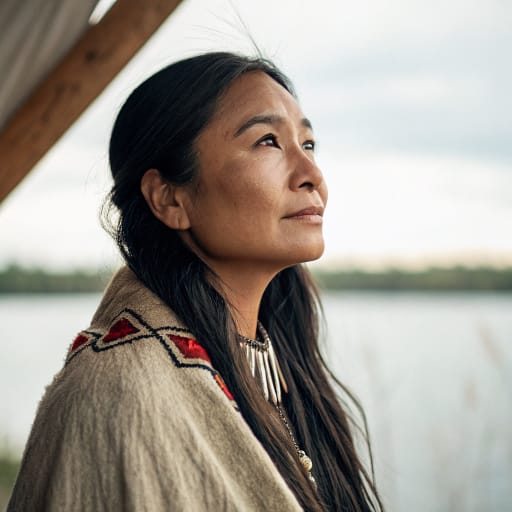
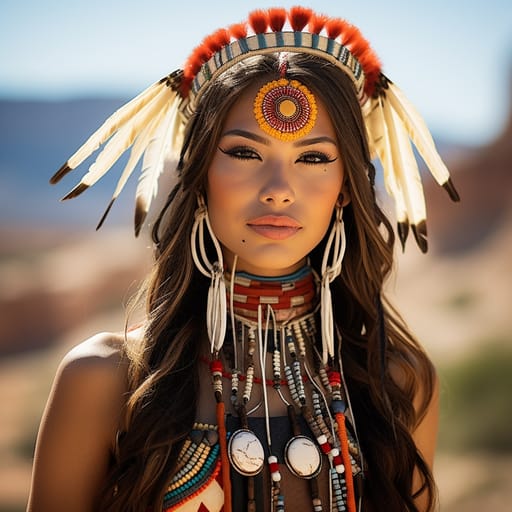
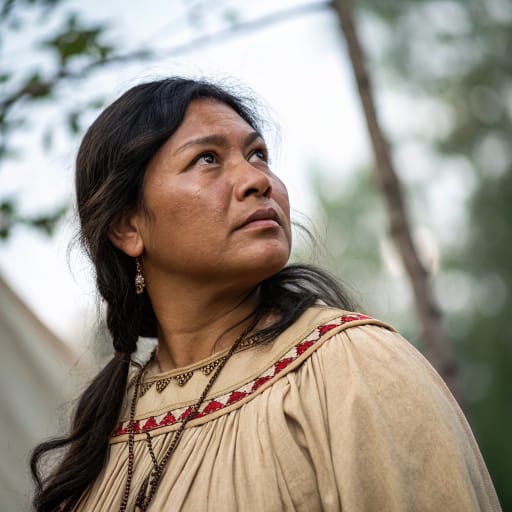
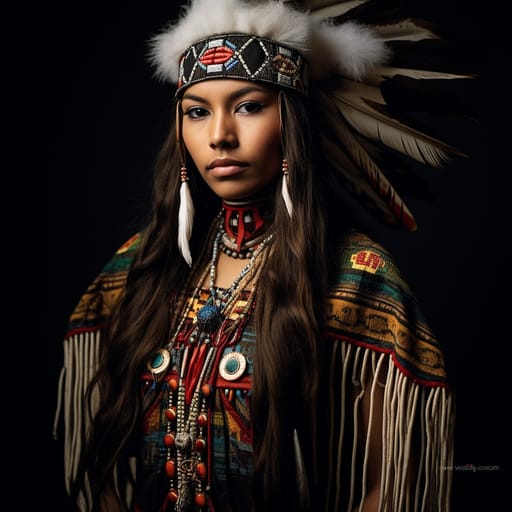
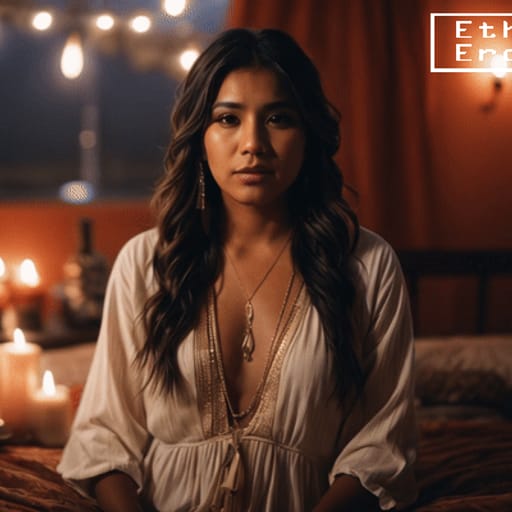
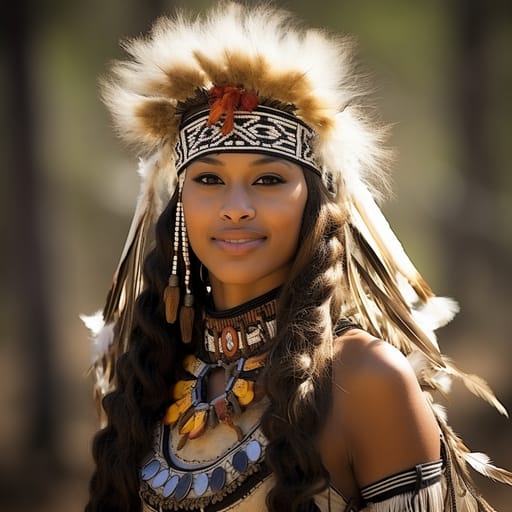
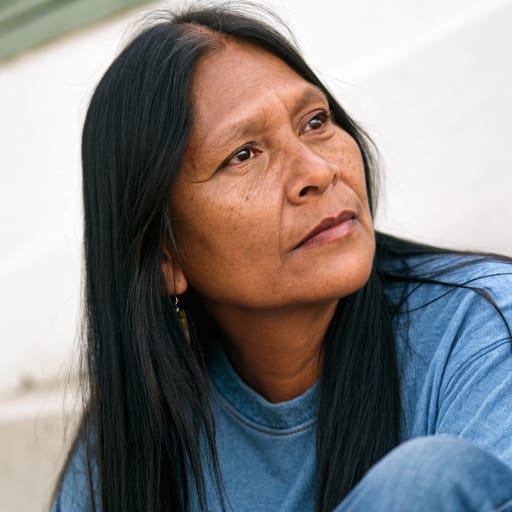
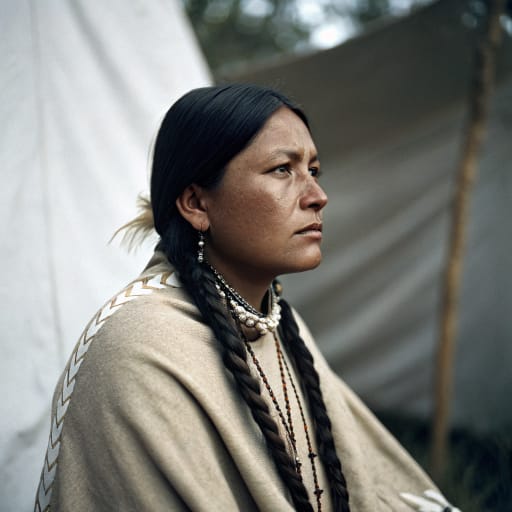
Typical Odawa Phenotypes
Reference for AI generation: hair, eyes, skin, facial structure, build
Odawa Body & Anatomy Reference
Indigenous Northern American / Algonquian-Iroquoian phenotype: anatomy reference for AI nude generation
Odawa Boobs & Breasts
Odawa boobs follow the Indigenous Northern American / Algonquian-Iroquoian profile: medium cup, moderate projection. Areolar diameter is usually 30-44mm, and the coloring is medium-brown areolar pigmentation against the copper-to-medium-brown skin tone. Breast shape tracks body composition (mesomorph, broader frame in northern Indigenous populations, mean adult female BMI 25-28), so Odawa breasts tend to be full and moderate projection. Expect a forward-set shape, not the smaller East Asian bust.
Odawa Ass & Hips
Odawa ass and hip morphology presents as medium, moderate-to-full projection, distinctly different from the slim East Asian narrow-hip profile. The Odawa pelvic profile shows medium iliac crests, anchored in the Indigenous Northern American / Algonquian-Iroquoian skeletal pattern. Odawa butt shots in adult AI imagery should render the medium, moderate-to-full projection silhouette with the overall build (mesomorph, broader frame in northern Indigenous populations) and the fat distribution typical of the Indigenous Northern American / Algonquian-Iroquoian phenotype.
Odawa Vagina & Pussy
Odawa pussy anatomy typically shows medium-brown labial pigmentation. Pubic hair is usually straight medium-coarse texture. In AI-generated Odawa nudes, labial color should blend into the copper to medium-brown skin with a gradual transition, and the hair should keep its straight medium-coarse texture.
Odawa Dicks & Penis
Penis reference for Odawa men: regional mean ~13cm erect, moderate girth. Coloring: medium-brown shaft pigmentation. An accurate Odawa cock in AI imagery matches the surrounding copper to medium-brown skin rather than a generic porn default. Circumcision depends on religion and custom, not ancestry.
Odawa Body, Curves & Build
The Odawa figure is generally mesomorph, broader frame in northern Indigenous populations, with mean adult female BMI 25-28, characteristic of Indigenous Northern American / Algonquian-Iroquoian ancestry. AI image tools tend to flatten regional body types into a few stock shapes; here the Odawa build is kept as its own reference.
Odawa Skin Tone & Hair Texture
Skin: copper to medium-brown (Fitzpatrick III-V). Hair: straight 1A, dark-brown to black, often thick and dense. Both are typical of Indigenous Northern American / Algonquian-Iroquoian ancestry. The most common mistake in AI nudes of Odawa women is a body rendered lighter than the face.
Explore phenotype categories
Structured taxonomy with peer-reviewed scales · 22 anatomical categories
Erotic Poses & Sex Positions
From the pose catalog: 219 named positions with reference skeletons
Frequently asked questions about Odawa people
Where is the Odawa homeland?
The Odawa homeland is Northern Lower Peninsula of Michigan, United States, and Manitoulin Island and the Georgian Bay shore of Ontario, Canada, with a removed branch in northeastern Oklahoma in North America.
What language do Odawa people speak?
Odawa people primarily speak Ottawa (Odawa) dialect of Ojibwe, also called Nishnaabemwin (Algonquian), and English.
What religion do Odawa people practice?
The predominant religion among Odawa people is Roman Catholic and other Christian denominations, alongside traditional Anishinaabe spirituality including the Midewiwin.






Make your own Odawa images
Five a day, free, no credits to buy. The studio starts from this group's phenotype data, so you can set body type, pose and style and keep the traits accurate.
Start with Odawa