No portrait yet
O Du Erotic
Mountains of western Nghệ An province, Vietnam, mainly around Tương Dương on the upper Cả River near the Laos border
O Du, also Iduh (Austroasiatic, Khmuic), nearly extinct; most now speak Thai (Kra-Dai), Khmu (Austroasiatic) or Vietnamese (Austroasiatic)
Ancestor veneration and spirit beliefs, strongly influenced by neighboring Thai practice
No recognized subgroups; a Khmuic-speaking people grouped with Vietnam's Mon-Khmer minorities and closely tied to local Thai and Khmu communities
About O Du People
The O Du are among the smallest peoples officially recognized in Vietnam, a community counted in the hundreds, not the thousands. An outsider would not pick them out at a glance. They share their stilt houses, the women's skirts and the everyday speech of the village with the Thai and Khmu communities around them. What sets them apart is descent, a few rites of their own and a language that now lives mostly with the elderly.
Their home is the mountains of western Nghệ An province, in the Tương Dương area along the upper Cả River near the Laos border. The O Du language, also written Iduh, belongs to the Khmuic branch of the Austroasiatic family. That makes it a distant cousin of Vietnamese and a closer relative of the Khmu spoken in nearby villages. Long intermarriage and life as a tiny minority in Thai-dominated valleys have pushed it aside. Most O Du today grow up speaking Thai, Khmu or Vietnamese, and only a few older people are still fluent. Official ethnic lists also record them under the name Tày Hạt.
Religious life follows the upland pattern of the region: ancestors honored at the household altar alongside the spirits of place, with a heavy overlay of Thai practice. The custom most often named as distinctly O Du is how they count the new year. They don't fix it to a calendar date. Traditionally they wait for the first thunder of spring, and when it rolls through the valley, households hold a ceremony with offerings to mark the turn of the year. For people who lived by farming and the river, starting the year when the rains announce themselves was as practical as it was sacred.
Their modern story is one of survival by narrow margins. Their recorded numbers were once low enough that observers wondered whether the O Du would simply fold into their neighbors. Census counts have risen since then, and the group now falls under state programs for Vietnam's smallest minorities, with support aimed at housing, schooling and livelihoods. In a community this small, whether the O Du go on as a people rests with each family that keeps the name and the thunder rite.
Related ethnic groups
Groups that share O Du's homeland, region, language, or religious tradition. These are likely candidates for comparative phenotype reference.
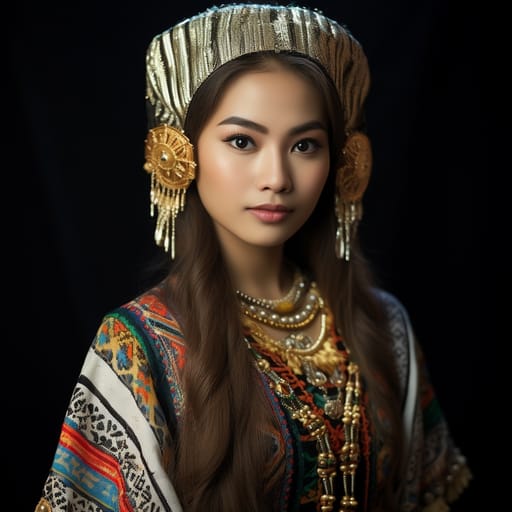
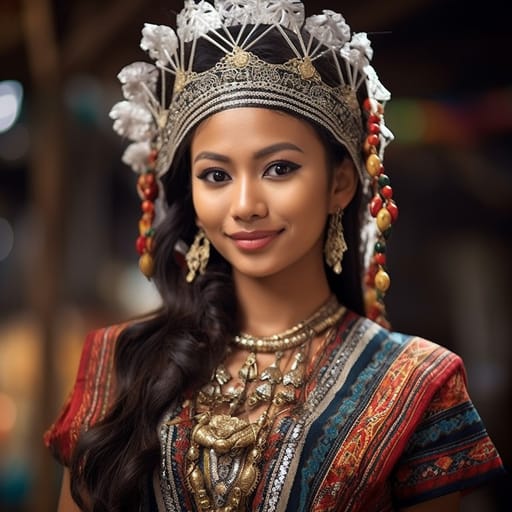
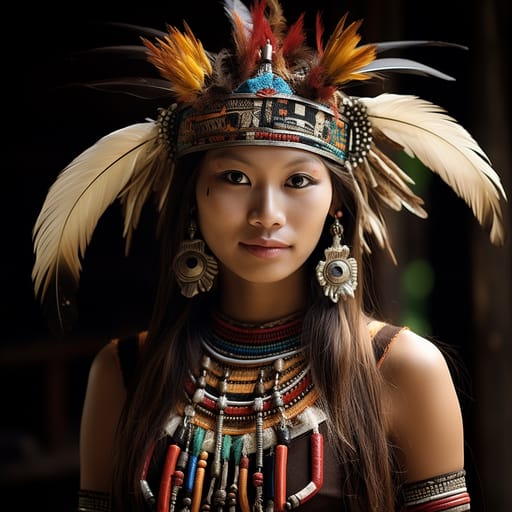
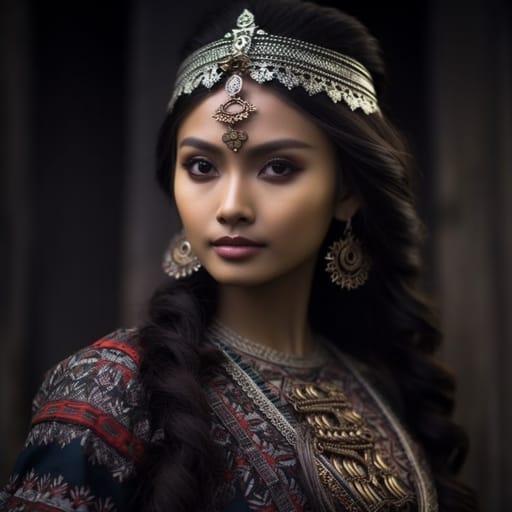
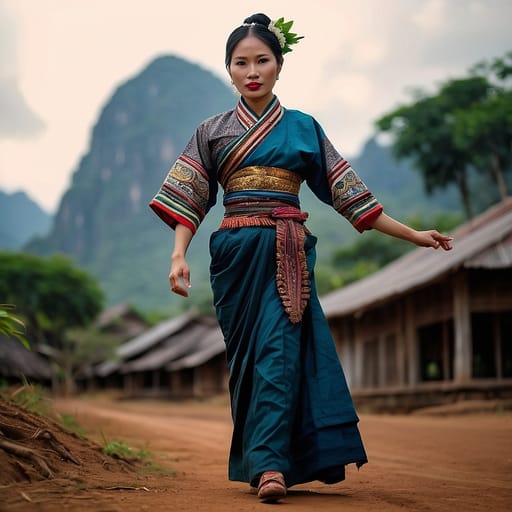
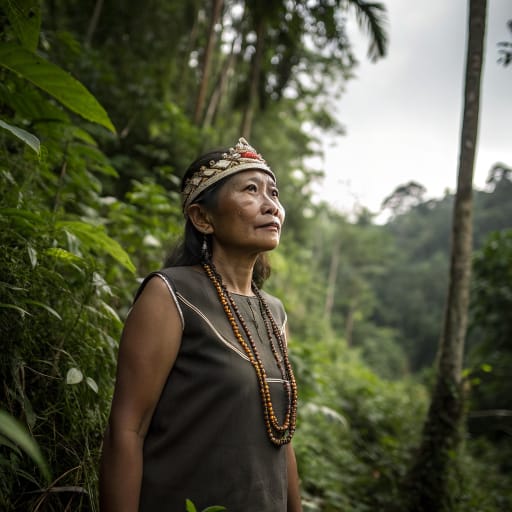
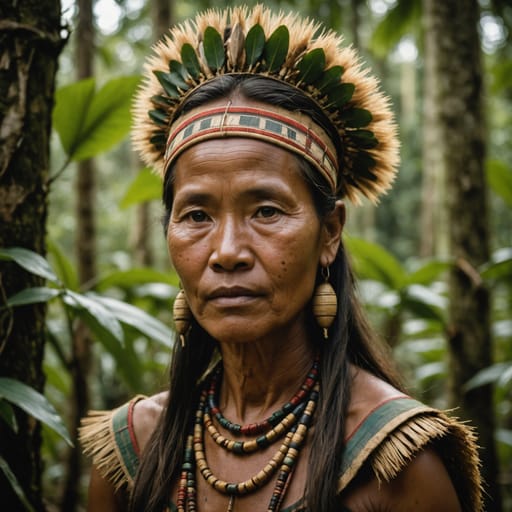
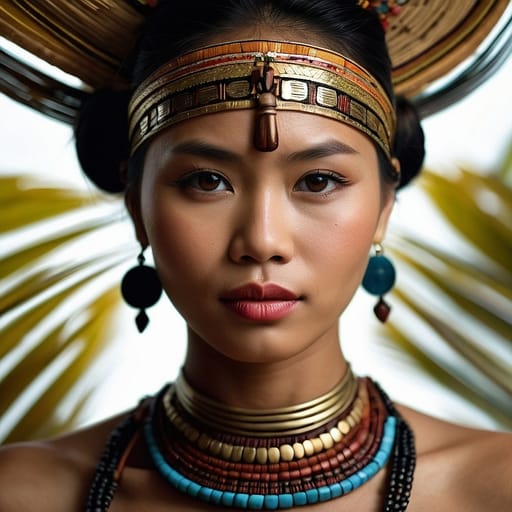
Typical O Du Phenotypes
Reference for AI generation: hair, eyes, skin, facial structure, build
O Du Body & Anatomy Reference
Per-feature anatomical profile for AI nude generation: Southeast Asian Austronesian / Austroasiatic phenotype
O Du Boobs & Breasts
O Du boobs follow the Southeast Asian Austronesian / Austroasiatic profile: small-to-medium cup, modest projection. Areolar diameter is usually 26-38mm, and the coloring is medium-brown to dark-brown areolar pigmentation against the tan-to-medium-brown skin tone. Breast shape tracks body composition (ectomorph, petite frame, mean adult female BMI 20-23), so O Du breasts tend to be firm, modest projection. Expect a forward-set shape, not the fuller South Asian or Polynesian bust.
O Du Ass & Hips
O Du ass and hip morphology presents as small-to-medium, modest projection, narrower hip profile, distinctly different from the fuller glutes of the Pacific Islander phenotype. The O Du pelvic profile shows narrow-to-medium iliac crests, anchored in the Southeast Asian Austronesian / Austroasiatic skeletal pattern. O Du butt shots in adult AI imagery should render the small-to-medium, modest projection, narrower hip profile silhouette with the overall build (ectomorph, petite frame) and the fat distribution typical of the Southeast Asian Austronesian / Austroasiatic phenotype.
O Du Vagina & Pussy
O Du pussy anatomy typically shows medium-brown to dark-brown labial pigmentation. Pubic hair is usually straight-to-wavy fine-to-medium texture. In AI-generated O Du nudes, labial color should blend into the tan to medium-brown skin with a gradual transition, and the hair should keep its straight-to-wavy fine-to-medium texture.
O Du Dicks & Penis
Penis reference for O Du men: regional mean ~11cm erect, moderate girth. Coloring: medium-brown shaft pigmentation. An accurate O Du cock in AI imagery matches the surrounding tan to medium-brown skin rather than a generic porn default. Circumcision depends on religion and custom, not ancestry.
O Du Body, Curves & Build
The O Du figure is generally ectomorph, petite frame, with mean adult female BMI 20-23, characteristic of Southeast Asian Austronesian / Austroasiatic ancestry. AI image tools tend to flatten regional body types into a few stock shapes; here the O Du build is kept as its own reference.
O Du Skin Tone & Hair Texture
Skin: tan to medium-brown (Fitzpatrick III-V). Hair: straight-to-wavy 1A-2A, dark-brown to black. Both are typical of Southeast Asian Austronesian / Austroasiatic ancestry. The most common mistake in AI nudes of O Du women is a body rendered lighter than the face.
Explore phenotype categories
Structured taxonomy with peer-reviewed scales · 22 anatomical categories
Erotic Poses & Sex Positions
From the pose catalog: 219 named positions with reference skeletons
Frequently asked questions about O Du people
Where is the O Du homeland?
The O Du homeland is Mountains of western Nghệ An province, Vietnam, mainly around Tương Dương on the upper Cả River near the Laos border in Southeast Asia.
What language do O Du people speak?
O Du people primarily speak O Du, also Iduh (Austroasiatic, Khmuic), nearly extinct; most now speak Thai (Kra-Dai), Khmu (Austroasiatic) or Vietnamese (Austroasiatic).
What religion do O Du people practice?
The predominant religion among O Du people is Ancestor veneration and spirit beliefs, strongly influenced by neighboring Thai practice.






Make your own O Du images
Five a day, free, no credits to buy. The studio starts from this group's phenotype data, so you can set body type, pose and style and keep the traits accurate.
Start with O Du