No portrait yet
Nuna Erotic
South central Burkina Faso, chiefly Sissili, Ziro and Sanguié provinces, around towns such as Léo
Nuni, in northern and southern varieties (Niger-Congo, Gur, Grusi branch)
Traditional religion centered on ancestors, the earth and bush spirits, alongside Roman Catholicism and Islam
Northern and Southern Nuni speakers; part of the Gurunsi (Grusi) cluster with the Lela, Kasena and Winiama
About Nuna People
Come to a Nuna village on the day of an important funeral and you will see quickly what sets this people apart. Carved wooden masks come out into the compounds in the shapes of hawks, buffalo, crocodiles, antelope and butterflies. They are painted in hard red, white and black geometry, and they dance for the dead. These are not props. Each mask belongs to a family or clan and holds a spirit tied to that lineage, often through a story about an ancestor who met it in the bush. Owning one brings duties as well as standing. The Bwa to the west carve in a closely related style, and some Bwa communities say they took up wooden masks from the Nuna in the first place.
The Nuna farm the savanna of south central Burkina Faso. They grow millet, sorghum and maize among stands of shea trees, and the market town of Léo, close to the Ghana border, anchors the south of their country. They speak Nuni, a Gur language of the Grusi branch that is closest to Lyélé, the language of their Lela neighbors. Nuni's northern and southern forms differ enough that linguists often count them as two languages. People in Burkina Faso commonly group the Nuna with the Lela, Kasena and Winiama under the name Gurunsi, a label that came from the Mossi and that not everyone embraces. The difference matters locally. The Mossi built kingdoms; the Nuna never did. Authority rested with lineage elders and with earth priests from founding families, who answer for the land, its fertility and the rules around it.
With no central state, the region was exposed in the late nineteenth century. Zarma warlords raided Gurunsi country for captives, and French columns followed in the 1890s. Colonial rule brought Catholic missions, and many Nuna today are Catholic, with Muslim communities as well. The older religion has not packed up and left. Ancestor shrines, earth rites and the mask spirits still shape funerals, harvests and initiations, often in the same households that fill the pews on Sunday.
Related ethnic groups
Groups that share Nuna's homeland, region, language, or religious tradition. These are likely candidates for comparative phenotype reference.
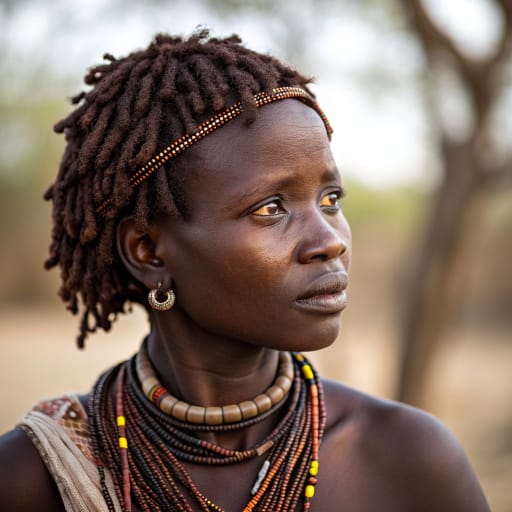
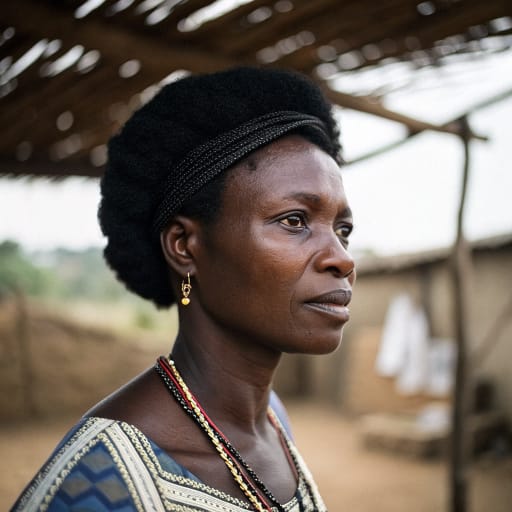
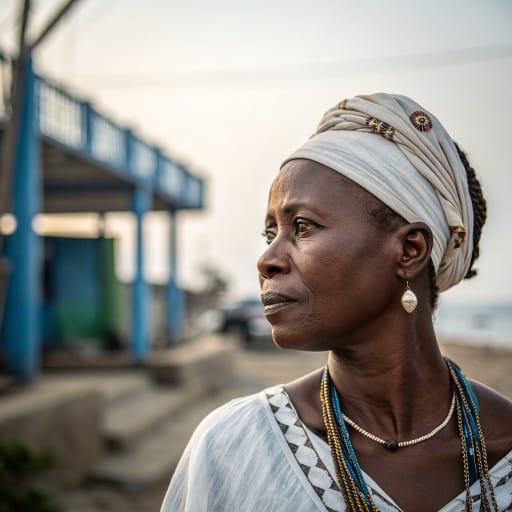
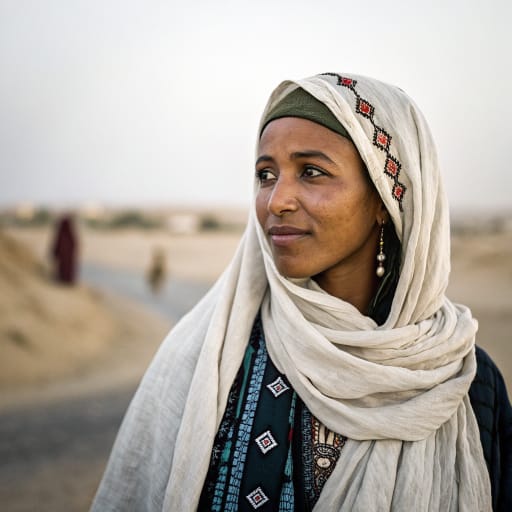
Typical Nuna Phenotypes
Reference for AI generation: hair, eyes, skin, facial structure, build
Nuna Body & Anatomy Reference
Anatomy by feature, West African Niger-Congo phenotype
Nuna Boobs & Breasts
Nuna boobs follow the West African Niger-Congo profile: medium-to-large cup, full, projecting. Areolar diameter is usually 35-50mm, and the coloring is deep-brown to near-black areolar pigmentation against the medium-to-deep-brown skin tone. Breast shape tracks body composition (mesomorph with strong gluteal-femoral fat distribution, mean adult female BMI 24-27), so Nuna breasts tend to be fuller and more projecting than the East African norm. Expect a forward-set shape, not the smaller conical Cushitic East African profile.
Nuna Ass & Hips
Nuna ass and hip morphology presents as wide-set, full, heavily projected glutes, distinctly different from the slim narrow-hip Cushitic East African profile. The Nuna pelvic profile shows wide iliac crests, broad gynoid pelvic pattern, high glute-to-waist ratio, anchored in the West African Niger-Congo skeletal pattern. Nuna butt shots in adult AI imagery should render the wide-set, full, heavily projected glutes silhouette with the overall build (mesomorph with strong gluteal-femoral fat distribution) and the fat distribution typical of the West African Niger-Congo phenotype.
Nuna Vagina & Pussy
Nuna pussy anatomy typically shows deep-brown to near-black labial pigmentation, fuller labia minora. Pubic hair is usually tightly-coiled coarse texture, densely distributed. In AI-generated Nuna nudes, labial color should blend into the medium-brown to deep-brown skin with a gradual transition, and the hair should keep its tightly-coiled coarse texture.
Nuna Dicks & Penis
Penis reference for Nuna men: regional mean ~14-15cm erect, above-average girth, ~13cm circumference. Coloring: deep-brown-to-near-black shaft pigmentation. An accurate Nuna cock in AI imagery matches the surrounding medium-brown to deep-brown skin rather than a generic porn default. Circumcision depends on religion and custom, not ancestry.
Nuna Body, Curves & Build
The Nuna figure is generally mesomorph with strong gluteal-femoral fat distribution, with mean adult female BMI 24-27, characteristic of West African Niger-Congo ancestry. AI image tools tend to flatten regional body types into a few stock shapes; here the Nuna build is kept as its own reference.
Nuna Skin Tone & Hair Texture
Skin: medium-brown to deep-brown (Fitzpatrick V-VI). Hair: tight 4A-4C coil, often worn natural, braided, or relaxed. Both are typical of West African Niger-Congo ancestry. The most common mistake in AI nudes of Nuna women is a body rendered lighter than the face.
Explore phenotype categories
Structured taxonomy with peer-reviewed scales · 22 anatomical categories
Erotic Poses & Sex Positions
From the pose catalog: 219 named positions with reference skeletons
Frequently asked questions about Nuna people
Where is the Nuna homeland?
The Nuna homeland is South central Burkina Faso, chiefly Sissili, Ziro and Sanguié provinces, around towns such as Léo in Western Africa.
What language do Nuna people speak?
Nuna people primarily speak Nuni, in northern and southern varieties (Niger-Congo, Gur, Grusi branch).
What religion do Nuna people practice?
The predominant religion among Nuna people is Traditional religion centered on ancestors, the earth and bush spirits, alongside Roman Catholicism and Islam.






Make your own Nuna images
Five a day, free, no credits to buy. The studio starts from this group's phenotype data, so you can set body type, pose and style and keep the traits accurate.
Start with Nuna