No portrait yet
Ntomba Erotic
Shores and swamp forests of Lake Tumba (Bikoro area, Équateur province) and Lake Mai-Ndombe (around Inongo, Mai-Ndombe province), western Democratic Republic of the Congo.
Lontomba, also called Ntomba (Bantu, Niger-Congo; Guthrie zone C, close to Bolia and Lomongo); Lingala as lingua franca, French in school and administration.
Predominantly Christian (Catholic and Protestant), with continuing regard for ancestors and nature spirits.
Part of the Mongo cluster. Two main branches: Ntomba of Lake Tumba and Ntomba of Lake Mai-Ndombe. Closely related to the Bolia, Ekonda and Sengele.
About Ntomba People
The Ntomba are lake people. They belong to the wide Mongo family of the central Congo basin, but what sets them apart is where they settled: the shores and flooded forests of two shallow blackwater lakes in the western Democratic Republic of the Congo. One branch lives around Lake Tumba in Équateur province, the other around Lake Mai-Ndombe to the south, where the town of Inongo is their main center. Swamp forest and other peoples separate the two, yet both call themselves Ntomba and speak varieties of Lontomba, a Bantu language close to Bolia and to the Lomongo of their eastern relatives. Most people also use Lingala, the trade language of the river, and French arrives through school and administration.
Life follows the water. When the lakes drop in the dry season, families leave their villages for fishing camps, where women dam and bail out shallow pools while men work nets and traps, and much of the catch is smoked for sale in river towns as far as Kinshasa. The rest of the year turns on cassava fields cut from the forest, palm oil, and hunting. The Ntomba have long lived alongside Twa communities, forest specialists tied to Ntomba villages through an unequal patron and client arrangement that is increasingly contested. Authority traditionally rested with lineage elders and with the nkumu, a titled chief whose office carries ritual weight, an institution shared with Bolia and Ekonda neighbors.
One custom is better documented than most. Around Lake Tumba, a woman who has her first child returns to her parents' household as a walé. She is excused from heavy work, fed well, rubbed with red camwood powder, and kept apart from her husband, sometimes for two years or more, until a public ceremony of song and dance marks her return to married life. Nutrition researchers who studied the practice found secluded mothers noticeably better nourished than other village women.
The colonial era hit this region hard. Lake Mai-Ndombe carried the name of Leopold II until 1972 and sat inside his private Crown Domain, where the rubber regime emptied villages. At Lake Tumba, Roger Casement recorded the same depopulation during his 1903 investigation, drawing on missionaries stationed on the shore. Catholic and Protestant missions left the Ntomba overwhelmingly Christian, though ancestors and nature spirits still figure in how people explain illness and luck. Today their homeland lies within one of the largest wetlands on the Ramsar list and above the Congo basin peatlands, which has brought conservation and carbon projects into communities that still depend on fish, forest, and cassava.
Related ethnic groups
Groups that share Ntomba's homeland, region, language, or religious tradition. These are likely candidates for comparative phenotype reference.
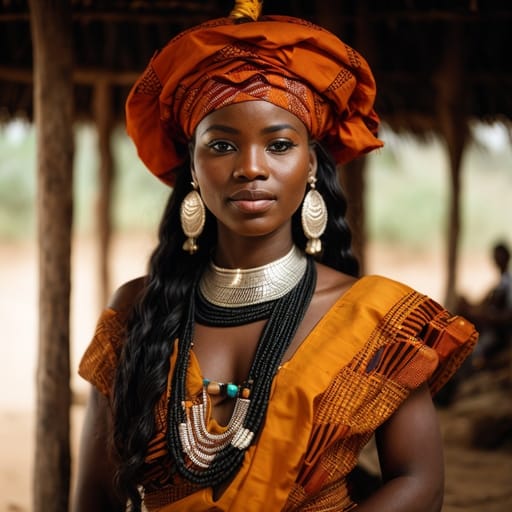
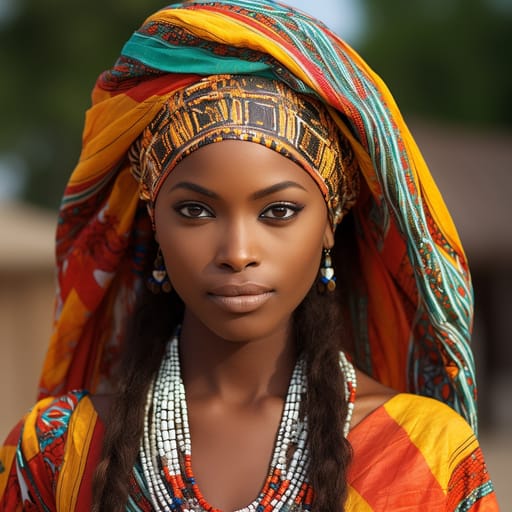
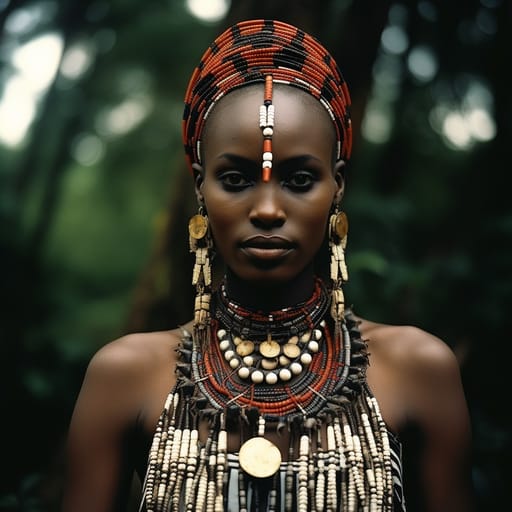
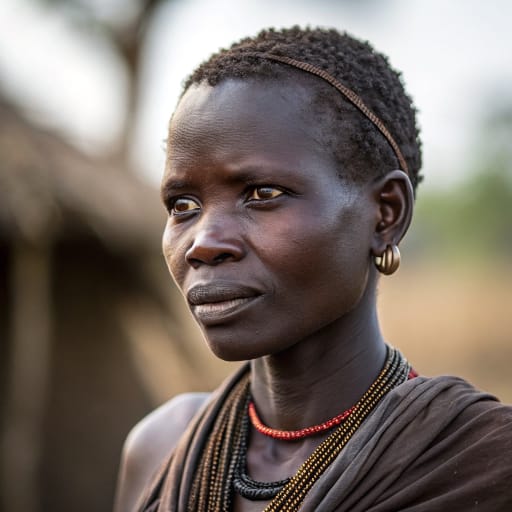
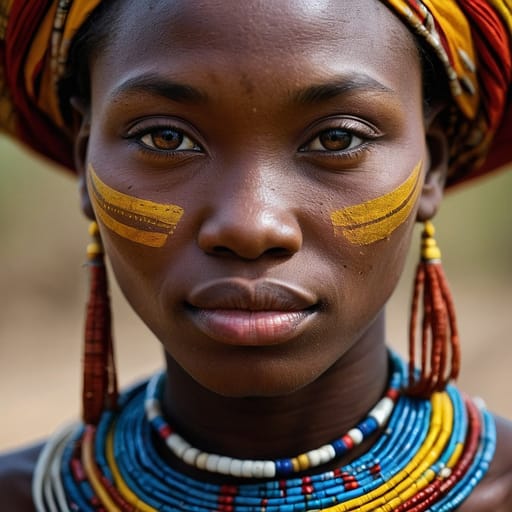
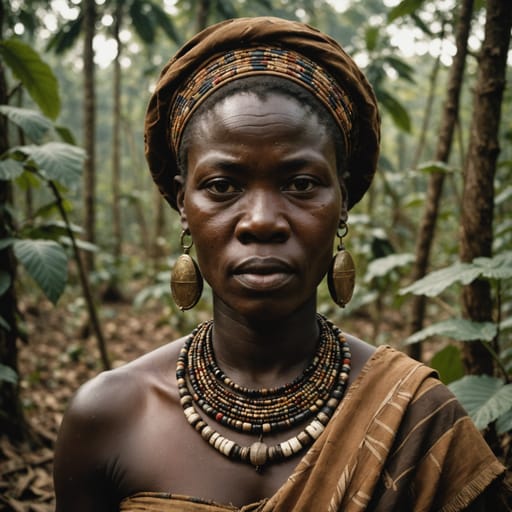
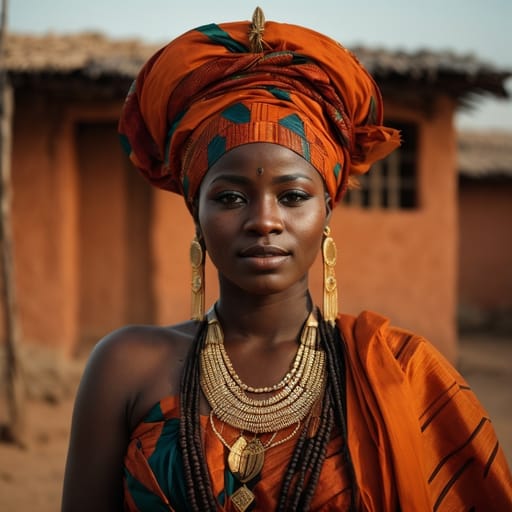
Typical Ntomba Phenotypes
Reference for AI generation: hair, eyes, skin, facial structure, build
Ntomba Body & Anatomy Reference
Per-feature anatomical profile for AI nude generation: Bantu / Central African Niger-Congo phenotype
Ntomba Boobs & Breasts
The typical Ntomba bust is medium-to-large cup, full, projecting, in line with the wider Bantu / Central African Niger-Congo pattern. Areolas usually fall in the 32-48mm range, with deep-brown areolar pigmentation against the deep-brown skin tone. Compared with the smaller East African conical profile, Ntomba breasts sit forward and are generally fuller projection than East African; comparable to West African norm. A faithful AI render of Ntomba tits keeps that shape and areola size.
Ntomba Ass & Hips
Butt shape among Ntomba women: full, projected, wide-set glutes, over broad iliac crests, gynoid pelvic pattern. This follows Bantu / Central African Niger-Congo ancestry and looks quite unlike the slim narrow-hip Cushitic East African profile. An accurate Ntomba ass in adult AI imagery keeps both the silhouette and the overall build (mesomorph with strong gluteal-femoral fat deposition) instead of a generic average.
Ntomba Vagina & Pussy
Vulvar anatomy among Ntomba women: deep-brown labial pigmentation, fuller labia minora. Pubic hair tends to be tightly-coiled coarse texture, dense distribution, in the usual inverted-triangle pattern. Both follow Bantu / Central African Niger-Congo pigmentation, which is why Ntomba pussy renders should not fall back on a pale, sparse Western template.
Ntomba Dicks & Penis
The Ntomba cock profile, from Bantu / Central African Niger-Congo anthropometric data: regional mean ~14cm erect; above-average girth; deep-brown shaft pigmentation. Pubic hair has a tightly-coiled coarse texture and forms the usual inverted-V pattern. Whether Ntomba men are circumcised follows religious and cultural practice rather than phenotype.
Ntomba Body, Curves & Build
Build and curves among Ntomba women follow the Bantu / Central African Niger-Congo pattern: mesomorph with strong gluteal-femoral fat deposition, mean adult female BMI 23-26. Proportions matter as much as skin tone, so Ntomba figures should keep their regional height and limb ratios.
Ntomba Skin Tone & Hair Texture
The Ntomba skin range is deep-brown (Fitzpatrick VI), and hair tends to be tight 4A-4C coil. That combination marks the Bantu / Central African Niger-Congo phenotype, and skin tone is the trait AI generators most often get wrong for Ntomba women.
Explore phenotype categories
Structured taxonomy with peer-reviewed scales · 22 anatomical categories
Erotic Poses & Sex Positions
From the pose catalog: 219 named positions with reference skeletons
Frequently asked questions about Ntomba people
Where is the Ntomba homeland?
The Ntomba homeland is Shores and swamp forests of Lake Tumba (Bikoro area, Équateur province) and Lake Mai-Ndombe (around Inongo, Mai-Ndombe province), western Democratic Republic of the Congo. in Central Africa.
What language do Ntomba people speak?
Ntomba people primarily speak Lontomba, also called Ntomba (Bantu, Niger-Congo; Guthrie zone C, close to Bolia and Lomongo); Lingala as lingua franca, French in school and administration..
What religion do Ntomba people practice?
The predominant religion among Ntomba people is Predominantly Christian (Catholic and Protestant), with continuing regard for ancestors and nature spirits..






Make your own Ntomba images
Five a day, free, no credits to buy. The studio starts from this group's phenotype data, so you can set body type, pose and style and keep the traits accurate.
Start with Ntomba