No portrait yet
Xindonga Erotic
Southeastern Angola, in the Cuando Cubango region along the Cubango (Okavango) and Cuando rivers; related communities in Namibia and Botswana
Thimbukushu, Rumanyo (Gciriku) and related languages (Bantu, Niger-Congo)
Mostly Christian (Catholic and Protestant), alongside ancestral beliefs and traditional healing
A grouping in Angolan ethnography for river peoples such as the Mbukushu and Diriku (Gciriku); part of the wider Bantu peoples
About Xindonga People
Xindonga is less the name of a single people than a name for the river communities of Angola's far southeast. It comes from Angolan ethnography, where the Portuguese-era scholar José Redinha sorted the country's Bantu speakers into a few broad blocs. The name has stayed in official and academic lists ever since, and it is among the smallest of those blocs. It covers communities with names of their own, such as the Mbukushu and the Diriku, also written Gciriku. Their country is Cuando Cubango, which the Portuguese called the land at the end of the earth. Here the Cubango River forms the border with Namibia before it flows on into Botswana as the Okavango, and the Cuando marks the frontier toward Zambia. Life follows the water: fish traps and nets, gardens on the floodplain, millet fields and cattle. In the 1880s Portugal and Germany agreed on a boundary that ran along the Cubango itself, so the same peoples live on both banks, with kin across the river in Namibia's Kavango regions. The languages, among them Thimbukushu and Rumanyo, are Bantu, grouped by linguists in zone K. Ngangela speakers live to the north and Ovambo to the west, and Khoisan-speaking !Xun and Khwe communities share parts of the land.
Most people today are Christian, the legacy of Catholic and Protestant missions, but ancestors, healers and diviners still matter when illness or bad luck needs explaining. The Mbukushu were known far beyond their own villages as rainmakers, and their chiefs' authority was tied to the power to bring rain. History here has been hard. In 1969 thousands of Mbukushu fled fighting in Angola and crossed into Botswana, where they were resettled at Etsha. The coiled baskets their women made there later found buyers around the world. Angola's civil war then made Cuando Cubango a stronghold of UNITA and one of the most heavily mined parts of the country, emptying villages and pushing more families across the rivers. Since peace came in 2002, people have been returning to a region that is now part of the Kavango-Zambezi transfrontier conservation area. Demining and conservation work are slowly changing daily life in the far southeast.
Related ethnic groups
Groups that share Xindonga's homeland, region, language, or religious tradition. These are likely candidates for comparative phenotype reference.
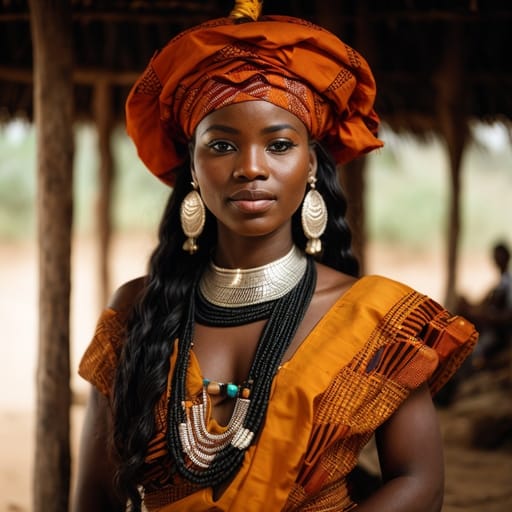
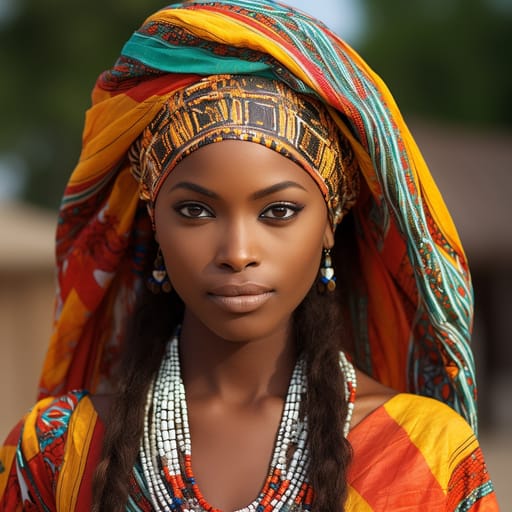
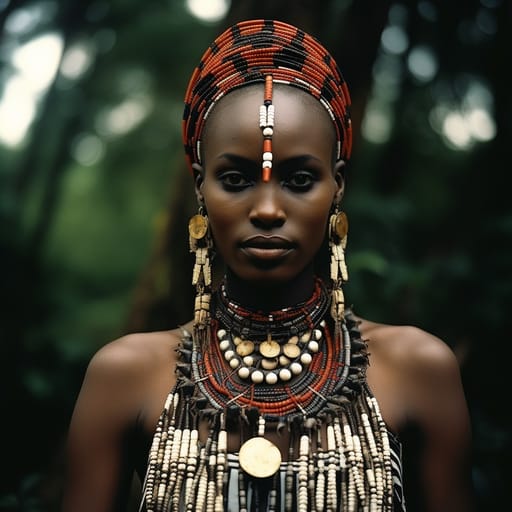
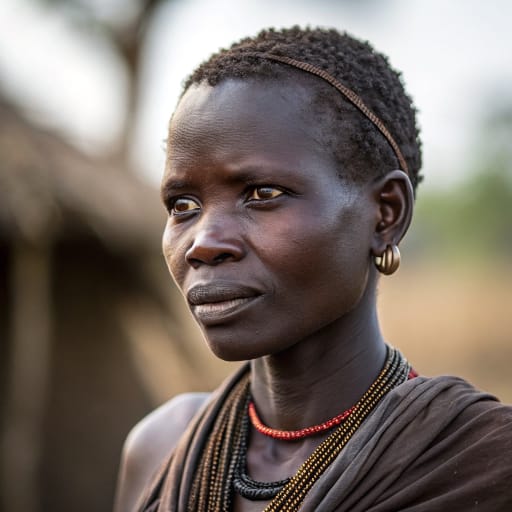
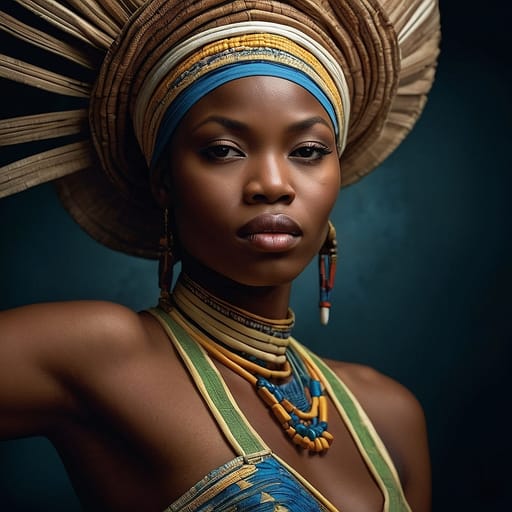
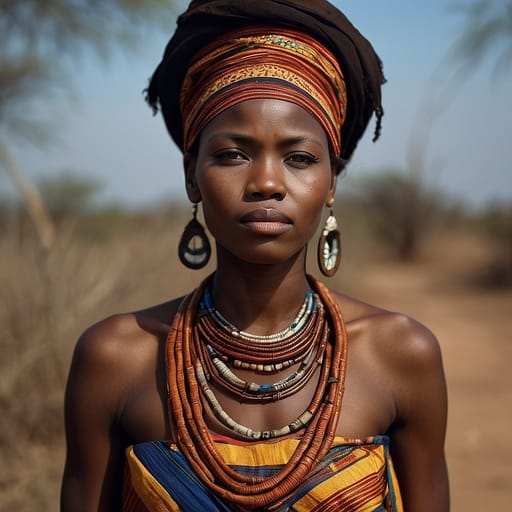
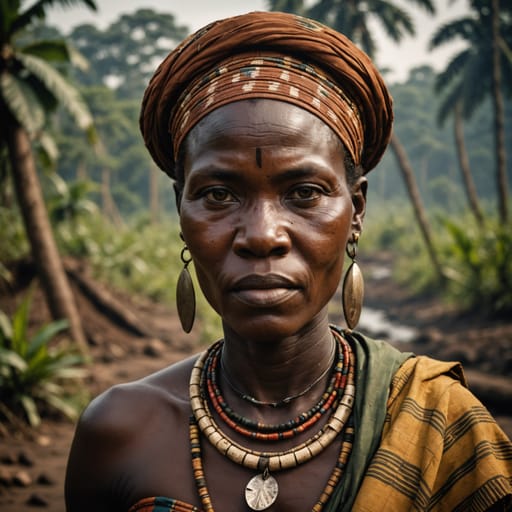
Typical Xindonga Phenotypes
Reference for AI generation: hair, eyes, skin, facial structure, build
Xindonga Body & Anatomy Reference
Bantu / Central African Niger-Congo phenotype: anatomy reference for AI nude generation
Xindonga Boobs & Breasts
Xindonga boobs follow the Bantu / Central African Niger-Congo profile: medium-to-large cup, full, projecting. Areolar diameter is usually 32-48mm, and the coloring is deep-brown areolar pigmentation against the deep-brown skin tone. Breast shape tracks body composition (mesomorph with strong gluteal-femoral fat deposition, mean adult female BMI 23-26), so Xindonga breasts tend to be fuller projection than East African; comparable to West African norm. Expect a forward-set shape, not the smaller East African conical profile.
Xindonga Ass & Hips
Xindonga ass and hip morphology presents as full, projected, wide-set glutes, distinctly different from the slim narrow-hip Cushitic East African profile. The Xindonga pelvic profile shows broad iliac crests, gynoid pelvic pattern, anchored in the Bantu / Central African Niger-Congo skeletal pattern. Xindonga butt shots in adult AI imagery should render the full, projected, wide-set glutes silhouette with the overall build (mesomorph with strong gluteal-femoral fat deposition) and the fat distribution typical of the Bantu / Central African Niger-Congo phenotype.
Xindonga Vagina & Pussy
Xindonga pussy anatomy typically shows deep-brown labial pigmentation, fuller labia minora. Pubic hair is usually tightly-coiled coarse texture, dense distribution. In AI-generated Xindonga nudes, labial color should blend into the deep-brown skin with a gradual transition, and the hair should keep its tightly-coiled coarse texture.
Xindonga Dicks & Penis
Penis reference for Xindonga men: regional mean ~14cm erect, above-average girth. Coloring: deep-brown shaft pigmentation. An accurate Xindonga cock in AI imagery matches the surrounding deep-brown skin rather than a generic porn default. Circumcision depends on religion and custom, not ancestry.
Xindonga Body, Curves & Build
The Xindonga figure is generally mesomorph with strong gluteal-femoral fat deposition, with mean adult female BMI 23-26, characteristic of Bantu / Central African Niger-Congo ancestry. AI image tools tend to flatten regional body types into a few stock shapes; here the Xindonga build is kept as its own reference.
Xindonga Skin Tone & Hair Texture
Skin: deep-brown (Fitzpatrick VI). Hair: tight 4A-4C coil. Both are typical of Bantu / Central African Niger-Congo ancestry. The most common mistake in AI nudes of Xindonga women is a body rendered lighter than the face.
Explore phenotype categories
Structured taxonomy with peer-reviewed scales · 22 anatomical categories
Erotic Poses & Sex Positions
From the pose catalog: 219 named positions with reference skeletons
Frequently asked questions about Xindonga people
Where is the Xindonga homeland?
The Xindonga homeland is Southeastern Angola, in the Cuando Cubango region along the Cubango (Okavango) and Cuando rivers; related communities in Namibia and Botswana in Central Africa.
What language do Xindonga people speak?
Xindonga people primarily speak Thimbukushu, Rumanyo (Gciriku) and related languages (Bantu, Niger-Congo).
What religion do Xindonga people practice?
The predominant religion among Xindonga people is Mostly Christian (Catholic and Protestant), alongside ancestral beliefs and traditional healing.






Make your own Xindonga images
Five a day, free, no credits to buy. The studio starts from this group's phenotype data, so you can set body type, pose and style and keep the traits accurate.
Start with Xindonga