Nisga’a Erotic
The Nass River valley in northwestern British Columbia, Canada, with large urban communities in Terrace, Prince Rupert and Vancouver.
Nisga’a (Tsimshianic), closely related to Gitxsan; English is near universal
Christianity, principally Anglican, United Church and Salvation Army, alongside the ayuukhl and the feast tradition
Four matrilineal pdeek: Ganada (Frog/Raven), Gisk’aast (Killerwhale), Laxgibuu (Wolf), Laxsgiik (Eagle); part of the wider Tsimshianic peoples with the Gitxsan and Tsimshian
About Nisga’a People
The Nisga’a are the people of one river. The Nass runs out of the Coast Mountains through northwestern British Columbia to the Pacific, and four villages sit along it: Gitlaxt’aamiks, Gitwinksihlkw, Laxgalts’ap and Gingolx. About half the nation’s citizens live somewhere else now, mostly Terrace, Prince Rupert and Vancouver, and the treaty that governs the nation gave those urban locals seats rather than treating a move to the city as a resignation.
Descent runs through the mother. Every Nisga’a belongs to one of four pdeek, Ganada, Gisk’aast, Laxgibuu and Laxsgiik, and within that to a wilp, a house holding names, songs, crests and a defined stretch of territory. The ayuukhl, the body of Nisga’a law carried orally and recited aloud at feasts, is what makes those holdings real: title here depends on who witnessed what, and the feast hall is the court of record. Canada outlawed the feast in 1885 and left it illegal until 1951.
Two events anchor the history. Sometime around 1700 the Tseax cone erupted and pushed a lava flow across the valley floor, burying two villages and killing, by the traditional count, some two thousand people. It is the most recent volcanic eruption in Canada, the lava bed is still bare black rock three centuries on, and the Nisga’a account of the cause, children tormenting salmon with burning sticks, has come down unbroken. The second is Calder. Frank Calder took the question of Nisga’a title to the Supreme Court of Canada, and the 1973 decision, split as it was, forced Ottawa to concede that Aboriginal title exists in Canadian law. That line runs straight to the Nisga’a Final Agreement of 2000, the first modern treaty in British Columbia, which retired the Indian Act in the valley and replaced it with the Nisga’a Lisims Government.
The language belongs to the small Tsimshianic family and sits close enough to Gitxsan upriver that linguists sometimes count them one language and the two nations do not. Fluent speakers are few and mostly elderly, and the nation runs its own post-secondary institute at Gitlaxt’aamiks partly to change that. Christianity arrived hard in the nineteenth century, Anglican and Salvation Army both, and most Nisga’a are churchgoing; the church and the feast hall worked out an arrangement long ago. Spring is still counted by the eulachon. The small oily fish comes up the Nass in late winter, gets rendered into grease, and was traded so far inland for so long that the old routes are known as grease trails.
Related ethnic groups
Groups that share Nisga’a's homeland, region, language, or religious tradition. These are likely candidates for comparative phenotype reference.
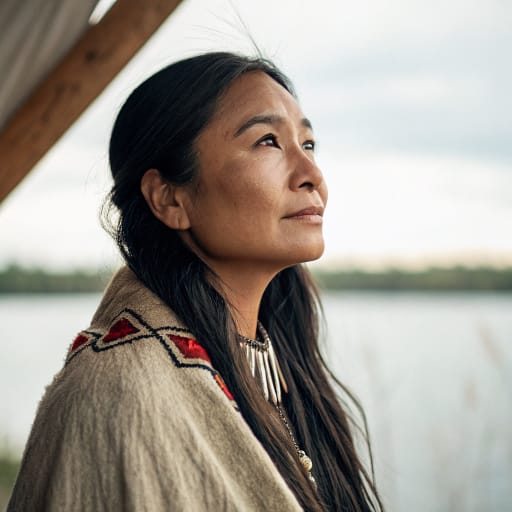
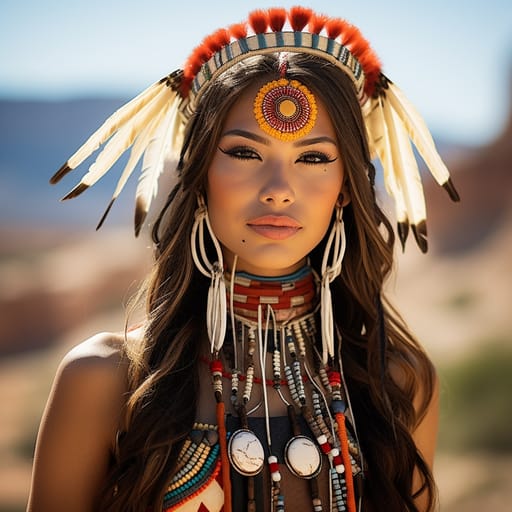
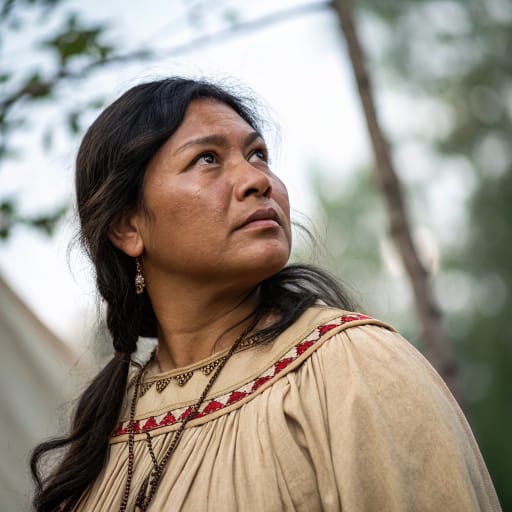
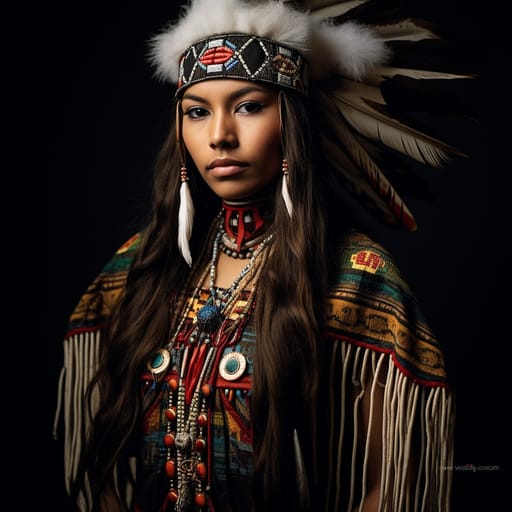
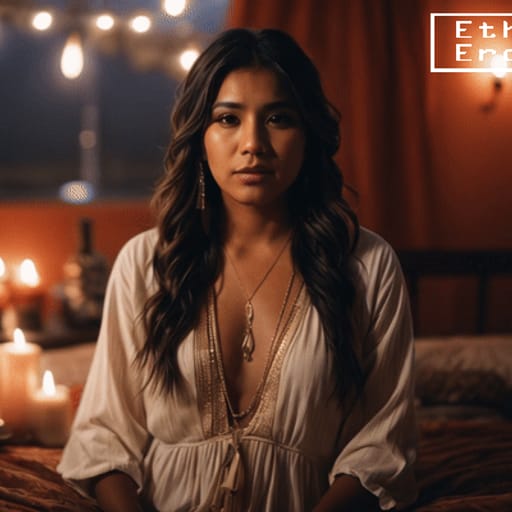
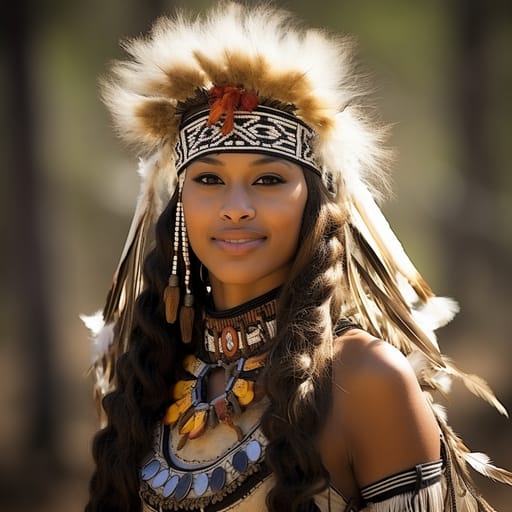
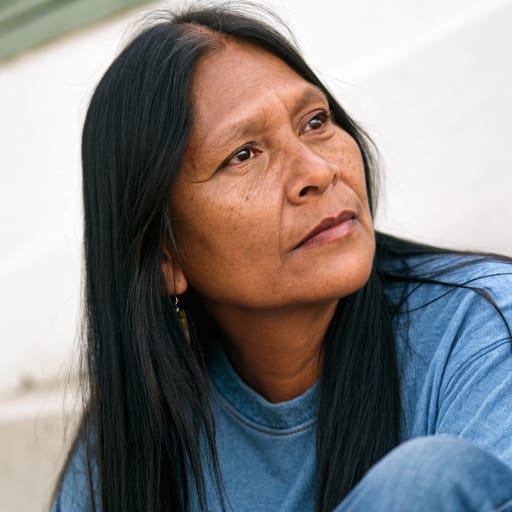
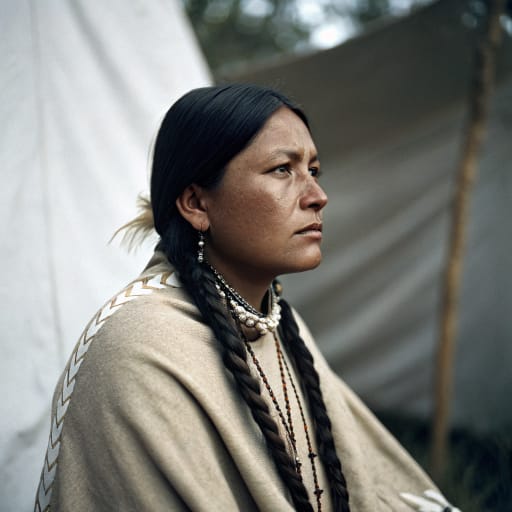
Typical Nisga’a Phenotypes
Reference for AI generation: hair, eyes, skin, facial structure, build
Nisga’a Body & Anatomy Reference
Indigenous Northern American / Algonquian-Iroquoian phenotype: anatomy reference for AI nude generation
Nisga’a Boobs & Breasts
Nisga’a tits and boobs run medium cup, moderate projection, the classic Indigenous Northern American / Algonquian-Iroquoian bust profile. Nisga’a nipples and areolas show medium-brown areolar pigmentation against the copper-to-medium-brown skin tone, with areolar diameter typically in the 30-44mm range and forward-set positioning rather than the smaller East Asian bust. Nisga’a breasts trend full and moderate projection, a function of the mesomorph, broader frame in northern Indigenous populations body habitus and the mean adult female BMI 25-28. For anatomically accurate AI-generated Nisga’a nudes the render preserves the medium cup, moderate projection shape, 30-44mm areolas with medium-brown pigmentation, and the torso proportions of the Indigenous Northern American / Algonquian-Iroquoian phenotype.
Nisga’a Ass & Hips
Nisga’a hips and butt usually read as medium, moderate-to-full projection. The skeletal base is medium iliac crests, the Indigenous Northern American / Algonquian-Iroquoian pattern. Set against the slim East Asian narrow-hip profile, the difference is easy to see, and the hip-to-waist ratio is often what identifies Nisga’a women in photos.
Nisga’a Vagina & Pussy
Expect medium-brown labial pigmentation on Nisga’a women, in keeping with Indigenous Northern American / Algonquian-Iroquoian ancestry. The pubic hair is straight medium-coarse texture. Coloring should run evenly from the copper to medium-brown skin of the thighs to the labia, and Nisga’a nude imagery should keep the hair's straight medium-coarse texture.
Nisga’a Dicks & Penis
Nisga’a dick and penile anatomy in adult AI generation should anchor on the regional reference data: regional mean ~13cm erect, moderate girth, and medium-brown shaft pigmentation. The Nisga’a cock profile reflects the Indigenous Northern American / Algonquian-Iroquoian population's anthropometric measurements. The shaft pigmentation should track the surrounding copper to medium-brown skin tone, and the pubic hair should keep its straight medium-coarse texture in the typical inverted-V escutcheon.
Nisga’a Body, Curves & Build
Nisga’a body type: mesomorph, broader frame in northern Indigenous populations, with mean adult female BMI 25-28. This is the typical Indigenous Northern American / Algonquian-Iroquoian build. Height range, shoulder-to-hip ratio and fat distribution all follow from it, which is what an accurate Nisga’a nude body should show.
Nisga’a Skin Tone & Hair Texture
Nisga’a skin tone falls in the copper to medium-brown (Fitzpatrick III-V) band, the surface signal most often miscalibrated by generic AI nude generators. Nisga’a hair texture is typically straight 1A, dark-brown to black, often thick and dense, characteristic of the Indigenous Northern American / Algonquian-Iroquoian phenotype. In Nisga’a nude renders the skin should hold that band consistently across the body.
Explore phenotype categories
Structured taxonomy with peer-reviewed scales · 22 anatomical categories
Erotic Poses & Sex Positions
From the pose catalog: 219 named positions with reference skeletons
Frequently asked questions about Nisga’a people
Where is the Nisga’a homeland?
The Nisga’a homeland is The Nass River valley in northwestern British Columbia, Canada, with large urban communities in Terrace, Prince Rupert and Vancouver. in North America.
What language do Nisga’a people speak?
Nisga’a people primarily speak Nisga’a (Tsimshianic), closely related to Gitxsan; English is near universal.
What religion do Nisga’a people practice?
The predominant religion among Nisga’a people is Christianity, principally Anglican, United Church and Salvation Army, alongside the ayuukhl and the feast tradition.






Make your own Nisga’a images
Five a day, free, no credits to buy. The studio starts from this group's phenotype data, so you can set body type, pose and style and keep the traits accurate.
Start with Nisga’a