No portrait yet
Moran Erotic
Upper Assam, India, chiefly Tinsukia and Dibrugarh districts, with smaller communities in neighboring Arunachal Pradesh
Assamese (Indo-European, Indo-Aryan); formerly Moran (Sino-Tibetan, Boro-Garo branch), no longer spoken
Hindu, predominantly Ekasarana Vaishnavism as followers of the Mayamara (Moamoria) Sattra
Closely linked with the Motok (Matak); linguistically part of the wider Bodo-Kachari family of Northeast India
About Moran People
The Morans are one of the old peoples of Upper Assam. They were already settled on the eastern plains of the Brahmaputra valley when the Ahoms arrived, and centuries later they made up much of the force behind the uprising that nearly broke the Ahom kingdom. Most live today in Tinsukia and Dibrugarh districts, with smaller communities in neighboring Arunachal Pradesh. Many live in rice-growing villages where the namghar, the community prayer hall, is still the center of village life.
Their history shows in their language. The original Moran tongue belonged to the Boro-Garo branch of Sino-Tibetan, the same broad family as Dimasa and the other Kachari languages. Centuries inside the Ahom state and among Assamese speakers wore it away, and Assamese is now the language of Moran homes, schools and politics. What marks Moran identity today is less a vocabulary than a memory and a faith.
When the Ahom founder Sukaphaa crossed the Patkai hills in the thirteenth century, the Morans and their neighbors the Borahis were among the first peoples he met. Many were brought into the new state through marriage and service. The bigger break came later, through religion. Morans became devoted followers of the Mayamara Sattra, a Vaishnavite monastery lineage founded by Aniruddhadeva in the seventeenth century. Mayamara accepted disciples regardless of caste, which put its large following at odds with Ahom rulers who backed rival institutions led by Brahmins. Anger over the humiliation of the sattra's leaders and the mistreatment of its followers erupted in 1769 in what is known as the Moamoria rebellion. Rebels, among them Raghav Moran, took the capital at Rangpur, lost it again and kept fighting in waves until about 1805. The kingdom survived badly weakened, and within a generation it fell to Burmese invasion and then to British rule.
The Motoks, who shared the same religious loyalty and fought in the same revolt, are the Morans' closest relatives in history, and the two are often discussed together. Today Morans are counted among Assam's backward classes. For years they have campaigned for Scheduled Tribe status, along with several other Assamese communities. In 2020 the state created a Moran Autonomous Council to direct development spending to the community. Bihu is celebrated here with the same energy as anywhere in Assam. But the tie to Mayamara, and the memory of what that loyalty once cost, is still central to how Morans see themselves.
Related ethnic groups
Groups that share Moran's homeland, region, language, or religious tradition. These are likely candidates for comparative phenotype reference.
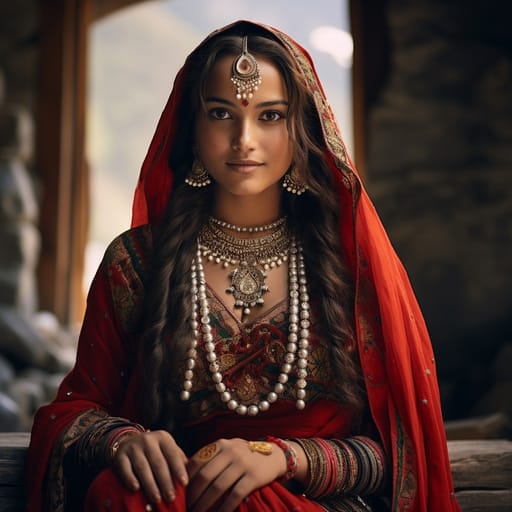
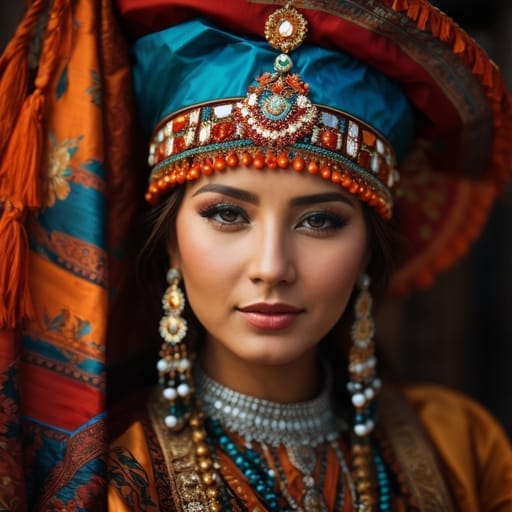
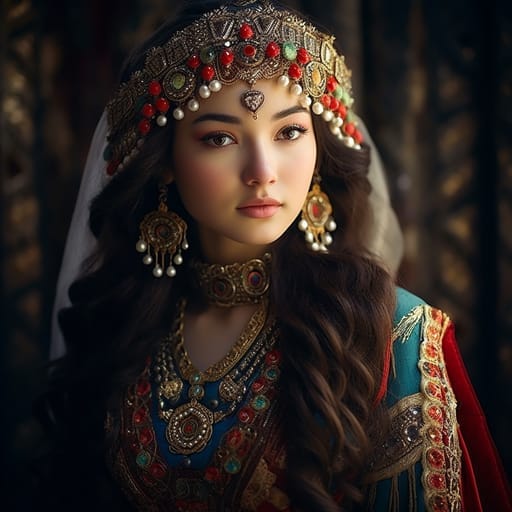
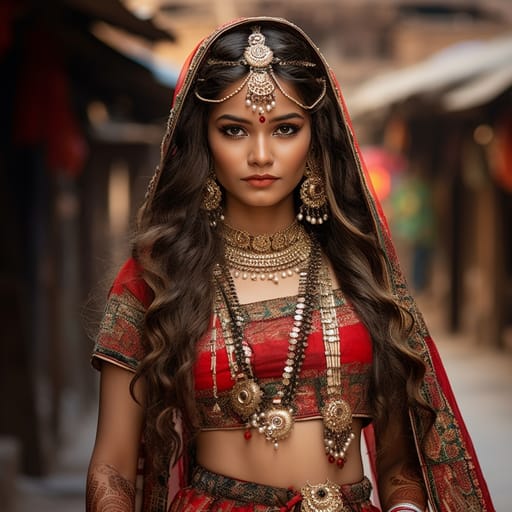
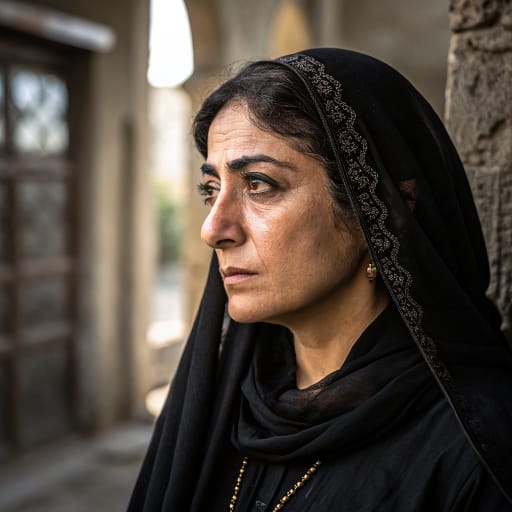
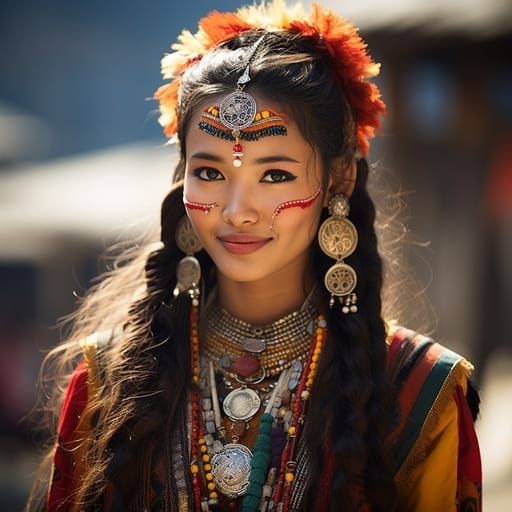
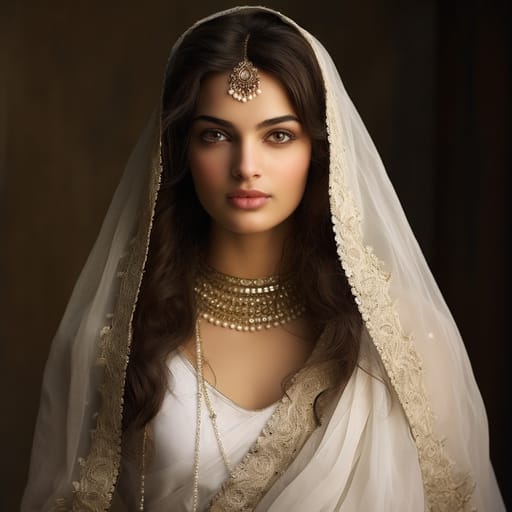
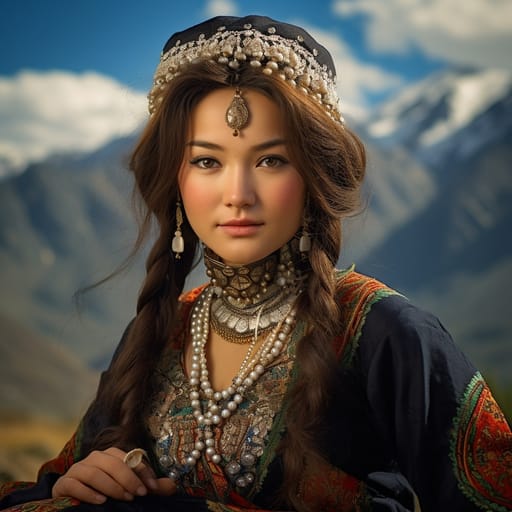
Typical Moran Phenotypes
Reference for AI generation: hair, eyes, skin, facial structure, build
Moran Body & Anatomy Reference
Anatomy by feature, Indo-Aryan / Dravidian South Asian phenotype
Moran Boobs & Breasts
The typical Moran bust is medium-to-large cup, moderate-to-full projection, in line with the wider Indo-Aryan / Dravidian South Asian pattern. Areolas usually fall in the 32-46mm range, with medium-brown to dark-brown areolar pigmentation against the wheatish-to-brown skin tone. Compared with the smaller East Asian bust profile, Moran breasts sit forward and are generally full and soft, generally fuller than the East Asian norm. A faithful AI render of Moran tits keeps that shape and areola size.
Moran Ass & Hips
Butt shape among Moran women: medium-to-full, moderate-to-high projection, classic curvy hip profile, over medium-to-wide iliac crests, full gluteal-femoral fat distribution. This follows Indo-Aryan / Dravidian South Asian ancestry and looks quite unlike the slim hip profile of East Asian women. An accurate Moran ass in adult AI imagery keeps both the silhouette and the overall build (endomorph-to-mesomorph with fuller hip deposition) instead of a generic average.
Moran Vagina & Pussy
Vulvar anatomy among Moran women: medium-brown to dark-brown labial pigmentation, fuller labia minora projection. Pubic hair tends to be straight-to-wavy coarse texture, dense distribution, in the usual inverted-triangle pattern. Both follow Indo-Aryan / Dravidian South Asian pigmentation, which is why Moran pussy renders should not fall back on a pale, sparse Western template.
Moran Dicks & Penis
The Moran cock profile, from Indo-Aryan / Dravidian South Asian anthropometric data: regional mean ~13cm erect; moderate girth; medium-brown shaft pigmentation. Pubic hair has a straight-to-wavy coarse texture and forms the usual inverted-V pattern. Whether Moran men are circumcised follows religious and cultural practice rather than phenotype.
Moran Body, Curves & Build
Build and curves among Moran women follow the Indo-Aryan / Dravidian South Asian pattern: endomorph-to-mesomorph with fuller hip deposition, mean adult female BMI 22-25. Proportions matter as much as skin tone, so Moran figures should keep their regional height and limb ratios.
Moran Skin Tone & Hair Texture
The Moran skin range is wheatish to brown (Fitzpatrick III-V), and hair tends to be straight-to-wavy 1A-2B, dense, dark-brown to black. That combination marks the Indo-Aryan / Dravidian South Asian phenotype, and skin tone is the trait AI generators most often get wrong for Moran women.
Explore phenotype categories
Structured taxonomy with peer-reviewed scales · 22 anatomical categories
Erotic Poses & Sex Positions
From the pose catalog: 219 named positions with reference skeletons
Frequently asked questions about Moran people
Where is the Moran homeland?
The Moran homeland is Upper Assam, India, chiefly Tinsukia and Dibrugarh districts, with smaller communities in neighboring Arunachal Pradesh in Southern Asia.
What language do Moran people speak?
Moran people primarily speak Assamese (Indo-European, Indo-Aryan); formerly Moran (Sino-Tibetan, Boro-Garo branch), no longer spoken.
What religion do Moran people practice?
The predominant religion among Moran people is Hindu, predominantly Ekasarana Vaishnavism as followers of the Mayamara (Moamoria) Sattra.






Make your own Moran images
Five a day, free, no credits to buy. The studio starts from this group's phenotype data, so you can set body type, pose and style and keep the traits accurate.
Start with Moran