Help us get this right
Does this portrait look right for Darzi?
Nobody has judged this one yet. You would be the first.
Darzi Erotic
India and Pakistan, especially Uttar Pradesh, Bihar, Gujarat, Rajasthan, Maharashtra, Punjab and Sindh; related tailoring castes in Nepal
Hindi, Urdu, Gujarati, Marathi, Rajasthani, Punjabi and Sindhi, depending on region (Indo-Aryan)
Islam (mainly Sunni) and Hinduism, in separate communities; Hindu branches revere devotional saints such as Namdev and Pipa
Muslim Darzi (Idrisi); Hindu Darji including the Shimpi of Maharashtra and the Pipa Kshatriya of Rajasthan and Gujarat; comparable to the Damai tailoring caste of Nepal
About Darzi People
The Darzi are held together by a needle, not by a shared homeland or mother tongue. The name comes from the Persian word for tailor, built on darz, a seam. Across northern and western South Asia it names a hereditary community whose families have cut and stitched clothing for generations. A Darzi in Lucknow and a Darji in Ahmedabad may pray differently, speak different languages and never marry into each other's families. Both still belong to a caste defined by the same craft and the same place in the economy of the village and the bazaar.
The first split is religious. Muslim Darzi live mostly in Uttar Pradesh, Bihar and neighboring regions, and many use the surname Idrisi. The choice is deliberate. In Islamic tradition the prophet Idris was the first person to sew garments, which gives a trade often ranked low in the local caste order a patron of the highest standing. Hindu tailoring communities have their own saints. In Maharashtra the Shimpi claim Namdev, the medieval Marathi poet and saint of the Varkari devotional movement, whose hymns later entered the Sikh scripture. In Rajasthan and Gujarat, many Darji families call themselves Pipa Kshatriya, after Pipa, a Rajput ruler who gave up his throne for a life of devotion. In Nepal the matching caste is the Damai, tailors who also traditionally play in the wedding band.
Language follows region rather than caste: Urdu and Hindi in the north, Gujarati, Marathi or Rajasthani to the west, Punjabi and Sindhi across the border. Marriage has traditionally stayed within the community, and the Hindu and Muslim branches keep separate marriage circles. Partition in 1947 divided Muslim families, and the Darzi are now a recognized artisan group in Pakistan as well as India.
The work has changed faster than the identity. Ready-made clothing and factory garment lines have taken much of the neighborhood tailor's trade, and many younger Darzi have moved into other jobs. Still, the small shop with a sewing machine and a tape measure draped around the owner's neck is part of everyday street life. It is busiest in wedding season, when sari blouses, sherwanis and salwar suits all have to be made to measure. In many Indian states the Darzi are listed among the Other Backward Classes, a status that shapes access to education and public employment.
Related ethnic groups
Groups that share Darzi's homeland, region, language, or religious tradition. These are likely candidates for comparative phenotype reference.
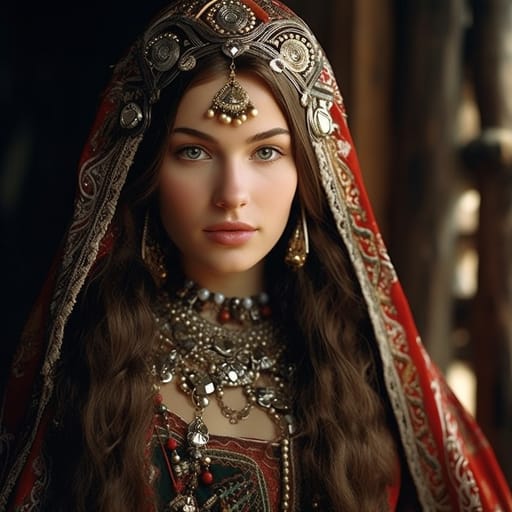
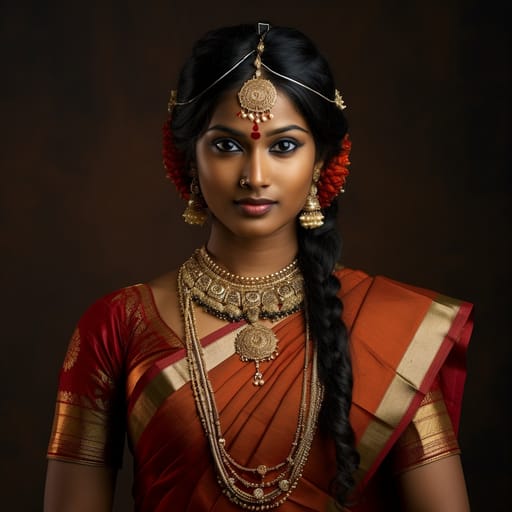
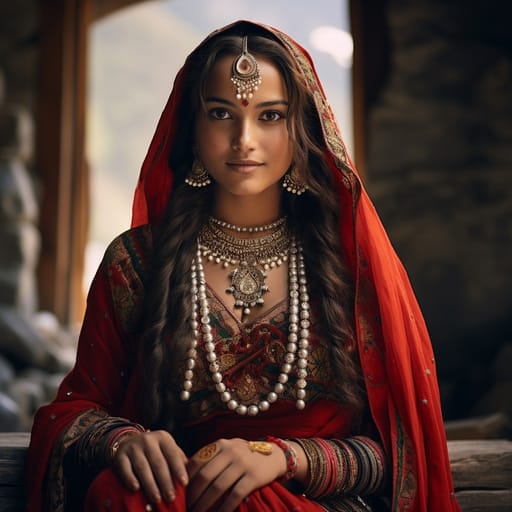
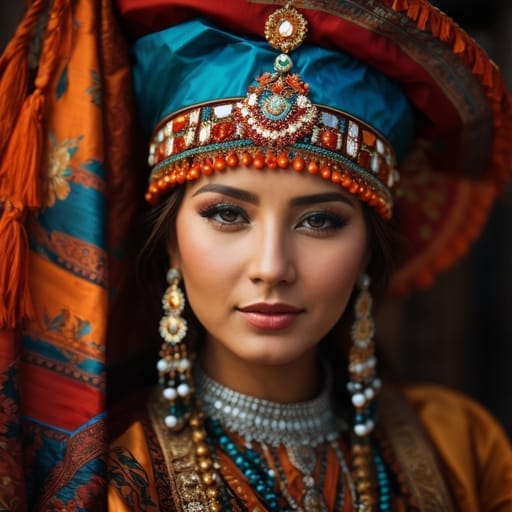
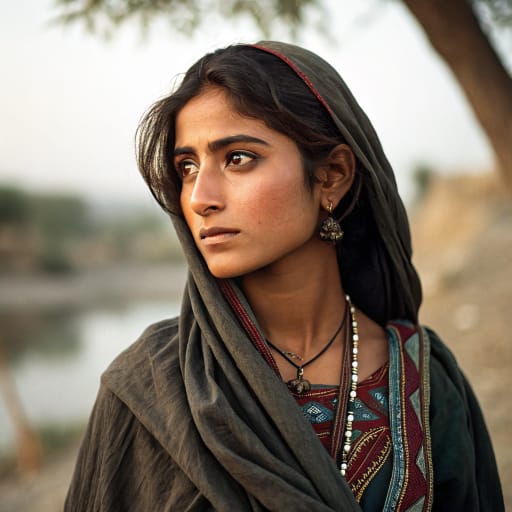
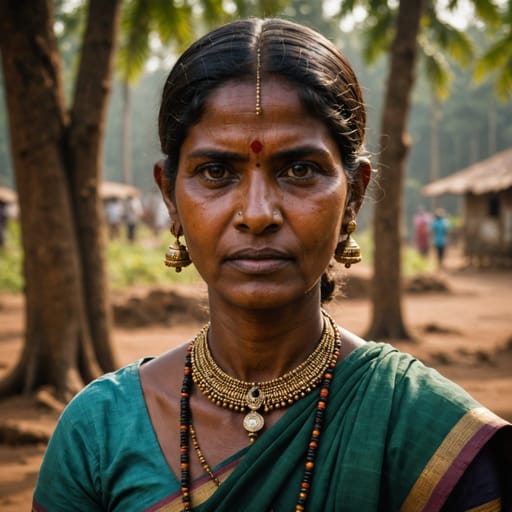
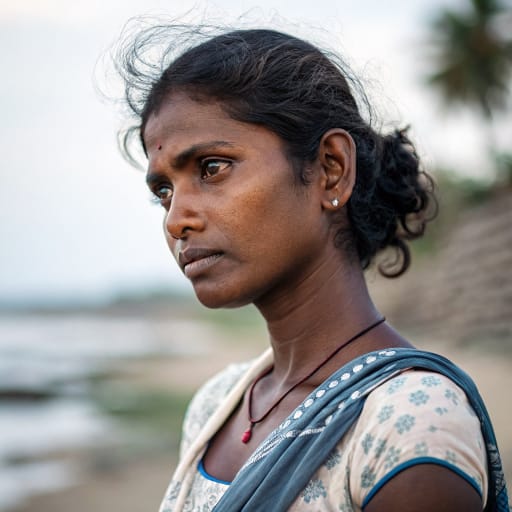
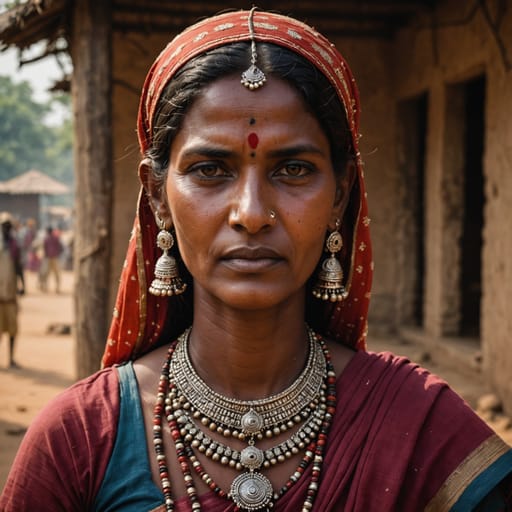
Typical Darzi Phenotypes
Reference for AI generation: hair, eyes, skin, facial structure, build
Darzi Body & Anatomy Reference
Anatomy by feature, Indo-Aryan / Dravidian South Asian phenotype
Darzi Boobs & Breasts
Darzi boobs follow the Indo-Aryan / Dravidian South Asian profile: medium-to-large cup, moderate-to-full projection. Areolar diameter is usually 32-46mm, and the coloring is medium-brown to dark-brown areolar pigmentation against the wheatish-to-brown skin tone. Breast shape tracks body composition (endomorph-to-mesomorph with fuller hip deposition, mean adult female BMI 22-25), so Darzi breasts tend to be full and soft, generally fuller than the East Asian norm. Expect a forward-set shape, not the smaller East Asian bust profile.
Darzi Ass & Hips
Darzi ass and hip morphology presents as medium-to-full, moderate-to-high projection, classic curvy hip profile, distinctly different from the slim hip profile of East Asian women. The Darzi pelvic profile shows medium-to-wide iliac crests, full gluteal-femoral fat distribution, anchored in the Indo-Aryan / Dravidian South Asian skeletal pattern. Darzi butt shots in adult AI imagery should render the medium-to-full, moderate-to-high projection, classic curvy hip profile silhouette with the overall build (endomorph-to-mesomorph with fuller hip deposition) and the fat distribution typical of the Indo-Aryan / Dravidian South Asian phenotype.
Darzi Vagina & Pussy
Darzi pussy anatomy typically shows medium-brown to dark-brown labial pigmentation, fuller labia minora projection. Pubic hair is usually straight-to-wavy coarse texture, dense distribution. In AI-generated Darzi nudes, labial color should blend into the wheatish to brown skin with a gradual transition, and the hair should keep its straight-to-wavy coarse texture.
Darzi Dicks & Penis
Penis reference for Darzi men: regional mean ~13cm erect, moderate girth. Coloring: medium-brown shaft pigmentation. An accurate Darzi cock in AI imagery matches the surrounding wheatish to brown skin rather than a generic porn default. Circumcision depends on religion and custom, not ancestry.
Darzi Body, Curves & Build
The Darzi figure is generally endomorph-to-mesomorph with fuller hip deposition, with mean adult female BMI 22-25, characteristic of Indo-Aryan / Dravidian South Asian ancestry. AI image tools tend to flatten regional body types into a few stock shapes; here the Darzi build is kept as its own reference.
Darzi Skin Tone & Hair Texture
Skin: wheatish to brown (Fitzpatrick III-V). Hair: straight-to-wavy 1A-2B, dense, dark-brown to black. Both are typical of Indo-Aryan / Dravidian South Asian ancestry. The most common mistake in AI nudes of Darzi women is a body rendered lighter than the face.
Explore phenotype categories
Structured taxonomy with peer-reviewed scales · 22 anatomical categories
Erotic Poses & Sex Positions
From the pose catalog: 219 named positions with reference skeletons
Frequently asked questions about Darzi people
Where is the Darzi homeland?
The Darzi homeland is India and Pakistan, especially Uttar Pradesh, Bihar, Gujarat, Rajasthan, Maharashtra, Punjab and Sindh; related tailoring castes in Nepal in Southern Asia.
What language do Darzi people speak?
Darzi people primarily speak Hindi, Urdu, Gujarati, Marathi, Rajasthani, Punjabi and Sindhi, depending on region (Indo-Aryan).
What religion do Darzi people practice?
The predominant religion among Darzi people is Islam (mainly Sunni) and Hinduism, in separate communities; Hindu branches revere devotional saints such as Namdev and Pipa.






Make your own Darzi images
Five a day, free, no credits to buy. The studio starts from this group's phenotype data, so you can set body type, pose and style and keep the traits accurate.
Start with Darzi