Help us get this right
Does this portrait look right for Mbukushu?
One tap. It takes a second and it is recorded.
0 say it looks right, 1 says it looks off.
Mbukushu Erotic
The Okavango River valley in Kavango East, Namibia; the Okavango panhandle and Etsha area of northwestern Botswana; Cuando Cubango, Angola; smaller numbers in Zambia
Thimbukushu (Bantu, Niger-Congo); many also speak Setswana, Rukwangali or English
Christianity, alongside ancestral beliefs and a long rainmaking tradition
One of Namibia's five traditional Kavango communities, with the Kwangali, Mbunza, Shambyu and Gciriku; known in Botswana as Hambukushu
About Mbukushu People
The Mbukushu live along the Okavango River, from where it leaves Angola, past the rapids at Popa Falls, and on into the long panhandle of Botswana's Okavango Delta. Three borders divide them: Namibia, Angola and Botswana, with a smaller group in Zambia. They still hold together through a shared language and shared clan histories. For a long time they also had a reputation that reached well beyond their own villages: the Mbukushu were the rainmakers of the region. When the rains failed, neighboring rulers asked them for help, and the chief's power to call rain was at the center of Mbukushu political life.
Their language, Thimbukushu, is a Bantu language. In Namibia it is taught in schools as one of the Kavango languages. Rukwangali and Rumanyo are spoken upriver, and Khwe San communities live close by. In Botswana, Thimbukushu is spoken alongside Setswana and alongside Shiyeyi, the language of the Wayeyi, who have been their neighbors on the Okavango for a long time. Most Mbukushu today are Christian, partly a legacy of the Catholic mission at Andara, but older beliefs are still there. The ancestors must be kept content, and good rain is tied to proper ritual and rightful leadership. The Tsodilo Hills, west of the panhandle, are part of Hambukushu religious tradition, along with their much older importance to the San.
History has kept them moving. Oral tradition says they once lived farther east, toward the Chobe and Zambezi, before upheavals in the region pushed them onto the Okavango. The twentieth century brought a sharper break. In 1969, several thousand Mbukushu fleeing the war in Angola crossed into Botswana. They were settled at Etsha, a string of numbered villages on the western edge of the Delta, grouped by the communities they had come from. The Mbukushu who stayed in Namibia keep a hereditary traditional authority in Kavango East.
Daily life follows the rise and fall of the river. Families plant the floodplain as the water goes down, fish from dugout canoes and set traps in the reeds. Women wade the shallows in groups and fish with baskets. Outsiders know the Mbukushu best for their basketry. Women at Etsha and Gumare make tightly coiled, patterned baskets from palm fiber colored with bark and root dyes, and their work became one of Botswana's best-known crafts.
Related ethnic groups
Groups that share Mbukushu's homeland, region, language, or religious tradition. These are likely candidates for comparative phenotype reference.
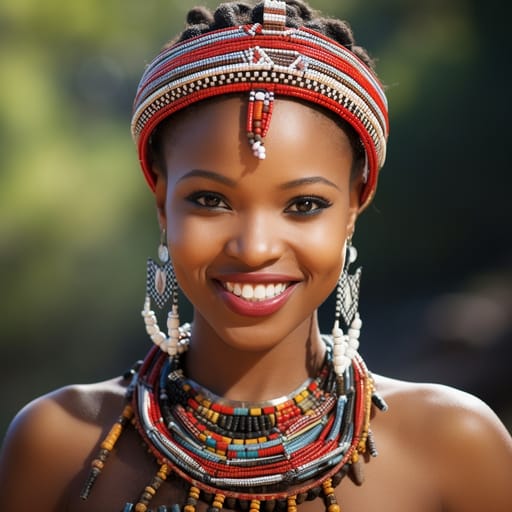
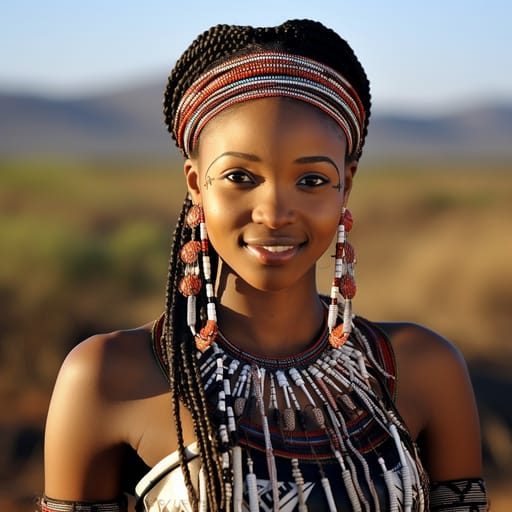
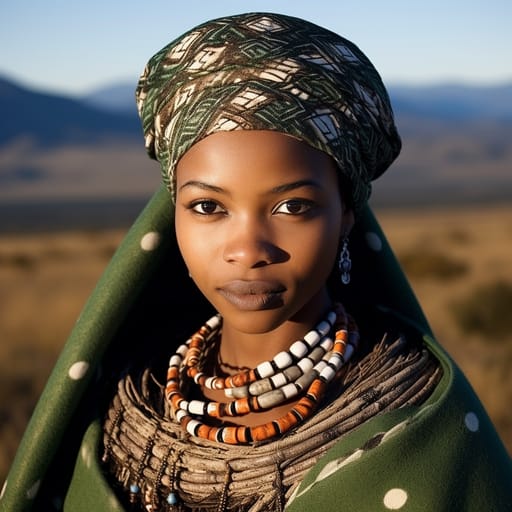
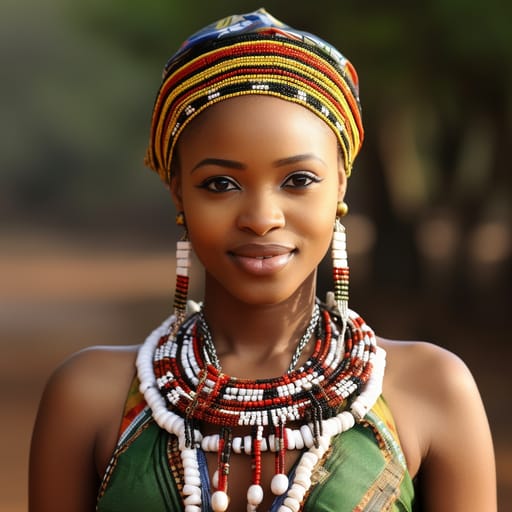
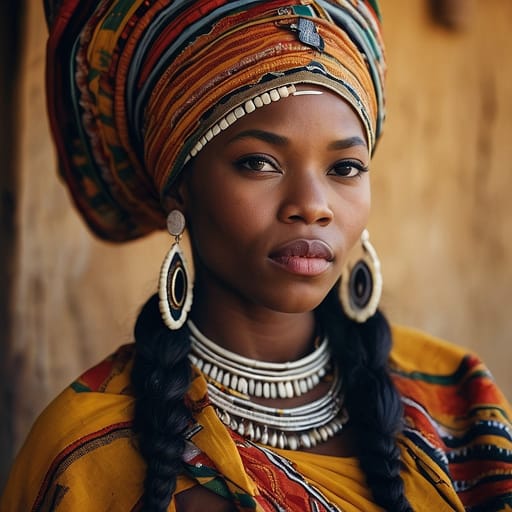
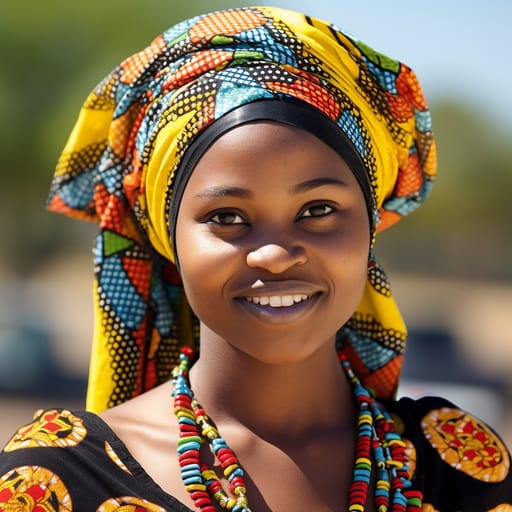
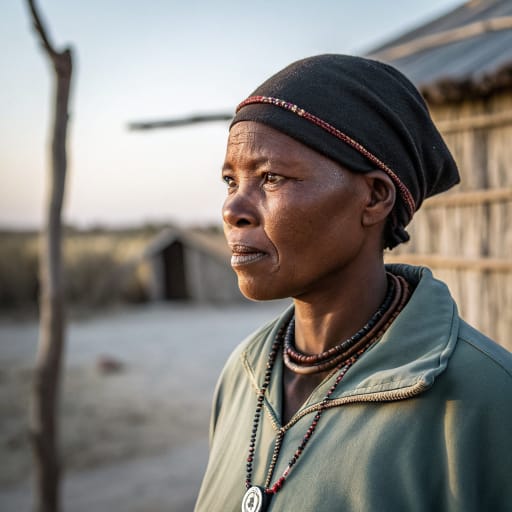
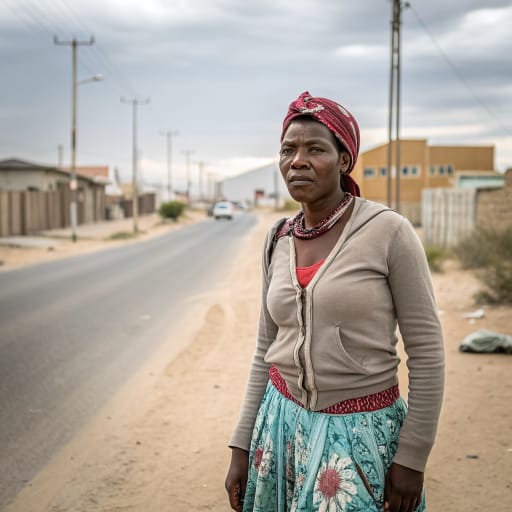
Typical Mbukushu Phenotypes
Reference for AI generation: hair, eyes, skin, facial structure, build
Mbukushu Body & Anatomy Reference
Per-feature anatomical profile for AI nude generation: Bantu / Khoisan Southern African phenotype
Mbukushu Boobs & Breasts
Mbukushu boobs follow the Bantu / Khoisan Southern African profile: medium cup, full but moderate projection. Areolar diameter is usually 30-44mm, and the coloring is medium-brown to deep-brown areolar pigmentation. Breast shape tracks body composition (mesomorph; Khoisan-descended sub-populations show distinctive steatopygic fat deposition, mean adult female BMI 24-28), so Mbukushu breasts tend to be moderately full; less projecting than West African norm. Expect a forward-set shape, not the heavier West African bust.
Mbukushu Ass & Hips
Mbukushu ass and hip morphology presents as the distinctive Khoisan-influenced steatopygic profile in some sub-populations (San, Khoekhoe); broader gluteal projection in Bantu-speaking groups, distinctly different from the slim Cushitic East African profile. The Mbukushu pelvic profile shows wide iliac crests with notable lordosis in Khoisan-descended sub-populations, anchored in the Bantu / Khoisan Southern African skeletal pattern. Mbukushu butt shots in adult AI imagery should render the the distinctive Khoisan-influenced steatopygic profile in some sub-populations (San, Khoekhoe); broader gluteal projection in Bantu-speaking groups silhouette with the overall build (mesomorph; Khoisan-descended sub-populations show distinctive steatopygic fat deposition) and the fat distribution typical of the Bantu / Khoisan Southern African phenotype.
Mbukushu Vagina & Pussy
Mbukushu pussy anatomy typically shows deep-brown labial pigmentation; the elongated labia minora documented in some Khoisan-descended populations. Pubic hair is usually tightly-coiled coarse texture. In AI-generated Mbukushu nudes, labial color should blend into the medium-brown to deep-brown skin with a gradual transition, and the hair should keep its tightly-coiled coarse texture.
Mbukushu Dicks & Penis
Penis reference for Mbukushu men: regional mean ~14cm erect, moderate-to-above-average girth. Coloring: deep-brown shaft pigmentation. An accurate Mbukushu cock in AI imagery matches the surrounding medium-brown to deep-brown skin rather than a generic porn default. Circumcision depends on religion and custom, not ancestry.
Mbukushu Body, Curves & Build
The Mbukushu figure is generally mesomorph; Khoisan-descended sub-populations show distinctive steatopygic fat deposition, with mean adult female BMI 24-28, characteristic of Bantu / Khoisan Southern African ancestry. AI image tools tend to flatten regional body types into a few stock shapes; here the Mbukushu build is kept as its own reference.
Mbukushu Skin Tone & Hair Texture
Skin: medium-brown to deep-brown (Fitzpatrick V-VI); lighter in Khoisan-descended populations. Hair: tightly-coiled 4A-4C; the distinctive 'peppercorn' tight-spiral texture in Khoisan-descended populations. Both are typical of Bantu / Khoisan Southern African ancestry. The most common mistake in AI nudes of Mbukushu women is a body rendered lighter than the face.
Explore phenotype categories
Structured taxonomy with peer-reviewed scales · 22 anatomical categories
Erotic Poses & Sex Positions
From the pose catalog: 219 named positions with reference skeletons
Frequently asked questions about Mbukushu people
Where is the Mbukushu homeland?
The Mbukushu homeland is The Okavango River valley in Kavango East, Namibia; the Okavango panhandle and Etsha area of northwestern Botswana; Cuando Cubango, Angola; smaller numbers in Zambia in Southern Africa.
What language do Mbukushu people speak?
Mbukushu people primarily speak Thimbukushu (Bantu, Niger-Congo); many also speak Setswana, Rukwangali or English.
What religion do Mbukushu people practice?
The predominant religion among Mbukushu people is Christianity, alongside ancestral beliefs and a long rainmaking tradition.






Make your own Mbukushu images
Five a day, free, no credits to buy. The studio starts from this group's phenotype data, so you can set body type, pose and style and keep the traits accurate.
Start with Mbukushu