- Home/
- World/
- Central Africa/
- Mbangala
Mbangala Erotic
The Baixa de Cassanje and the middle Kwango valley in Malanje Province, northern Angola, with earlier origins in the central Angolan plateau.
Kimbundu (Bantu, Niger-Congo), with Portuguese widely spoken
Predominantly Roman Catholic with Protestant minorities; ancestral veneration and spirit practice persist alongside church life
Counted among the Mbundu (Ambundu) peoples; historically organized as the kingdom of Kasanje and its constituent war bands
About Mbangala People
The Mbangala, who enter the Portuguese record as Imbangala, are one of the few peoples in the region whose identity was assembled on purpose, in the field, out of whoever could be recruited. They appear around 1600 as roving war bands in the plateau country of central Angola, organized not by descent but by the kilombo: a fortified camp that worked as an initiation society. Young men taken in raids were put through its rites, anointed with an ointment their elders said turned aside iron, and came out Mbangala. Titles were positional, held in a fixed order rather than passed from father to son, which is unusual in a region where lineage was the ordinary grammar of authority. A camp that reproduces by adoption instead of birth can double in a season, and theirs did. The fullest early description comes from Andrew Battell, an English sailor who lived among them for months and whose account also seeded a cannibal reputation that later European writers repeated without checking.
That capacity to absorb strangers made them the hinge of the seventeenth century in Angola. Portuguese commanders hired them against Ndongo; Njinga, Ndongo's most formidable ruler, took up their military organization and their leaders as allies in turn. By the 1630s one band had settled the Baixa de Cassanje, the low floodplain of the Kwango in what is now Malanje Province, and converted mobility into a tollgate. For nearly two centuries the kingdom of Kasanje held the roads that carried captives from Lunda country west to Luanda, taking its cut and keeping competitors off them. This is the uncomfortable center of Mbangala history and it is better stated than softened. Kasanje's grip slipped in the mid nineteenth century as Chokwe and Ovimbundu caravans simply went around it, and Portuguese columns finished the kingdom militarily in the early twentieth. In January 1961 the same floodplain, by then planted in cotton under a concession company, rose against forced cultivation; the massacre that followed is generally counted as the opening of Angola's war of independence.
Today Mbangala live mostly in Malanje, speak Kimbundu, and are usually counted among the Mbundu. One trace of them went further than they did: the word kilombo crossed the Atlantic with captives to Brazil, where quilombo came to mean a settlement of people who had escaped slavery. The war camp's name outlived the war camp, as a word for freedom.
Related ethnic groups
Groups that share Mbangala's homeland, region, language, or religious tradition — likely candidates for comparative phenotype reference.
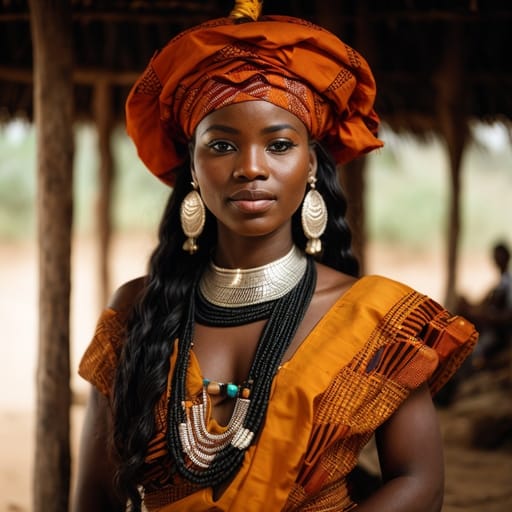
Typical Mbangala Phenotypes
Reference for AI generation — hair, eyes, skin, facial structure, build
Mbangala Body & Anatomy Reference
Per-feature anatomical profile for AI nude generation — Bantu / Central African Niger-Congo phenotype
Mbangala Boobs & Breasts
Mbangala tits and boobs run medium-to-large cup, full, projecting — the classic Bantu / Central African Niger-Congo bust profile. Mbangala nipples and areolas show deep-brown areolar pigmentation against the deep-brown skin tone, with areolar diameter typically in the 32-48mm range and forward-set positioning rather than the smaller East African conical profile. Mbangala breasts trend fuller projection than East African; comparable to West African norm, a function of the mesomorph with strong gluteal-femoral fat deposition body habitus and the mean adult female BMI 23-26. For anatomically-accurate AI-generated Mbangala nudes the render preserves: medium-to-large cup, full, projecting shape, 32-48mm areolas with deep-brown pigmentation, and the torso proportions of the Bantu / Central African Niger-Congo phenotype.
Mbangala Ass & Hips
Mbangala ass and hip morphology presents as full, projected, wide-set glutes — distinctly different from the slim narrow-hip Cushitic East African profile. The Mbangala pelvic profile shows broad iliac crests, gynoid pelvic pattern, anchored in the Bantu / Central African Niger-Congo skeletal pattern. Mbangala butt shots in adult AI imagery should render the full, projected, wide-set glutes silhouette with the mesomorph with strong gluteal-femoral fat deposition build and the gluteal-femoral fat distribution typical of the Bantu / Central African Niger-Congo phenotype rather than defaulting to a globally-averaged "ethnic" butt that generic AI generators produce. The hip-to-waist ratio characteristic of Mbangala women is one of the identifying features of the Bantu / Central African Niger-Congo regional phenotype.
Mbangala Vagina & Pussy
Mbangala pussy and vulvar anatomy presents deep-brown labial pigmentation, fuller labia minora — consistent with the Bantu / Central African Niger-Congo phenotype's pigmentation pattern. Mbangala pubic hair is typically tightly-coiled coarse texture, dense distribution, distributed in the inverted-triangle pattern with regional-typical density. AI-generated Mbangala nude imagery should preserve the deep-brown labial pigmentation and the tightly-coiled coarse texture hair texture rather than defaulting to a Western-European pink-and-sparse template. For anatomically-accurate Mbangala pussy renders the labial pigmentation and coloration should match the surrounding deep-brown skin tone of the Bantu / Central African Niger-Congo phenotype, with continuous gradient rather than an abrupt color transition.
Mbangala Dicks & Penis
Mbangala dick and penile anatomy in adult AI generation should anchor on the regional reference data: regional mean ~14cm erect, above-average girth, and deep-brown shaft pigmentation. The Mbangala cock profile reflects the Bantu / Central African Niger-Congo ancestral population's anthropometric measurements rather than a globally-averaged Western-pornography default. For anatomically-accurate Mbangala nude male imagery the shaft pigmentation should track the surrounding deep-brown skin tone, the glans-to-shaft pigmentation transition should be continuous, and the pubic hair pattern should match tightly-coiled coarse texture texture distributed in the typical inverted-V escutcheon. Circumcision status in Mbangala populations varies by religious-cultural tradition rather than ancestral phenotype.
Mbangala Body, Curves & Build
Mbangala body type and overall build presents as mesomorph with strong gluteal-femoral fat deposition, with mean adult female BMI 23-26 — the characteristic Bantu / Central African Niger-Congo habitus. Mbangala curves and proportions in adult AI imagery should preserve the regional skeletal frame (height, shoulder-to-hip ratio, limb proportions) rather than scaling to a Western-European mesomorph default. The Mbangala nude female form, when rendered with anatomical fidelity, shows the height range, frame width, and adipose distribution pattern typical of the Bantu / Central African Niger-Congo phenotype. Generic AI image generators tend to collapse regional body types into a few default shapes; the EthnicErotic phenotype-anchored approach preserves the Mbangala build as its own reference category.
Mbangala Skin Tone & Hair Texture
Mbangala skin tone falls in the deep-brown (Fitzpatrick VI) band — the surface signal most often miscalibrated by generic AI nude generators trained on Western-photographic datasets. Mbangala hair texture is typically tight 4A-4C coil, characteristic of the Bantu / Central African Niger-Congo phenotype. For anatomically-accurate Mbangala nude renders the skin should hold the Fitzpatrick band consistently across body surface rather than showing the lighter-than-face body shading that AI generators default to. Mbangala hair pigmentation and texture on body, pubic, and head should match across the figure rather than mixing textures (a common AI artefact).
Explore phenotype categories
Structured taxonomy with peer-reviewed scales · 22 anatomical categories
Erotic Poses & Sex Positions
From the pose catalog — 219 named positions with reference skeletons
Frequently asked questions about Mbangala people
Where is the Mbangala homeland?
The Mbangala homeland is The Baixa de Cassanje and the middle Kwango valley in Malanje Province, northern Angola, with earlier origins in the central Angolan plateau. in Central Africa.
What language do Mbangala people speak?
Mbangala people primarily speak Kimbundu (Bantu, Niger-Congo), with Portuguese widely spoken.
What religion do Mbangala people practice?
The predominant religion among Mbangala people is Predominantly Roman Catholic with Protestant minorities; ancestral veneration and spirit practice persist alongside church life.

What does a typical Mbangala woman look like?
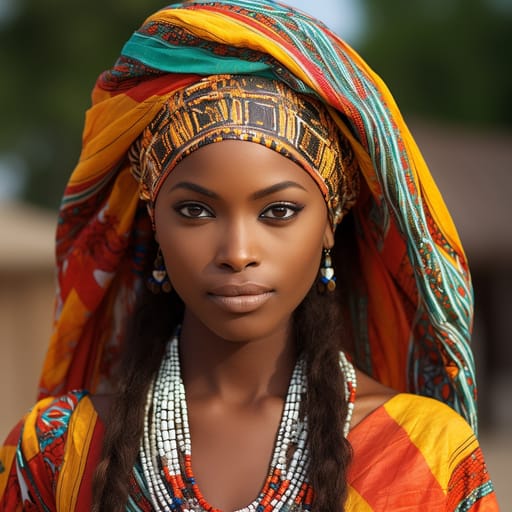
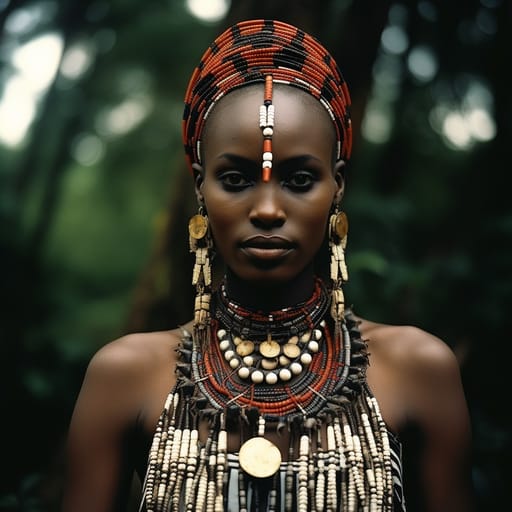
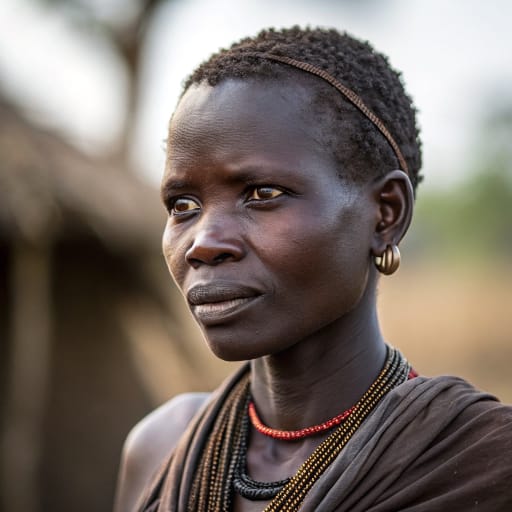
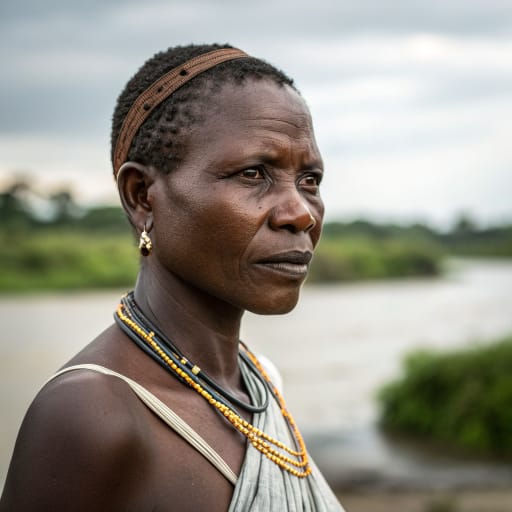
Skin tone runs medium to deep brown, with build generally lean and of medium height. Hair is tightly coiled and black, historically dressed in raised crested and braided arrangements that early European observers singled out for comment.
Make your own Mbangala images
Five a day, free, no credits to buy. The studio starts from this group's phenotype data, so you can set body type, pose and style and keep the traits accurate.
Start with Mbangala