No portrait yet
Hungana Erotic
The Kwilu River valley in Kwilu province (formerly part of Bandundu), southwestern Democratic Republic of the Congo
Hungana (Bantu, Niger-Congo), closely related to Mbala; Kituba, Lingala and French also widely used
Mostly Christian (Catholic and Protestant), with older beliefs about ancestors and protective charms persisting
One of the Bantu peoples of the Kwango-Kwilu region; linguistically closest to the Mbala
About Hungana People
The Hungana are a small Bantu-speaking people of the Kwilu River valley in the southwestern Democratic Republic of the Congo. Their name reaches farther than their numbers would suggest. In museum catalogs, where it is often spelled Hungaan, the name is attached to a well-known group of miniature ivory pendants: human figures small enough to hang from a cord, carved so finely that collectors of Central African art prize them. At home the name means something plainer and more lasting: a language, a web of kin, and villages that have long held their place among larger neighbors. Their language, also called Hungana, is a Bantu language grouped with Mbala in the standard classification, and the two peoples are neighbors in more than grammar. The Kwango-Kwilu region is a crowded map of related but distinct groups, among them the Pende, Yaka, Suku and Mbala, and few people there get by in just one language. Kituba, the Kikongo-based lingua franca of the region, is used for markets and travel, while Lingala and French arrive through towns, schools and radio. Speaking Hungana is one of the clearest ways of marking who belongs.
Religious life looks much like it does across the rest of Kwilu. Catholic and Protestant missions spread through the region under Belgian rule, and most Hungana today are Christian. That did not simply erase older ways of thinking about ancestors, sickness and protection. The ivory pendants came out of that older world. They were worn on the body and are generally understood as protective charms or as ties to the dead, though the Europeans who collected them seldom wrote down what a given piece meant to its owner. The Kwilu basin was also pulled hard into the colonial economy. Palm-oil concessions, forced labor and head taxes reshaped village life in the early twentieth century, and the region became a center of resistance twice: the Pende revolt of 1931, and the Kwilu rebellion that followed independence in the 1960s. Small groups like the Hungana lived through those upheavals alongside their neighbors. Today farming is the mainstay, with cassava at the center of the table, and many younger people head for Kikwit or Kinshasa for school and work.
Related ethnic groups
Groups that share Hungana's homeland, region, language, or religious tradition. These are likely candidates for comparative phenotype reference.
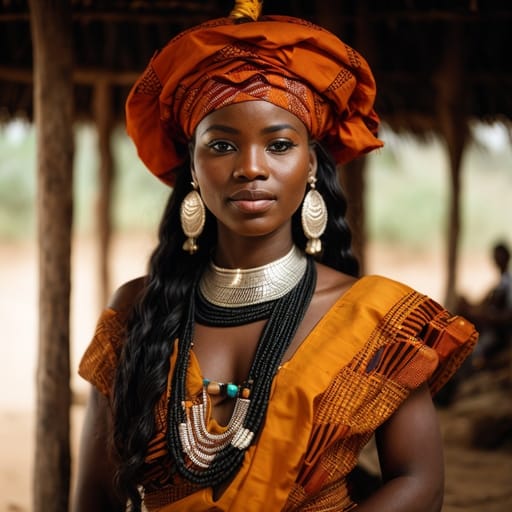
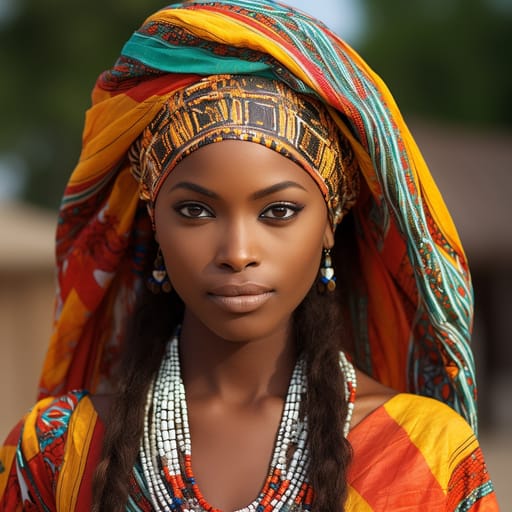
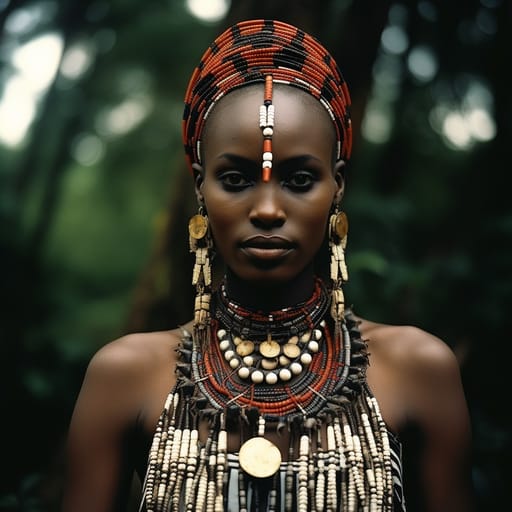
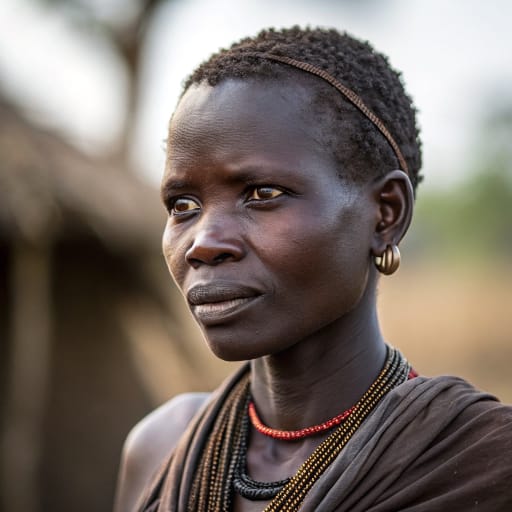
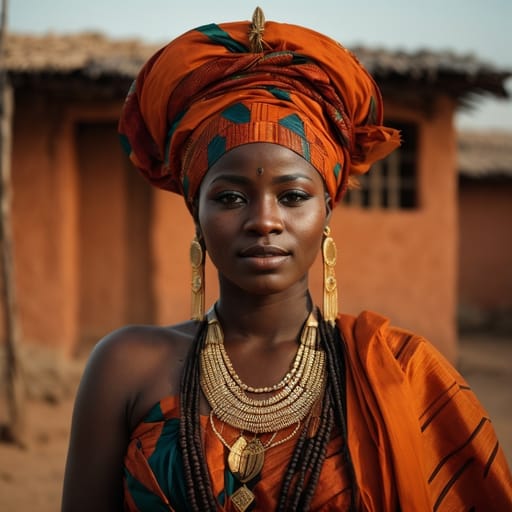
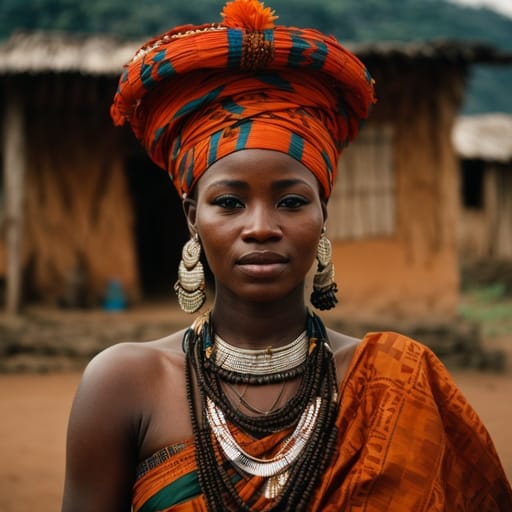
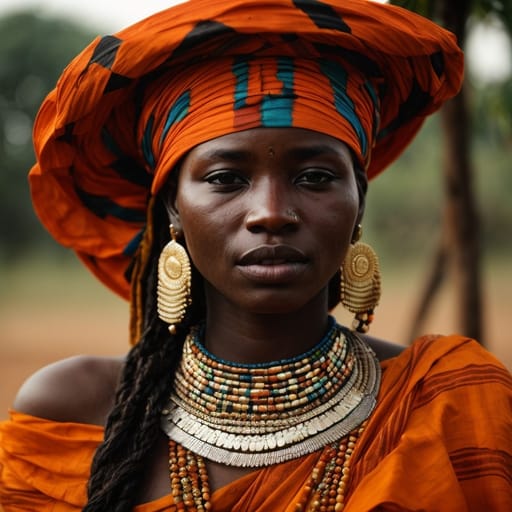
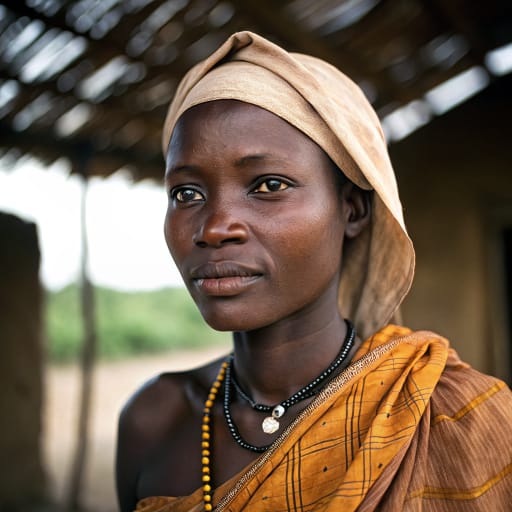
Typical Hungana Phenotypes
Reference for AI generation: hair, eyes, skin, facial structure, build
Hungana Body & Anatomy Reference
Anatomy by feature, Bantu / Central African Niger-Congo phenotype
Hungana Boobs & Breasts
Hungana boobs follow the Bantu / Central African Niger-Congo profile: medium-to-large cup, full, projecting. Areolar diameter is usually 32-48mm, and the coloring is deep-brown areolar pigmentation against the deep-brown skin tone. Breast shape tracks body composition (mesomorph with strong gluteal-femoral fat deposition, mean adult female BMI 23-26), so Hungana breasts tend to be fuller projection than East African; comparable to West African norm. Expect a forward-set shape, not the smaller East African conical profile.
Hungana Ass & Hips
Hungana ass and hip morphology presents as full, projected, wide-set glutes, distinctly different from the slim narrow-hip Cushitic East African profile. The Hungana pelvic profile shows broad iliac crests, gynoid pelvic pattern, anchored in the Bantu / Central African Niger-Congo skeletal pattern. Hungana butt shots in adult AI imagery should render the full, projected, wide-set glutes silhouette with the overall build (mesomorph with strong gluteal-femoral fat deposition) and the fat distribution typical of the Bantu / Central African Niger-Congo phenotype.
Hungana Vagina & Pussy
Hungana pussy anatomy typically shows deep-brown labial pigmentation, fuller labia minora. Pubic hair is usually tightly-coiled coarse texture, dense distribution. In AI-generated Hungana nudes, labial color should blend into the deep-brown skin with a gradual transition, and the hair should keep its tightly-coiled coarse texture.
Hungana Dicks & Penis
Penis reference for Hungana men: regional mean ~14cm erect, above-average girth. Coloring: deep-brown shaft pigmentation. An accurate Hungana cock in AI imagery matches the surrounding deep-brown skin rather than a generic porn default. Circumcision depends on religion and custom, not ancestry.
Hungana Body, Curves & Build
The Hungana figure is generally mesomorph with strong gluteal-femoral fat deposition, with mean adult female BMI 23-26, characteristic of Bantu / Central African Niger-Congo ancestry. AI image tools tend to flatten regional body types into a few stock shapes; here the Hungana build is kept as its own reference.
Hungana Skin Tone & Hair Texture
Skin: deep-brown (Fitzpatrick VI). Hair: tight 4A-4C coil. Both are typical of Bantu / Central African Niger-Congo ancestry. The most common mistake in AI nudes of Hungana women is a body rendered lighter than the face.
Explore phenotype categories
Structured taxonomy with peer-reviewed scales · 22 anatomical categories
Erotic Poses & Sex Positions
From the pose catalog: 219 named positions with reference skeletons
Frequently asked questions about Hungana people
Where is the Hungana homeland?
The Hungana homeland is The Kwilu River valley in Kwilu province (formerly part of Bandundu), southwestern Democratic Republic of the Congo in Central Africa.
What language do Hungana people speak?
Hungana people primarily speak Hungana (Bantu, Niger-Congo), closely related to Mbala; Kituba, Lingala and French also widely used.
What religion do Hungana people practice?
The predominant religion among Hungana people is Mostly Christian (Catholic and Protestant), with older beliefs about ancestors and protective charms persisting.






Make your own Hungana images
Five a day, free, no credits to buy. The studio starts from this group's phenotype data, so you can set body type, pose and style and keep the traits accurate.
Start with Hungana