No portrait yet
Bulu Erotic
Southern Cameroon, chiefly the South Region around Ebolowa and Sangmélima
Bulu (Niger-Congo, Bantu, Beti group), closely related to Ewondo and Fang; French widely spoken as a second language
Predominantly Christian, strongly Presbyterian with Catholic and other churches; traditional beliefs about ancestors persist in family rites
A branch of the Beti-Pahuin (Pan-Fang) peoples, alongside the Ewondo, Eton and Fang; organized in exogamous patrilineal clans
About Bulu People
The Bulu are a forest people of Cameroon's South Region. They are one branch of a larger family held together by closely related speech, a shared origin story and the same way of reckoning kin. That family is the Beti-Pahuin, which also includes the Ewondo, Eton and Fang. Among the Bulu, descent runs through the father, and each patrilineal clan is exogamous, so a marriage has to reach outside it. Their heartland centers on Ebolowa and Sangmélima, where cocoa groves and food plots are cut from rainforest that still stands close to the villages.
Bulu is a Bantu language, close enough to Ewondo that speakers of the two follow each other with little effort, and it has had an unusual career for a regional language. American Presbyterian missionaries arrived in the 1890s, founded stations at Efulen and then at Elat near Ebolowa, and made Bulu the language of their schools, hymns and Bible. Through that mission it reached readers well beyond Bulu country, and Presbyterian congregations are still at the center of village and town life. The older beliefs have not disappeared. The word for God is still Zambe, the name of the creator long before missionaries took it up, and duties to lineage elders and ancestors still shape land, bridewealth and burial.
Like their Pahuin relatives, the Bulu tell of a migration south out of the savanna and of crossing the Sanaga River on the back of a giant serpent. By the nineteenth century they were settled inland from the coast at Kribi, working as middlemen who passed ivory and later rubber on to European traders. When German firms pushed to trade directly with the interior, Bulu fighters resisted at the turn of the twentieth century, and German military columns brought the region under colonial control. Older arts outlasted that conquest. The mvet, a harp-zither whose players chant epics of warring clans of mortals and immortals, is still performed, and villages once sent messages over long distances by slit drum, beating out the tones of the spoken language.
In national politics the Bulu carry weight out of proportion to their numbers, largely because Paul Biya, who took power in 1982, comes from Mvomeka'a near Sangmélima. Many Cameroonians read the makeup of the state through that fact. Away from the capital, though, the South is still mostly a region of smallholder cocoa farmers, and many of its young people leave for Yaoundé to find work.
Related ethnic groups
Groups that share Bulu's homeland, region, language, or religious tradition. These are likely candidates for comparative phenotype reference.
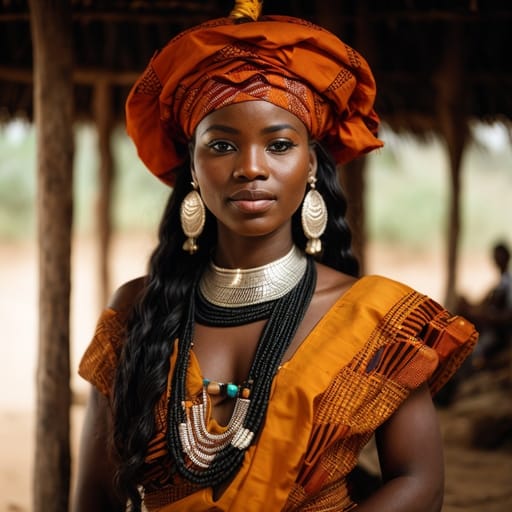
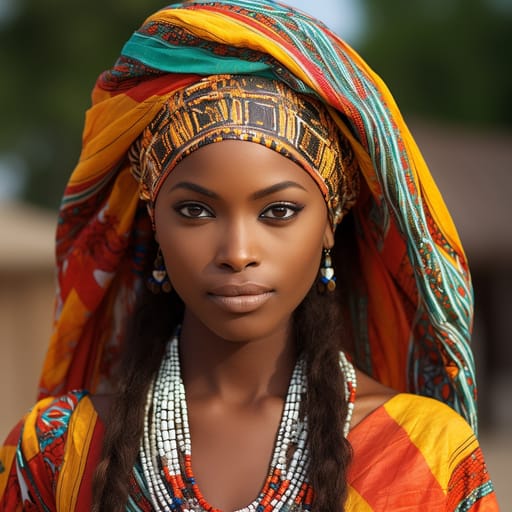
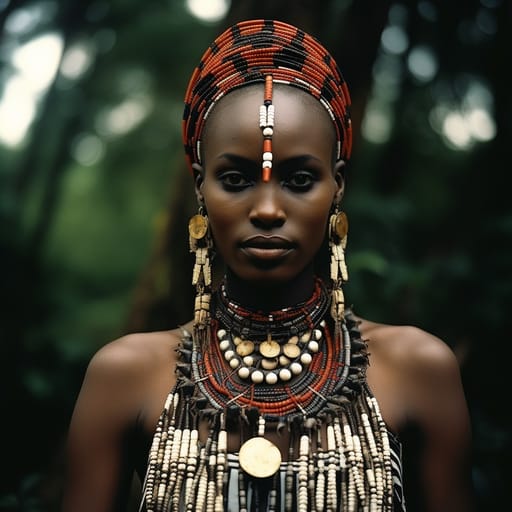
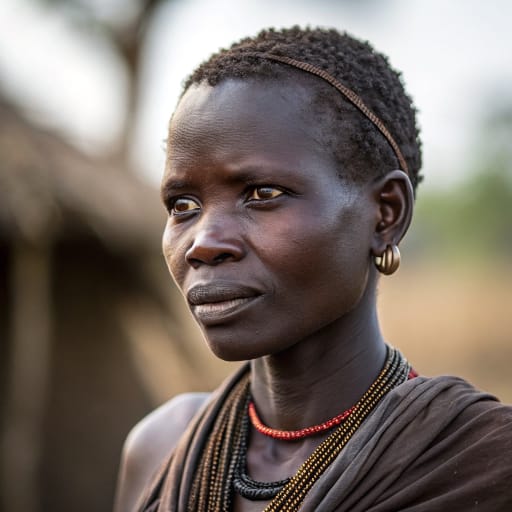
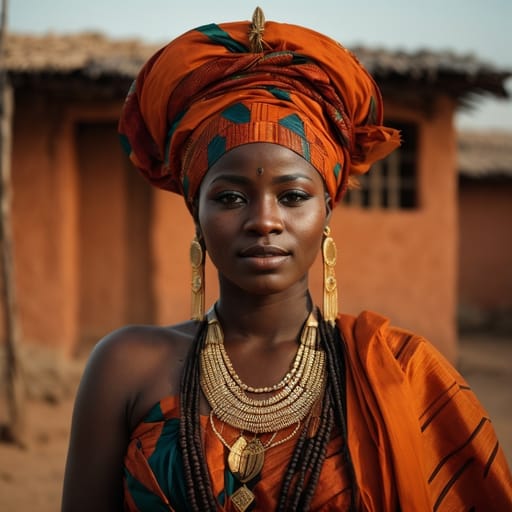
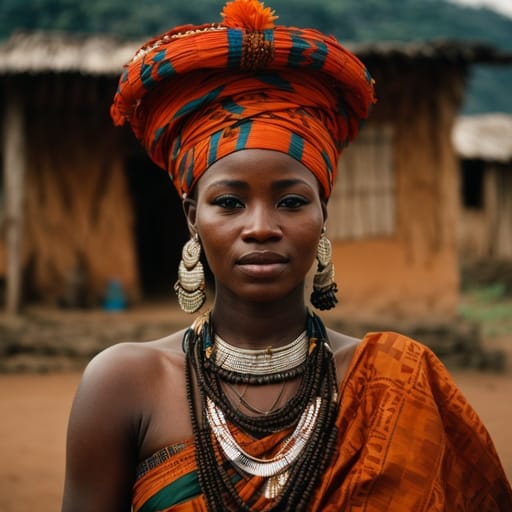
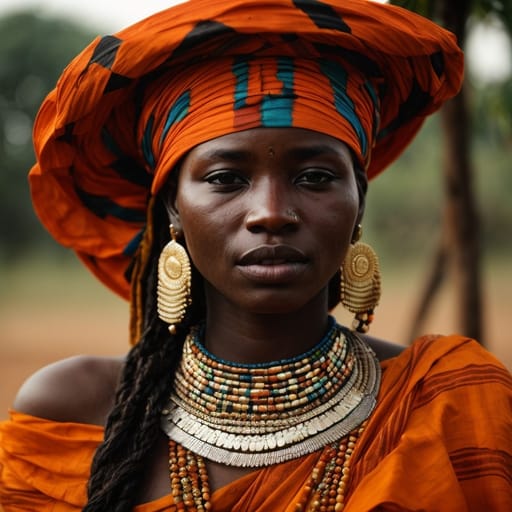
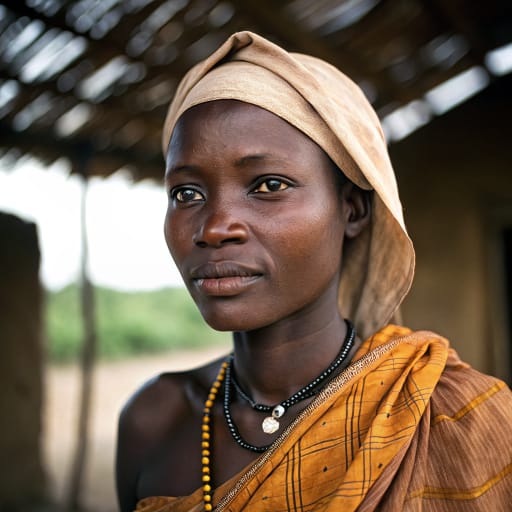
Typical Bulu Phenotypes
Reference for AI generation: hair, eyes, skin, facial structure, build
Bulu Body & Anatomy Reference
Per-feature anatomical profile for AI nude generation: Bantu / Central African Niger-Congo phenotype
Bulu Boobs & Breasts
Bulu tits and boobs run medium-to-large cup, full, projecting, the classic Bantu / Central African Niger-Congo bust profile. Bulu nipples and areolas show deep-brown areolar pigmentation against the deep-brown skin tone, with areolar diameter typically in the 32-48mm range and forward-set positioning rather than the smaller East African conical profile. Bulu breasts trend fuller projection than East African; comparable to West African norm, a function of the mesomorph with strong gluteal-femoral fat deposition body habitus and the mean adult female BMI 23-26. For anatomically accurate AI-generated Bulu nudes the render preserves the medium-to-large cup, full, projecting shape, 32-48mm areolas with deep-brown pigmentation, and the torso proportions of the Bantu / Central African Niger-Congo phenotype.
Bulu Ass & Hips
Bulu hips and butt usually read as full, projected, wide-set glutes. The skeletal base is broad iliac crests, gynoid pelvic pattern, the Bantu / Central African Niger-Congo pattern. Set against the slim narrow-hip Cushitic East African profile, the difference is easy to see, and the hip-to-waist ratio is often what identifies Bulu women in photos.
Bulu Vagina & Pussy
Expect deep-brown labial pigmentation, fuller labia minora on Bulu women, in keeping with Bantu / Central African Niger-Congo ancestry. The pubic hair is tightly-coiled coarse texture, dense distribution. Coloring should run evenly from the deep-brown skin of the thighs to the labia, and Bulu nude imagery should keep the hair's tightly-coiled coarse texture.
Bulu Dicks & Penis
Bulu dick and penile anatomy in adult AI generation should anchor on the regional reference data: regional mean ~14cm erect, above-average girth, and deep-brown shaft pigmentation. The Bulu cock profile reflects the Bantu / Central African Niger-Congo population's anthropometric measurements. The shaft pigmentation should track the surrounding deep-brown skin tone, and the pubic hair should keep its tightly-coiled coarse texture in the typical inverted-V escutcheon.
Bulu Body, Curves & Build
Bulu body type: mesomorph with strong gluteal-femoral fat deposition, with mean adult female BMI 23-26. This is the typical Bantu / Central African Niger-Congo build. Height range, shoulder-to-hip ratio and fat distribution all follow from it, which is what an accurate Bulu nude body should show.
Bulu Skin Tone & Hair Texture
Bulu skin tone falls in the deep-brown (Fitzpatrick VI) band, the surface signal most often miscalibrated by generic AI nude generators. Bulu hair texture is typically tight 4A-4C coil, characteristic of the Bantu / Central African Niger-Congo phenotype. In Bulu nude renders the skin should hold that band consistently across the body.
Explore phenotype categories
Structured taxonomy with peer-reviewed scales · 22 anatomical categories
Erotic Poses & Sex Positions
From the pose catalog: 219 named positions with reference skeletons
Frequently asked questions about Bulu people
Where is the Bulu homeland?
The Bulu homeland is Southern Cameroon, chiefly the South Region around Ebolowa and Sangmélima in Central Africa.
What language do Bulu people speak?
Bulu people primarily speak Bulu (Niger-Congo, Bantu, Beti group), closely related to Ewondo and Fang; French widely spoken as a second language.
What religion do Bulu people practice?
The predominant religion among Bulu people is Predominantly Christian, strongly Presbyterian with Catholic and other churches; traditional beliefs about ancestors persist in family rites.






Make your own Bulu images
Five a day, free, no credits to buy. The studio starts from this group's phenotype data, so you can set body type, pose and style and keep the traits accurate.
Start with Bulu