No portrait yet
Mapulana Erotic
Mapulaneng, the Bushbuckridge area of Mpumalanga, South Africa, between the Drakensberg escarpment and Kruger National Park
Sepulana, officially treated as a dialect of Northern Sotho (Niger-Congo, Bantu, Sotho-Tswana)
Mostly Christian, many in African independent churches, alongside ancestral observance and traditional healing
Sotho-Tswana peoples; grouped with the Pai and Kutswe as the Eastern Sotho, closely linked to the Northern Sotho
About Mapulana People
The Mapulana are defined as much by a place as by descent. Their home is Mapulaneng, the country around Bushbuckridge in Mpumalanga, where the Drakensberg escarpment falls away into the lowveld a short drive from Kruger National Park. The landmark at its center is Mariepskop, a forested mountain that locals also call Moholoholo. It is also at the center of their best known story.
In the nineteenth century, Swazi raiding parties pushed into the lowveld. The Mapulana, under Chief Maripe Mashile, pulled back to the heights of the mountain and held it, by most accounts by rolling boulders down onto the attackers. The mountain still carries his name, and the Mashile name is still tied to Mapulana chieftaincy. Later pressures were slower and less dramatic. First came colonial land loss, then apartheid homeland policy. That policy put the Mapulana side of Bushbuckridge in Lebowa, the Northern Sotho homeland, and assigned their Xitsonga speaking neighbors to Gazankulu. After 1994 the area was fought over again, this time between provinces, until it was settled in Mpumalanga in the mid 2000s.
Their language, Sepulana, belongs to the Sotho-Tswana branch of the Bantu family, and officially it counts as a dialect of Northern Sotho. Linguists have long grouped it with the speech of the neighboring Pai and Kutswe as Eastern Sotho, a set of dialects that took shape on a frontier with Swati and Tsonga speakers. That frontier is still part of ordinary life. Bushbuckridge is a patchwork of Sepulana and Xitsonga villages, and moving between the two languages is unremarkable. Schools teach standard Sepedi, so Sepulana is mostly spoken at home and in the community. Whether it should be recognized as a language in its own right is a recurring local argument.
Most Mapulana are Christian, many of them in African independent churches. Honoring the ancestors and consulting traditional healers go on next to church life, not in opposition to it. The local economy runs through game lodges, commercial forestry and tourism along the escarpment, plus a steady flow of workers to Mbombela and Gauteng. What holds the identity together is less a costume or a ritual calendar than a shared history on one stretch of mountain and bush. It is also a language people keep speaking even though the official one is something else.
Related ethnic groups
Groups that share Mapulana's homeland, region, language, or religious tradition. These are likely candidates for comparative phenotype reference.
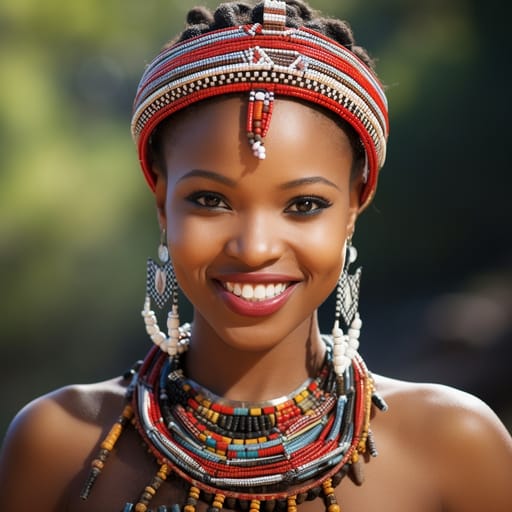
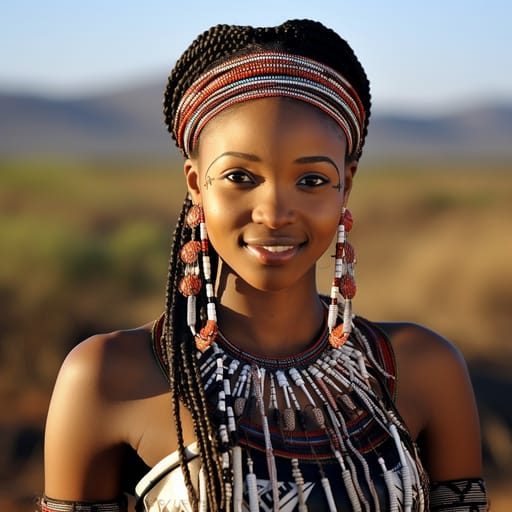
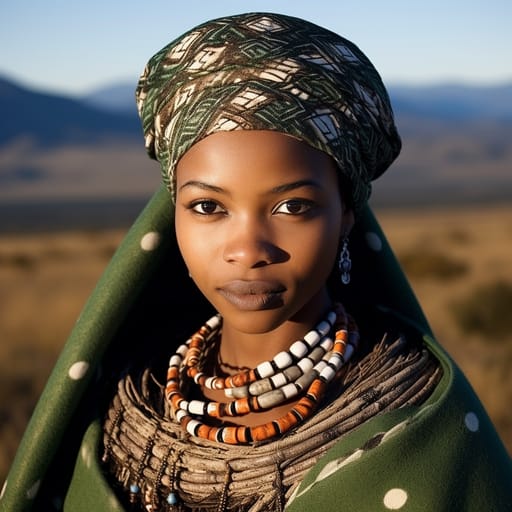
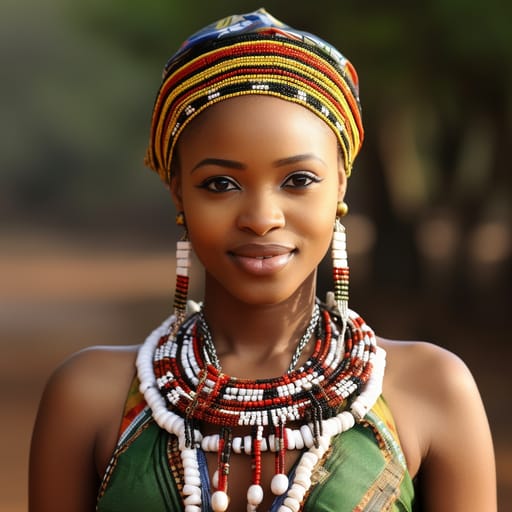
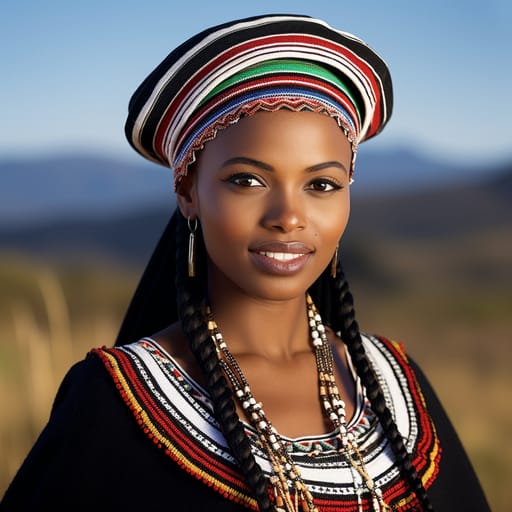

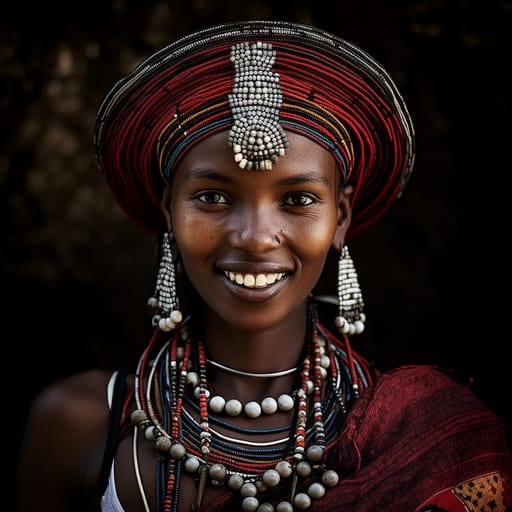
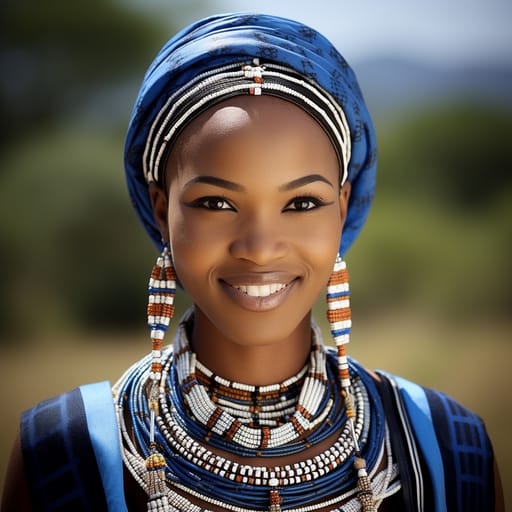
Typical Mapulana Phenotypes
Reference for AI generation: hair, eyes, skin, facial structure, build
Mapulana Body & Anatomy Reference
Bantu / Khoisan Southern African phenotype: anatomy reference for AI nude generation
Mapulana Boobs & Breasts
The typical Mapulana bust is medium cup, full but moderate projection, in line with the wider Bantu / Khoisan Southern African pattern. Areolas usually fall in the 30-44mm range, with medium-brown to deep-brown areolar pigmentation. Compared with the heavier West African bust, Mapulana breasts sit forward and are generally moderately full; less projecting than West African norm. A faithful AI render of Mapulana tits keeps that shape and areola size.
Mapulana Ass & Hips
Butt shape among Mapulana women: the distinctive Khoisan-influenced steatopygic profile in some sub-populations (San, Khoekhoe); broader gluteal projection in Bantu-speaking groups, over wide iliac crests with notable lordosis in Khoisan-descended sub-populations. This follows Bantu / Khoisan Southern African ancestry and looks quite unlike the slim Cushitic East African profile. An accurate Mapulana ass in adult AI imagery keeps both the silhouette and the overall build (mesomorph; Khoisan-descended sub-populations show distinctive steatopygic fat deposition) instead of a generic average.
Mapulana Vagina & Pussy
Vulvar anatomy among Mapulana women: deep-brown labial pigmentation; the elongated labia minora documented in some Khoisan-descended populations. Pubic hair tends to be tightly-coiled coarse texture, in the usual inverted-triangle pattern. Both follow Bantu / Khoisan Southern African pigmentation, which is why Mapulana pussy renders should not fall back on a pale, sparse Western template.
Mapulana Dicks & Penis
The Mapulana cock profile, from Bantu / Khoisan Southern African anthropometric data: regional mean ~14cm erect; moderate-to-above-average girth; deep-brown shaft pigmentation. Pubic hair has a tightly-coiled coarse texture and forms the usual inverted-V pattern. Whether Mapulana men are circumcised follows religious and cultural practice rather than phenotype.
Mapulana Body, Curves & Build
Build and curves among Mapulana women follow the Bantu / Khoisan Southern African pattern: mesomorph; Khoisan-descended sub-populations show distinctive steatopygic fat deposition, mean adult female BMI 24-28. Proportions matter as much as skin tone, so Mapulana figures should keep their regional height and limb ratios.
Mapulana Skin Tone & Hair Texture
The Mapulana skin range is medium-brown to deep-brown (Fitzpatrick V-VI); lighter in Khoisan-descended populations, and hair tends to be tightly-coiled 4A-4C; the distinctive 'peppercorn' tight-spiral texture in Khoisan-descended populations. That combination marks the Bantu / Khoisan Southern African phenotype, and skin tone is the trait AI generators most often get wrong for Mapulana women.
Explore phenotype categories
Structured taxonomy with peer-reviewed scales · 22 anatomical categories
Erotic Poses & Sex Positions
From the pose catalog: 219 named positions with reference skeletons
Frequently asked questions about Mapulana people
Where is the Mapulana homeland?
The Mapulana homeland is Mapulaneng, the Bushbuckridge area of Mpumalanga, South Africa, between the Drakensberg escarpment and Kruger National Park in Southern Africa.
What language do Mapulana people speak?
Mapulana people primarily speak Sepulana, officially treated as a dialect of Northern Sotho (Niger-Congo, Bantu, Sotho-Tswana).
What religion do Mapulana people practice?
The predominant religion among Mapulana people is Mostly Christian, many in African independent churches, alongside ancestral observance and traditional healing.






Make your own Mapulana images
Five a day, free, no credits to buy. The studio starts from this group's phenotype data, so you can set body type, pose and style and keep the traits accurate.
Start with Mapulana