Help us get this right
Does this portrait look right for Makoa?
Nobody has judged this one yet. You would be the first.
Makoa Erotic
Communities along the western coast of Madagascar; ancestral origins in northern Mozambique and its interior
Malagasy (Austronesian)
Christianity alongside traditional Malagasy ancestor-centered practice
Sometimes classified as a subgroup of the Vezo coastal fishing peoples; ancestry traced to the Makua and neighboring peoples of northern Mozambique
About Makoa People
The Makoa speak Malagasy and have lived on Madagascar for generations, but their story begins across the water. Most of their ancestors were captured on the African mainland in the nineteenth century. They were brought to the slaving ports of northern Mozambique and shipped over the Mozambique Channel to be sold on the island. Not all of the captives were ethnic Makua, but the name that stuck came from the coastal country they passed through: Makua, which Malagasy speech turned into Makoa. That makes them one of the youngest African diaspora communities anywhere, a people whose roots in the slave trade go back only a few generations.
That short span is what sets them apart. Madagascar was settled by seafarers from island Southeast Asia who mixed with East Africans more than a thousand years ago, so African ancestry is ordinary across the island. The Makoa are different because of when they came, and because the memory of arriving in bondage is still close. Today they live in communities along the western coast. They speak Malagasy, the Austronesian language that every region of the island shares in its own dialect, instead of the Bantu languages their forebears brought.
Freedom came in two steps. In 1877 the Merina kingdom of the central highlands freed its Mozambican-born slaves. In 1896 the French abolished slavery across Madagascar, the same year they made the island a colony. The new administration then put a reputation to work. Makoa men were known for their height and heavy build, and the French recruited them as police. The job kept the community in public view and deepened the sense that they were a people apart.
Some classifications fold the Makoa into the Vezo, the fishing people of the west coast who work reefs and lagoons from outrigger canoes. It is not a comfortable fit. Vezo identity is famously about what you do: live by the sea and fish, and you become Vezo. Makoa identity comes through descent instead. On an island where ancestors and family tombs anchor social standing, slave descent still carries stigma in some regions. A name that points openly back to the Mozambican coast is not a neutral label, and the Makoa have kept it.
Related ethnic groups
Groups that share Makoa's homeland, region, language, or religious tradition. These are likely candidates for comparative phenotype reference.
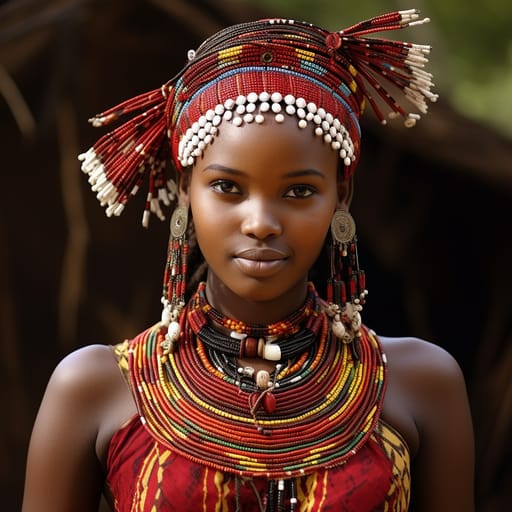
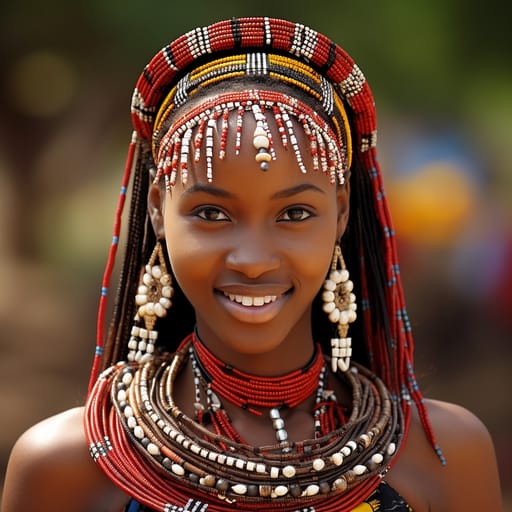
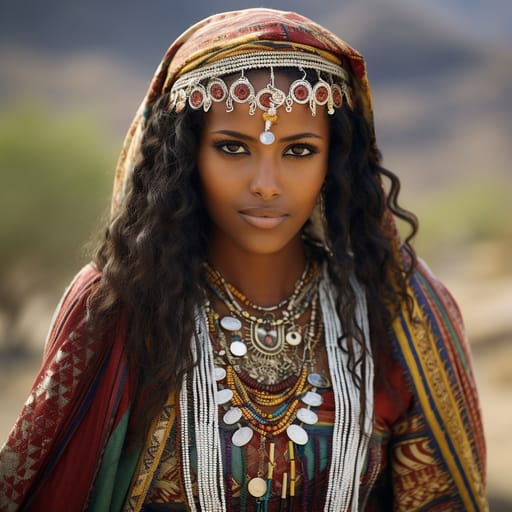
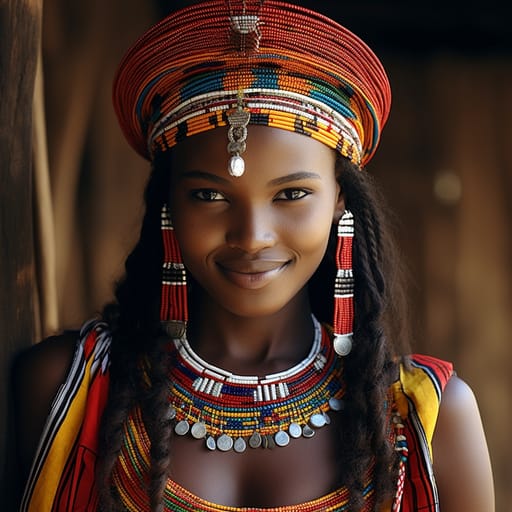
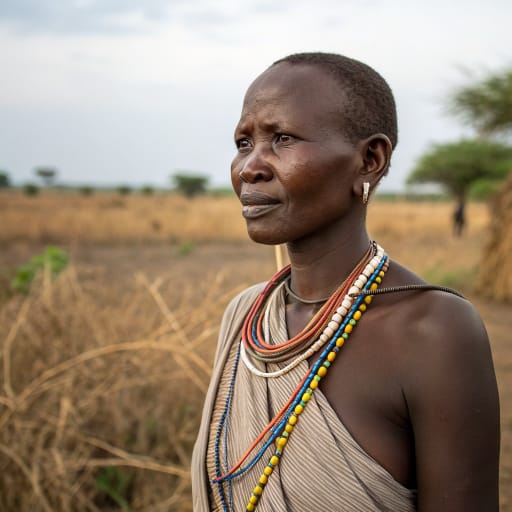
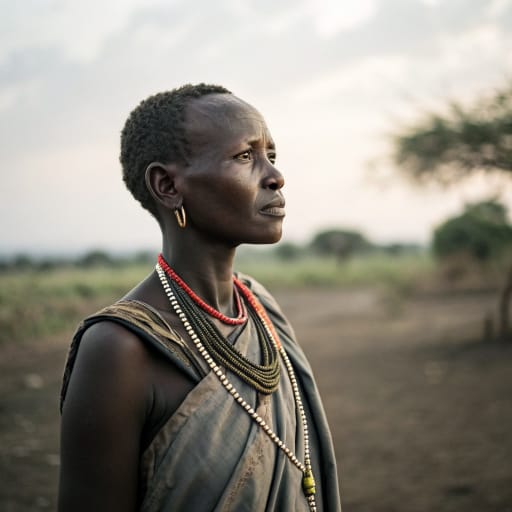
Typical Makoa Phenotypes
Reference for AI generation: hair, eyes, skin, facial structure, build
Makoa Body & Anatomy Reference
Cushitic / Nilo-Cushitic East African phenotype: anatomy reference for AI nude generation
Makoa Boobs & Breasts
Bust reference for Makoa women: small-to-medium-cup, high-set, conical, which is typical of Cushitic / Nilo-Cushitic East African ancestry. Areolas measure about 28-38mm across, with moderate-to-high pigmentation. Body type (lean ectomorph-to-mesomorph) shapes the bust as well, so Makoa tits are usually firmer and less projecting than the African-American or West African norm. In AI imagery, keep the forward-set shape rather than drifting toward the lateral spread of the West African phenotype.
Makoa Ass & Hips
The Makoa ass is typically small-to-medium, high-set, rounded, which sets it apart from the wide-set heavy-projection West African or African-American norm. Underneath, the pelvis shows narrow-to-medium iliac crests, longer torso-to-leg ratio, part of the Cushitic / Nilo-Cushitic East African skeletal pattern. For Makoa butt pics and AI renders, match that silhouette and the overall build (lean ectomorph-to-mesomorph).
Makoa Vagina & Pussy
Makoa pussy and vulvar anatomy presents brown-to-deep-brown labial pigmentation, narrow-to-medium labia minora projection, consistent with the Cushitic / Nilo-Cushitic East African phenotype's pigmentation pattern. Makoa pubic hair is typically tightly-coiled coarse texture, densely distributed, in the inverted-triangle pattern. For anatomically accurate Makoa pussy renders the labial coloration should match the surrounding brown to deep brown skin tone with a continuous gradient, and the hair should keep its tightly-coiled coarse texture.
Makoa Dicks & Penis
Makoa dicks follow the Cushitic / Nilo-Cushitic East African reference data: regional mean ~13.5cm erect; moderate girth, ~12cm circumference; deeper-pigmented than the West African norm. Shaft color should track the brown to deep brown skin tone with a smooth change toward the glans, and Makoa pubic hair keeps its tightly-coiled coarse texture.
Makoa Body, Curves & Build
Makoa body type and overall build presents as lean ectomorph-to-mesomorph, with mean adult female BMI 19-22: the characteristic Cushitic / Nilo-Cushitic East African habitus. Makoa curves and proportions should keep the regional skeletal frame (height, shoulder-to-hip ratio, limb proportions) rather than a generic mesomorph default.
Makoa Skin Tone & Hair Texture
Makoa skin sits in the brown to deep brown (Fitzpatrick V-VI) band. Hair is typically tight 4A-4C coil, often worn natural or in braided/twisted protective styles, in keeping with the Cushitic / Nilo-Cushitic East African phenotype. In nude renders the skin should stay one even tone from face to body, and body, pubic and head hair should match.
Explore phenotype categories
Structured taxonomy with peer-reviewed scales · 22 anatomical categories
Erotic Poses & Sex Positions
From the pose catalog: 219 named positions with reference skeletons
Frequently asked questions about Makoa people
Where is the Makoa homeland?
The Makoa homeland is Communities along the western coast of Madagascar; ancestral origins in northern Mozambique and its interior in Eastern Africa.
What language do Makoa people speak?
Makoa people primarily speak Malagasy (Austronesian).
What religion do Makoa people practice?
The predominant religion among Makoa people is Christianity alongside traditional Malagasy ancestor-centered practice.






Make your own Makoa images
Five a day, free, no credits to buy. The studio starts from this group's phenotype data, so you can set body type, pose and style and keep the traits accurate.
Start with Makoa