Help us get this right
Does this portrait look right for Loko?
Nobody has judged this one yet. You would be the first.
Loko Erotic
Northern Sierra Leone, mainly Bombali District around Kalangba, Kagbere, Batkanu, Gbendembu and Tambiama, plus communities such as Regent near Freetown
Loko, called Landogo by its speakers (Mande, Southwestern branch, close to Mende); Temne and Krio widely spoken as second languages
Mostly Muslim, with a Christian minority; the Poro and Sande (Bondo) initiation societies remain influential
Southwestern Mande peoples, related by language to the Mende, Kpelle, Loma and Bandi
About Loko People
The Loko are a Mande-speaking people who live somewhat out of place, at least by the logic of a language map. Their language, called Landogo by its speakers and Loko by everyone else, belongs to the Southwestern Mande branch along with Mende, Kpelle and Loma. Those languages are centered to the south and east, in southern Sierra Leone, Liberia and Guinea. The Loko heartland, though, lies in northern Sierra Leone, in the wooded savanna and farm country of Bombali. There the dominant neighbor is Temne, an Atlantic language with no close kinship to Landogo. That language island is the clearest marker of who the Loko are, and it hints at older ties to the Mende country to the south.
Loko life turns on farming towns such as Kalangba, Kagbere, Batkanu, Gbendembu and Tambiama. None of them is only Loko: Temne, Mandingo and Fula families live there too. Generations of marriage between groups and shared markets have made Temne a second language for many Loko, and Krio, Sierra Leone's national lingua franca, covers the rest. Being Loko rests less on isolation than on holding on: people switch languages all day and still call themselves Landogo. A second center sits at the edge of the capital, in communities such as Regent in the hills behind Freetown, where Loko families are part of the city's mixed population.
Most Loko are Muslim. Islam spread through northern Sierra Leone with Mandingo and Fula traders and clerics, and there is a Christian minority, especially around Freetown. Neither faith has pushed aside the initiation societies that shape adult life across much of the region. Men traditionally join Poro and women join Sande, also known as Bondo. These societies still carry weight in teaching the young, in settling disputes and in marking the move from childhood to full adult standing. Praying at the mosque on Friday and taking part in society rites later in the season are not seen as a contradiction.
Larger neighbors have shaped Loko history. Temne expansion over past centuries redrew the country around them, and the town of Port Loko is commonly said to take its name from a time when Loko held that ground. The slave trade that worked the rivers and creeks of this coast took Loko captives, as it took their neighbors. Today the pressure is quieter and falls on the language. In mixed towns and in Freetown, Temne and Krio pull steadily at younger speakers, so whether Landogo lasts is still an open question.
Related ethnic groups
Groups that share Loko's homeland, region, language, or religious tradition. These are likely candidates for comparative phenotype reference.
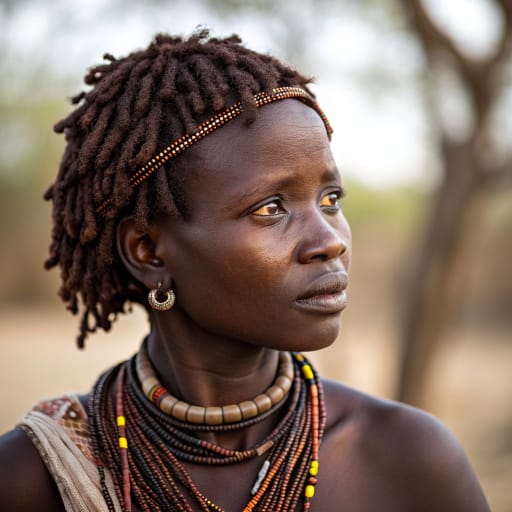
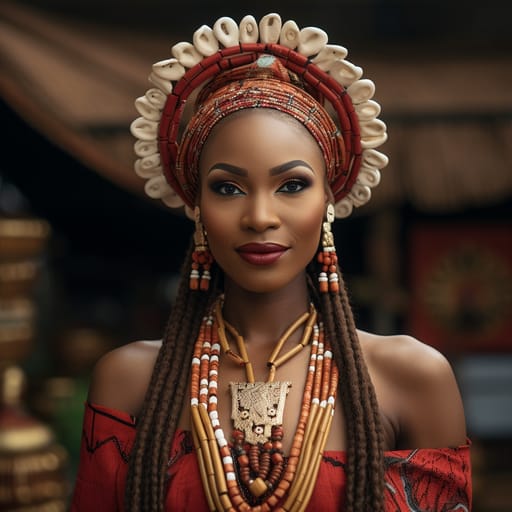
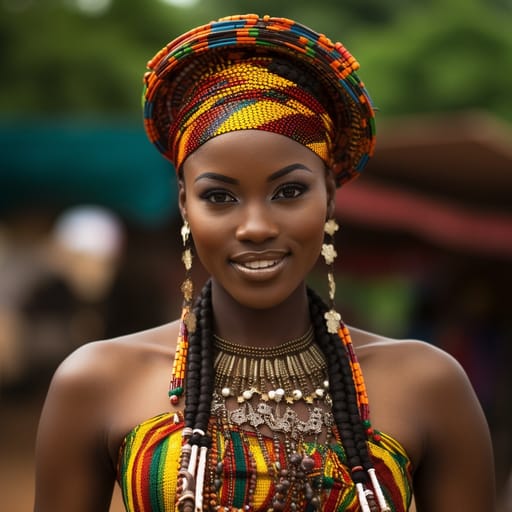
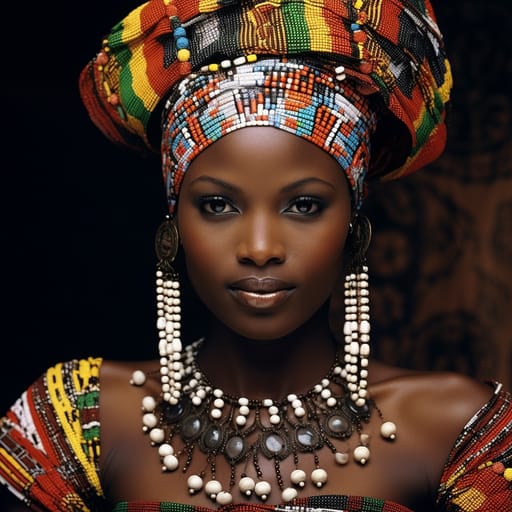
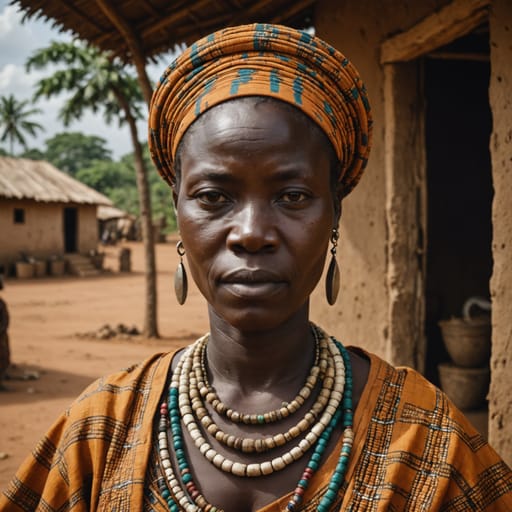
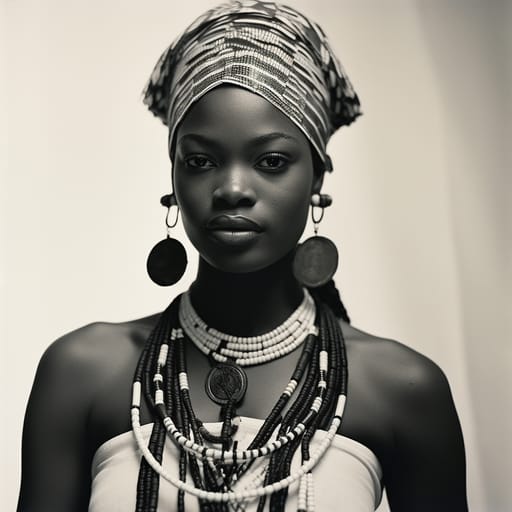
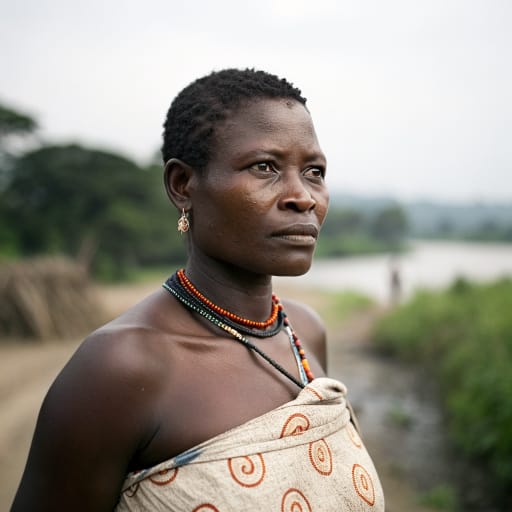
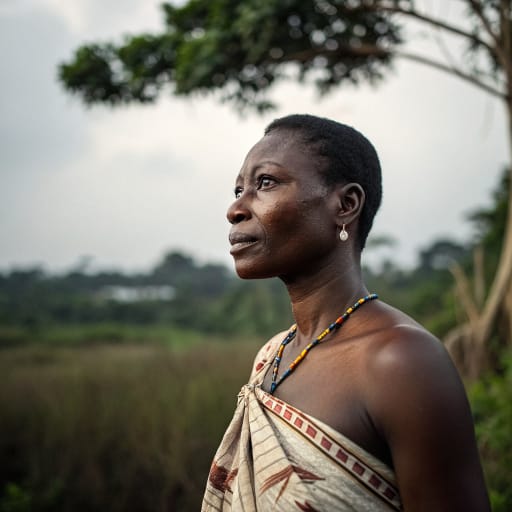
Typical Loko Phenotypes
Reference for AI generation: hair, eyes, skin, facial structure, build
Loko Body & Anatomy Reference
West African Niger-Congo phenotype: anatomy reference for AI nude generation
Loko Boobs & Breasts
The typical Loko bust is medium-to-large cup, full, projecting, in line with the wider West African Niger-Congo pattern. Areolas usually fall in the 35-50mm range, with deep-brown to near-black areolar pigmentation against the medium-to-deep-brown skin tone. Compared with the smaller conical Cushitic East African profile, Loko breasts sit forward and are generally fuller and more projecting than the East African norm. A faithful AI render of Loko tits keeps that shape and areola size.
Loko Ass & Hips
Butt shape among Loko women: wide-set, full, heavily projected glutes, over wide iliac crests, broad gynoid pelvic pattern, high glute-to-waist ratio. This follows West African Niger-Congo ancestry and looks quite unlike the slim narrow-hip Cushitic East African profile. An accurate Loko ass in adult AI imagery keeps both the silhouette and the overall build (mesomorph with strong gluteal-femoral fat distribution) instead of a generic average.
Loko Vagina & Pussy
Vulvar anatomy among Loko women: deep-brown to near-black labial pigmentation, fuller labia minora. Pubic hair tends to be tightly-coiled coarse texture, densely distributed, in the usual inverted-triangle pattern. Both follow West African Niger-Congo pigmentation, which is why Loko pussy renders should not fall back on a pale, sparse Western template.
Loko Dicks & Penis
The Loko cock profile, from West African Niger-Congo anthropometric data: regional mean ~14-15cm erect; above-average girth, ~13cm circumference; deep-brown-to-near-black shaft pigmentation. Pubic hair has a tightly-coiled coarse texture and forms the usual inverted-V pattern. Whether Loko men are circumcised follows religious and cultural practice rather than phenotype.
Loko Body, Curves & Build
Build and curves among Loko women follow the West African Niger-Congo pattern: mesomorph with strong gluteal-femoral fat distribution, mean adult female BMI 24-27. Proportions matter as much as skin tone, so Loko figures should keep their regional height and limb ratios.
Loko Skin Tone & Hair Texture
The Loko skin range is medium-brown to deep-brown (Fitzpatrick V-VI), and hair tends to be tight 4A-4C coil, often worn natural, braided, or relaxed. That combination marks the West African Niger-Congo phenotype, and skin tone is the trait AI generators most often get wrong for Loko women.
Explore phenotype categories
Structured taxonomy with peer-reviewed scales · 22 anatomical categories
Erotic Poses & Sex Positions
From the pose catalog: 219 named positions with reference skeletons
Frequently asked questions about Loko people
Where is the Loko homeland?
The Loko homeland is Northern Sierra Leone, mainly Bombali District around Kalangba, Kagbere, Batkanu, Gbendembu and Tambiama, plus communities such as Regent near Freetown in Western Africa.
What language do Loko people speak?
Loko people primarily speak Loko, called Landogo by its speakers (Mande, Southwestern branch, close to Mende); Temne and Krio widely spoken as second languages.
What religion do Loko people practice?
The predominant religion among Loko people is Mostly Muslim, with a Christian minority; the Poro and Sande (Bondo) initiation societies remain influential.






Make your own Loko images
Five a day, free, no credits to buy. The studio starts from this group's phenotype data, so you can set body type, pose and style and keep the traits accurate.
Start with Loko