Help us get this right
Does this portrait look right for Lhop?
Nobody has judged this one yet. You would be the first.
Lhop Erotic
A small group of hill villages in Samtse District, southwestern Bhutan, near the border with West Bengal, India
Lhokpu (Sino-Tibetan, exact place in the family debated); many also speak Nepali and Dzongkha
Animist tradition centered on local spirits and ancestors, with Buddhist and Hindu influences
An indigenous minority people of southern Bhutan; their language is sometimes linked to Toto, spoken in neighboring West Bengal
About Lhop People
The Lhop are one of the few peoples in Bhutan whose roots in the country appear to go deeper than those of the Buddhist majority. There are only a few thousand of them. They live in a small group of hill villages in Samtse District in the southwest, close to the Indian border, and they have kept a firm sense of themselves as a people apart. Their name comes from the Dzongkha word for south, a label given to them by people further north. Their Nepali-speaking neighbors call them Doya. Three things hold the group together: their language, a long habit of marrying within the community, and a religious life built around the spirits of places and ancestors rather than around monasteries. Their language, Lhokpu, belongs to the Sino-Tibetan family but does not fit neatly beside its neighbors. It is not a Tibetic language like Dzongkha, and linguists still argue over exactly where it belongs in the family. Those looking for its relatives have looked across the border, and Toto, spoken by a small community in West Bengal, is the one most often suggested. Many Lhop also speak Nepali, the common language of the villages around them, and children learn Dzongkha and English at school. Religion here is practical and local. People make offerings to the gods of the forest, the hills and the household, and to their own dead, and ritual specialists lead the more serious ceremonies. Buddhist and Hindu elements have come in through neighbors, but they sit on top of the older practice rather than replacing it.
For a long time the Lhop married only within the group. That is a big part of why they have stayed distinct in a district where other communities have mixed together. Farming used to depend on shifting cultivation, with maize and millet grown in cleared patches on forested slopes. Two things changed that. Bhutan restricted slash-and-burn farming, and roads, schools and clinics reached the area in recent decades. Together they moved households toward permanent fields and cash crops such as cardamom. The traditional dress is the pakhi, a single length of cloth wrapped around the body and fastened at the shoulder. Development programs now treat the Lhop as one of Bhutan's vulnerable communities, and the pressures on them are familiar ones. Young people leave for school and work, more of them marry outside the group, and a small language has to compete with Dzongkha, Nepali and English. The villages are still clearly Lhop, but the next generation will decide how much of that lasts.
Related ethnic groups
Groups that share Lhop's homeland, region, language, or religious tradition. These are likely candidates for comparative phenotype reference.
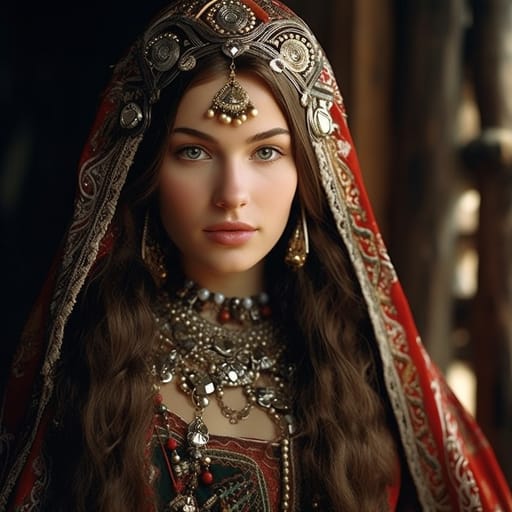
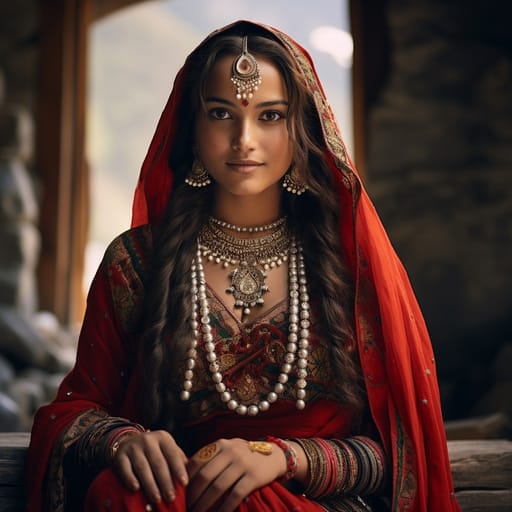
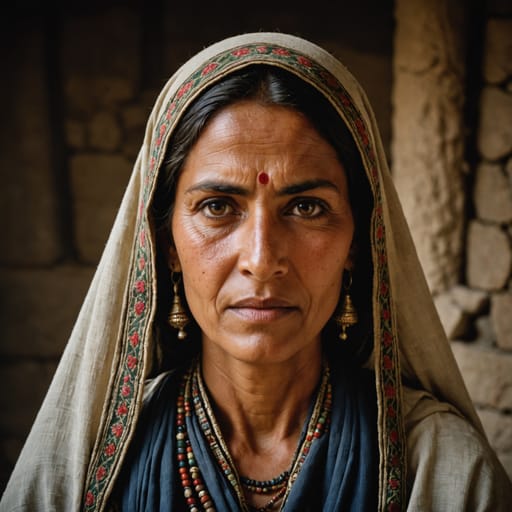
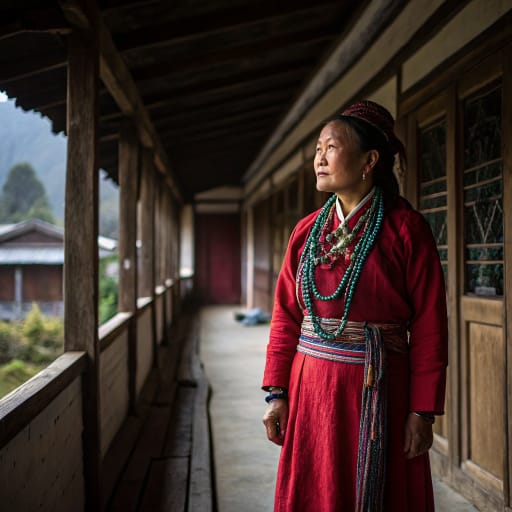
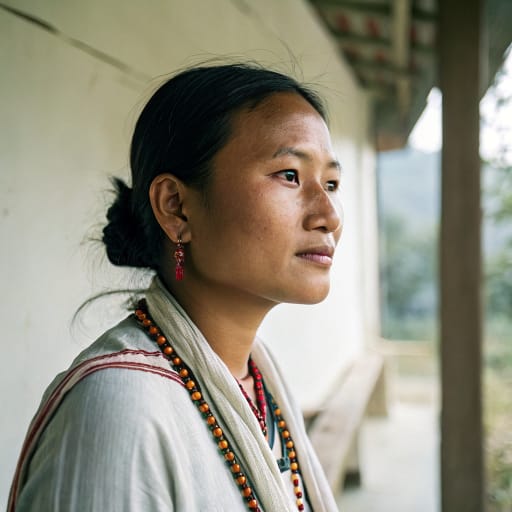
Typical Lhop Phenotypes
Reference for AI generation: hair, eyes, skin, facial structure, build
Explore phenotype categories
Structured taxonomy with peer-reviewed scales · 22 anatomical categories
Erotic Poses & Sex Positions
From the pose catalog: 219 named positions with reference skeletons
Frequently asked questions about Lhop people
Where is the Lhop homeland?
The Lhop homeland is A small group of hill villages in Samtse District, southwestern Bhutan, near the border with West Bengal, India in Southern Asia.
What language do Lhop people speak?
Lhop people primarily speak Lhokpu (Sino-Tibetan, exact place in the family debated); many also speak Nepali and Dzongkha.
What religion do Lhop people practice?
The predominant religion among Lhop people is Animist tradition centered on local spirits and ancestors, with Buddhist and Hindu influences.






Make your own Lhop images
Five a day, free, no credits to buy. The studio starts from this group's phenotype data, so you can set body type, pose and style and keep the traits accurate.
Start with Lhop