Help us get this right
Does this portrait look right for Lele?
Nobody has judged this one yet. You would be the first.
Lele Erotic
West of the Kasai River toward the Loange, around Ilebo in Kasai Province, Democratic Republic of the Congo, where equatorial forest gives way to savanna.
Lele, also called Usilele (Bantu, Niger-Congo), close to Bushong and Wongo
Mostly Christian, largely Catholic, alongside older beliefs in the creator Njambi, forest spirits, cult groups and sorcery.
Bantu people of the Kuba cultural cluster, related to the Bushong and Wongo; historically organized as autonomous villages under loose chiefdoms.
About Lele People
The Lele are the people anthropology students meet through a pangolin. They live on the western side of the Kasai River in the Democratic Republic of the Congo, in rolling country where the southern edge of the equatorial forest breaks into grassland, and they became one of the best documented small societies in Africa after Mary Douglas lived among them around 1950. The fame is a little lopsided: a farming and hunting people numbering in the tens of thousands, known worldwide for a scaly anteater. But the detail matters, because it shows how the Lele think. The forest is where God, Njambi, placed the spirits and everything good: game, medicines, raffia palms, fertility itself. The tree pangolin, a scaled animal that climbs, and bears one young at a time the way humans do, breaks every category, and so initiated Pangolin men eat it in a rite meant to bring children and good hunting to the village.
Their language, Lele, is Bantu and sits close to Bushong, the language of the Kuba kingdom across the river, and to neighboring Wongo. The Lele and the Kuba tell a shared story of origin, but the Lele never built a court. A chiefly clan existed with little real power; each village ran itself, ranked its men by age sets, and deferred, loosely, to its oldest man. Wealth was counted in raffia cloth, woven by men from palm fiber and handed over for marriages, cult entry fees, fines and compensation. Old men held the cloth and the wives, young men waited, and one answer to that pressure was the village wife, a woman married jointly to an age set, whose children belonged to the village as a whole. Rights over women also settled blood debts, a system of pawnship that tied clans together across generations. Belgian administrators and missionaries suppressed the village wife, pawnship and the poison ordeal used to test accused sorcerers.
Most Lele today are Christian, largely Catholic, and many have left for the river port of Ilebo or for Kinshasa. The old cults have thinned, but fear of sorcery has not gone with them. When Douglas returned in the 1980s she found accusations running hotter than before, with anti-sorcery campaigns now led in a Christian idiom. Village life still turns on cassava and maize fields, palm wine, and the communal hunt, whose success or failure was long read as a verdict on the moral state of the village.
Related ethnic groups
Groups that share Lele's homeland, region, language, or religious tradition. These are likely candidates for comparative phenotype reference.
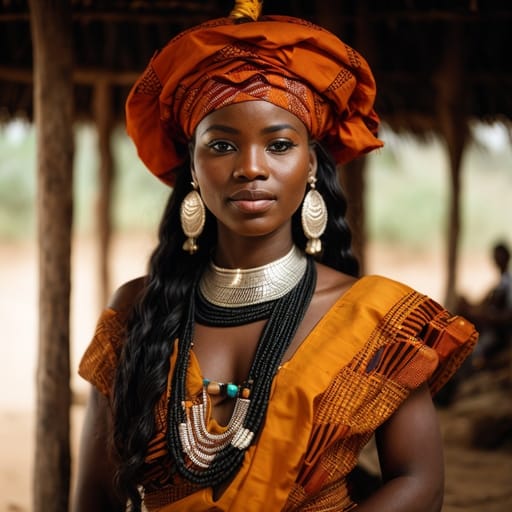
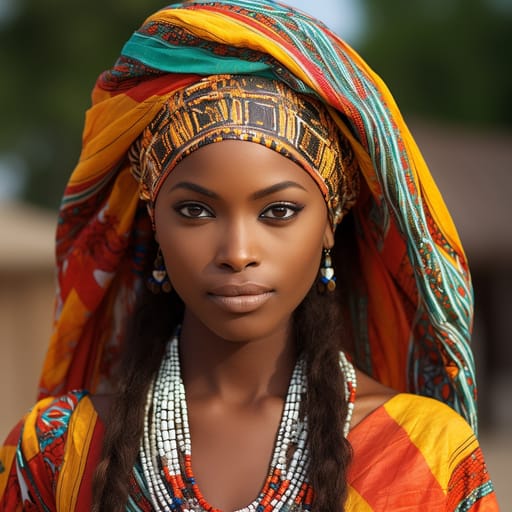
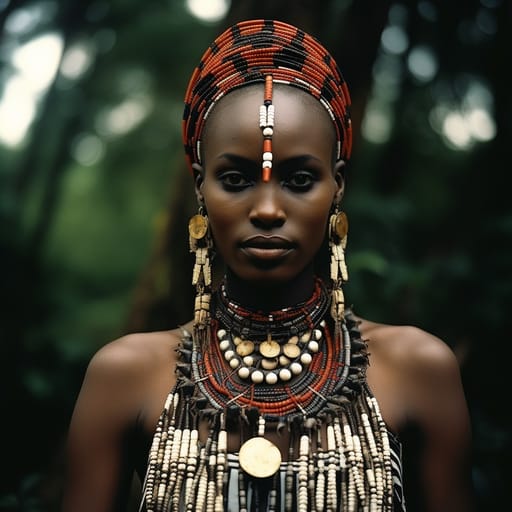
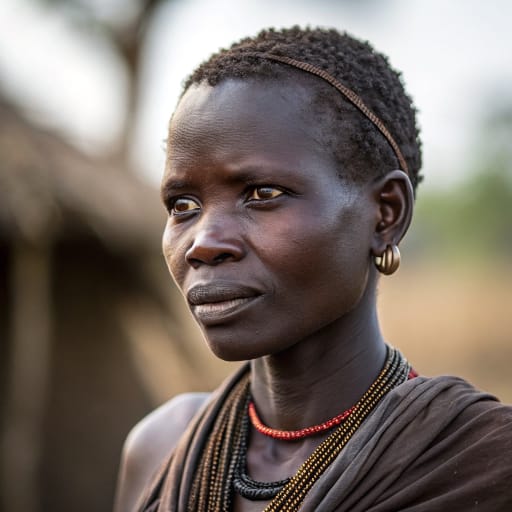
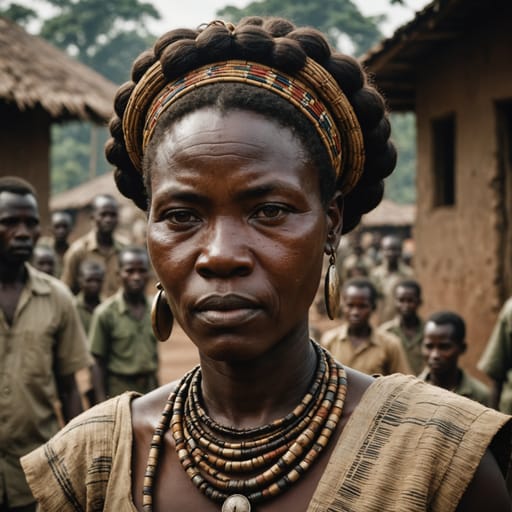
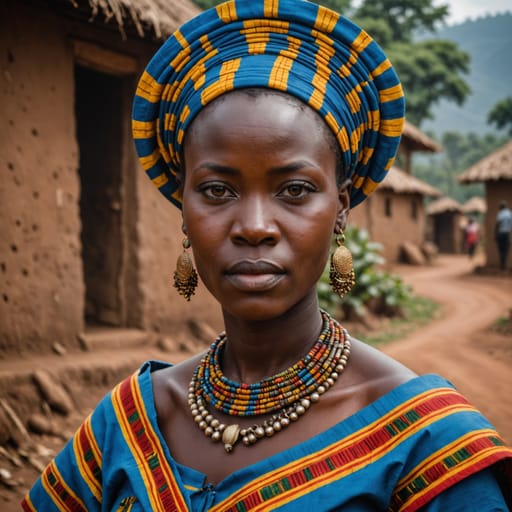
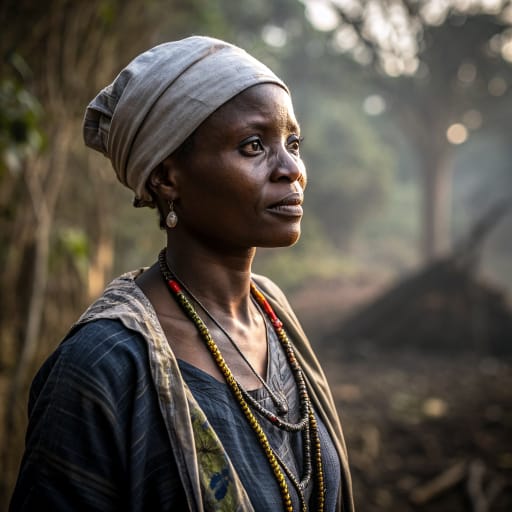
Typical Lele Phenotypes
Reference for AI generation: hair, eyes, skin, facial structure, build
Lele Body & Anatomy Reference
Bantu / Central African Niger-Congo phenotype: anatomy reference for AI nude generation
Lele Boobs & Breasts
Lele boobs follow the Bantu / Central African Niger-Congo profile: medium-to-large cup, full, projecting. Areolar diameter is usually 32-48mm, and the coloring is deep-brown areolar pigmentation against the deep-brown skin tone. Breast shape tracks body composition (mesomorph with strong gluteal-femoral fat deposition, mean adult female BMI 23-26), so Lele breasts tend to be fuller projection than East African; comparable to West African norm. Expect a forward-set shape, not the smaller East African conical profile.
Lele Ass & Hips
Lele ass and hip morphology presents as full, projected, wide-set glutes, distinctly different from the slim narrow-hip Cushitic East African profile. The Lele pelvic profile shows broad iliac crests, gynoid pelvic pattern, anchored in the Bantu / Central African Niger-Congo skeletal pattern. Lele butt shots in adult AI imagery should render the full, projected, wide-set glutes silhouette with the overall build (mesomorph with strong gluteal-femoral fat deposition) and the fat distribution typical of the Bantu / Central African Niger-Congo phenotype.
Lele Vagina & Pussy
Lele pussy anatomy typically shows deep-brown labial pigmentation, fuller labia minora. Pubic hair is usually tightly-coiled coarse texture, dense distribution. In AI-generated Lele nudes, labial color should blend into the deep-brown skin with a gradual transition, and the hair should keep its tightly-coiled coarse texture.
Lele Dicks & Penis
Penis reference for Lele men: regional mean ~14cm erect, above-average girth. Coloring: deep-brown shaft pigmentation. An accurate Lele cock in AI imagery matches the surrounding deep-brown skin rather than a generic porn default. Circumcision depends on religion and custom, not ancestry.
Lele Body, Curves & Build
The Lele figure is generally mesomorph with strong gluteal-femoral fat deposition, with mean adult female BMI 23-26, characteristic of Bantu / Central African Niger-Congo ancestry. AI image tools tend to flatten regional body types into a few stock shapes; here the Lele build is kept as its own reference.
Lele Skin Tone & Hair Texture
Skin: deep-brown (Fitzpatrick VI). Hair: tight 4A-4C coil. Both are typical of Bantu / Central African Niger-Congo ancestry. The most common mistake in AI nudes of Lele women is a body rendered lighter than the face.
Explore phenotype categories
Structured taxonomy with peer-reviewed scales · 22 anatomical categories
Erotic Poses & Sex Positions
From the pose catalog: 219 named positions with reference skeletons
Frequently asked questions about Lele people
Where is the Lele homeland?
The Lele homeland is West of the Kasai River toward the Loange, around Ilebo in Kasai Province, Democratic Republic of the Congo, where equatorial forest gives way to savanna. in Central Africa.
What language do Lele people speak?
Lele people primarily speak Lele, also called Usilele (Bantu, Niger-Congo), close to Bushong and Wongo.
What religion do Lele people practice?
The predominant religion among Lele people is Mostly Christian, largely Catholic, alongside older beliefs in the creator Njambi, forest spirits, cult groups and sorcery..






Make your own Lele images
Five a day, free, no credits to buy. The studio starts from this group's phenotype data, so you can set body type, pose and style and keep the traits accurate.
Start with Lele