No portrait yet
Widikum Erotic
Momo Division and the country around Bamenda in the Northwest Region of Cameroon, on the lower, forested western edge of the Bamenda Grassfields.
Momo languages such as Moghamo, Meta', Ngie, Ngwo and Oshie, and Ngemba languages such as Mankon (Grassfields, Southern Bantoid, Niger-Congo); Cameroonian Pidgin English and English widely used.
Mostly Christian (Presbyterian, Catholic, Baptist), practiced alongside ancestor veneration and traditional title societies.
Moghamo, Meta' (Menemo), Ngie, Ngwo, Oshie, and Ngemba chiefdoms including Mankon; part of the wider Grassfields peoples of Cameroon.
About Widikum People
The Widikum are less a single tribe than a family of peoples who agree on where they came from. Across the western edge of Cameroon's Bamenda Grassfields, the Moghamo, Meta', Ngie, Ngwo and Oshie of Momo Division, together with the Ngemba-speaking chiefdoms around Bamenda such as Mankon, trace their ancestors to one spot: Tadkon, an old market site near the present town of Widikum. The story runs that the founders came up out of the forest country to the southwest, settled at Tadkon, and then split off by lineage to claim the hills and valleys to the north and east. In a region where the big neighbors define themselves by other journeys, the Tikar-origin kingdoms of Bafut, Kom and Nso and the Chamba raiders who founded Bali, saying we are Widikum is a statement about origin and about land.
That shared claim has never meant a shared tongue or a shared throne. Widikum peoples speak a cluster of related Grassfields languages, some in the Momo group, others in the Ngemba group, close enough to mark kinship yet far enough apart that Cameroonian Pidgin English does much of the work between villages. Most of them were historically organized around village heads and lineage elders, with authority spread thin, rather than around the powerful palace fons found farther east. Mankon, with its strong fon and palace, is the notable exception. The country itself sits lower and wetter than the high plateau, which made it oil palm territory: for generations Widikum growers carried palm oil uphill to grassland markets, a trade that tied them to neighbors they otherwise kept at arm's length.
The hardest chapter in their modern history involves Bali Nyonga. The Chamba newcomers arrived in the nineteenth century, subdued a number of Widikum villages, and were later confirmed as overlords by the German colonial administration, which used Bali to collect labor and tax. The resentment outlasted the Germans. In 1952, under British rule, it broke into open fighting over land, and the dispute still shadows local politics. Since 2017 the Anglophone crisis has hit Momo Division hard, emptying villages and pushing many Widikum families toward Bamenda, Douala, Yaoundé and abroad.
Most Widikum today are Christian, with Presbyterian congregations rooted in the old Basel Mission and a strong Catholic presence. Church sits comfortably beside older obligations: libations poured to ancestors, family heads who speak for the dead, and title societies that still regulate village affairs. Funerals, or more precisely the death celebrations held long after burial, remain the great social occasions, when scattered kin come home, dance and settle who stands where in the lineage.
Related ethnic groups
Groups that share Widikum's homeland, region, language, or religious tradition. These are likely candidates for comparative phenotype reference.
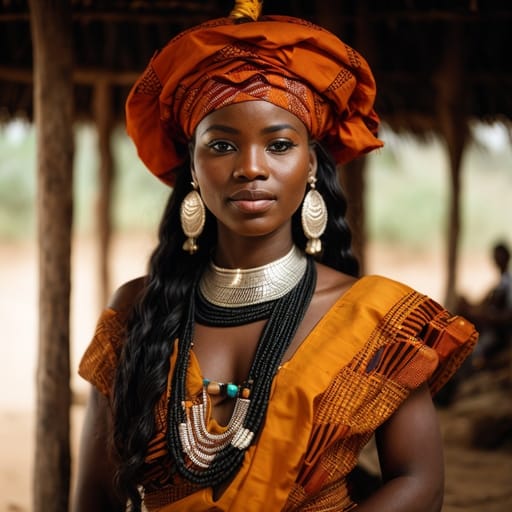
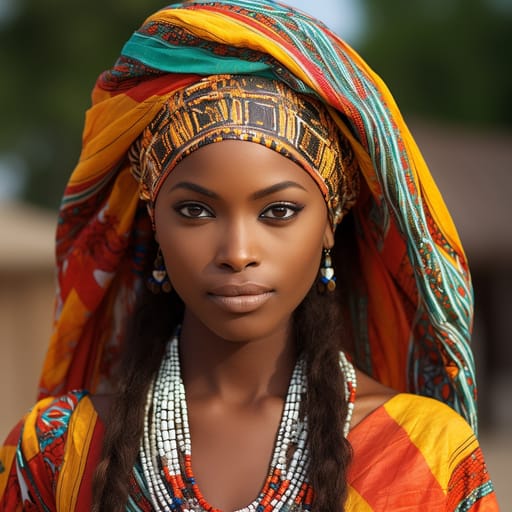
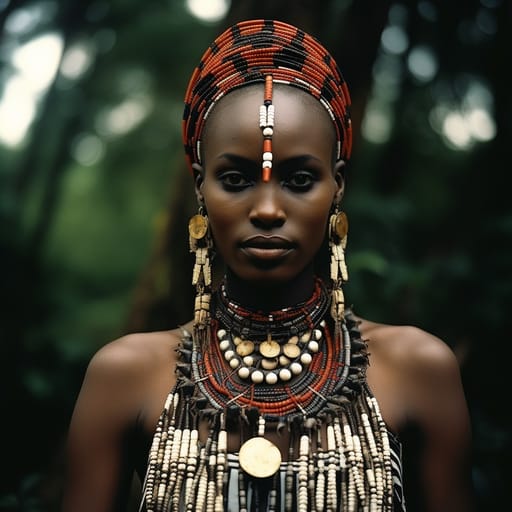
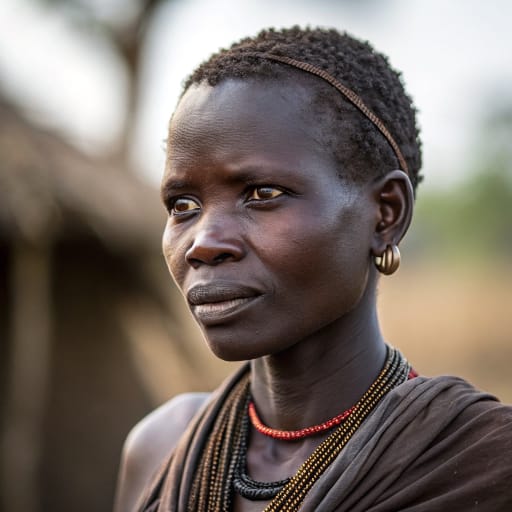
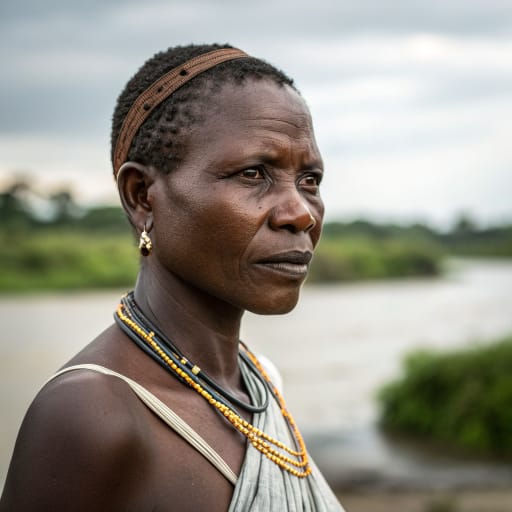
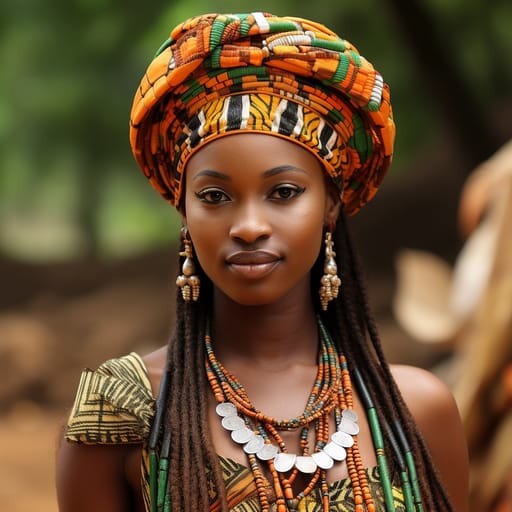
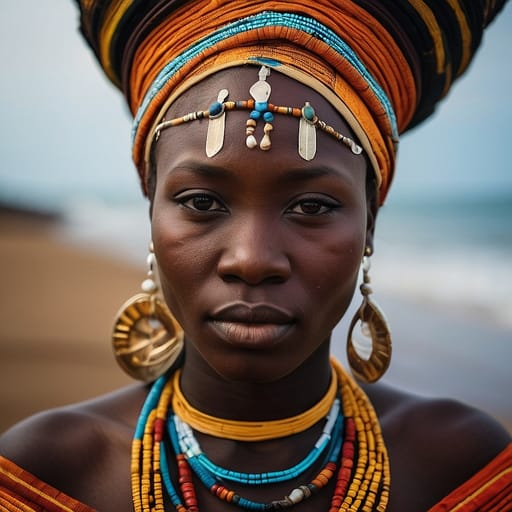
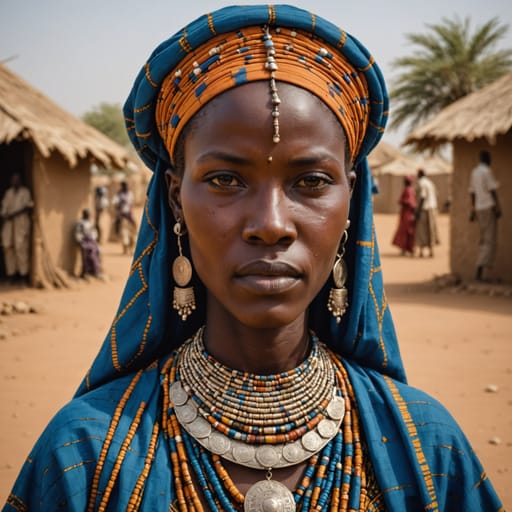
Typical Widikum Phenotypes
Reference for AI generation: hair, eyes, skin, facial structure, build
Widikum Body & Anatomy Reference
Per-feature anatomical profile for AI nude generation: Bantu / Central African Niger-Congo phenotype
Widikum Boobs & Breasts
Widikum boobs follow the Bantu / Central African Niger-Congo profile: medium-to-large cup, full, projecting. Areolar diameter is usually 32-48mm, and the coloring is deep-brown areolar pigmentation against the deep-brown skin tone. Breast shape tracks body composition (mesomorph with strong gluteal-femoral fat deposition, mean adult female BMI 23-26), so Widikum breasts tend to be fuller projection than East African; comparable to West African norm. Expect a forward-set shape, not the smaller East African conical profile.
Widikum Ass & Hips
Widikum ass and hip morphology presents as full, projected, wide-set glutes, distinctly different from the slim narrow-hip Cushitic East African profile. The Widikum pelvic profile shows broad iliac crests, gynoid pelvic pattern, anchored in the Bantu / Central African Niger-Congo skeletal pattern. Widikum butt shots in adult AI imagery should render the full, projected, wide-set glutes silhouette with the overall build (mesomorph with strong gluteal-femoral fat deposition) and the fat distribution typical of the Bantu / Central African Niger-Congo phenotype.
Widikum Vagina & Pussy
Widikum pussy anatomy typically shows deep-brown labial pigmentation, fuller labia minora. Pubic hair is usually tightly-coiled coarse texture, dense distribution. In AI-generated Widikum nudes, labial color should blend into the deep-brown skin with a gradual transition, and the hair should keep its tightly-coiled coarse texture.
Widikum Dicks & Penis
Penis reference for Widikum men: regional mean ~14cm erect, above-average girth. Coloring: deep-brown shaft pigmentation. An accurate Widikum cock in AI imagery matches the surrounding deep-brown skin rather than a generic porn default. Circumcision depends on religion and custom, not ancestry.
Widikum Body, Curves & Build
The Widikum figure is generally mesomorph with strong gluteal-femoral fat deposition, with mean adult female BMI 23-26, characteristic of Bantu / Central African Niger-Congo ancestry. AI image tools tend to flatten regional body types into a few stock shapes; here the Widikum build is kept as its own reference.
Widikum Skin Tone & Hair Texture
Skin: deep-brown (Fitzpatrick VI). Hair: tight 4A-4C coil. Both are typical of Bantu / Central African Niger-Congo ancestry. The most common mistake in AI nudes of Widikum women is a body rendered lighter than the face.
Explore phenotype categories
Structured taxonomy with peer-reviewed scales · 22 anatomical categories
Erotic Poses & Sex Positions
From the pose catalog: 219 named positions with reference skeletons
Frequently asked questions about Widikum people
Where is the Widikum homeland?
The Widikum homeland is Momo Division and the country around Bamenda in the Northwest Region of Cameroon, on the lower, forested western edge of the Bamenda Grassfields. in Central Africa.
What language do Widikum people speak?
Widikum people primarily speak Momo languages such as Moghamo, Meta', Ngie, Ngwo and Oshie, and Ngemba languages such as Mankon (Grassfields, Southern Bantoid, Niger-Congo); Cameroonian Pidgin English and English widely used..
What religion do Widikum people practice?
The predominant religion among Widikum people is Mostly Christian (Presbyterian, Catholic, Baptist), practiced alongside ancestor veneration and traditional title societies..






Make your own Widikum images
Five a day, free, no credits to buy. The studio starts from this group's phenotype data, so you can set body type, pose and style and keep the traits accurate.
Start with Widikum