No portrait yet
Kwisi Erotic
Dry lowlands of Namibe Province in southwestern Angola, part of the Angolan Namib.
A Bantu language close to that of neighboring herding peoples (Niger-Congo, Bantu).
Grouped in colonial ethnography with the Kwepe among the so-called pre-Bantu former foraging peoples of southwestern Angola.
About Kwisi People
The Kwisi are one of the smallest and least documented peoples in Angola. They live in the dry lowlands of Namibe Province in the far southwest, land shared with much larger cattle-keeping peoples such as the Kuvale. What sets the Kwisi apart is less a language or a style of dress than their place in local society. Their neighbors have long known them as people who hunted and gathered in a land built around cattle, and who worked in herding households as laborers and dependents instead of owning large herds. That history of living on the edge of a herding economy runs through nearly everything written about them.
Colonial-era writers put them in a category of their own. Portuguese sources call them Cuíssis, and the missionary ethnographer Carlos Estermann placed them, along with the Kwepe, among the so-called pre-Bantu peoples of southwestern Angola. In that view they were survivors of the people who held the region before Bantu-speaking herders and farmers arrived. The idea held for decades. Recent linguistic and genetic fieldwork in the Angolan Namib has made it much less certain. The Kwisi speak a Bantu language close to their neighbors' speech, and ancestry studies have found them genetically close to the Bantu-speaking herders around them. The picture now emerging is of a people set apart at least as much by social and economic exclusion as by separate origins.
None of that makes the identity less real. A label that began as a description of how people made a living is now a name that people claim for themselves. The Kwisi face the same pressures as everyone else in the Namib hinterland: repeated drought, long distances to schools and clinics, and the shrinking of the wild foods and game that foraging once relied on. Outsiders have written down very little about their ritual life or oral history, and much of what exists comes from colonial observers whose categories are now in question. The Kwisi are a living community, and the southwestern drylands, with their cattle economies and hard seasons, are what explain them.
Related ethnic groups
Groups that share Kwisi's homeland, region, language, or religious tradition. These are likely candidates for comparative phenotype reference.
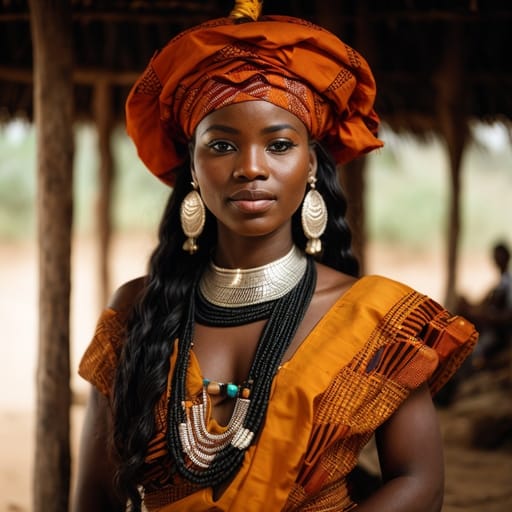
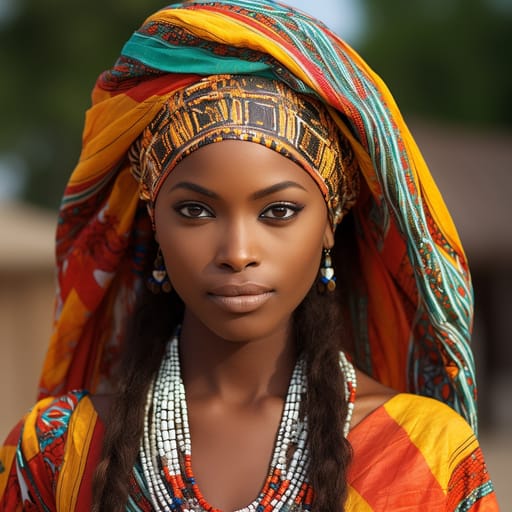
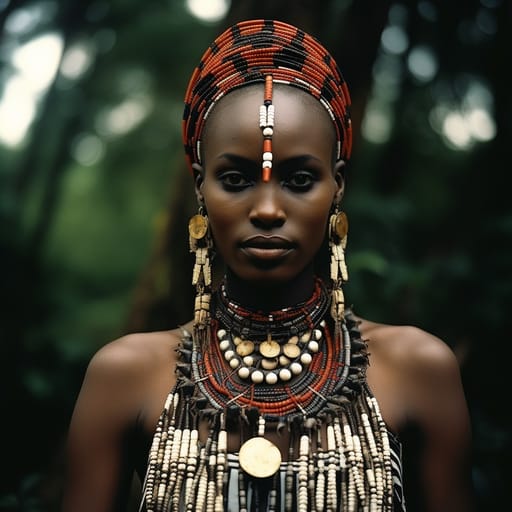
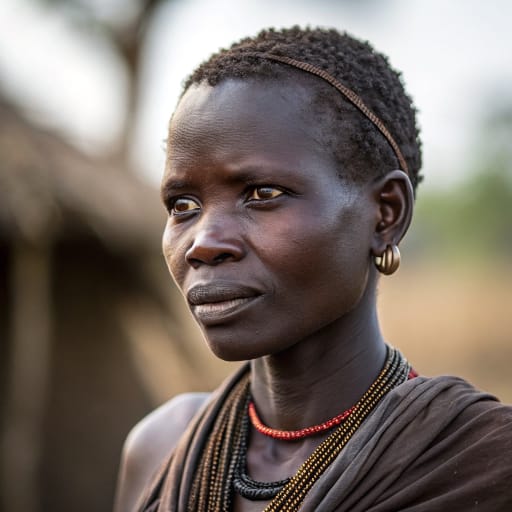
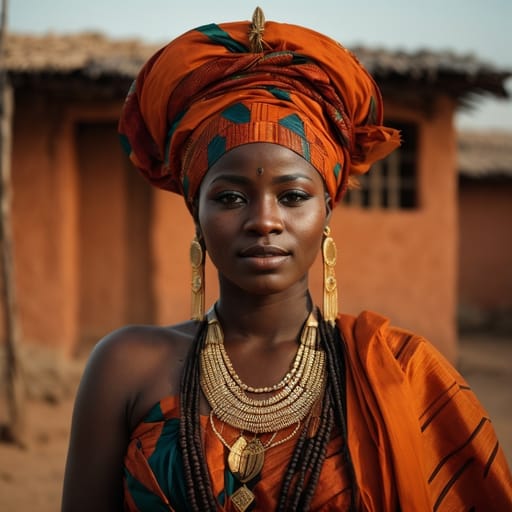
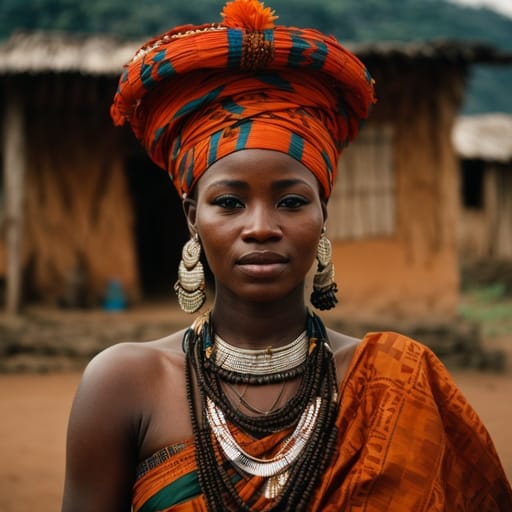
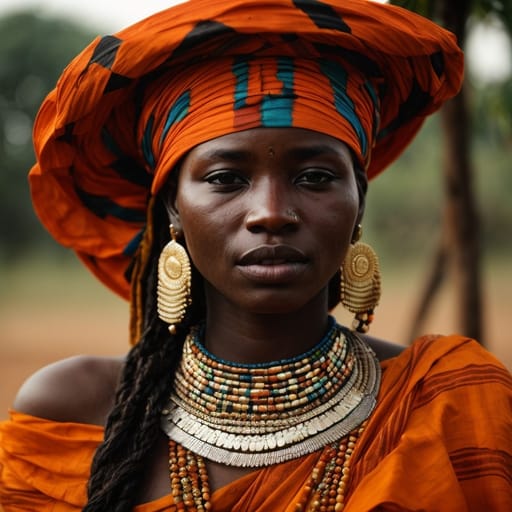
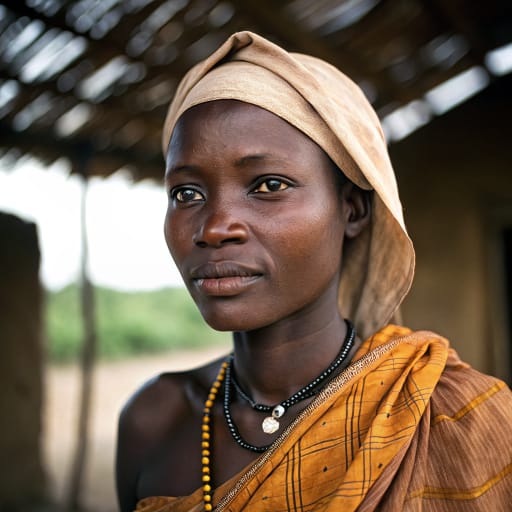
Typical Kwisi Phenotypes
Reference for AI generation: hair, eyes, skin, facial structure, build
Kwisi Body & Anatomy Reference
Anatomy by feature, Bantu / Central African Niger-Congo phenotype
Kwisi Boobs & Breasts
The typical Kwisi bust is medium-to-large cup, full, projecting, in line with the wider Bantu / Central African Niger-Congo pattern. Areolas usually fall in the 32-48mm range, with deep-brown areolar pigmentation against the deep-brown skin tone. Compared with the smaller East African conical profile, Kwisi breasts sit forward and are generally fuller projection than East African; comparable to West African norm. A faithful AI render of Kwisi tits keeps that shape and areola size.
Kwisi Ass & Hips
Butt shape among Kwisi women: full, projected, wide-set glutes, over broad iliac crests, gynoid pelvic pattern. This follows Bantu / Central African Niger-Congo ancestry and looks quite unlike the slim narrow-hip Cushitic East African profile. An accurate Kwisi ass in adult AI imagery keeps both the silhouette and the overall build (mesomorph with strong gluteal-femoral fat deposition) instead of a generic average.
Kwisi Vagina & Pussy
Vulvar anatomy among Kwisi women: deep-brown labial pigmentation, fuller labia minora. Pubic hair tends to be tightly-coiled coarse texture, dense distribution, in the usual inverted-triangle pattern. Both follow Bantu / Central African Niger-Congo pigmentation, which is why Kwisi pussy renders should not fall back on a pale, sparse Western template.
Kwisi Dicks & Penis
The Kwisi cock profile, from Bantu / Central African Niger-Congo anthropometric data: regional mean ~14cm erect; above-average girth; deep-brown shaft pigmentation. Pubic hair has a tightly-coiled coarse texture and forms the usual inverted-V pattern. Whether Kwisi men are circumcised follows religious and cultural practice rather than phenotype.
Kwisi Body, Curves & Build
Build and curves among Kwisi women follow the Bantu / Central African Niger-Congo pattern: mesomorph with strong gluteal-femoral fat deposition, mean adult female BMI 23-26. Proportions matter as much as skin tone, so Kwisi figures should keep their regional height and limb ratios.
Kwisi Skin Tone & Hair Texture
The Kwisi skin range is deep-brown (Fitzpatrick VI), and hair tends to be tight 4A-4C coil. That combination marks the Bantu / Central African Niger-Congo phenotype, and skin tone is the trait AI generators most often get wrong for Kwisi women.
Explore phenotype categories
Structured taxonomy with peer-reviewed scales · 22 anatomical categories
Erotic Poses & Sex Positions
From the pose catalog: 219 named positions with reference skeletons
Frequently asked questions about Kwisi people
Where is the Kwisi homeland?
The Kwisi homeland is Dry lowlands of Namibe Province in southwestern Angola, part of the Angolan Namib. in Central Africa.
What language do Kwisi people speak?
Kwisi people primarily speak A Bantu language close to that of neighboring herding peoples (Niger-Congo, Bantu)..






Make your own Kwisi images
Five a day, free, no credits to buy. The studio starts from this group's phenotype data, so you can set body type, pose and style and keep the traits accurate.
Start with Kwisi