No portrait yet
Kuki Erotic
The hills of Manipur, with communities in Mizoram, Assam, Nagaland, Meghalaya and Tripura in India, the Chin Hills and Sagaing in Myanmar, and the Chittagong Hill Tracts of Bangladesh.
Kuki-Chin languages, chiefly Thadou, alongside Hmar, Paite, Vaiphei, Gangte, Zou, Simte and Kom (Tibeto-Burman, Sino-Tibetan)
Overwhelmingly Christian, mainly Baptist and Presbyterian; the pre-Christian high god Pathen supplied the name now used for the Christian God.
One arm of the wider Kuki-Chin-Mizo or Zo peoples, alongside the Mizo and the Chin; internally organized into patrilineal clans including Thadou, Haokip, Kipgen, Sitlhou, Chongloi, Singson, Doungel and Lhungdim.
About Kuki People
Kuki is a name that came from outside. Bengali speakers and then British administrators used it for the clans living along the ranges between the Brahmaputra valley and the Chindwin, and it stuck to people who had their own names for themselves: Thadou, Haokip, Kipgen, Hmar, Paite, Vaiphei, Gangte, Zou, Simte, Kom. Many now prefer Zo or Zomi. The argument over which name to use is not etiquette, it is politics with land and seats attached. What holds the group together is a cluster of closely related Kuki-Chin languages inside the Tibeto-Burman family, a village built around a hereditary chief and his council of elders, and clan genealogies that most people can still recite well past their grandparents.
Home is steep forested hill country: the Manipur hills above all, plus parts of Mizoram, Assam, Nagaland and Tripura, the Chin Hills and Sagaing in Myanmar, and pockets of the Chittagong Hill Tracts. Farming meant jhum, cutting and burning a slope, working it a few seasons, then moving on. Two village institutions are worth knowing. The Som was a dormitory where unmarried men slept and were drilled in how to conduct themselves. The Lawm was a work group that moved through everyone's fields in turn and doubled as the place the young learned songs, courtship and argument. Rank was something a man bought with generosity: a large enough grain surplus paid for the Chang Ai feast, enough game for the Sa Ai, and each earned him the right to wear a particular shawl. The Saipikhup was not available to a man who had not done the work. The textiles were a record of what someone had accomplished.
Christianity arrived late and then went almost everywhere. Presbyterian and Baptist missions reached the hills around the turn of the twentieth century, and within two generations nearly everyone belonged to one or the other. Pathen, the old name for the high god, transferred to the Christian one without much friction, and the church now does a good deal of the organizing that clan and chief once handled alone. The hardest political memory is the Anglo-Kuki War of 1917 to 1919, when chiefs across the Manipur hills refused to send men to the British labor corps in France and fought for two years before a punitive expedition broke the resistance and jailed the chiefs. Later ruptures were closer to home: the Kuki and Naga killings of the 1990s, and since 2023 a violent separation from the Meitei of the Manipur valley that emptied mixed towns and left tens of thousands in relief camps. Chavang Kut, the harvest festival on the first of November, is a state holiday and now carries a great deal of that weight.
Related ethnic groups
Groups that share Kuki's homeland, region, language, or religious tradition. These are likely candidates for comparative phenotype reference.
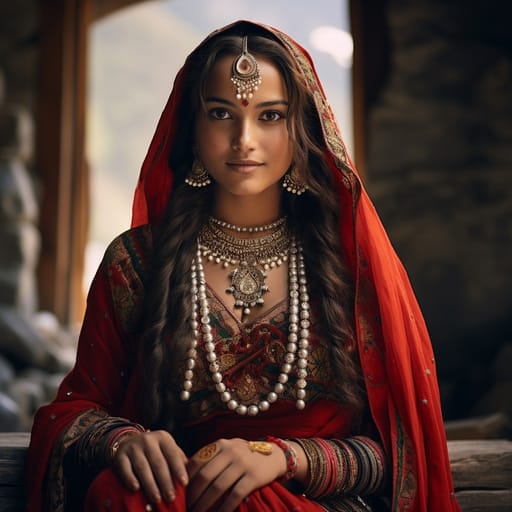
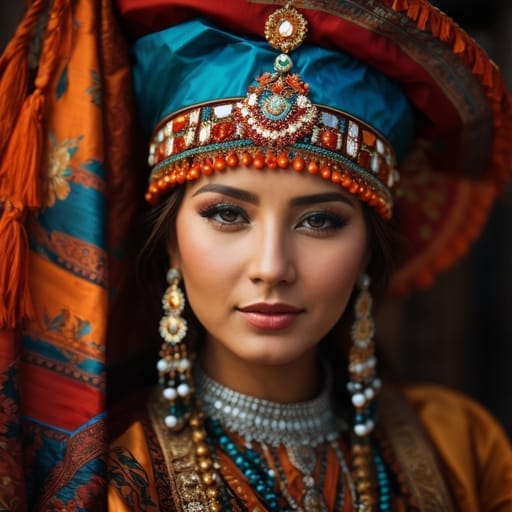
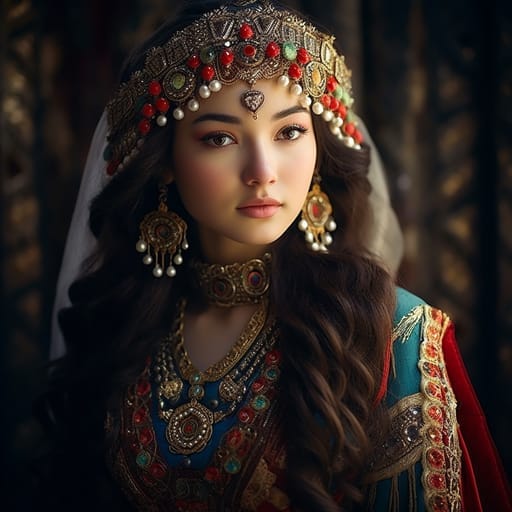
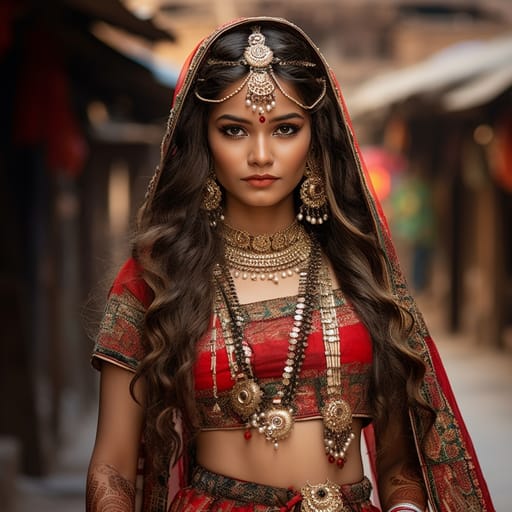
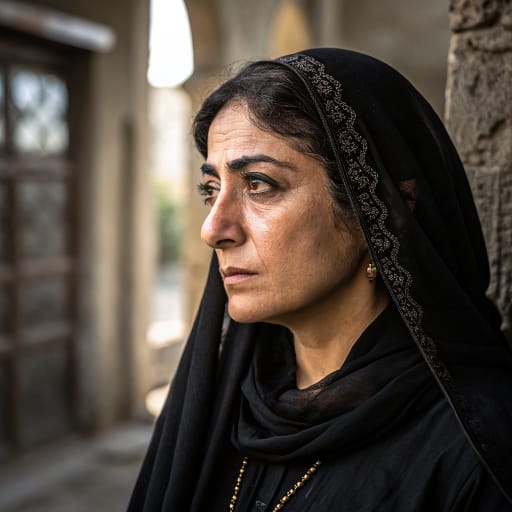
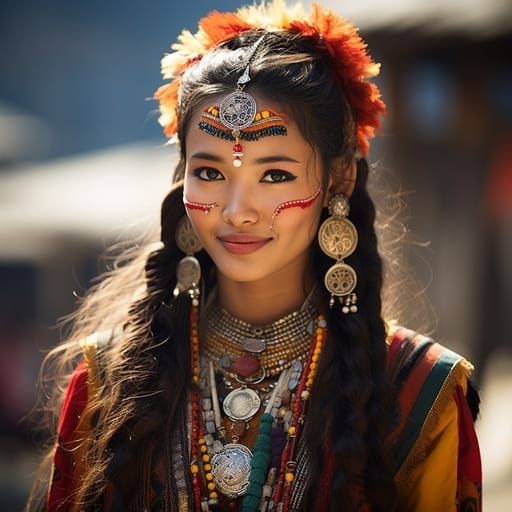
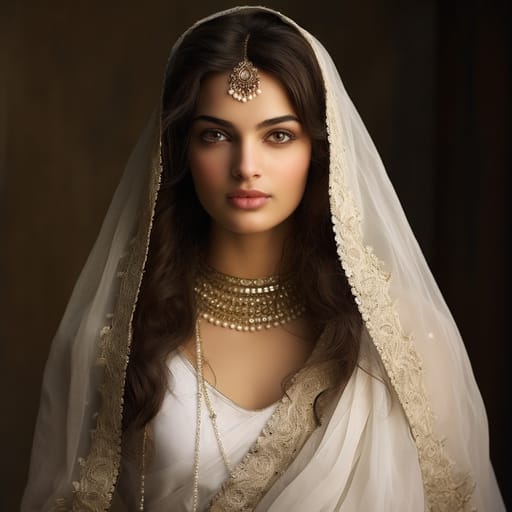
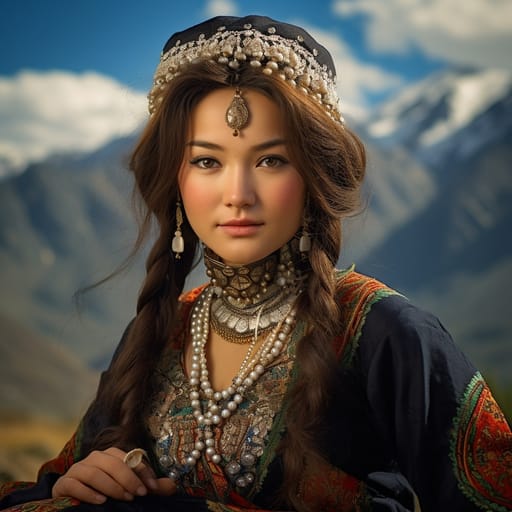
Typical Kuki Phenotypes
Reference for AI generation: hair, eyes, skin, facial structure, build
Kuki Body & Anatomy Reference
Per-feature anatomical profile for AI nude generation: Indo-Aryan / Dravidian South Asian phenotype
Kuki Boobs & Breasts
Kuki boobs follow the Indo-Aryan / Dravidian South Asian profile: medium-to-large cup, moderate-to-full projection. Areolar diameter is usually 32-46mm, and the coloring is medium-brown to dark-brown areolar pigmentation against the wheatish-to-brown skin tone. Breast shape tracks body composition (endomorph-to-mesomorph with fuller hip deposition, mean adult female BMI 22-25), so Kuki breasts tend to be full and soft, generally fuller than the East Asian norm. Expect a forward-set shape, not the smaller East Asian bust profile.
Kuki Ass & Hips
Kuki ass and hip morphology presents as medium-to-full, moderate-to-high projection, classic curvy hip profile, distinctly different from the slim hip profile of East Asian women. The Kuki pelvic profile shows medium-to-wide iliac crests, full gluteal-femoral fat distribution, anchored in the Indo-Aryan / Dravidian South Asian skeletal pattern. Kuki butt shots in adult AI imagery should render the medium-to-full, moderate-to-high projection, classic curvy hip profile silhouette with the overall build (endomorph-to-mesomorph with fuller hip deposition) and the fat distribution typical of the Indo-Aryan / Dravidian South Asian phenotype.
Kuki Vagina & Pussy
Kuki pussy anatomy typically shows medium-brown to dark-brown labial pigmentation, fuller labia minora projection. Pubic hair is usually straight-to-wavy coarse texture, dense distribution. In AI-generated Kuki nudes, labial color should blend into the wheatish to brown skin with a gradual transition, and the hair should keep its straight-to-wavy coarse texture.
Kuki Dicks & Penis
Penis reference for Kuki men: regional mean ~13cm erect, moderate girth. Coloring: medium-brown shaft pigmentation. An accurate Kuki cock in AI imagery matches the surrounding wheatish to brown skin rather than a generic porn default. Circumcision depends on religion and custom, not ancestry.
Kuki Body, Curves & Build
The Kuki figure is generally endomorph-to-mesomorph with fuller hip deposition, with mean adult female BMI 22-25, characteristic of Indo-Aryan / Dravidian South Asian ancestry. AI image tools tend to flatten regional body types into a few stock shapes; here the Kuki build is kept as its own reference.
Kuki Skin Tone & Hair Texture
Skin: wheatish to brown (Fitzpatrick III-V). Hair: straight-to-wavy 1A-2B, dense, dark-brown to black. Both are typical of Indo-Aryan / Dravidian South Asian ancestry. The most common mistake in AI nudes of Kuki women is a body rendered lighter than the face.
Explore phenotype categories
Structured taxonomy with peer-reviewed scales · 22 anatomical categories
Erotic Poses & Sex Positions
From the pose catalog: 219 named positions with reference skeletons
Frequently asked questions about Kuki people
Where is the Kuki homeland?
The Kuki homeland is The hills of Manipur, with communities in Mizoram, Assam, Nagaland, Meghalaya and Tripura in India, the Chin Hills and Sagaing in Myanmar, and the Chittagong Hill Tracts of Bangladesh. in Southern Asia.
What language do Kuki people speak?
Kuki people primarily speak Kuki-Chin languages, chiefly Thadou, alongside Hmar, Paite, Vaiphei, Gangte, Zou, Simte and Kom (Tibeto-Burman, Sino-Tibetan).
What religion do Kuki people practice?
The predominant religion among Kuki people is Overwhelmingly Christian, mainly Baptist and Presbyterian; the pre-Christian high god Pathen supplied the name now used for the Christian God..






Make your own Kuki images
Five a day, free, no credits to buy. The studio starts from this group's phenotype data, so you can set body type, pose and style and keep the traits accurate.
Start with Kuki