No portrait yet
Muslim Rajputs Erotic
Punjab, Sindh, the Potohar plateau and the Jammu hills across Pakistan and India, with communities in Rajasthan, Uttar Pradesh, Bihar, Gujarat and the Nepali Terai.
Punjabi, Pothwari, Saraiki, Sindhi, Urdu, Hindi, Awadhi, Bhojpuri and Gujarati (Indo-Aryan, Indo-European)
Sunni Islam, predominantly Hanafi, with Shia families in the Awadh region; widespread devotion at Sufi shrines.
Part of the wider Rajput community. Clan lines include Janjua, Bhatti, Chauhan, Rathore, Tomar, Minhas, Chib, Khokhar and Sial; regional branches include the Kayamkhanis of Rajasthan, the Ranghars of Haryana and western Uttar Pradesh, the Khanzadas of Awa
About Muslim Rajputs People
What holds Muslim Rajputs together is descent rather than doctrine. These are Rajput clans, Janjua, Bhatti, Chauhan, Rathore, Tomar, Minhas, Chib, Khokhar, Sial, that took Islam somewhere between the thirteenth and the eighteenth centuries and carried their clan names, genealogies and claim on a warrior past across the change without setting any of it down. Ask a family about itself and the clan arrives before anything else, which is why a Muslim Rajput and a Hindu Rajput can share a surname, a founding ancestor and a village of origin. The belt runs from the Salt Range and Potohar plateau of northern Pakistan through the Punjab plains on both sides of the border, into the Jammu hills, down into Sindh, and east across the Shekhawati country of Rajasthan and the Gangetic districts of Uttar Pradesh and Bihar, with pockets in Gujarat and the Nepali Terai. Language follows geography, not lineage: Punjabi, Pothwari, Saraiki, Sindhi, Urdu, Hindi, Awadhi, Bhojpuri, all Indo-Aryan and all shared with the neighbors. Practice is overwhelmingly Sunni and Hanafi, with Shia families in the old Awadh orbit, and the Sufi shrine does much of the everyday religious work, absorbing vows, death anniversaries and the visits that formal orthodoxy has never managed to discourage.
The branch names carry their own histories. The Kayamkhanis of Rajasthan descend from a fifteenth century convert and commissioned the Kyam Khan Raso, a verse chronicle of their own house written in Rajasthani, which is a fair summary of how this group has handled a double inheritance. The Ranghars of Haryana and western Uttar Pradesh were largely driven into Pakistan in 1947 and rebuilt in Punjab and Sindh, where the name still marks a family as displaced. The Molesalam Girasias of Gujarat kept Hindu ritual running beside Muslim practice for generations after conversion. Marriage operates on two logics at once: the Rajput rule of clan exogamy, which pushes outward, and the Muslim preference for cousins, which pulls in. Families settle it case by case, but nearly all marry inside the Rajput biradari, and status is still counted in which clan gave a bride to which. British recruiters folded Punjabi Rajputs into the martial races category, and the military careers that followed have outlived the empire that invented the label. Today most Muslim Rajputs are farmers, soldiers, shopkeepers and laborers, and in Pakistan the name is claimed widely enough that older families keep score of who is entitled to it.
Related ethnic groups
Groups that share Muslim Rajputs's homeland, region, language, or religious tradition. These are likely candidates for comparative phenotype reference.
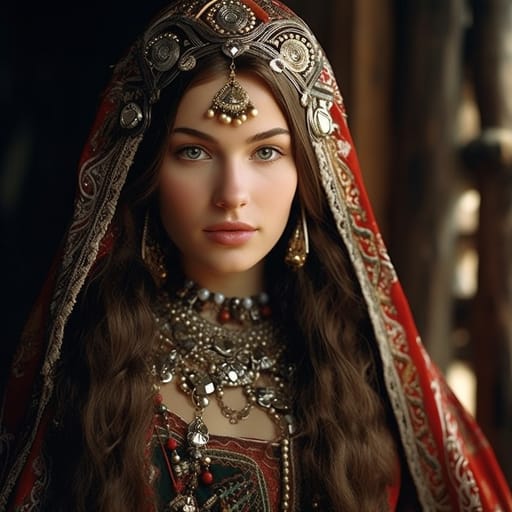
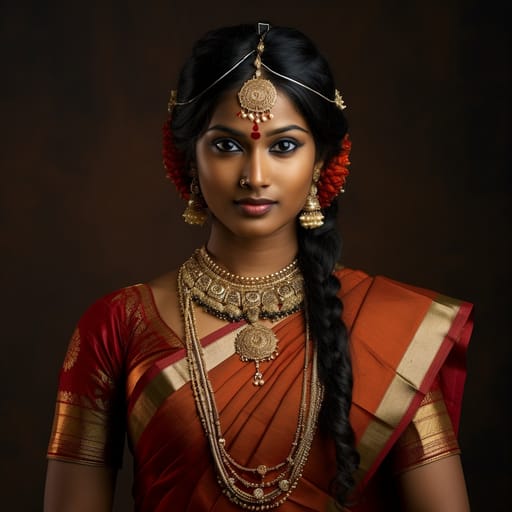
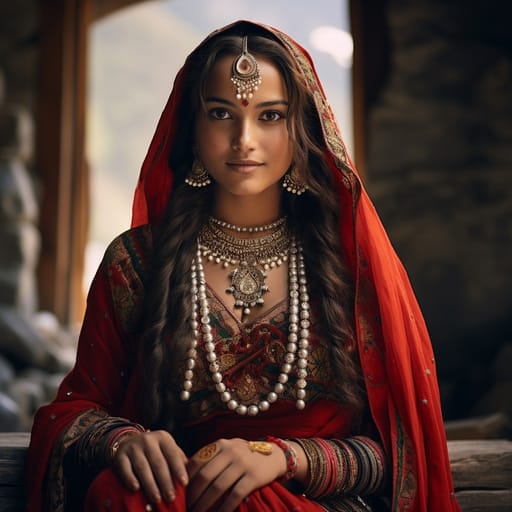
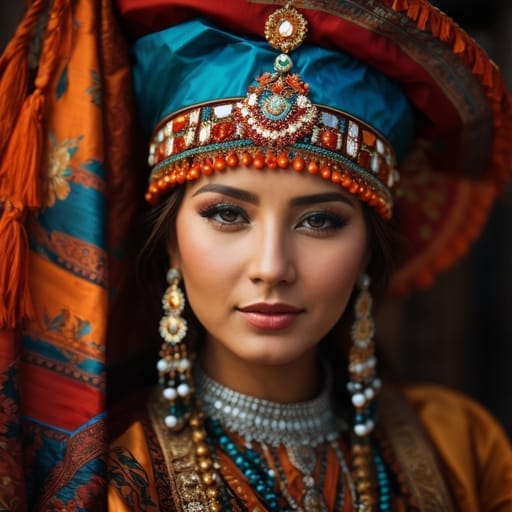
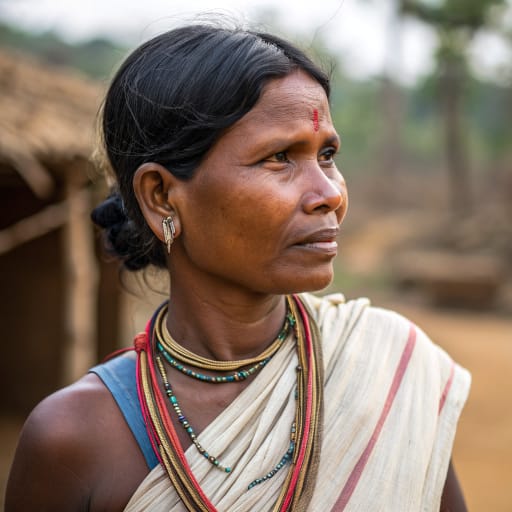
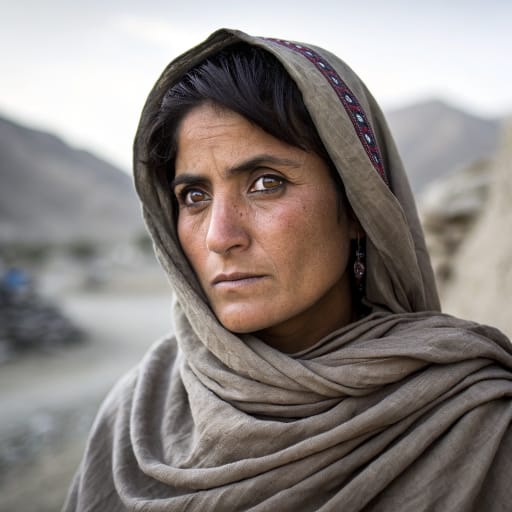
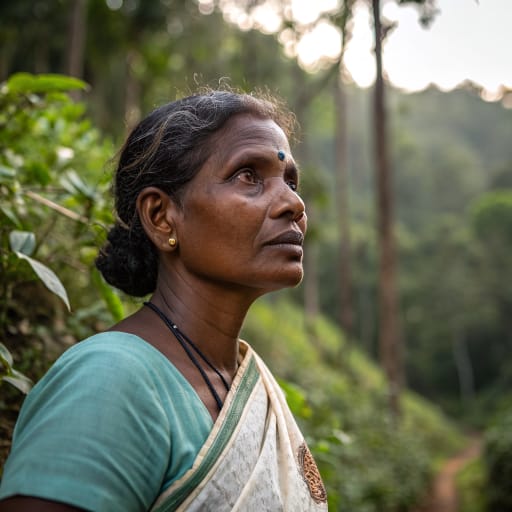
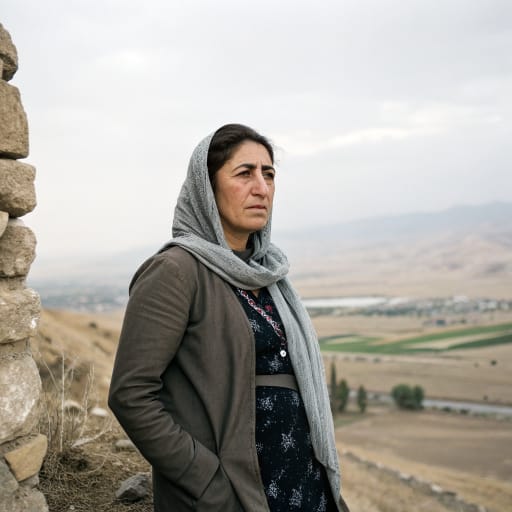
Typical Muslim Rajputs Phenotypes
Reference for AI generation: hair, eyes, skin, facial structure, build
Muslim Rajputs Body & Anatomy Reference
Indo-Aryan / Dravidian South Asian phenotype: anatomy reference for AI nude generation
Muslim Rajputs Boobs & Breasts
Muslim Rajputs boobs follow the Indo-Aryan / Dravidian South Asian profile: medium-to-large cup, moderate-to-full projection. Areolar diameter is usually 32-46mm, and the coloring is medium-brown to dark-brown areolar pigmentation against the wheatish-to-brown skin tone. Breast shape tracks body composition (endomorph-to-mesomorph with fuller hip deposition, mean adult female BMI 22-25), so Muslim Rajputs breasts tend to be full and soft, generally fuller than the East Asian norm. Expect a forward-set shape, not the smaller East Asian bust profile.
Muslim Rajputs Ass & Hips
Muslim Rajputs ass and hip morphology presents as medium-to-full, moderate-to-high projection, classic curvy hip profile, distinctly different from the slim hip profile of East Asian women. The Muslim Rajputs pelvic profile shows medium-to-wide iliac crests, full gluteal-femoral fat distribution, anchored in the Indo-Aryan / Dravidian South Asian skeletal pattern. Muslim Rajputs butt shots in adult AI imagery should render the medium-to-full, moderate-to-high projection, classic curvy hip profile silhouette with the overall build (endomorph-to-mesomorph with fuller hip deposition) and the fat distribution typical of the Indo-Aryan / Dravidian South Asian phenotype.
Muslim Rajputs Vagina & Pussy
Muslim Rajputs pussy anatomy typically shows medium-brown to dark-brown labial pigmentation, fuller labia minora projection. Pubic hair is usually straight-to-wavy coarse texture, dense distribution. In AI-generated Muslim Rajputs nudes, labial color should blend into the wheatish to brown skin with a gradual transition, and the hair should keep its straight-to-wavy coarse texture.
Muslim Rajputs Dicks & Penis
Penis reference for Muslim Rajputs men: regional mean ~13cm erect, moderate girth. Coloring: medium-brown shaft pigmentation. An accurate Muslim Rajputs cock in AI imagery matches the surrounding wheatish to brown skin rather than a generic porn default. Circumcision depends on religion and custom, not ancestry.
Muslim Rajputs Body, Curves & Build
The Muslim Rajputs figure is generally endomorph-to-mesomorph with fuller hip deposition, with mean adult female BMI 22-25, characteristic of Indo-Aryan / Dravidian South Asian ancestry. AI image tools tend to flatten regional body types into a few stock shapes; here the Muslim Rajputs build is kept as its own reference.
Muslim Rajputs Skin Tone & Hair Texture
Skin: wheatish to brown (Fitzpatrick III-V). Hair: straight-to-wavy 1A-2B, dense, dark-brown to black. Both are typical of Indo-Aryan / Dravidian South Asian ancestry. The most common mistake in AI nudes of Muslim Rajputs women is a body rendered lighter than the face.
Explore phenotype categories
Structured taxonomy with peer-reviewed scales · 22 anatomical categories
Erotic Poses & Sex Positions
From the pose catalog: 219 named positions with reference skeletons
Frequently asked questions about Muslim Rajputs people
Where is the Muslim Rajputs homeland?
The Muslim Rajputs homeland is Punjab, Sindh, the Potohar plateau and the Jammu hills across Pakistan and India, with communities in Rajasthan, Uttar Pradesh, Bihar, Gujarat and the Nepali Terai. in Southern Asia.
What language do Muslim Rajputs people speak?
Muslim Rajputs people primarily speak Punjabi, Pothwari, Saraiki, Sindhi, Urdu, Hindi, Awadhi, Bhojpuri and Gujarati (Indo-Aryan, Indo-European).
What religion do Muslim Rajputs people practice?
The predominant religion among Muslim Rajputs people is Sunni Islam, predominantly Hanafi, with Shia families in the Awadh region; widespread devotion at Sufi shrines..






Make your own Muslim Rajputs images
Five a day, free, no credits to buy. The studio starts from this group's phenotype data, so you can set body type, pose and style and keep the traits accurate.
Start with Muslim Rajputs