No portrait yet
Kamantan Erotic
Southern Kaduna State, Nigeria, mainly around Kachia and Zangon Kataf local government areas
Kamantan, also called Anghan or Angan (Plateau, Benue-Congo, Niger-Congo); Hausa and English widely used
Mostly Christian, with some traditional beliefs still held
One of the Southern Kaduna peoples of Nigeria's Middle Belt; neighbors of the Atyap, Bajju, Ham and Adara
About Kamantan People
The Kamantan are one of the many small peoples of southern Kaduna State, Nigeria. Their sense of who they are rests on a language, a stretch of farmland and a long memory of being ruled by others. Many use the name Anghan for themselves. Kamantan is the name on maps and government lists and the one used in Hausa. Their villages sit in the farm country around Kachia and Zangon Kataf, surrounded by Atyap, Bajju, Ham and Adara neighbors, in a district known across Nigeria for its ginger. Maize, sorghum and yams fill out the fields.
Their language, also called Kamantan or Anghan, belongs to the Plateau group of the Niger-Congo family. Most of the languages spoken around it belong to the same branch, and southern Kaduna is crowded with them: a short drive can take you through several separate speech communities, each small and each its own. Hausa is the language of trade and travel, and English is the language of school and government. That leaves a language like Kamantan to live mostly in homes, churches and village meetings. For a community this size, that pressure is real.
Most Kamantan today are Christian, the result of mission work that spread through southern Kaduna in the twentieth century. Church membership shapes much of ordinary social life, from weddings to community associations, though some older beliefs persist alongside it. They share their history with their neighbors. In the nineteenth century, slave raiders from the Zazzau emirate targeted the non-Muslim peoples south of Zaria. British indirect rule then placed them under district heads appointed by the emirate, an arrangement they resented and contested for decades. That grievance fed the long push for local chiefdoms that reshaped traditional rule in southern Kaduna from the 1990s. Land, faith and political representation are still tangled together in the communal violence that keeps returning to rural parts of the region.
For a Kamantan family, identity is practical: the language spoken at home, the village a family traces back to, and the churches and traditional institutions at the center of public life. Many younger people now live and work in Kaduna, Abuja or farther away, but home villages still draw them back for burials and holidays.
Related ethnic groups
Groups that share Kamantan's homeland, region, language, or religious tradition. These are likely candidates for comparative phenotype reference.
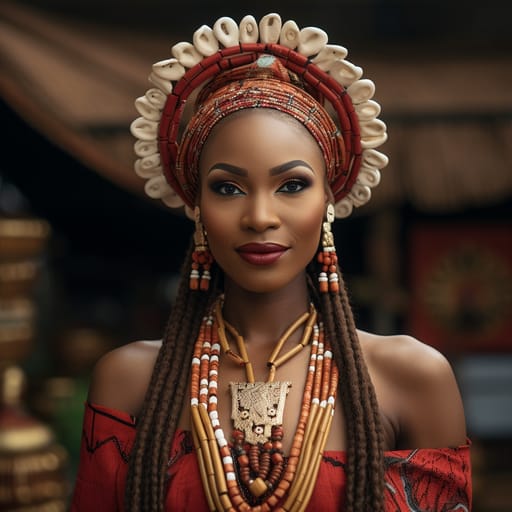
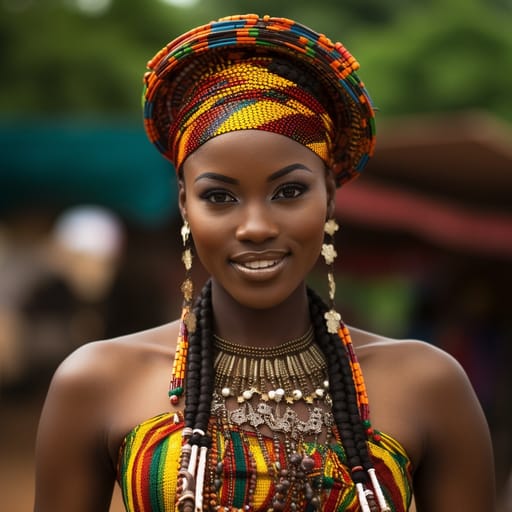
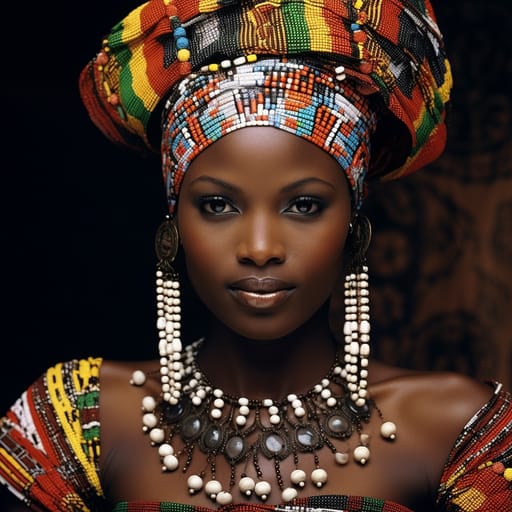
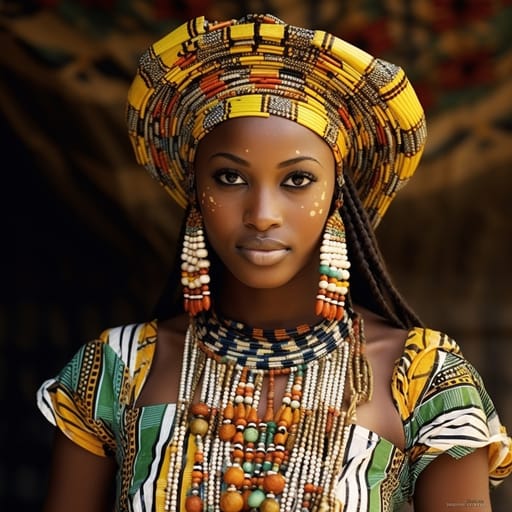
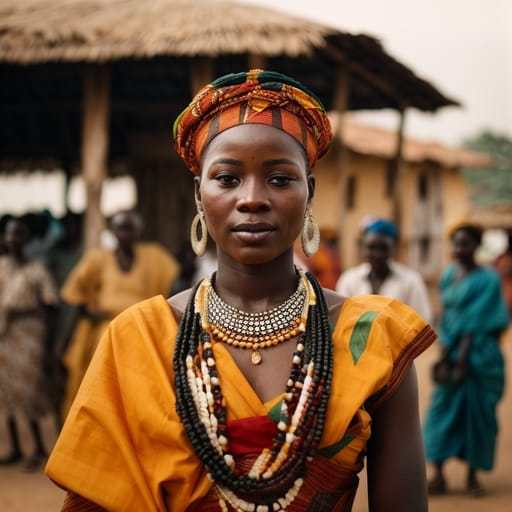
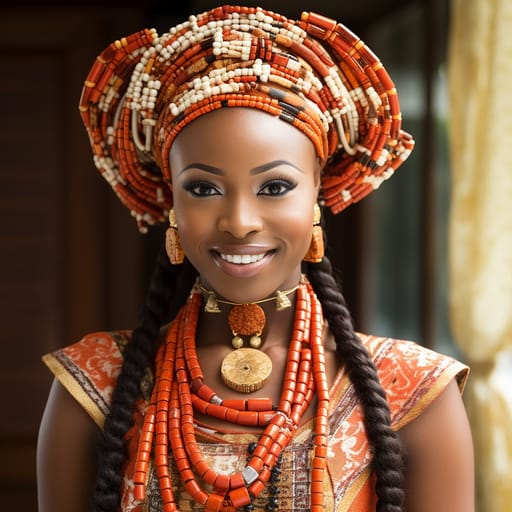
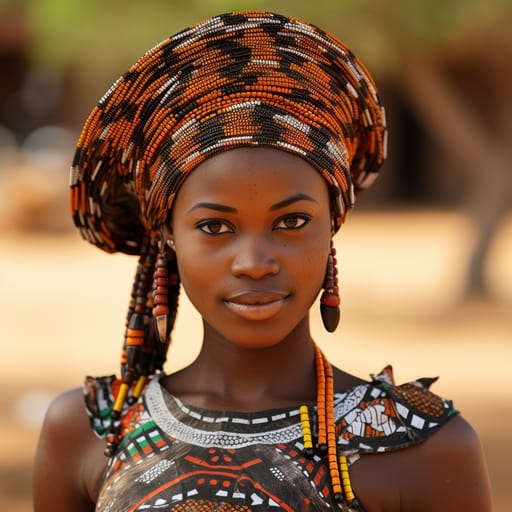
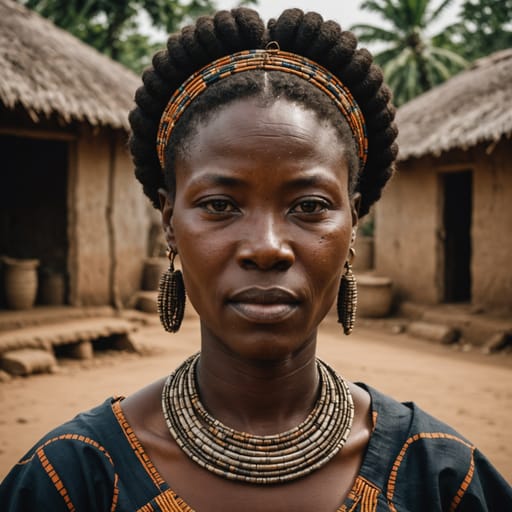
Typical Kamantan Phenotypes
Reference for AI generation: hair, eyes, skin, facial structure, build
Kamantan Body & Anatomy Reference
Per-feature anatomical profile for AI nude generation: West African Niger-Congo phenotype
Kamantan Boobs & Breasts
The typical Kamantan bust is medium-to-large cup, full, projecting, in line with the wider West African Niger-Congo pattern. Areolas usually fall in the 35-50mm range, with deep-brown to near-black areolar pigmentation against the medium-to-deep-brown skin tone. Compared with the smaller conical Cushitic East African profile, Kamantan breasts sit forward and are generally fuller and more projecting than the East African norm. A faithful AI render of Kamantan tits keeps that shape and areola size.
Kamantan Ass & Hips
Butt shape among Kamantan women: wide-set, full, heavily projected glutes, over wide iliac crests, broad gynoid pelvic pattern, high glute-to-waist ratio. This follows West African Niger-Congo ancestry and looks quite unlike the slim narrow-hip Cushitic East African profile. An accurate Kamantan ass in adult AI imagery keeps both the silhouette and the overall build (mesomorph with strong gluteal-femoral fat distribution) instead of a generic average.
Kamantan Vagina & Pussy
Vulvar anatomy among Kamantan women: deep-brown to near-black labial pigmentation, fuller labia minora. Pubic hair tends to be tightly-coiled coarse texture, densely distributed, in the usual inverted-triangle pattern. Both follow West African Niger-Congo pigmentation, which is why Kamantan pussy renders should not fall back on a pale, sparse Western template.
Kamantan Dicks & Penis
The Kamantan cock profile, from West African Niger-Congo anthropometric data: regional mean ~14-15cm erect; above-average girth, ~13cm circumference; deep-brown-to-near-black shaft pigmentation. Pubic hair has a tightly-coiled coarse texture and forms the usual inverted-V pattern. Whether Kamantan men are circumcised follows religious and cultural practice rather than phenotype.
Kamantan Body, Curves & Build
Build and curves among Kamantan women follow the West African Niger-Congo pattern: mesomorph with strong gluteal-femoral fat distribution, mean adult female BMI 24-27. Proportions matter as much as skin tone, so Kamantan figures should keep their regional height and limb ratios.
Kamantan Skin Tone & Hair Texture
The Kamantan skin range is medium-brown to deep-brown (Fitzpatrick V-VI), and hair tends to be tight 4A-4C coil, often worn natural, braided, or relaxed. That combination marks the West African Niger-Congo phenotype, and skin tone is the trait AI generators most often get wrong for Kamantan women.
Explore phenotype categories
Structured taxonomy with peer-reviewed scales · 22 anatomical categories
Erotic Poses & Sex Positions
From the pose catalog: 219 named positions with reference skeletons
Frequently asked questions about Kamantan people
Where is the Kamantan homeland?
The Kamantan homeland is Southern Kaduna State, Nigeria, mainly around Kachia and Zangon Kataf local government areas in Western Africa.
What language do Kamantan people speak?
Kamantan people primarily speak Kamantan, also called Anghan or Angan (Plateau, Benue-Congo, Niger-Congo); Hausa and English widely used.
What religion do Kamantan people practice?
The predominant religion among Kamantan people is Mostly Christian, with some traditional beliefs still held.






Make your own Kamantan images
Five a day, free, no credits to buy. The studio starts from this group's phenotype data, so you can set body type, pose and style and keep the traits accurate.
Start with Kamantan