Help us get this right
Does this portrait look right for Kunta?
One tap. It takes a second and it is recorded.
1 says it looks right, 0 say it looks off.
Kunta Erotic
Northern Mali (Azawad, Timbuktu and Gao regions) and Mauritania, with historic roots in the Tuat oases of southern Algeria
Hassaniya Arabic (Afro-Asiatic, Semitic)
Sunni Islam, Maliki school, with strong hereditary ties to the Qadiriyya Sufi order
Clerical (zawaya) lineage within Moorish society; eastern Kunta of the Azawad and western Kunta of Mauritania
About Kunta People
The Kunta are known less for a territory than for a reputation. Across the western Sahara, from the oases of southern Algeria to the bend of the Niger, the name has long meant scholars, Sufi shaykhs and men whose word could settle a feud or open a caravan route. They are an Arabic-speaking Moorish lineage, and they trace their descent to Uqba ibn Nafi, the Arab commander who founded Kairouan in the seventh century. Their own tradition also names a later founding figure, Sidi Ahmad al-Bakkay, who died in the early 1500s. It follows the family from the Maghreb through the Tuat oases, where a town called Zaouiet Kounta still carries the name, and on into the desert that is now Mali and Mauritania.
Moorish society split its free tribes into warrior lineages and clerical ones, and the Kunta sit firmly on the clerical side, among the zawaya. That did not make them otherworldly. Their shaykhs herded camels, dealt in Saharan salt and treated religious prestige as practical capital. It bought protection for travelers, a role as referee between Tuareg and Arab factions, and a network of students and clients across the Sahel. The high point came with Sidi al-Mukhtar al-Kunti, who died in 1811. From the Azawad north of Timbuktu, he built the Qadiriyya Sufi order into one of the leading brotherhoods of the western Sahel. His writings on law, theology and mysticism still sit in West African manuscript collections. His grandson Ahmad al-Bakkay became known to Europeans as the Timbuktu shaykh who sheltered the German explorer Heinrich Barth in the 1850s and refused to hand him over to the Fulani state of Masina.
Today the Kunta speak Hassaniya Arabic and follow Sunni Islam in the Maliki tradition. For them, Sufi ties are part of family identity rather than a private devotion. Descent from a saintly line still counts for something, and so does the old habit of visiting shaykhs for blessing and advice. Historians describe two branches: an eastern one centered on the Azawad and the Timbuktu and Gao regions, and a western one in Mauritania. In northern Mali, Kunta families have had to steer through the armed politics that followed the 2012 rebellion. There, old questions of lineage, rank and alliance with Tuareg and other Arab groups took on new and sometimes violent weight.
Related ethnic groups
Groups that share Kunta's homeland, region, language, or religious tradition. These are likely candidates for comparative phenotype reference.
Oulad Delim
same language (Hassaniya Arabic (Afro-Asiatic, Semitic))
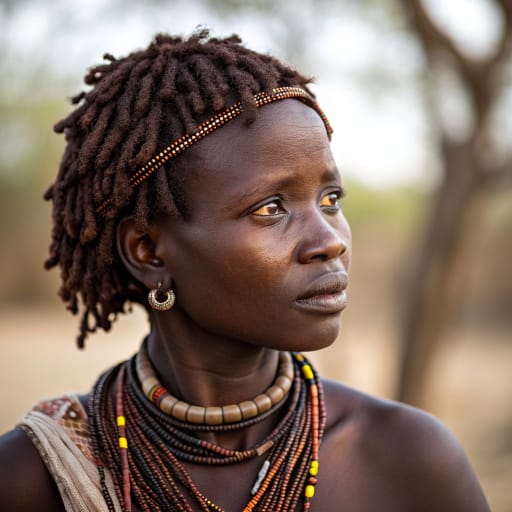
Soninke
same region (Western Africa)
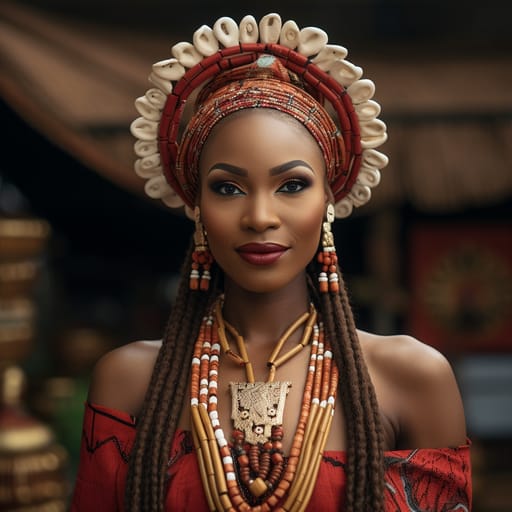
Igbo
same region (Western Africa)
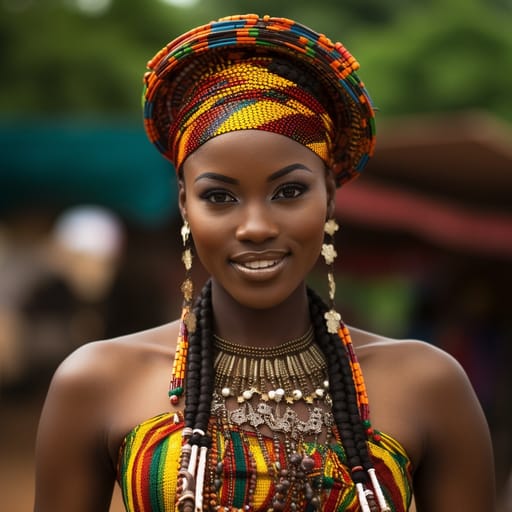
Ga-Adangbe
same region (Western Africa)
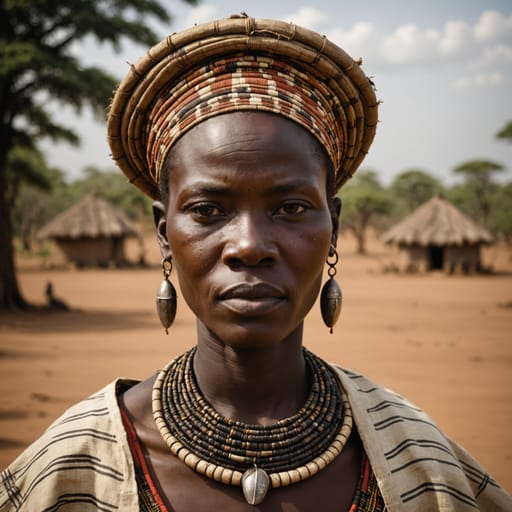
Tallensi
same region (Western Africa)
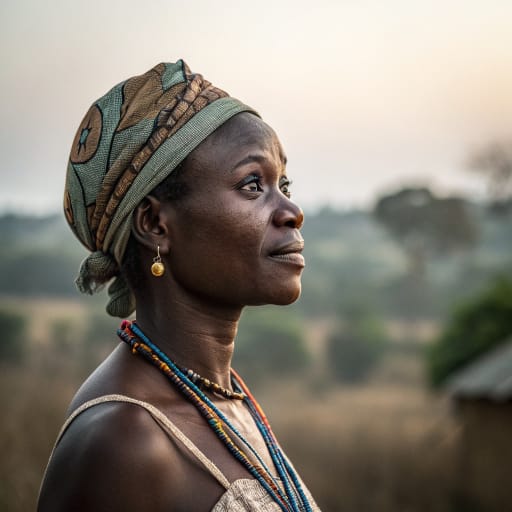
Akuapem
same region (Western Africa)
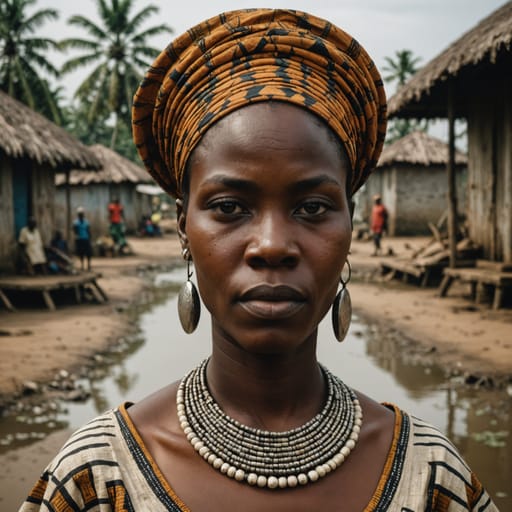
Obolo
same region (Western Africa)
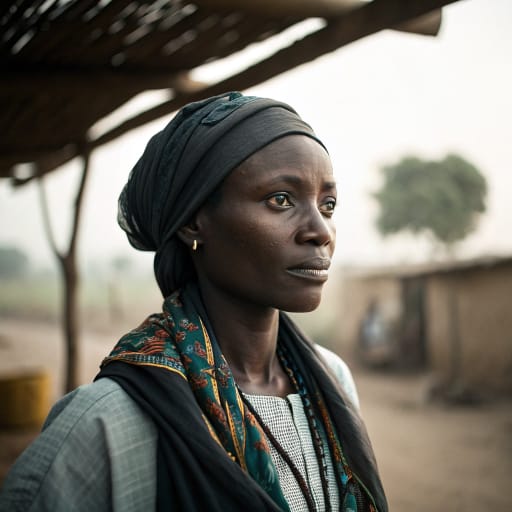
Akurmi
same region (Western Africa)
Typical Kunta Phenotypes
Reference for AI generation: hair, eyes, skin, facial structure, build
Kunta Body & Anatomy Reference
Anatomy by feature, West African Niger-Congo phenotype
Kunta Boobs & Breasts
The typical Kunta bust is medium-to-large cup, full, projecting, in line with the wider West African Niger-Congo pattern. Areolas usually fall in the 35-50mm range, with deep-brown to near-black areolar pigmentation against the medium-to-deep-brown skin tone. Compared with the smaller conical Cushitic East African profile, Kunta breasts sit forward and are generally fuller and more projecting than the East African norm. A faithful AI render of Kunta tits keeps that shape and areola size.
Kunta Ass & Hips
Butt shape among Kunta women: wide-set, full, heavily projected glutes, over wide iliac crests, broad gynoid pelvic pattern, high glute-to-waist ratio. This follows West African Niger-Congo ancestry and looks quite unlike the slim narrow-hip Cushitic East African profile. An accurate Kunta ass in adult AI imagery keeps both the silhouette and the overall build (mesomorph with strong gluteal-femoral fat distribution) instead of a generic average.
Kunta Vagina & Pussy
Vulvar anatomy among Kunta women: deep-brown to near-black labial pigmentation, fuller labia minora. Pubic hair tends to be tightly-coiled coarse texture, densely distributed, in the usual inverted-triangle pattern. Both follow West African Niger-Congo pigmentation, which is why Kunta pussy renders should not fall back on a pale, sparse Western template.
Kunta Dicks & Penis
The Kunta cock profile, from West African Niger-Congo anthropometric data: regional mean ~14-15cm erect; above-average girth, ~13cm circumference; deep-brown-to-near-black shaft pigmentation. Pubic hair has a tightly-coiled coarse texture and forms the usual inverted-V pattern. Whether Kunta men are circumcised follows religious and cultural practice rather than phenotype.
Kunta Body, Curves & Build
Build and curves among Kunta women follow the West African Niger-Congo pattern: mesomorph with strong gluteal-femoral fat distribution, mean adult female BMI 24-27. Proportions matter as much as skin tone, so Kunta figures should keep their regional height and limb ratios.
Kunta Skin Tone & Hair Texture
The Kunta skin range is medium-brown to deep-brown (Fitzpatrick V-VI), and hair tends to be tight 4A-4C coil, often worn natural, braided, or relaxed. That combination marks the West African Niger-Congo phenotype, and skin tone is the trait AI generators most often get wrong for Kunta women.
Explore phenotype categories
Structured taxonomy with peer-reviewed scales · 22 anatomical categories
Erotic Poses & Sex Positions
From the pose catalog: 219 named positions with reference skeletons
Frequently asked questions about Kunta people
Where is the Kunta homeland?
The Kunta homeland is Northern Mali (Azawad, Timbuktu and Gao regions) and Mauritania, with historic roots in the Tuat oases of southern Algeria in Western Africa.
What language do Kunta people speak?
Kunta people primarily speak Hassaniya Arabic (Afro-Asiatic, Semitic).
What religion do Kunta people practice?
The predominant religion among Kunta people is Sunni Islam, Maliki school, with strong hereditary ties to the Qadiriyya Sufi order.






Make your own Kunta images
Five a day, free, no credits to buy. The studio starts from this group's phenotype data, so you can set body type, pose and style and keep the traits accurate.
Start with Kunta