Help us get this right
Does this portrait look right for Jōmon?
Nobody has judged this one yet. You would be the first.
Jōmon Erotic
The Japanese archipelago, Japan, from Hokkaido through Honshu, Shikoku and Kyushu, with related cultures in the Ryukyu Islands; most densely settled in eastern and northern Honshu
Unknown and unwritten (unclassified); proposed links to Ainu remain unproven
Unknown; animist ritual is inferred from dogū figurines, stone circles, stone rods and burials
Prehistoric hunter-gatherers of Japan, divided into Incipient, Initial, Early, Middle, Late and Final periods, with the Epi-Jōmon of Hokkaido as a later successor; partly ancestral to the Ainu, Ryukyuans and Japanese
About Jōmon People
The Jōmon were the foragers, hunters and fishers of the Japanese archipelago from about 14,000 BCE until rice farmers from the continent spread through most of the islands in the first millennium BCE, and their ancestry lives on in the Ainu, the Okinawans and, to a smaller degree, most Japanese today. Nobody knows what they called themselves. The name comes from their pottery. In 1877 the American zoologist Edward Morse excavated the Ōmori shell mound near Tokyo and described its vessels as cord marked, and a Japanese translation of that phrase, jōmon, eventually named the whole era.
That pottery is among the oldest in the world, with fragments from northern Honshu dated to more than 15,000 years ago. It also points to what set the Jōmon apart: they cooked in clay and settled into lasting villages without relying on grain farming. They built sunken pit houses, heaped up shell middens along the coasts, managed chestnut groves, worked red lacquer and green jade, and buried their dogs with care. At Sannai-Maruyama in Aomori, a village lived in for well over a thousand years put up a structure on six huge chestnut posts, and people still argue about what it was for. Most people lived in the east and north, where nut forests and fish-filled rivers were generous, and their numbers fell sharply as the climate cooled in the later periods.
They left no writing, so their languages are lost. Some scholars look for traces in Ainu or in old place names, but nothing is settled, and the Japonic languages are generally thought to have arrived later with migrants from the Korean peninsula. What they believed has to be read from objects. Clay figurines called dogū are often female and are often found deliberately broken. They are usually linked to fertility, healing or renewal. Stone circles like those at Ōyu in Akita point to shared ceremony and burial. In the Late and Final periods, many young adults had healthy canines or incisors pulled, and some had their incisors filed into forked shapes, apparently to mark adulthood or marriage.
The Jōmon did not vanish so much as blend in. On Kyushu, Shikoku and Honshu, Yayoi newcomers with wet rice and metal absorbed them. In Hokkaido, foraging carried on for centuries longer and fed into Ainu culture. Genetics tells the same story: the Ainu carry the most Jōmon ancestry, Okinawans a good deal, and mainland Japanese less. The artist Tarō Okamoto championed the flame-rimmed Middle Jōmon pots as art in the early 1950s, and since 2021 a group of northern Jōmon sites has been on the UNESCO World Heritage List.
Related ethnic groups
Groups that share Jōmon's homeland, region, language, or religious tradition. These are likely candidates for comparative phenotype reference.
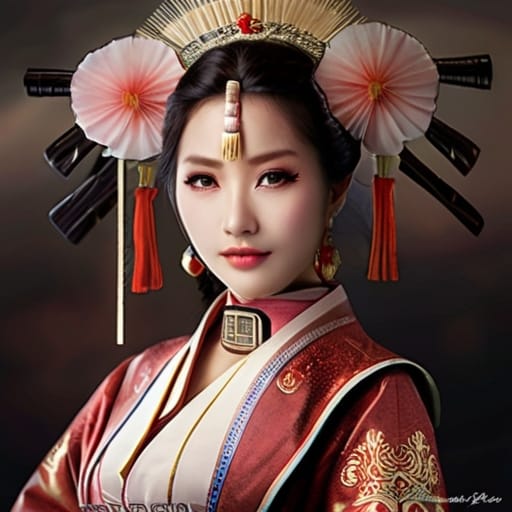
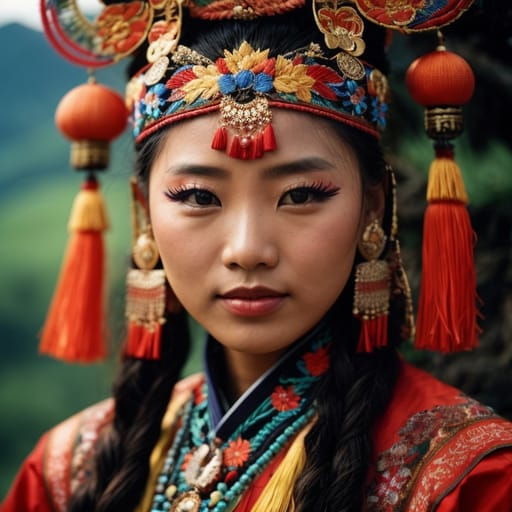
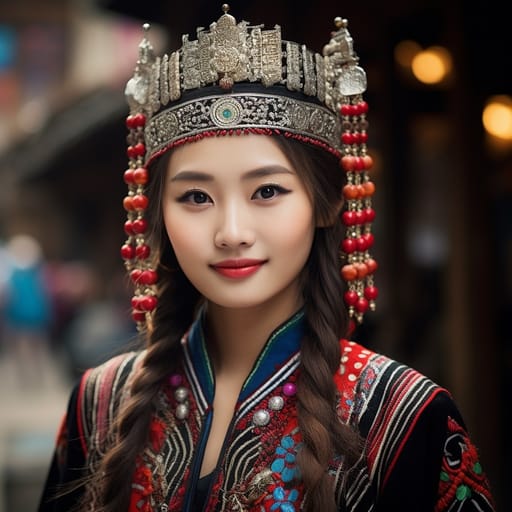
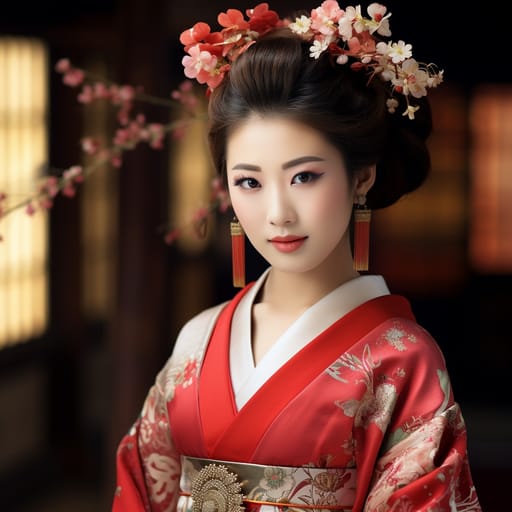
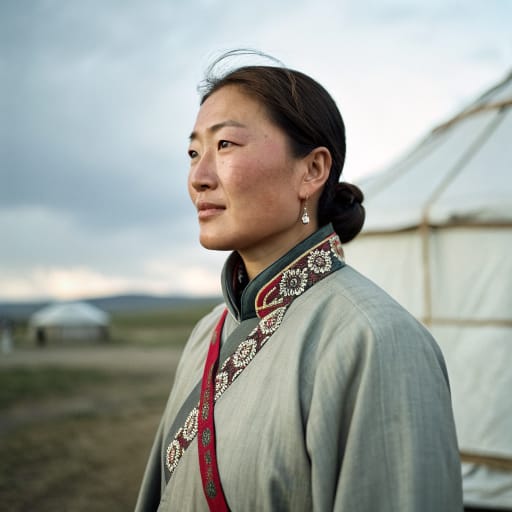
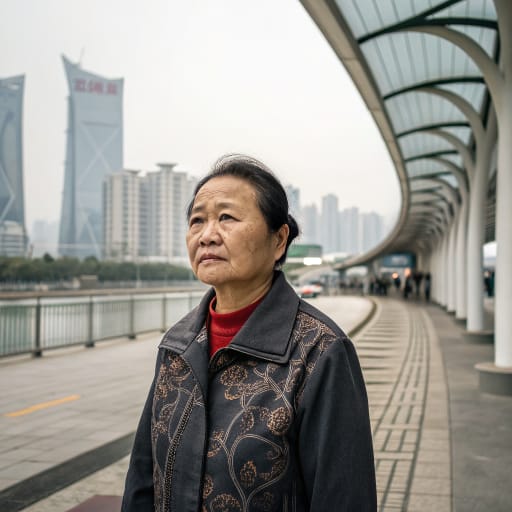
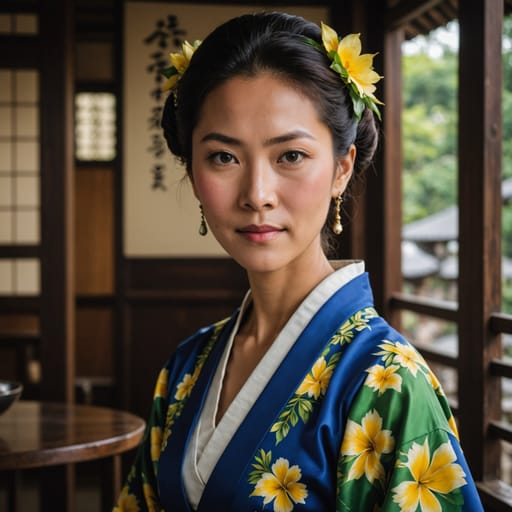
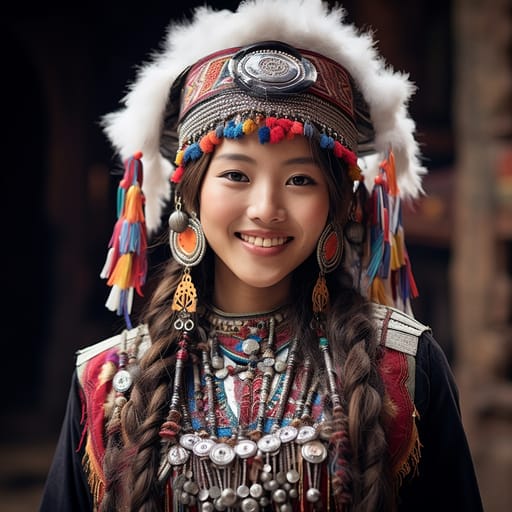
Typical Jōmon Phenotypes
Reference for AI generation: hair, eyes, skin, facial structure, build
Jōmon Body & Anatomy Reference
Anatomy by feature, East Asian Sinitic / Mongoloid phenotype
Jōmon Boobs & Breasts
The typical Jōmon bust is small-to-medium cup, modest projection, in line with the wider East Asian Sinitic / Mongoloid pattern. Areolas usually fall in the 26-36mm range, with light-pink to medium-brown areolar pigmentation against the light-to-medium skin tone. Compared with the fuller South Asian or Levantine bust profile, Jōmon breasts sit forward and are generally firm and modestly projecting; smaller cup size than the South Asian or Western Asian average. A faithful AI render of Jōmon tits keeps that shape and areola size.
Jōmon Ass & Hips
Butt shape among Jōmon women: small-to-medium, modest projection, narrower hip profile, over narrower iliac crests, less gluteal-femoral fat deposition. This follows East Asian Sinitic / Mongoloid ancestry and looks quite unlike the fuller projected glutes of the West African or Polynesian phenotype. An accurate Jōmon ass in adult AI imagery keeps both the silhouette and the overall build (ectomorph-to-mesomorph, lean frame) instead of a generic average.
Jōmon Vagina & Pussy
Vulvar anatomy among Jōmon women: light-pink to medium-brown labial pigmentation, smaller labia minora. Pubic hair tends to be straight fine texture, sparser distribution than the South Asian norm, in the usual inverted-triangle pattern. Both follow East Asian Sinitic / Mongoloid pigmentation, which is why Jōmon pussy renders should not fall back on a pale, sparse Western template.
Jōmon Dicks & Penis
The Jōmon cock profile, from East Asian Sinitic / Mongoloid anthropometric data: regional mean ~11-12cm erect; moderate girth; light-brown shaft pigmentation. Pubic hair has a straight fine texture and forms the usual inverted-V pattern. Whether Jōmon men are circumcised follows religious and cultural practice rather than phenotype.
Jōmon Body, Curves & Build
Build and curves among Jōmon women follow the East Asian Sinitic / Mongoloid pattern: ectomorph-to-mesomorph, lean frame, mean adult female BMI 20-23. Proportions matter as much as skin tone, so Jōmon figures should keep their regional height and limb ratios.
Jōmon Skin Tone & Hair Texture
The Jōmon skin range is light to medium (Fitzpatrick II-IV), and hair tends to be straight 1A, fine-to-medium, predominantly black. That combination marks the East Asian Sinitic / Mongoloid phenotype, and skin tone is the trait AI generators most often get wrong for Jōmon women.
Explore phenotype categories
Structured taxonomy with peer-reviewed scales · 22 anatomical categories
Erotic Poses & Sex Positions
From the pose catalog: 219 named positions with reference skeletons
Frequently asked questions about Jōmon people
Where is the Jōmon homeland?
The Jōmon homeland is The Japanese archipelago, Japan, from Hokkaido through Honshu, Shikoku and Kyushu, with related cultures in the Ryukyu Islands; most densely settled in eastern and northern Honshu in East Asia.
What language do Jōmon people speak?
Jōmon people primarily speak Unknown and unwritten (unclassified); proposed links to Ainu remain unproven.
What religion do Jōmon people practice?
The predominant religion among Jōmon people is Unknown; animist ritual is inferred from dogū figurines, stone circles, stone rods and burials.






Make your own Jōmon images
Five a day, free, no credits to buy. The studio starts from this group's phenotype data, so you can set body type, pose and style and keep the traits accurate.
Start with Jōmon