Help us get this right
Does this portrait look right for Igdalen?
Nobody has judged this one yet. You would be the first.
Igdalen Erotic
The Azawagh valley of western Niger, between Tahoua and Agadez, around Abalak, Tchintabaraden and In Gall
Tagdal, including the Tabarog variety (Northern Songhay, Nilo-Saharan), heavily influenced by Tuareg Berber; Tamasheq and Hausa widely used as second languages
Sunni Islam, Maliki school; a recognized maraboutic group within Tuareg society
Igdalen proper and Iberogan (Tabarog speakers); of Berber descent, long attached to the Tuareg confederations of the Azawagh
About Igdalen People
The Igdalen are a small pastoral people of the Azawagh, the broad dry valley running across western Niger between Tahoua and Agadez, and the quickest way to place them is to wait until they speak. Everything else reads Tuareg: the camps, the herds, the men's face veil, the position inside Tuareg confederations as a maraboutic group whose business is Quranic learning, blessing and mediation. But their language is Tagdal, and Tagdal is not Berber. Its grammatical frame is Songhay, the language of the Niger River bend far to the southwest, carrying a heavy load of Tuareg vocabulary on top of it. Linguists file it alongside Tasawaq of In Gall, Tadaksahak of Mali and Korandje in Algeria, a scattered set of Northern Songhay speech forms that most likely took shape along the caravan roads, where Songhay served as a trade language and communities of Berber speakers ended up with a hybrid of their own.
Two branches are usually named: the Igdalen proper and the Iberogan, whose speech is close enough to be called a dialect of the same thing and distinct enough to carry its own name, Tabarog. Both are Sunni Muslims of the Maliki school. Among the Tuareg, religious specialists are a recognized social stratum rather than a job, and an Igdalen family's standing rests on scholarship: teaching children the Quran, writing amulets, settling disputes between herding groups that would rather not take the matter to a chief. They keep sheep, goats and camels, moving on the rains, in country that brushes the salt workings at Tegidda n Tesemt and the great seasonal gathering at In Gall where herders converge as the wet season ends. The last fifty years have been hard on that life. The droughts of the 1970s and 1980s killed herds and pushed families toward towns and wage labor, and the Tuareg rebellions, followed by the insecurity now spread across the Niger and Mali borderlands, have made long movement dangerous. Tagdal has perhaps a few tens of thousands of speakers, no widely used written form, and constant pressure from Tamasheq and Hausa on either side. It has lasted a great deal longer than anyone would have predicted, which is more or less the story of the Igdalen themselves.
Related ethnic groups
Groups that share Igdalen's homeland, region, language, or religious tradition. These are likely candidates for comparative phenotype reference.
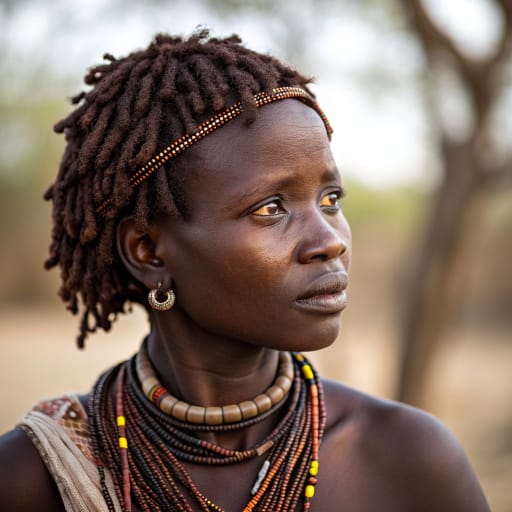
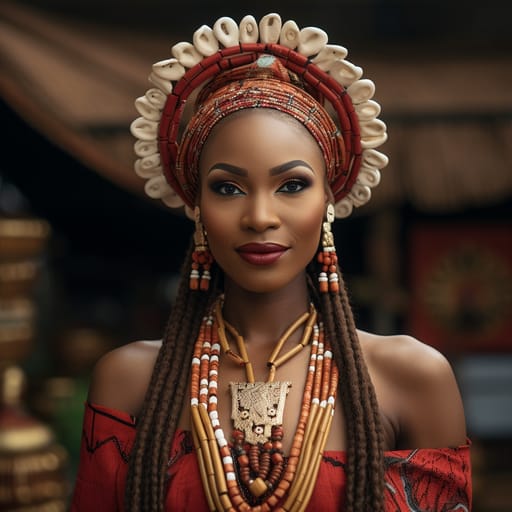
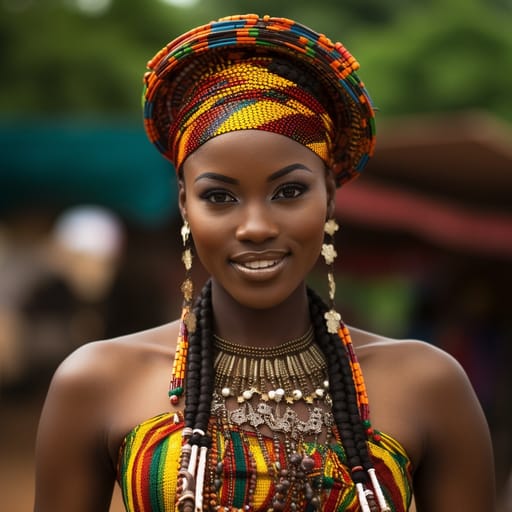
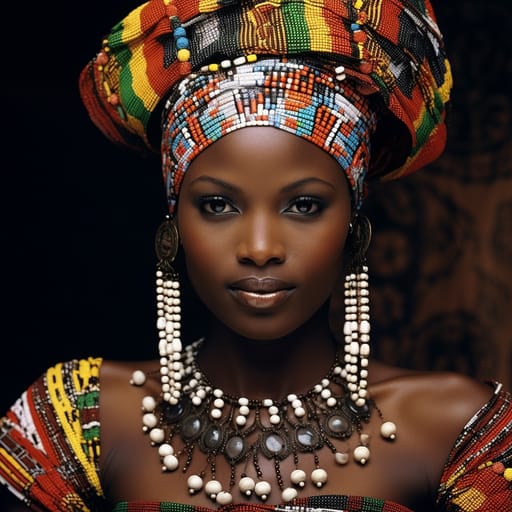
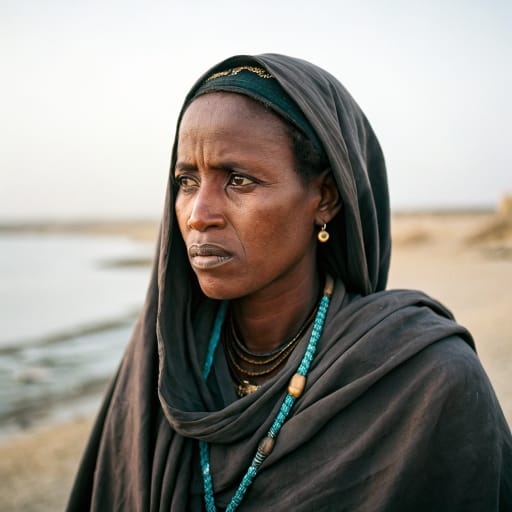
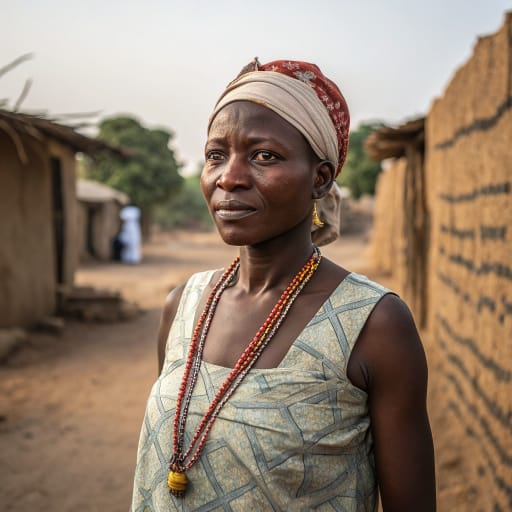
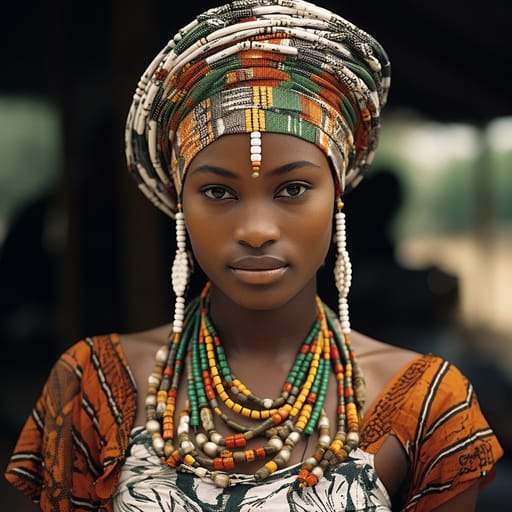
Typical Igdalen Phenotypes
Reference for AI generation: hair, eyes, skin, facial structure, build
Explore phenotype categories
Structured taxonomy with peer-reviewed scales · 22 anatomical categories
Erotic Poses & Sex Positions
From the pose catalog: 219 named positions with reference skeletons
Frequently asked questions about Igdalen people
Where is the Igdalen homeland?
The Igdalen homeland is The Azawagh valley of western Niger, between Tahoua and Agadez, around Abalak, Tchintabaraden and In Gall in Western Africa.
What language do Igdalen people speak?
Igdalen people primarily speak Tagdal, including the Tabarog variety (Northern Songhay, Nilo-Saharan), heavily influenced by Tuareg Berber; Tamasheq and Hausa widely used as second languages.
What religion do Igdalen people practice?
The predominant religion among Igdalen people is Sunni Islam, Maliki school; a recognized maraboutic group within Tuareg society.






Make your own Igdalen images
Five a day, free, no credits to buy. The studio starts from this group's phenotype data, so you can set body type, pose and style and keep the traits accurate.
Start with Igdalen