Help us get this right
Does this portrait look right for Hintata?
Nobody has judged this one yet. You would be the first.
Hintata Erotic
Western High Atlas mountains south of Marrakesh, Morocco; the Hafsid branch later ruled from Tunis, Tunisia
Masmuda Berber, ancestral to today's Tashelhit (Afroasiatic, Berber); Arabic for religion and government
Sunni Islam; Almohad doctrine in the 12th and 13th centuries, later Maliki Sunni Islam
Part of the Masmuda Berber confederation of the High Atlas; the Hafsid dynasty of Tunis came from a Hintata family
About Hintata People
The Hintata were a Berber tribe of the Masmuda confederation in the western High Atlas of Morocco. They were prominent from the twelfth century into the sixteenth, and over time their people merged into the Tashelhit-speaking communities that still work those mountain valleys. They are remembered for two things: a founding role in the Almohad movement, and a family line that ruled Tunisia as the Hafsid dynasty. In the 1120s Ibn Tumart began preaching his hard-edged doctrine of the oneness of God in the Atlas, and the Hintata were among the first Masmuda tribes to join him. One of their chiefs, Abu Hafs Umar, often called Umar Inti, sat on Ibn Tumart's inner council of ten companions and became one of the movement's most trusted commanders. The Almohads went on to overthrow the Almoravids, take Marrakesh in 1147, and build an empire that stretched from al-Andalus to Ifriqiya. Tribal rank counted for a great deal in that state, and Abu Hafs Umar's family kept its high place. His son governed Ifriqiya for the Almohads, and in 1229 a grandson, Abu Zakariya Yahya, broke with Marrakesh and ruled from Tunis in his own name. The Hafsids lasted about three centuries longer than the Almohads and held Tunis until the Ottomans took it in 1574. That is a remarkable run for a family from the mountains.
In Morocco the tribe remained a force in the mountains. Under the Marinids, Hintata chiefs held much of the High Atlas south of Marrakesh and at times openly defied the sultans in Fez. The Marinids weakened in the fifteenth century, and so did the Wattasids after them. In that gap a Hintata family took control of Marrakesh and ruled the city and its plain as a practically independent emirate, while the Portuguese pushed in from forts on the Atlantic coast. That ended in the 1520s, when the rising Saadians took Marrakesh. In religion the Hintata followed the rest of the region: Almohad doctrine at their height, then the Maliki Sunni Islam that took hold again across Morocco. Today they survive as a thread in North African history rather than as a named community. You can still see their mark in the Almohad mosque at Tinmel, in the monuments of Hafsid Tunis, and in the Shilha-speaking valleys where their descendants still live.
Related ethnic groups
Groups that share Hintata's homeland, region, language, or religious tradition. These are likely candidates for comparative phenotype reference.
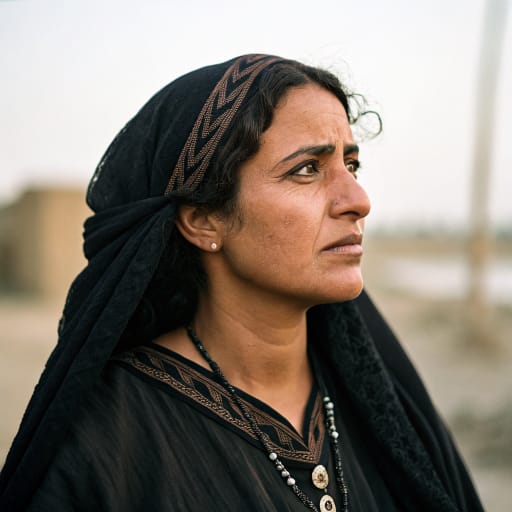
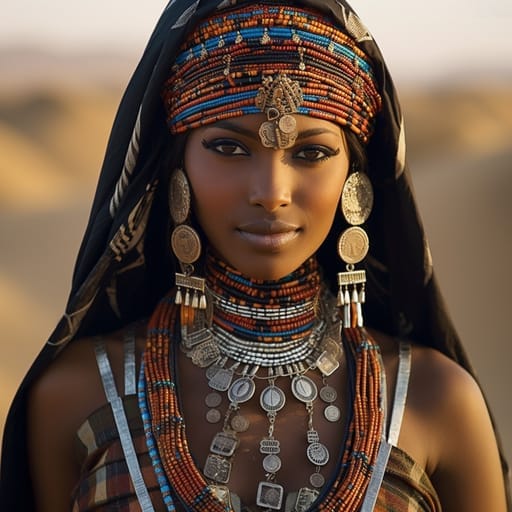
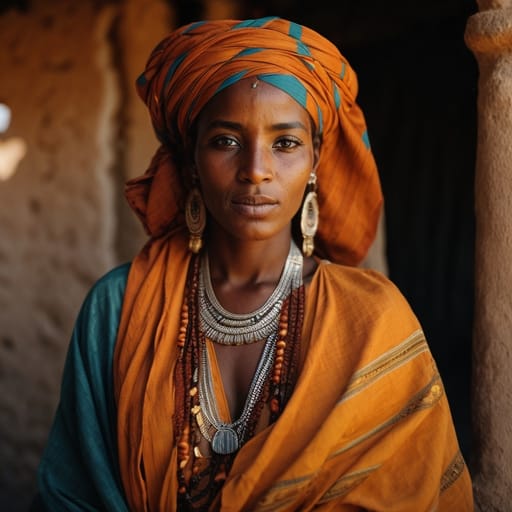
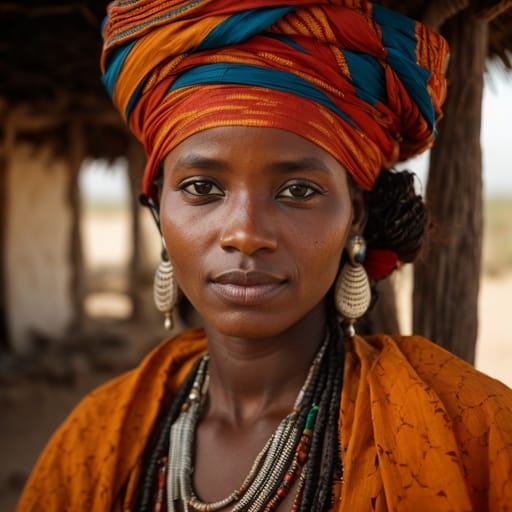
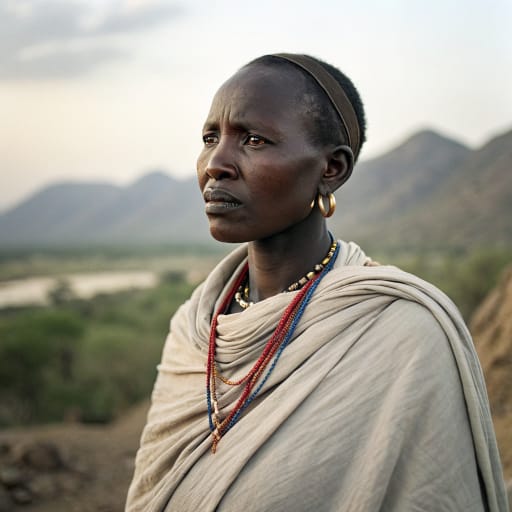
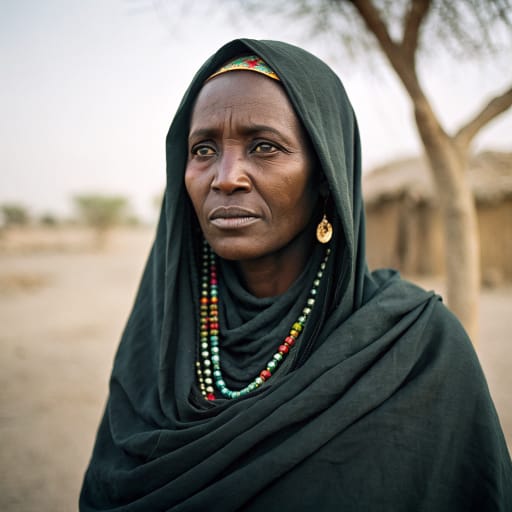
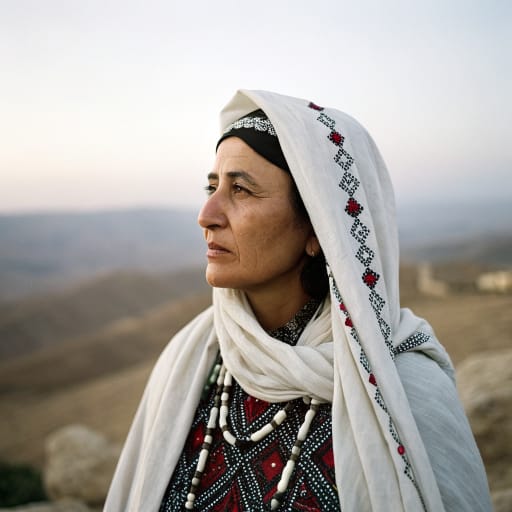
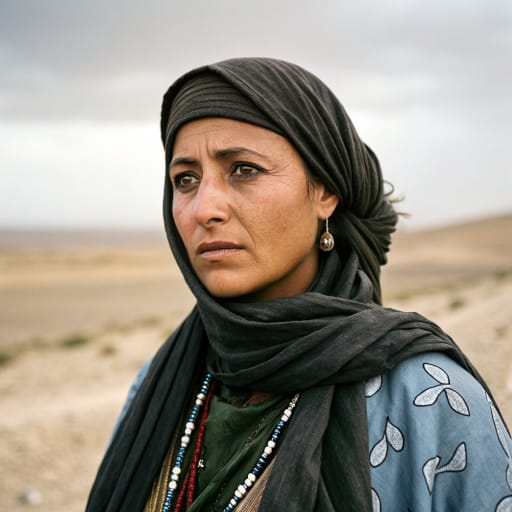
Typical Hintata Phenotypes
Reference for AI generation: hair, eyes, skin, facial structure, build
Hintata Body & Anatomy Reference
Berber / Mediterranean-Saharan phenotype: anatomy reference for AI nude generation
Hintata Boobs & Breasts
Bust reference for Hintata women: medium-to-large cup, full, moderate projection, which is typical of Berber / Mediterranean-Saharan ancestry. Areolas measure about 30-44mm across, with medium-brown to dark-brown pigmentation. Body type (mesomorph with fuller hip-and-bust deposition) shapes the bust as well, so Hintata tits are usually fuller and softer than the Cushitic East African norm. In AI imagery, keep the forward-set shape rather than drifting toward the smaller East Asian bust profile.
Hintata Ass & Hips
The Hintata ass is typically medium-to-full, moderate projection, broader hip profile, which sets it apart from the slim narrow-hip Cushitic East African profile. Underneath, the pelvis shows medium-to-wide iliac crests, fuller gluteal-femoral fat distribution, part of the Berber / Mediterranean-Saharan skeletal pattern. For Hintata butt pics and AI renders, match that silhouette and the overall build (mesomorph with fuller hip-and-bust deposition).
Hintata Vagina & Pussy
Hintata pussy and vulvar anatomy presents medium-brown to dark-brown labial pigmentation, fuller labia minora, consistent with the Berber / Mediterranean-Saharan phenotype's pigmentation pattern. Hintata pubic hair is typically wavy-to-coiled medium-coarse texture, dense distribution, in the inverted-triangle pattern. For anatomically accurate Hintata pussy renders the labial coloration should match the surrounding olive to medium-brown skin tone with a continuous gradient, and the hair should keep its wavy-to-coiled medium-coarse texture.
Hintata Dicks & Penis
Hintata dicks follow the Berber / Mediterranean-Saharan reference data: regional mean ~13-14cm erect; moderate girth; medium-brown shaft pigmentation. Shaft color should track the olive to medium-brown skin tone with a smooth change toward the glans, and Hintata pubic hair keeps its wavy-to-coiled medium-coarse texture.
Hintata Body, Curves & Build
Hintata body type and overall build presents as mesomorph with fuller hip-and-bust deposition, with mean adult female BMI 24-28: the characteristic Berber / Mediterranean-Saharan habitus. Hintata curves and proportions should keep the regional skeletal frame (height, shoulder-to-hip ratio, limb proportions) rather than a generic mesomorph default.
Hintata Skin Tone & Hair Texture
Hintata skin sits in the olive to medium-brown (Fitzpatrick III-V) band. Hair is typically wavy-to-curly 2B-3C, often dark-brown to black, in keeping with the Berber / Mediterranean-Saharan phenotype. In nude renders the skin should stay one even tone from face to body, and body, pubic and head hair should match.
Explore phenotype categories
Structured taxonomy with peer-reviewed scales · 22 anatomical categories
Erotic Poses & Sex Positions
From the pose catalog: 219 named positions with reference skeletons
Frequently asked questions about Hintata people
Where is the Hintata homeland?
The Hintata homeland is Western High Atlas mountains south of Marrakesh, Morocco; the Hafsid branch later ruled from Tunis, Tunisia in Northern Africa.
What language do Hintata people speak?
Hintata people primarily speak Masmuda Berber, ancestral to today's Tashelhit (Afroasiatic, Berber); Arabic for religion and government.
What religion do Hintata people practice?
The predominant religion among Hintata people is Sunni Islam; Almohad doctrine in the 12th and 13th centuries, later Maliki Sunni Islam.






Make your own Hintata images
Five a day, free, no credits to buy. The studio starts from this group's phenotype data, so you can set body type, pose and style and keep the traits accurate.
Start with Hintata