Help us get this right
Does this portrait look right for Hajjam?
Nobody has judged this one yet. You would be the first.
Hajjam Erotic
North India, chiefly Uttar Pradesh, Bihar and Delhi, and Pakistan, especially Punjab
Urdu and regional Hindi dialects in India; Punjabi and Urdu in Pakistan (Indo-Aryan, Indo-European)
Sunni Islam
Muslim barber community of South Asia, also called Salmani; counterpart of the Hindu Nai caste; counted among India's Pasmanda Muslims
About Hajjam People
The Hajjam take their name from their work. Hajjam is Arabic for a cupper, someone who practices hijama, the old Islamic healing art of drawing blood with cups. In North India and Pakistan the word came to mean the Muslim barber, who shaved heads and beards, did cupping and circumcised boys. Many in the community now call themselves Salmani, after Salman the Persian, the companion of the Prophet whom Muslim barbers across South Asia claim as their patron. The change is deliberate. Hajjam carried the sting of a service-caste label, while Salmani ties the community to early Islam and to a man of real standing in it.
They live across Uttar Pradesh, Bihar, Delhi and neighboring states, and in Pakistan, where the same trade community is often called Nai, especially in Punjab. The Partition of 1947 split families between the two countries. Their language depends on where they live. Many speak Urdu at home and in religious life, alongside a regional Indo-Aryan language such as a Hindi dialect of the Gangetic plain or Punjabi. In this they mirror the Hindu Nai, the barber caste on the other side of the religious line. The two share the same language, villages and trade, but the Hajjam marry within their own Muslim biradari.
They are Sunni Muslims, and their trade is tied to Muslim ritual. The barber shaves a newborn's head at the aqiqah, and it was traditionally the barber who performed the circumcision that marks a boy's place in the faith. In the old village economy a Hajjam family served a fixed circle of patron households and was paid in grain at harvest rather than per shave. The barber also worked as a messenger, carrying wedding invitations and marriage inquiries from house to house.
Most of that world has faded. Village barbers became salon owners in North Indian and Pakistani cities, and many families left the trade altogether. The question of status did not fade. In India the Hajjam are listed among the Other Backward Classes in several states. They are also part of the Pasmanda movement, which argues that caste did not disappear when South Asians became Muslim and that working-class Muslim communities should be recognized as disadvantaged in their own right.
Related ethnic groups
Groups that share Hajjam's homeland, region, language, or religious tradition. These are likely candidates for comparative phenotype reference.
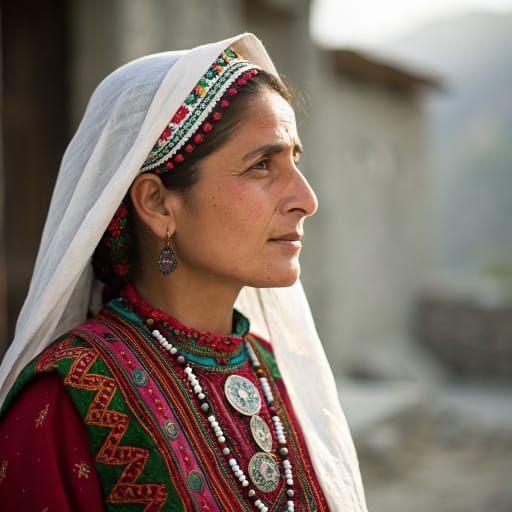
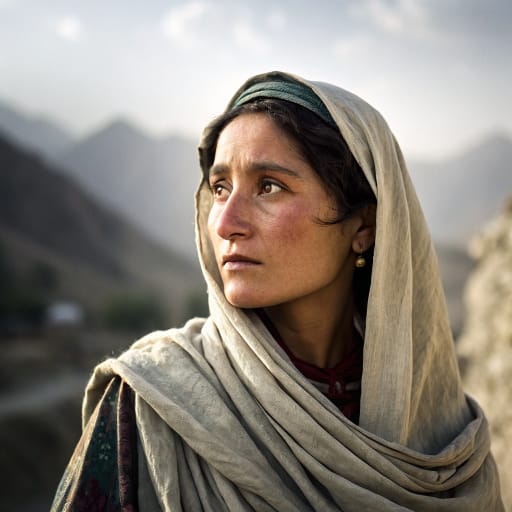
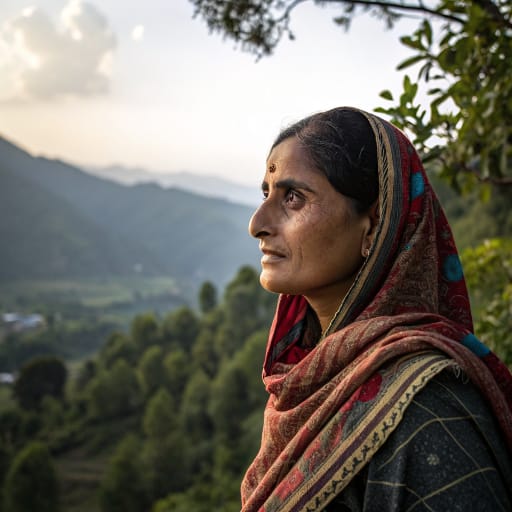
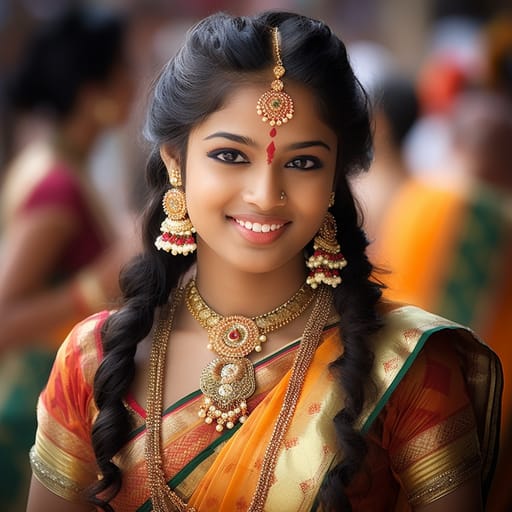
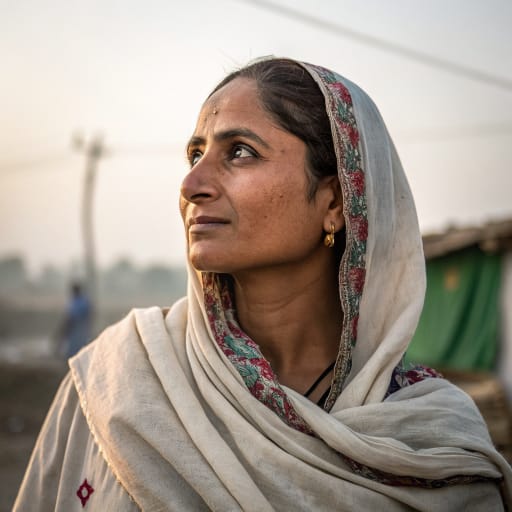
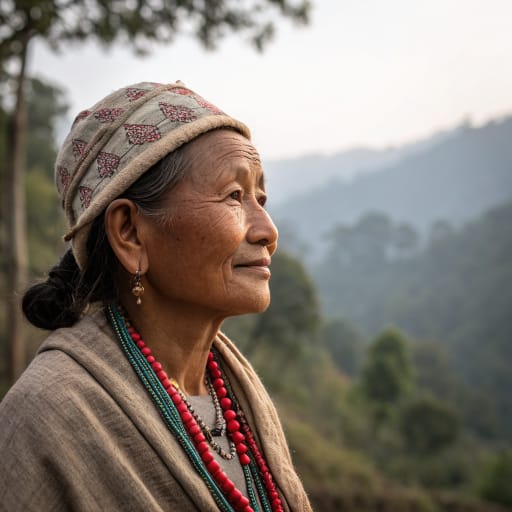
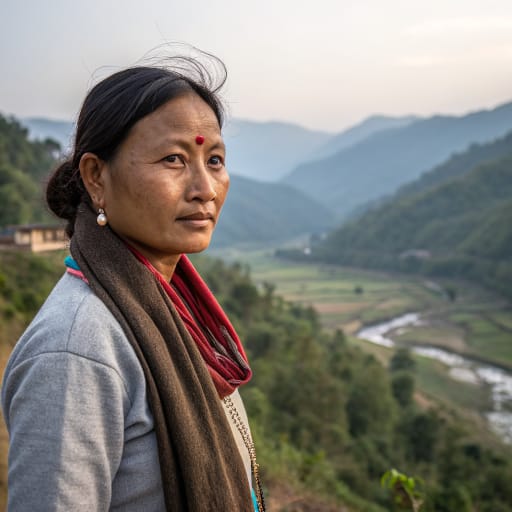
Typical Hajjam Phenotypes
Reference for AI generation: hair, eyes, skin, facial structure, build
Hajjam Body & Anatomy Reference
Anatomy by feature, Indo-Aryan / Dravidian South Asian phenotype
Hajjam Boobs & Breasts
Bust reference for Hajjam women: medium-to-large cup, moderate-to-full projection, which is typical of Indo-Aryan / Dravidian South Asian ancestry. Areolas measure about 32-46mm across, with medium-brown to dark-brown pigmentation. Body type (endomorph-to-mesomorph with fuller hip deposition) shapes the bust as well, so Hajjam tits are usually full and soft, generally fuller than the East Asian norm. In AI imagery, keep the forward-set shape rather than drifting toward the smaller East Asian bust profile.
Hajjam Ass & Hips
The Hajjam ass is typically medium-to-full, moderate-to-high projection, classic curvy hip profile, which sets it apart from the slim hip profile of East Asian women. Underneath, the pelvis shows medium-to-wide iliac crests, full gluteal-femoral fat distribution, part of the Indo-Aryan / Dravidian South Asian skeletal pattern. For Hajjam butt pics and AI renders, match that silhouette and the overall build (endomorph-to-mesomorph with fuller hip deposition).
Hajjam Vagina & Pussy
Hajjam pussy and vulvar anatomy presents medium-brown to dark-brown labial pigmentation, fuller labia minora projection, consistent with the Indo-Aryan / Dravidian South Asian phenotype's pigmentation pattern. Hajjam pubic hair is typically straight-to-wavy coarse texture, dense distribution, in the inverted-triangle pattern. For anatomically accurate Hajjam pussy renders the labial coloration should match the surrounding wheatish to brown skin tone with a continuous gradient, and the hair should keep its straight-to-wavy coarse texture.
Hajjam Dicks & Penis
Hajjam dicks follow the Indo-Aryan / Dravidian South Asian reference data: regional mean ~13cm erect; moderate girth; medium-brown shaft pigmentation. Shaft color should track the wheatish to brown skin tone with a smooth change toward the glans, and Hajjam pubic hair keeps its straight-to-wavy coarse texture.
Hajjam Body, Curves & Build
Hajjam body type and overall build presents as endomorph-to-mesomorph with fuller hip deposition, with mean adult female BMI 22-25: the characteristic Indo-Aryan / Dravidian South Asian habitus. Hajjam curves and proportions should keep the regional skeletal frame (height, shoulder-to-hip ratio, limb proportions) rather than a generic mesomorph default.
Hajjam Skin Tone & Hair Texture
Hajjam skin sits in the wheatish to brown (Fitzpatrick III-V) band. Hair is typically straight-to-wavy 1A-2B, dense, dark-brown to black, in keeping with the Indo-Aryan / Dravidian South Asian phenotype. In nude renders the skin should stay one even tone from face to body, and body, pubic and head hair should match.
Explore phenotype categories
Structured taxonomy with peer-reviewed scales · 22 anatomical categories
Erotic Poses & Sex Positions
From the pose catalog: 219 named positions with reference skeletons
Frequently asked questions about Hajjam people
Where is the Hajjam homeland?
The Hajjam homeland is North India, chiefly Uttar Pradesh, Bihar and Delhi, and Pakistan, especially Punjab in Southern Asia.
What language do Hajjam people speak?
Hajjam people primarily speak Urdu and regional Hindi dialects in India; Punjabi and Urdu in Pakistan (Indo-Aryan, Indo-European).
What religion do Hajjam people practice?
The predominant religion among Hajjam people is Sunni Islam.






Make your own Hajjam images
Five a day, free, no credits to buy. The studio starts from this group's phenotype data, so you can set body type, pose and style and keep the traits accurate.
Start with Hajjam