Help us get this right
Does this portrait look right for Kusunda?
Nobody has judged this one yet. You would be the first.
Kusunda Erotic
Mid-hill districts of western and central Nepal, including Dang, Rolpa, Pyuthan, Surkhet, Gorkha and Tanahun.
Kusunda, also called Mihaq (a language isolate with no demonstrated relatives), now moribund; Nepali (Indo-European, Indo-Aryan) is the everyday language.
Recorded as Hindu in the census, alongside older forest and hunting observances. No separate organized religion.
No named branches. One of Nepal's adivasi janajati, officially classed among the endangered indigenous nationalities, and known to neighbors as Ban Raja.
About Kusunda People
The Kusunda are identifiable by something almost no other people on earth can claim: a language that belongs to nothing. Kusunda, which its own speakers call Mihaq, has resisted every attempt to file it under Tibeto-Burman, Indo-Aryan, Austroasiatic or anything else. It sits in the middle of Nepal surrounded by languages it is not related to, and linguists have spent decades looking for its cousins without finding any. Whatever it is, it is probably older in those hills than anything now spoken around them. The people themselves are few. Nepal's census counts them in the low hundreds, scattered across the mid-hill districts of the west and center: Dang, Rolpa, Pyuthan, Surkhet, Gorkha, Tanahun. Their neighbors call them Ban Raja, kings of the forest, and Kusunda oral tradition takes the title at face value, tracing the line back to a royal house that left the palaces for the woods.
Until well into the twentieth century they lived by hunting rather than farming: wild fowl and monitor lizards taken with bow and net, yams dug out of the forest floor, honey gathered, most of it traded to settled villagers for grain, cloth and iron. They moved in small family bands, kept clear of agriculture as a matter of preference and not only of habit, and rarely married out. That ended within living memory. The forest was cleared, land was registered to the people who plowed it, and the Kusunda came down into villages and married into Khas, Magar and Tharu families. Census forms now record them as Hindu, and household practice runs alongside older observances aimed at the forest and the hunt. The state lists them among its most endangered indigenous nationalities.
The language went first. Children grew up speaking Nepali, and by the 2000s fluency had narrowed to a few elderly people, which is why David Watters's grammar of Kusunda, assembled with them, reads more like a rescue operation than a survey. The last fully fluent speaker, Gyani Maiya Sen Kusunda, died in 2020. Her sister has since taught classes in Dang for young Kusunda who grew up without a word of it, working from recordings and word lists. Nobody involved pretends this restores a mother tongue. It does mean the thing is being handed on rather than filed away, which for a language with no relatives is the whole argument.
Related ethnic groups
Groups that share Kusunda's homeland, region, language, or religious tradition. These are likely candidates for comparative phenotype reference.
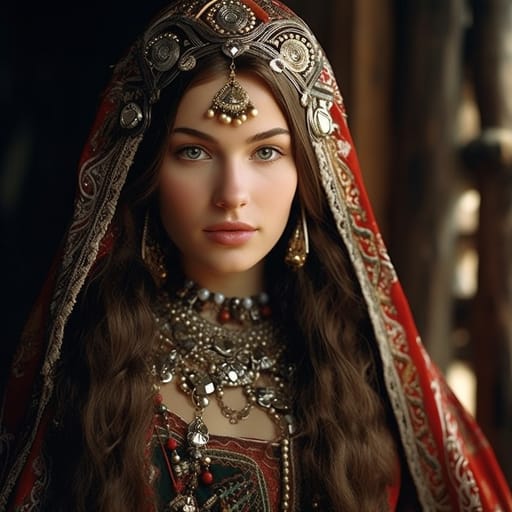
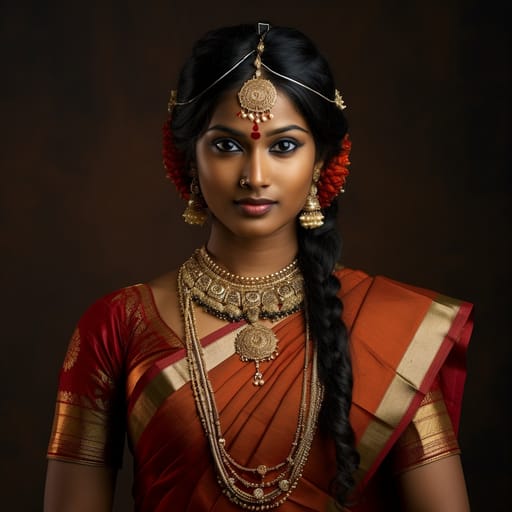
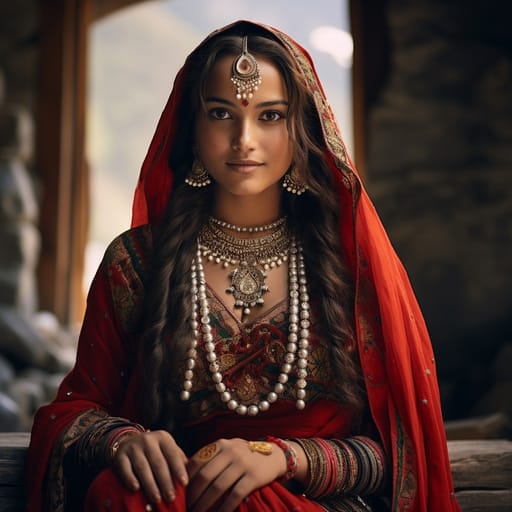
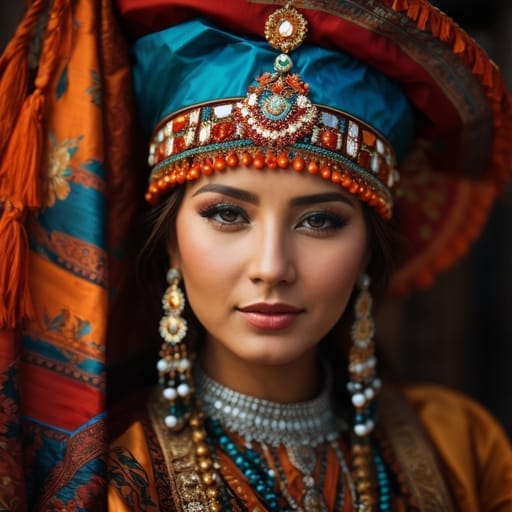
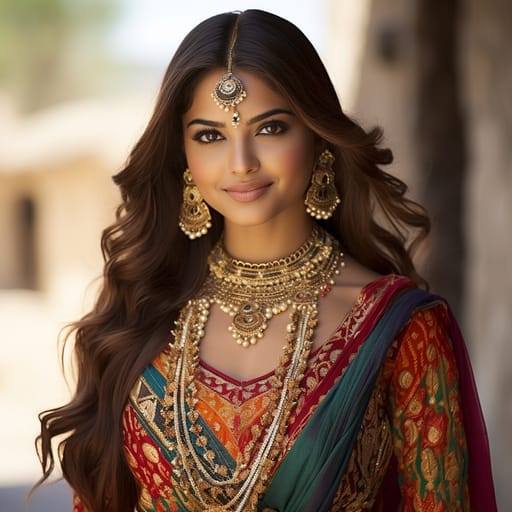
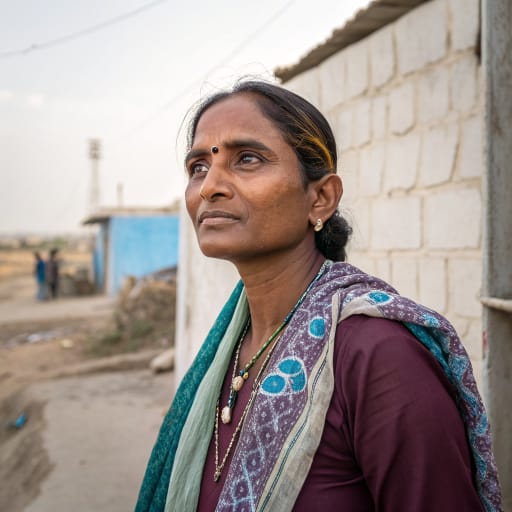
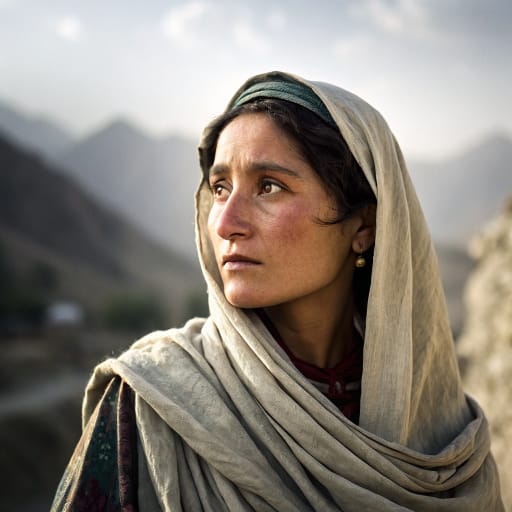
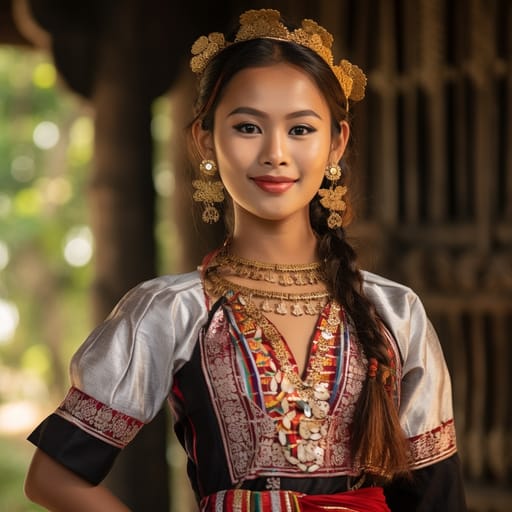
Typical Kusunda Phenotypes
Reference for AI generation: hair, eyes, skin, facial structure, build
Kusunda Body & Anatomy Reference
Indo-Aryan / Dravidian South Asian phenotype: anatomy reference for AI nude generation
Kusunda Boobs & Breasts
The typical Kusunda bust is medium-to-large cup, moderate-to-full projection, in line with the wider Indo-Aryan / Dravidian South Asian pattern. Areolas usually fall in the 32-46mm range, with medium-brown to dark-brown areolar pigmentation against the wheatish-to-brown skin tone. Compared with the smaller East Asian bust profile, Kusunda breasts sit forward and are generally full and soft, generally fuller than the East Asian norm. A faithful AI render of Kusunda tits keeps that shape and areola size.
Kusunda Ass & Hips
Butt shape among Kusunda women: medium-to-full, moderate-to-high projection, classic curvy hip profile, over medium-to-wide iliac crests, full gluteal-femoral fat distribution. This follows Indo-Aryan / Dravidian South Asian ancestry and looks quite unlike the slim hip profile of East Asian women. An accurate Kusunda ass in adult AI imagery keeps both the silhouette and the overall build (endomorph-to-mesomorph with fuller hip deposition) instead of a generic average.
Kusunda Vagina & Pussy
Vulvar anatomy among Kusunda women: medium-brown to dark-brown labial pigmentation, fuller labia minora projection. Pubic hair tends to be straight-to-wavy coarse texture, dense distribution, in the usual inverted-triangle pattern. Both follow Indo-Aryan / Dravidian South Asian pigmentation, which is why Kusunda pussy renders should not fall back on a pale, sparse Western template.
Kusunda Dicks & Penis
The Kusunda cock profile, from Indo-Aryan / Dravidian South Asian anthropometric data: regional mean ~13cm erect; moderate girth; medium-brown shaft pigmentation. Pubic hair has a straight-to-wavy coarse texture and forms the usual inverted-V pattern. Whether Kusunda men are circumcised follows religious and cultural practice rather than phenotype.
Kusunda Body, Curves & Build
Build and curves among Kusunda women follow the Indo-Aryan / Dravidian South Asian pattern: endomorph-to-mesomorph with fuller hip deposition, mean adult female BMI 22-25. Proportions matter as much as skin tone, so Kusunda figures should keep their regional height and limb ratios.
Kusunda Skin Tone & Hair Texture
The Kusunda skin range is wheatish to brown (Fitzpatrick III-V), and hair tends to be straight-to-wavy 1A-2B, dense, dark-brown to black. That combination marks the Indo-Aryan / Dravidian South Asian phenotype, and skin tone is the trait AI generators most often get wrong for Kusunda women.
Explore phenotype categories
Structured taxonomy with peer-reviewed scales · 22 anatomical categories
Erotic Poses & Sex Positions
From the pose catalog: 219 named positions with reference skeletons
Frequently asked questions about Kusunda people
Where is the Kusunda homeland?
The Kusunda homeland is Mid-hill districts of western and central Nepal, including Dang, Rolpa, Pyuthan, Surkhet, Gorkha and Tanahun. in Southern Asia.
What language do Kusunda people speak?
Kusunda people primarily speak Kusunda, also called Mihaq (a language isolate with no demonstrated relatives), now moribund; Nepali (Indo-European, Indo-Aryan) is the everyday language..
What religion do Kusunda people practice?
The predominant religion among Kusunda people is Recorded as Hindu in the census, alongside older forest and hunting observances. No separate organized religion..






Make your own Kusunda images
Five a day, free, no credits to buy. The studio starts from this group's phenotype data, so you can set body type, pose and style and keep the traits accurate.
Start with Kusunda