Help us get this right
Does this portrait look right for Arain?
Nobody has judged this one yet. You would be the first.
Arain Erotic
Punjab, Pakistan; historically also the eastern Punjab districts now in India, with smaller communities in Sindh and a diaspora in Britain and the Gulf states
Punjabi (Indo-Aryan); Urdu (Indo-Aryan) widely used; Saraiki and Sindhi (Indo-Aryan) in southern areas
Predominantly Sunni Islam
Numerous patrilineal clans within the Arain biradari; part of the wider body of Punjabi Muslim farming communities
About Arain People
The Arain are a Punjabi community known for most of their history as the people who grew the food. Across the plains of Punjab and into Sindh, the name meant intensive farming: vegetables, orchards and well-irrigated plots around the old cities. Families worked those small holdings as hard as the land would allow. That reputation, more than any agreed origin, is what made them a group people could recognize.
Where they came from is still argued. Many Arains trace their line to Arab soldiers who entered Sindh with Muhammad bin Qasim in the eighth century. Others link the name to Aror, the old capital of Sindh, and some scholars see a local farming people who became Muslim over centuries. Colonial census writers tended to group them by trade with the Hindu gardening castes. Nobody disputes that the community became overwhelmingly Sunni Muslim, and that faith runs through daily life: the mosque, Friday prayer, the fast and the feasts, sitting alongside Punjabi village customs that are older than Islam in the region.
They speak Punjabi, an Indo-Aryan language they share with their Sikh and Hindu neighbors. Urdu comes in through school and city life, and Saraiki or Sindhi is spoken in the south. Social life runs through the biradari, the extended brotherhood of related families, which splits into many clans. Marrying within the biradari has long been the norm, and in Pakistani politics an Arain biradari can still deliver votes as a bloc. Many Arain families use the honorific Mian.
Two twentieth-century events reshaped them. Under British rule, Arains were favored as settlers for the new canal colonies of western Punjab, and many families moved onto irrigated land around Lyallpur, now Faisalabad. Then Partition in 1947 split Punjab. Arains from eastern districts such as Jalandhar, Ludhiana and Amritsar crossed into Pakistan in large numbers, often leaving their land behind and starting over. Today they are one of the largest communities in Pakistani Punjab, with strong roots in Lahore and Faisalabad and a visible place in the army, the civil service, business and politics. General Zia-ul-Haq was among the best-known Arains. Farming is still part of how they see themselves, but many families have now lived in cities for two or three generations, and a sizable diaspora lives in Britain and the Gulf.
Related ethnic groups
Groups that share Arain's homeland, region, language, or religious tradition. These are likely candidates for comparative phenotype reference.
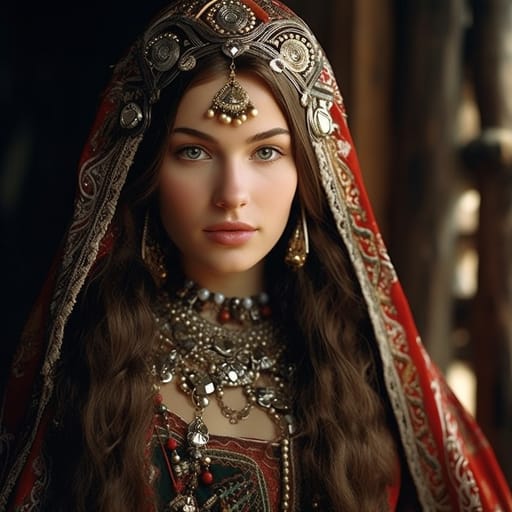
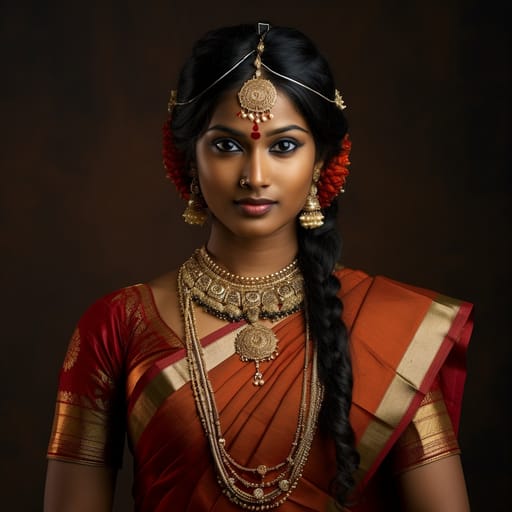
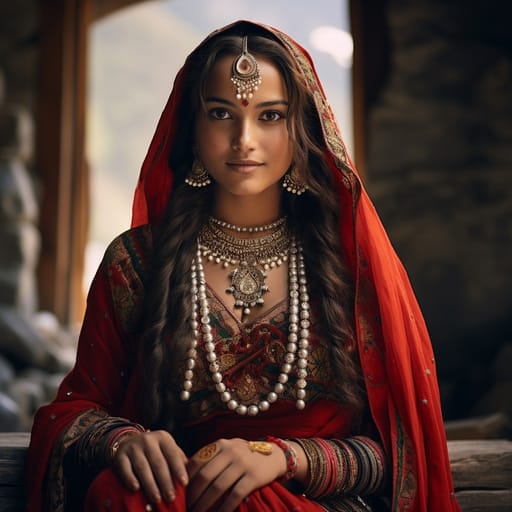
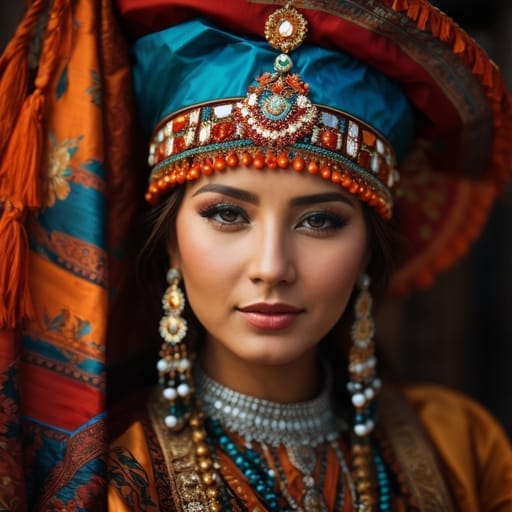
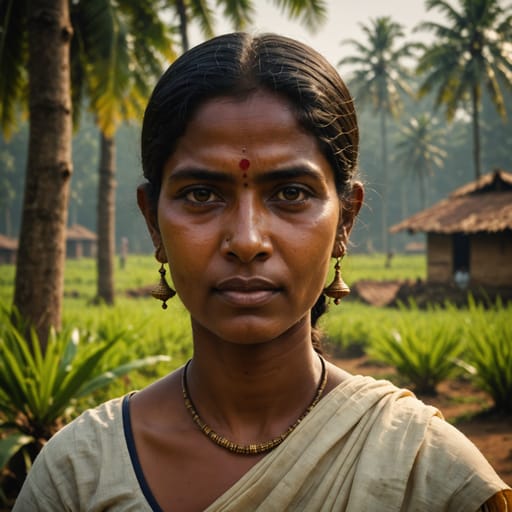
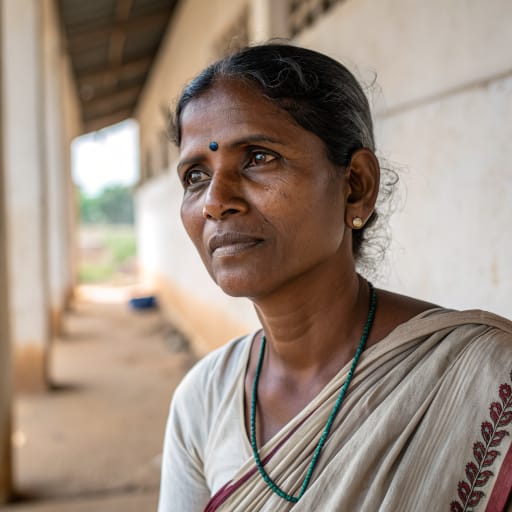
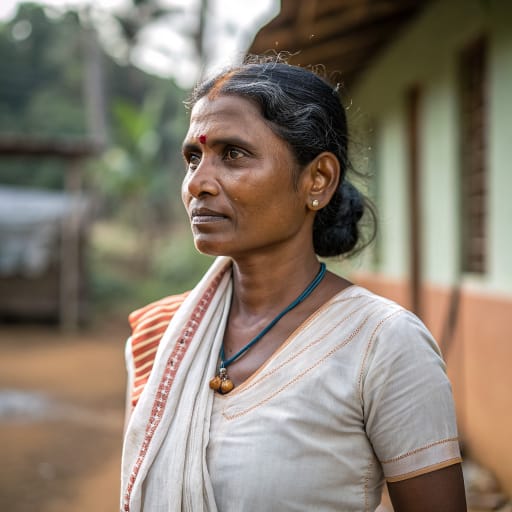
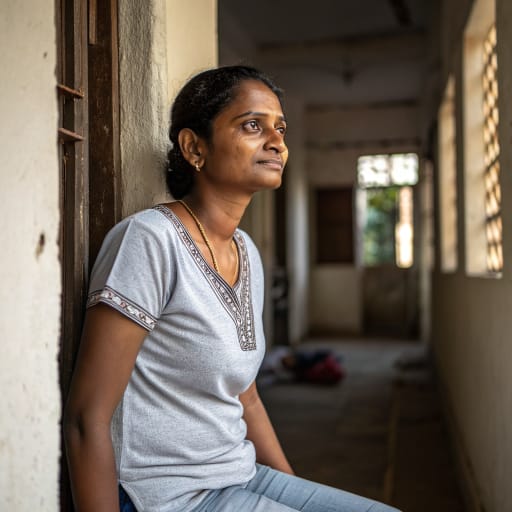
Typical Arain Phenotypes
Reference for AI generation: hair, eyes, skin, facial structure, build
Arain Body & Anatomy Reference
Per-feature anatomical profile for AI nude generation: Indo-Aryan / Dravidian South Asian phenotype
Arain Boobs & Breasts
The typical Arain bust is medium-to-large cup, moderate-to-full projection, in line with the wider Indo-Aryan / Dravidian South Asian pattern. Areolas usually fall in the 32-46mm range, with medium-brown to dark-brown areolar pigmentation against the wheatish-to-brown skin tone. Compared with the smaller East Asian bust profile, Arain breasts sit forward and are generally full and soft, generally fuller than the East Asian norm. A faithful AI render of Arain tits keeps that shape and areola size.
Arain Ass & Hips
Butt shape among Arain women: medium-to-full, moderate-to-high projection, classic curvy hip profile, over medium-to-wide iliac crests, full gluteal-femoral fat distribution. This follows Indo-Aryan / Dravidian South Asian ancestry and looks quite unlike the slim hip profile of East Asian women. An accurate Arain ass in adult AI imagery keeps both the silhouette and the overall build (endomorph-to-mesomorph with fuller hip deposition) instead of a generic average.
Arain Vagina & Pussy
Vulvar anatomy among Arain women: medium-brown to dark-brown labial pigmentation, fuller labia minora projection. Pubic hair tends to be straight-to-wavy coarse texture, dense distribution, in the usual inverted-triangle pattern. Both follow Indo-Aryan / Dravidian South Asian pigmentation, which is why Arain pussy renders should not fall back on a pale, sparse Western template.
Arain Dicks & Penis
The Arain cock profile, from Indo-Aryan / Dravidian South Asian anthropometric data: regional mean ~13cm erect; moderate girth; medium-brown shaft pigmentation. Pubic hair has a straight-to-wavy coarse texture and forms the usual inverted-V pattern. Whether Arain men are circumcised follows religious and cultural practice rather than phenotype.
Arain Body, Curves & Build
Build and curves among Arain women follow the Indo-Aryan / Dravidian South Asian pattern: endomorph-to-mesomorph with fuller hip deposition, mean adult female BMI 22-25. Proportions matter as much as skin tone, so Arain figures should keep their regional height and limb ratios.
Arain Skin Tone & Hair Texture
The Arain skin range is wheatish to brown (Fitzpatrick III-V), and hair tends to be straight-to-wavy 1A-2B, dense, dark-brown to black. That combination marks the Indo-Aryan / Dravidian South Asian phenotype, and skin tone is the trait AI generators most often get wrong for Arain women.
Explore phenotype categories
Structured taxonomy with peer-reviewed scales · 22 anatomical categories
Erotic Poses & Sex Positions
From the pose catalog: 219 named positions with reference skeletons
Frequently asked questions about Arain people
Where is the Arain homeland?
The Arain homeland is Punjab, Pakistan; historically also the eastern Punjab districts now in India, with smaller communities in Sindh and a diaspora in Britain and the Gulf states in Southern Asia.
What language do Arain people speak?
Arain people primarily speak Punjabi (Indo-Aryan); Urdu (Indo-Aryan) widely used; Saraiki and Sindhi (Indo-Aryan) in southern areas.
What religion do Arain people practice?
The predominant religion among Arain people is Predominantly Sunni Islam.






Make your own Arain images
Five a day, free, no credits to buy. The studio starts from this group's phenotype data, so you can set body type, pose and style and keep the traits accurate.
Start with Arain