Help us get this right
Does this portrait look right for Guale?
Nobody has judged this one yet. You would be the first.
Guale Erotic
Coast and Sea Islands of present-day Georgia, United States, centered on St. Catherines and Sapelo islands; later refugee missions on Amelia Island, Florida
Guale (unclassified; possibly Muskogean)
Indigenous Southeastern religion; Roman Catholicism under Spanish Franciscan missions from the late 1500s
Coastal chiefdoms and mission towns including Tolomato, Tupiqui, Asao, Ospo and Sapala; survivors joined the Yamasee and other refugee communities
About Guale People
The Guale were a Native people of the Georgia coast. From before European contact until the early 1700s they lived in chiefdoms among the Sea Islands and tidal marshes, and then war, disease and slave raiding broke them apart. Their survivors were taken in by neighboring refugee communities, including the Yamasee. What made them one people was a shared coastal world: towns bound together under paramount chiefs, or micos, a common language, and a way of life that followed the tides as much as the cornfield.
Guale towns lay along the central and northern Georgia coast, with major centers on and around St. Catherines and Sapelo islands. People planted maize, but they also relied heavily on oysters, fish, deer and nuts, and for part of the year households scattered to forage. Spanish friars complained about this constantly, since a congregation that disappears into the marshes for months is hard to teach. Only a handful of Guale words and names survive. Linguists often suspect the language was Muskogean, part of the family that includes Creek, but there is too little evidence to be sure.
Spain made Guale a mission province after founding St. Augustine in 1565. Jesuits tried first and gave up, and Franciscans followed. In 1597 an heir named Juanillo led a revolt that killed five missionaries. A friar had publicly rebuked him for taking more than one wife and had tried to block him from becoming chief. The Spanish burned Guale towns and granaries until the chiefs submitted. The missions were rebuilt in the early 1600s, and Santa Catalina de Guale on St. Catherines Island became the center of the province. From there, Guale workers were drafted to labor for the colony.
The end came from the north. In 1680 Native raiders allied with the English colony at Charles Town struck Santa Catalina. The missions pulled back south to Amelia Island, and James Moore's 1702 campaign against Spanish Florida destroyed what was left. Survivors scattered to St. Augustine and to the Yamasee. What remains today is mostly archaeology. The lost site of Santa Catalina was found again in 1981. Hundreds of burials lie beneath its church floor, many with glass beads and religious medals, and it is now one of the most closely studied mission sites in North America. Skeletons from Guale mission cemeteries show what that life cost, in decayed teeth and bodies worn down by hard labor.
Related ethnic groups
Groups that share Guale's homeland, region, language, or religious tradition. These are likely candidates for comparative phenotype reference.
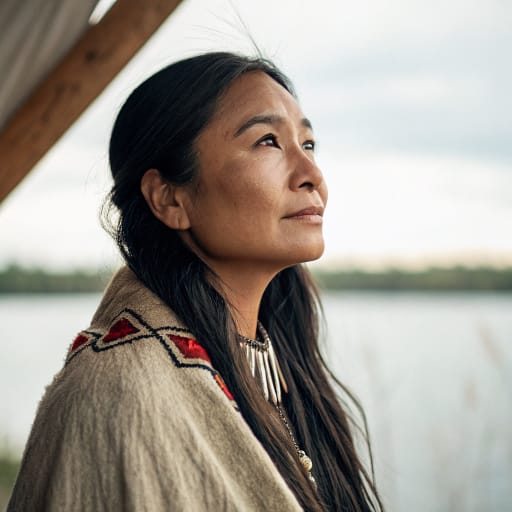
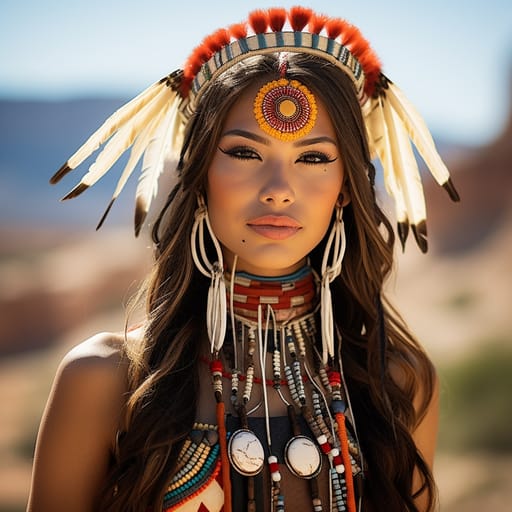
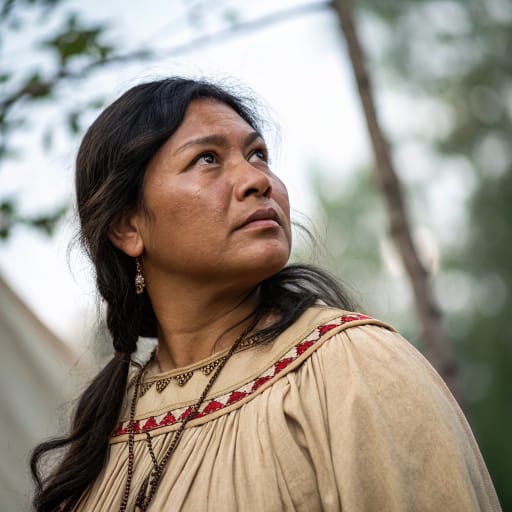
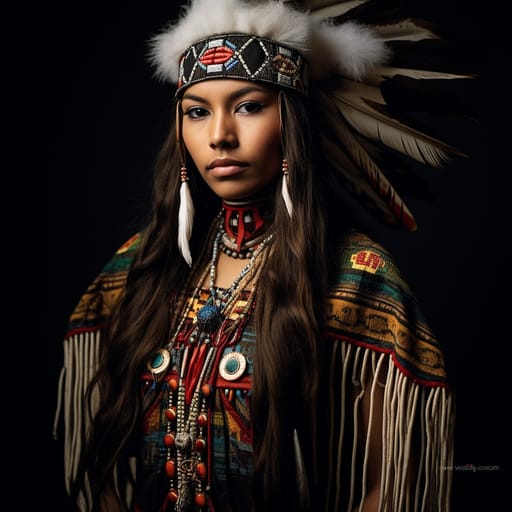
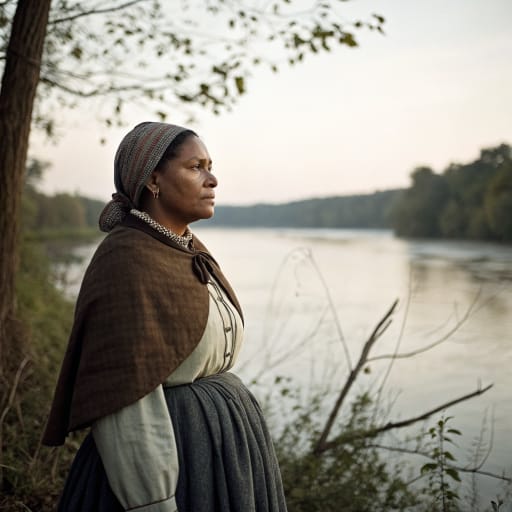
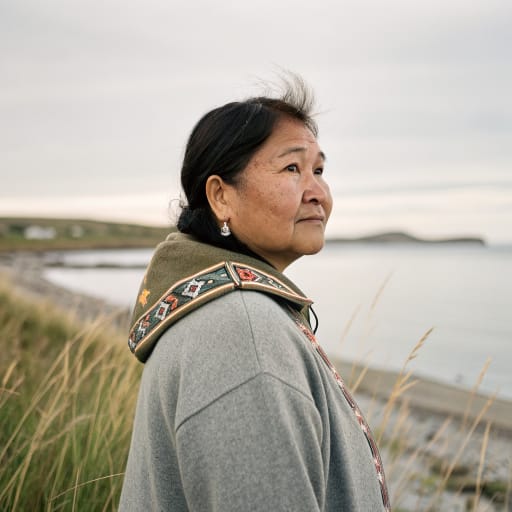
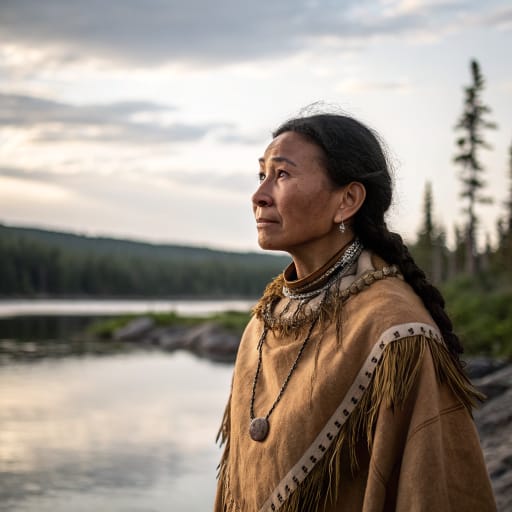
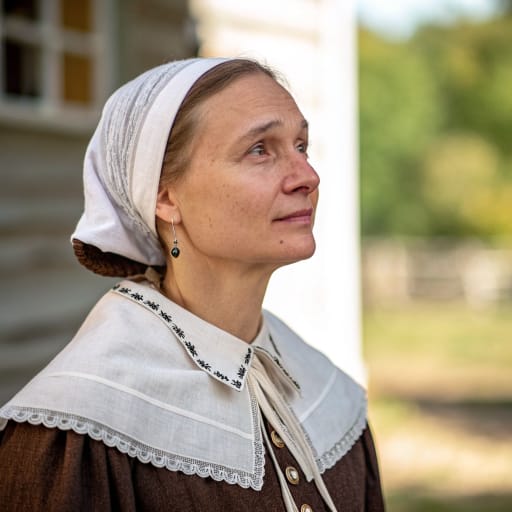
Typical Guale Phenotypes
Reference for AI generation: hair, eyes, skin, facial structure, build
Guale Body & Anatomy Reference
Per-feature anatomical profile for AI nude generation: Indigenous Northern American / Algonquian-Iroquoian phenotype
Guale Boobs & Breasts
Guale tits and boobs run medium cup, moderate projection, the classic Indigenous Northern American / Algonquian-Iroquoian bust profile. Guale nipples and areolas show medium-brown areolar pigmentation against the copper-to-medium-brown skin tone, with areolar diameter typically in the 30-44mm range and forward-set positioning rather than the smaller East Asian bust. Guale breasts trend full and moderate projection, a function of the mesomorph, broader frame in northern Indigenous populations body habitus and the mean adult female BMI 25-28. For anatomically accurate AI-generated Guale nudes the render preserves the medium cup, moderate projection shape, 30-44mm areolas with medium-brown pigmentation, and the torso proportions of the Indigenous Northern American / Algonquian-Iroquoian phenotype.
Guale Ass & Hips
Guale hips and butt usually read as medium, moderate-to-full projection. The skeletal base is medium iliac crests, the Indigenous Northern American / Algonquian-Iroquoian pattern. Set against the slim East Asian narrow-hip profile, the difference is easy to see, and the hip-to-waist ratio is often what identifies Guale women in photos.
Guale Vagina & Pussy
Expect medium-brown labial pigmentation on Guale women, in keeping with Indigenous Northern American / Algonquian-Iroquoian ancestry. The pubic hair is straight medium-coarse texture. Coloring should run evenly from the copper to medium-brown skin of the thighs to the labia, and Guale nude imagery should keep the hair's straight medium-coarse texture.
Guale Dicks & Penis
Guale dick and penile anatomy in adult AI generation should anchor on the regional reference data: regional mean ~13cm erect, moderate girth, and medium-brown shaft pigmentation. The Guale cock profile reflects the Indigenous Northern American / Algonquian-Iroquoian population's anthropometric measurements. The shaft pigmentation should track the surrounding copper to medium-brown skin tone, and the pubic hair should keep its straight medium-coarse texture in the typical inverted-V escutcheon.
Guale Body, Curves & Build
Guale body type: mesomorph, broader frame in northern Indigenous populations, with mean adult female BMI 25-28. This is the typical Indigenous Northern American / Algonquian-Iroquoian build. Height range, shoulder-to-hip ratio and fat distribution all follow from it, which is what an accurate Guale nude body should show.
Guale Skin Tone & Hair Texture
Guale skin tone falls in the copper to medium-brown (Fitzpatrick III-V) band, the surface signal most often miscalibrated by generic AI nude generators. Guale hair texture is typically straight 1A, dark-brown to black, often thick and dense, characteristic of the Indigenous Northern American / Algonquian-Iroquoian phenotype. In Guale nude renders the skin should hold that band consistently across the body.
Explore phenotype categories
Structured taxonomy with peer-reviewed scales · 22 anatomical categories
Erotic Poses & Sex Positions
From the pose catalog: 219 named positions with reference skeletons
Frequently asked questions about Guale people
Where is the Guale homeland?
The Guale homeland is Coast and Sea Islands of present-day Georgia, United States, centered on St. Catherines and Sapelo islands; later refugee missions on Amelia Island, Florida in North America.
What language do Guale people speak?
Guale people primarily speak Guale (unclassified; possibly Muskogean).
What religion do Guale people practice?
The predominant religion among Guale people is Indigenous Southeastern religion; Roman Catholicism under Spanish Franciscan missions from the late 1500s.






Make your own Guale images
Five a day, free, no credits to buy. The studio starts from this group's phenotype data, so you can set body type, pose and style and keep the traits accurate.
Start with Guale