No portrait yet
Beothuk Erotic
Island of Newfoundland, Canada, especially the northeast coast, the Exploits River and Red Indian Lake
Beothuk (unclassified, possibly Algonquian), known only from about 400 recorded words
Traditional Indigenous beliefs, little recorded; red ocher carried ritual meaning and burials with grave goods point to belief in an afterlife
Descendants of the Little Passage complex of Newfoundland's Recent Indian period; no surviving branches, with claimed partial descent among some Newfoundland Mi'kmaq families
About Beothuk People
The Beothuk were the Indigenous people of the island of Newfoundland when Europeans arrived, and they are gone: the last known Beothuk, a woman named Shanawdithit, died of tuberculosis in St. John's in 1829, and no community today carries the name. What set them apart from every neighbor was red ocher. They ground it, mixed it with grease and worked it into skin, hair, caribou-hide robes, canoes, weapons and the bodies of their dead. English fishermen called them Red Indians, and that label, later applied to Indigenous people across the continent, may have begun on this one island.
Their year ran on two clocks. Summers were spent on the coast taking harbor seals, salmon, seabirds and eggs, traveling in bark canoes unlike any other in North America: sharply V-bottomed, with high peaked ends and gunwales that rose to a hump at midship, ballasted with stones to stay upright. In autumn they moved inland along the Exploits River to Red Indian Lake, where fences of felled trees ran for miles and funneled migrating caribou toward hunters waiting at the water. Winter was passed in mamateeks, conical dwellings with sunken floors and sleeping hollows cut around a central hearth, beside storehouses of frozen meat. Their language survives as a few hundred words written down from three captives. It may be a distant Algonquian relative. Most linguists leave it unclassified.
The Beothuk did what almost no other people in the Americas managed: they refused the trade. Rather than exchange furs for iron, they waited for the seasonal fishing crews to sail home and took nails, hooks and sailcloth from the empty stations. Fishermen read that as theft and answered with guns. Pushed off the coast, hemmed in by English settlers on the northeast shore and Mi'kmaq along the south, they lost the sea that fed them, and tuberculosis did the rest. In 1819 settlers captured Demasduit at Red Indian Lake and killed her husband Nonosabasut. She died within the year. Her niece Shanawdithit, taken in 1823, spent her last years drawing maps and scenes of Beothuk life for the explorer William Cormack, and those sketches are most of what is known. The skulls of Demasduit and Nonosabasut, carried to Edinburgh in the 1820s, came home to Newfoundland in 2020. Some Newfoundland Mi'kmaq families hold that Beothuk ancestry runs in their lines, and that question remains open.
Related ethnic groups
Groups that share Beothuk's homeland, region, language, or religious tradition. These are likely candidates for comparative phenotype reference.
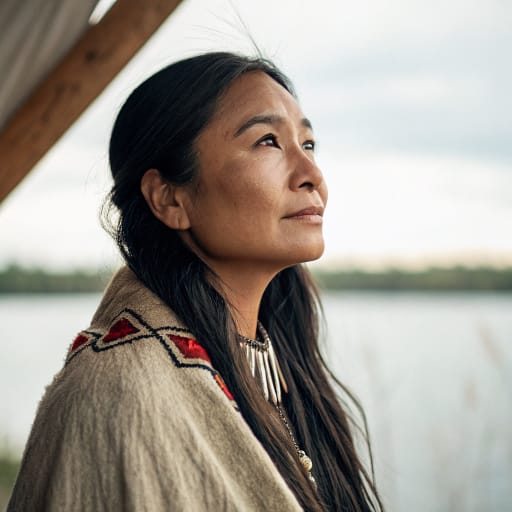
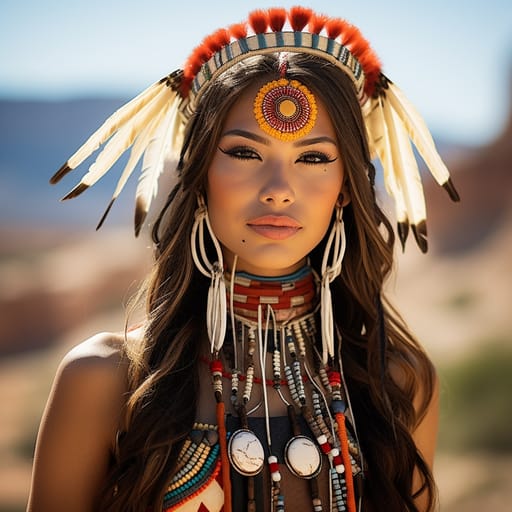
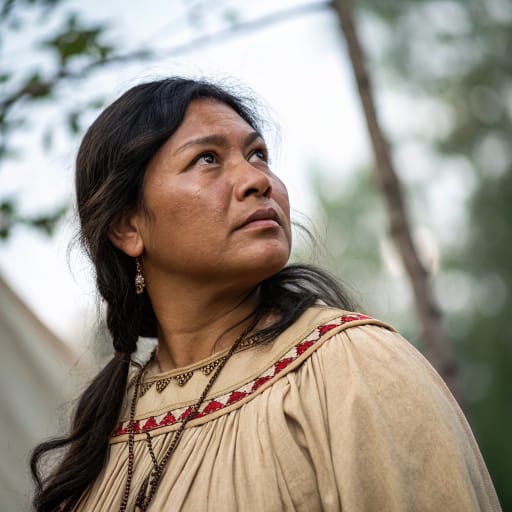
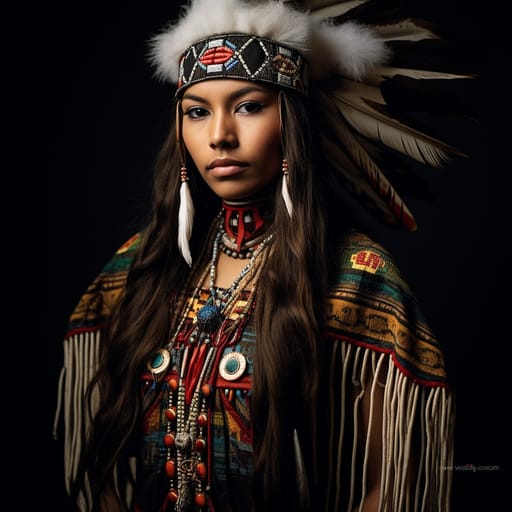
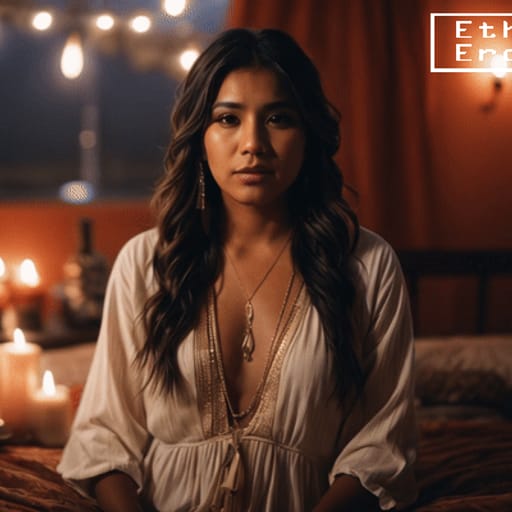
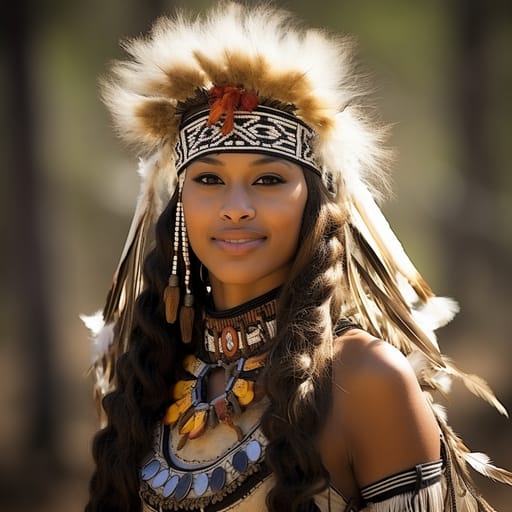
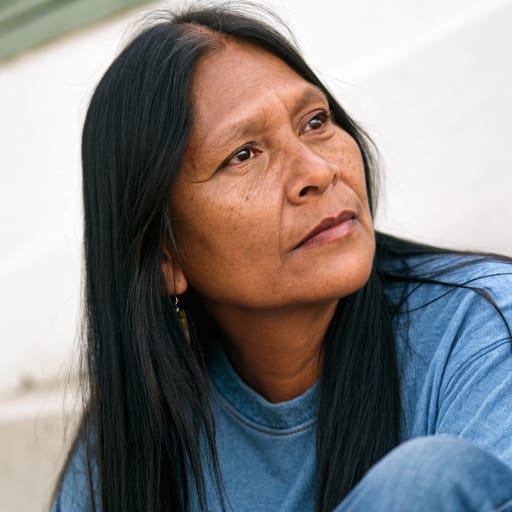
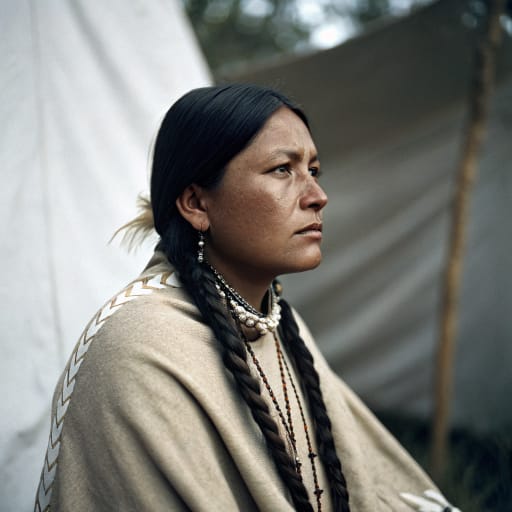
Typical Beothuk Phenotypes
Reference for AI generation: hair, eyes, skin, facial structure, build
Beothuk Body & Anatomy Reference
Anatomy by feature, Indigenous Northern American / Algonquian-Iroquoian phenotype
Beothuk Boobs & Breasts
Beothuk boobs follow the Indigenous Northern American / Algonquian-Iroquoian profile: medium cup, moderate projection. Areolar diameter is usually 30-44mm, and the coloring is medium-brown areolar pigmentation against the copper-to-medium-brown skin tone. Breast shape tracks body composition (mesomorph, broader frame in northern Indigenous populations, mean adult female BMI 25-28), so Beothuk breasts tend to be full and moderate projection. Expect a forward-set shape, not the smaller East Asian bust.
Beothuk Ass & Hips
Beothuk ass and hip morphology presents as medium, moderate-to-full projection, distinctly different from the slim East Asian narrow-hip profile. The Beothuk pelvic profile shows medium iliac crests, anchored in the Indigenous Northern American / Algonquian-Iroquoian skeletal pattern. Beothuk butt shots in adult AI imagery should render the medium, moderate-to-full projection silhouette with the overall build (mesomorph, broader frame in northern Indigenous populations) and the fat distribution typical of the Indigenous Northern American / Algonquian-Iroquoian phenotype.
Beothuk Vagina & Pussy
Beothuk pussy anatomy typically shows medium-brown labial pigmentation. Pubic hair is usually straight medium-coarse texture. In AI-generated Beothuk nudes, labial color should blend into the copper to medium-brown skin with a gradual transition, and the hair should keep its straight medium-coarse texture.
Beothuk Dicks & Penis
Penis reference for Beothuk men: regional mean ~13cm erect, moderate girth. Coloring: medium-brown shaft pigmentation. An accurate Beothuk cock in AI imagery matches the surrounding copper to medium-brown skin rather than a generic porn default. Circumcision depends on religion and custom, not ancestry.
Beothuk Body, Curves & Build
The Beothuk figure is generally mesomorph, broader frame in northern Indigenous populations, with mean adult female BMI 25-28, characteristic of Indigenous Northern American / Algonquian-Iroquoian ancestry. AI image tools tend to flatten regional body types into a few stock shapes; here the Beothuk build is kept as its own reference.
Beothuk Skin Tone & Hair Texture
Skin: copper to medium-brown (Fitzpatrick III-V). Hair: straight 1A, dark-brown to black, often thick and dense. Both are typical of Indigenous Northern American / Algonquian-Iroquoian ancestry. The most common mistake in AI nudes of Beothuk women is a body rendered lighter than the face.
Explore phenotype categories
Structured taxonomy with peer-reviewed scales · 22 anatomical categories
Erotic Poses & Sex Positions
From the pose catalog: 219 named positions with reference skeletons
Frequently asked questions about Beothuk people
Where is the Beothuk homeland?
The Beothuk homeland is Island of Newfoundland, Canada, especially the northeast coast, the Exploits River and Red Indian Lake in North America.
What language do Beothuk people speak?
Beothuk people primarily speak Beothuk (unclassified, possibly Algonquian), known only from about 400 recorded words.
What religion do Beothuk people practice?
The predominant religion among Beothuk people is Traditional Indigenous beliefs, little recorded; red ocher carried ritual meaning and burials with grave goods point to belief in an afterlife.






Make your own Beothuk images
Five a day, free, no credits to buy. The studio starts from this group's phenotype data, so you can set body type, pose and style and keep the traits accurate.
Start with Beothuk