Help us get this right
Does this portrait look right for Genízaros?
Nobody has judged this one yet. You would be the first.
Genízaros Erotic
Northern New Mexico and southern Colorado, United States, especially Abiquiú, Belén, Tomé and the Chama and Río Grande valleys; historically Spanish and Mexican New Mexico
New Mexican Spanish (Indo-European, Romance); ancestral languages included Comanche and Ute (Uto-Aztecan), Navajo and Apache (Athabaskan) and Kiowa (Kiowa-Tanoan)
Roman Catholic, with ties to the Penitente lay brotherhoods and village feast-day traditions
Descendants of Apache, Comanche, Navajo, Ute, Kiowa, Pawnee and other Native captives; historically a distinct class in colonial New Mexico, now largely part of the wider Hispano (Nuevomexicano) population
About Genízaros People
Genízaros are a people made by captivity. In Spanish and Mexican New Mexico, the name meant Native Americans who had been taken in raids and wars, ransomed or bought at trade fairs, baptized, and raised as servants in Hispanic households. It also covered their children and grandchildren. They came from Apache, Comanche, Navajo, Ute, Kiowa, Pawnee and other nations. They lost their tribal ties and grew up speaking Spanish and praying as Catholics. The word itself traveled a long way: it comes from the Spanish form of the Turkish name for the Ottoman Janissaries, soldiers who had also been taken young from their families. Genízaros did not share an ancestral nation. What held them together was a shared place in society: tribal peoples did not treat them as fully Indian, and colonial society did not treat them as fully Spanish.
Colonial governors turned that in-between position into geography. In the middle of the 1700s, Genízaro families received land at exposed frontier sites such as Abiquiú, Belén and Tomé, and later San Miguel del Vado. There they served as a buffer against the same raiding economy that had produced them. The men scouted, fought in militias and traded out onto the plains. Abiquiú, granted in 1754, became the best known of these settlements. In the 1750s and 1760s it was also the scene of a decade of witchcraft trials that fell hard on its Genízaro residents. In 1837 a revolt in northern New Mexico briefly made José Gonzales, a man of Genízaro background from the Taos area, governor. He was executed soon after.
After the United States took the territory, the trade in captives went on until federal action against Indian slavery and peonage in the 1860s. The word Genízaro slowly fell out of everyday use. Most descendants blended into the Hispano population of New Mexico and southern Colorado, and their Native origins were often left out of family stories. That silence has been breaking. Descendants have taken back the name, researchers have traced family lines through church baptism records, and in 2007 the New Mexico legislature formally recognized Genízaros as part of the state's history. In Abiquiú, the feast of Santo Tomás still brings out Genízaro dancers, and the Penitentes, the Catholic lay brotherhoods, remain part of life in the old villages.
Related ethnic groups
Groups that share Genízaros's homeland, region, language, or religious tradition. These are likely candidates for comparative phenotype reference.
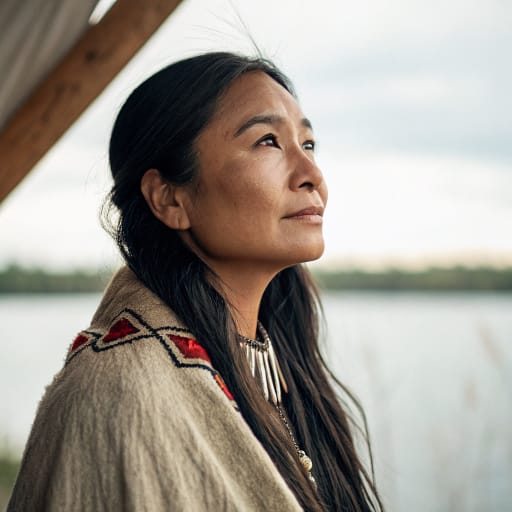
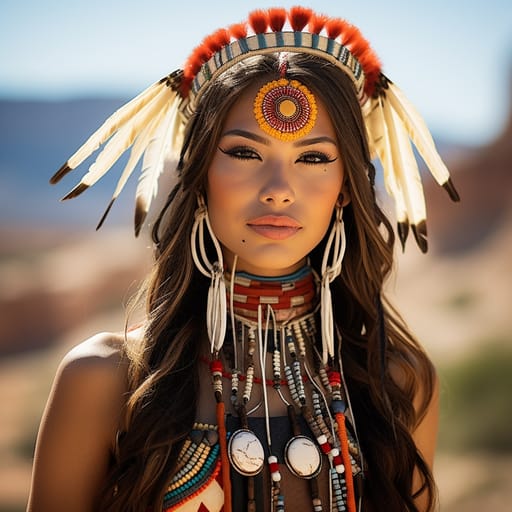
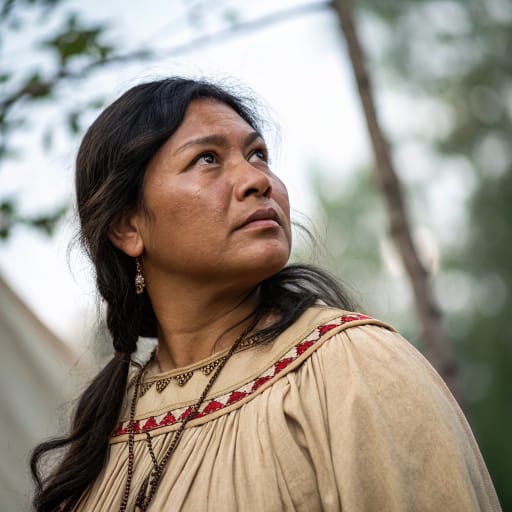
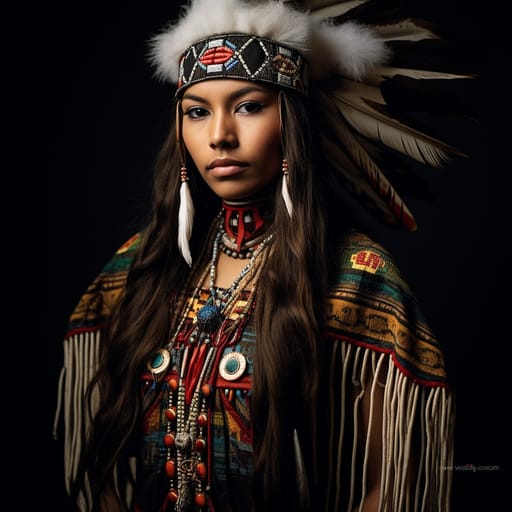
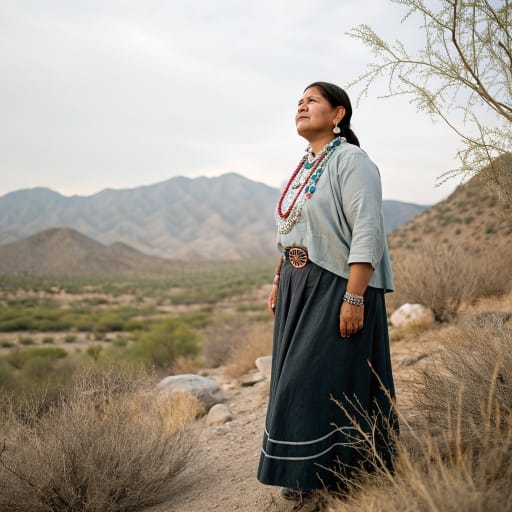
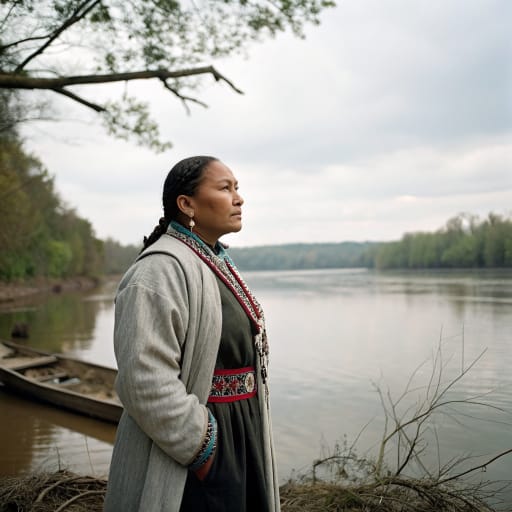
Typical Genízaros Phenotypes
Reference for AI generation: hair, eyes, skin, facial structure, build
Genízaros Body & Anatomy Reference
Per-feature anatomical profile for AI nude generation: Indigenous Northern American / Algonquian-Iroquoian phenotype
Genízaros Boobs & Breasts
Genízaros tits and boobs run medium cup, moderate projection, the classic Indigenous Northern American / Algonquian-Iroquoian bust profile. Genízaros nipples and areolas show medium-brown areolar pigmentation against the copper-to-medium-brown skin tone, with areolar diameter typically in the 30-44mm range and forward-set positioning rather than the smaller East Asian bust. Genízaros breasts trend full and moderate projection, a function of the mesomorph, broader frame in northern Indigenous populations body habitus and the mean adult female BMI 25-28. For anatomically accurate AI-generated Genízaros nudes the render preserves the medium cup, moderate projection shape, 30-44mm areolas with medium-brown pigmentation, and the torso proportions of the Indigenous Northern American / Algonquian-Iroquoian phenotype.
Genízaros Ass & Hips
Genízaros hips and butt usually read as medium, moderate-to-full projection. The skeletal base is medium iliac crests, the Indigenous Northern American / Algonquian-Iroquoian pattern. Set against the slim East Asian narrow-hip profile, the difference is easy to see, and the hip-to-waist ratio is often what identifies Genízaros women in photos.
Genízaros Vagina & Pussy
Expect medium-brown labial pigmentation on Genízaros women, in keeping with Indigenous Northern American / Algonquian-Iroquoian ancestry. The pubic hair is straight medium-coarse texture. Coloring should run evenly from the copper to medium-brown skin of the thighs to the labia, and Genízaros nude imagery should keep the hair's straight medium-coarse texture.
Genízaros Dicks & Penis
Genízaros dick and penile anatomy in adult AI generation should anchor on the regional reference data: regional mean ~13cm erect, moderate girth, and medium-brown shaft pigmentation. The Genízaros cock profile reflects the Indigenous Northern American / Algonquian-Iroquoian population's anthropometric measurements. The shaft pigmentation should track the surrounding copper to medium-brown skin tone, and the pubic hair should keep its straight medium-coarse texture in the typical inverted-V escutcheon.
Genízaros Body, Curves & Build
Genízaros body type: mesomorph, broader frame in northern Indigenous populations, with mean adult female BMI 25-28. This is the typical Indigenous Northern American / Algonquian-Iroquoian build. Height range, shoulder-to-hip ratio and fat distribution all follow from it, which is what an accurate Genízaros nude body should show.
Genízaros Skin Tone & Hair Texture
Genízaros skin tone falls in the copper to medium-brown (Fitzpatrick III-V) band, the surface signal most often miscalibrated by generic AI nude generators. Genízaros hair texture is typically straight 1A, dark-brown to black, often thick and dense, characteristic of the Indigenous Northern American / Algonquian-Iroquoian phenotype. In Genízaros nude renders the skin should hold that band consistently across the body.
Explore phenotype categories
Structured taxonomy with peer-reviewed scales · 22 anatomical categories
Erotic Poses & Sex Positions
From the pose catalog: 219 named positions with reference skeletons
Frequently asked questions about Genízaros people
Where is the Genízaros homeland?
The Genízaros homeland is Northern New Mexico and southern Colorado, United States, especially Abiquiú, Belén, Tomé and the Chama and Río Grande valleys; historically Spanish and Mexican New Mexico in North America.
What language do Genízaros people speak?
Genízaros people primarily speak New Mexican Spanish (Indo-European, Romance); ancestral languages included Comanche and Ute (Uto-Aztecan), Navajo and Apache (Athabaskan) and Kiowa (Kiowa-Tanoan).
What religion do Genízaros people practice?
The predominant religion among Genízaros people is Roman Catholic, with ties to the Penitente lay brotherhoods and village feast-day traditions.






Make your own Genízaros images
Five a day, free, no credits to buy. The studio starts from this group's phenotype data, so you can set body type, pose and style and keep the traits accurate.
Start with Genízaros