No portrait yet
Ga'anda Erotic
Ga'anda town and the surrounding hills, Gombi Local Government Area, Adamawa State, northeastern Nigeria
Ga'anda (Afro-Asiatic, Chadic, Biu-Mandara); Hausa and Fulfulde widely used as second languages
Christianity and Islam, alongside surviving traditional spirit and shrine practices
Speakers of a Biu-Mandara Chadic language closely related to Tera, Boga, Hwana and Jara; Gabin (Gabun) is often counted as a Ga'anda dialect community
About Ga'anda People
The Ga'anda are a small hill people of northeastern Nigeria. Their home is the town that shares their name and the rocky country around it, in Gombi Local Government Area of Adamawa State. Language sets them apart first. Ga'anda is a Chadic language of the Biu-Mandara group, in the Afro-Asiatic family, and its closest relatives are Tera, Boga, Hwana and Jara. Yet some of their nearest neighbors, the Yungur among them, speak Adamawa languages from a completely unrelated family. Meanwhile Hausa and Fulfulde carry the talk of markets and towns across the region. Switching between three or four languages in a day is ordinary here, not a special skill. Farming has long anchored life on and below the hills. Christianity and Islam both have a firm hold today and set the rhythm of weekly worship, weddings and funerals. Older ideas about spirits and shrines did not simply vanish when churches and mosques arrived.
Outside Nigeria, the Ga'anda are known mostly for hleeta, the scarification once given to Ga'anda girls. It was not one ordeal but a program. Patterns of small raised marks were cut in stages, starting in early childhood and spreading over the body across many years. Each stage was tied to the progress of a marriage arranged long in advance. The final marks showed that a young woman was ready to join her husband's household. The finished design also said plainly, without a word, that she was Ga'anda. The art historian Marla Berns recorded the custom in her fieldwork and found it already fading. Today it is seen mostly on older women. Women were also the potters, and some of the vessels they shaped were made for shrines, not kitchens. Those two crafts, marking skin and shaping clay, are the parts of Ga'anda life outsiders are most likely to have read about. The people behind them are neither a vanished tribe nor a museum case. They are a living community in their own hills, still speaking their own language among much larger neighbors.
Related ethnic groups
Groups that share Ga'anda's homeland, region, language, or religious tradition. These are likely candidates for comparative phenotype reference.
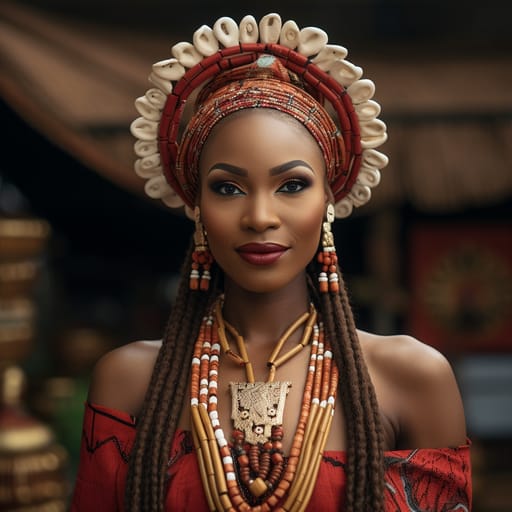
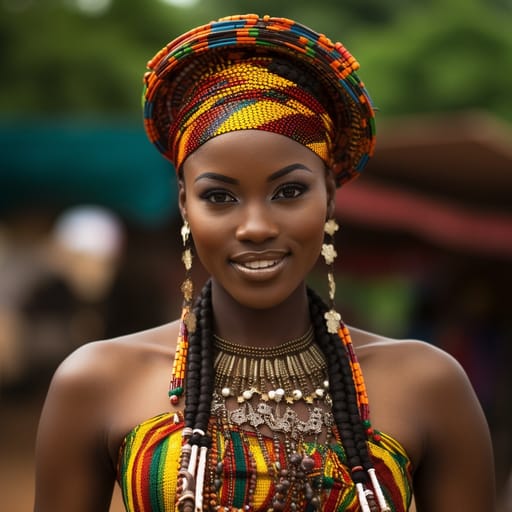
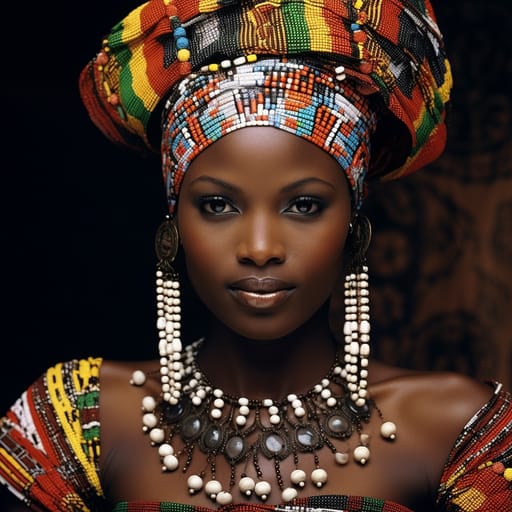
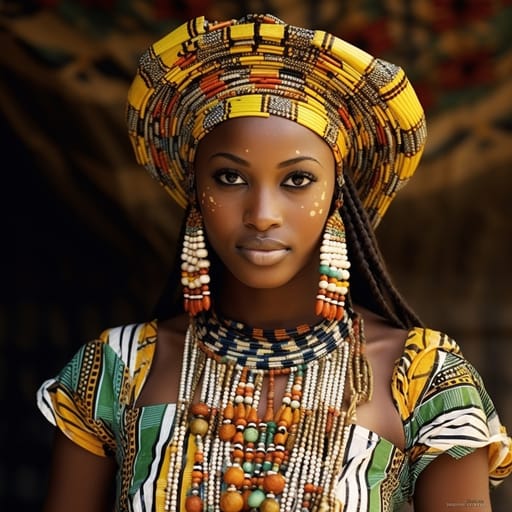
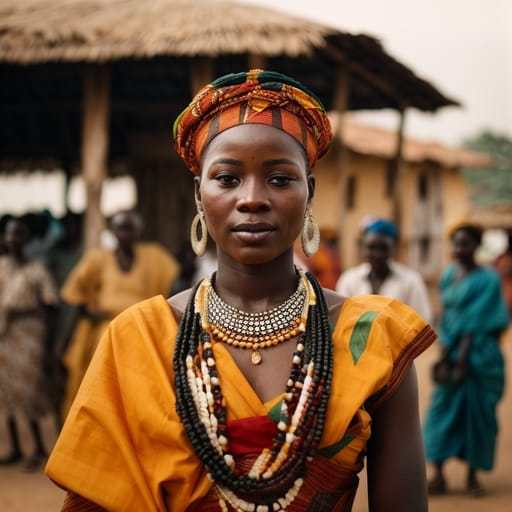
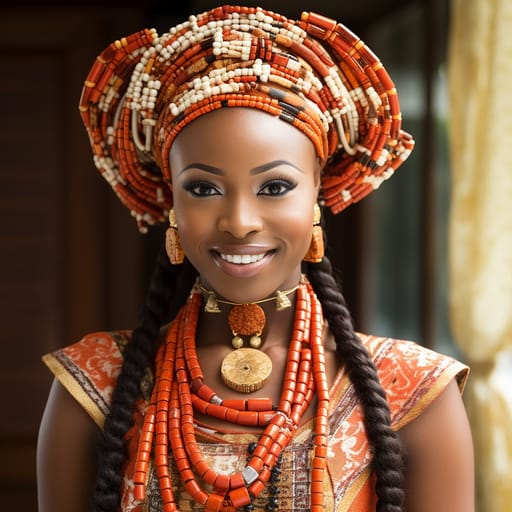
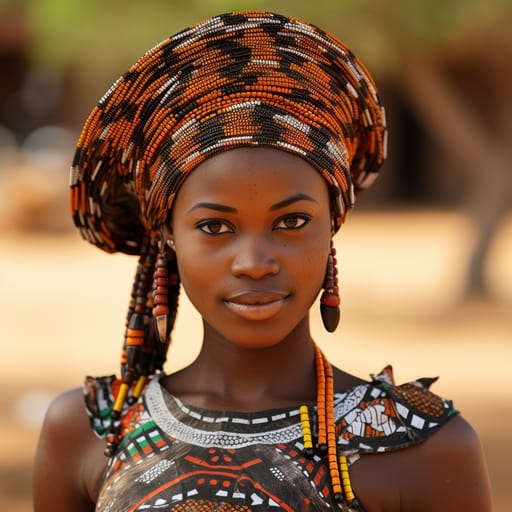
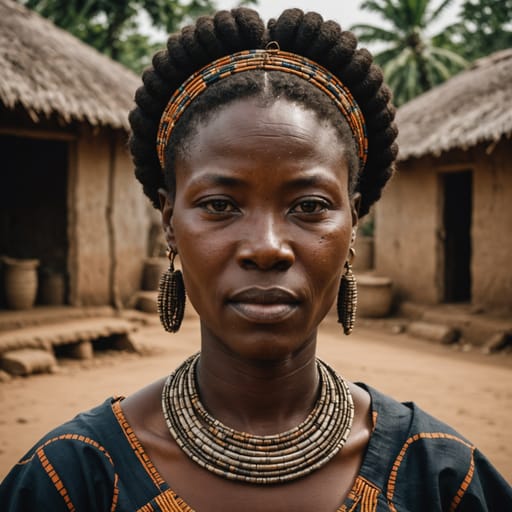
Typical Ga'anda Phenotypes
Reference for AI generation: hair, eyes, skin, facial structure, build
Ga'anda Body & Anatomy Reference
Per-feature anatomical profile for AI nude generation: West African Niger-Congo phenotype
Ga'anda Boobs & Breasts
The typical Ga'anda bust is medium-to-large cup, full, projecting, in line with the wider West African Niger-Congo pattern. Areolas usually fall in the 35-50mm range, with deep-brown to near-black areolar pigmentation against the medium-to-deep-brown skin tone. Compared with the smaller conical Cushitic East African profile, Ga'anda breasts sit forward and are generally fuller and more projecting than the East African norm. A faithful AI render of Ga'anda tits keeps that shape and areola size.
Ga'anda Ass & Hips
Butt shape among Ga'anda women: wide-set, full, heavily projected glutes, over wide iliac crests, broad gynoid pelvic pattern, high glute-to-waist ratio. This follows West African Niger-Congo ancestry and looks quite unlike the slim narrow-hip Cushitic East African profile. An accurate Ga'anda ass in adult AI imagery keeps both the silhouette and the overall build (mesomorph with strong gluteal-femoral fat distribution) instead of a generic average.
Ga'anda Vagina & Pussy
Vulvar anatomy among Ga'anda women: deep-brown to near-black labial pigmentation, fuller labia minora. Pubic hair tends to be tightly-coiled coarse texture, densely distributed, in the usual inverted-triangle pattern. Both follow West African Niger-Congo pigmentation, which is why Ga'anda pussy renders should not fall back on a pale, sparse Western template.
Ga'anda Dicks & Penis
The Ga'anda cock profile, from West African Niger-Congo anthropometric data: regional mean ~14-15cm erect; above-average girth, ~13cm circumference; deep-brown-to-near-black shaft pigmentation. Pubic hair has a tightly-coiled coarse texture and forms the usual inverted-V pattern. Whether Ga'anda men are circumcised follows religious and cultural practice rather than phenotype.
Ga'anda Body, Curves & Build
Build and curves among Ga'anda women follow the West African Niger-Congo pattern: mesomorph with strong gluteal-femoral fat distribution, mean adult female BMI 24-27. Proportions matter as much as skin tone, so Ga'anda figures should keep their regional height and limb ratios.
Ga'anda Skin Tone & Hair Texture
The Ga'anda skin range is medium-brown to deep-brown (Fitzpatrick V-VI), and hair tends to be tight 4A-4C coil, often worn natural, braided, or relaxed. That combination marks the West African Niger-Congo phenotype, and skin tone is the trait AI generators most often get wrong for Ga'anda women.
Explore phenotype categories
Structured taxonomy with peer-reviewed scales · 22 anatomical categories
Erotic Poses & Sex Positions
From the pose catalog: 219 named positions with reference skeletons
Frequently asked questions about Ga'anda people
Where is the Ga'anda homeland?
The Ga'anda homeland is Ga'anda town and the surrounding hills, Gombi Local Government Area, Adamawa State, northeastern Nigeria in Western Africa.
What language do Ga'anda people speak?
Ga'anda people primarily speak Ga'anda (Afro-Asiatic, Chadic, Biu-Mandara); Hausa and Fulfulde widely used as second languages.
What religion do Ga'anda people practice?
The predominant religion among Ga'anda people is Christianity and Islam, alongside surviving traditional spirit and shrine practices.






Make your own Ga'anda images
Five a day, free, no credits to buy. The studio starts from this group's phenotype data, so you can set body type, pose and style and keep the traits accurate.
Start with Ga'anda