No portrait yet
Felups Erotic
Northwestern Guinea-Bissau (São Domingos sector, around Suzana and Varela) and the neighboring Oussouye area of Lower Casamance, Senegal
Ejamat in Guinea-Bissau and Kasa Jola dialects in Senegal (Jola, Bak branch of Atlantic, Niger-Congo); also Guinea-Bissau Creole, French and Wolof
Mostly traditional Jola religion (awasena) centered on spirit shrines, with Catholic and smaller Muslim minorities
A southern branch of the Jola (Diola); in Senegal they overlap with the Kasa Jola communities of the Oussouye area
About Felups People
The Felups are the Jola of the far southwest. They farm rice on the tidal land along both sides of the border between Guinea-Bissau and Senegal, from Suzana and Varela in the south to Oussouye in Lower Casamance. The name came from outsiders: Portuguese traders were writing about the Falupos by the sixteenth century. What sets the group apart is how they farm the mangrove flats. Felup farmers wall off the flats along the creeks with earth dikes, let the rains wash out the salt, and turn the heavy soil into ridges with a long-handled shovel. Men dig, women transplant and harvest, and the rice goes into household granaries as stored wealth as much as food. The farming year sets the pace of everything else, and the dry season after harvest is when wrestling matches and the big ceremonies take place. Their language belongs to the Jola cluster of the Bak branch of the Atlantic languages. It is Ejamat on the Guinea-Bissau side and Kasa dialects around Oussouye, and speakers of neighboring Jola varieties can't always understand each other. Most Felups also speak Guinea-Bissau Creole, or French and Wolof, depending on which side of the border they grew up on.
Shrines and borders
For most Felups, religion is the older practice the Jola call awasena. It is addressed to Emitai, a remote creator, and carried out day to day at spirit shrines, ukine, kept by particular families and priests. People bring illness, theft, land disputes and failed rains to the shrines, and settle them with palm wine and animal sacrifice. Catholic missions have a real following, Islam a smaller one, and plenty of families practice more than one. Oussouye still has a priest-king whose authority is ritual rather than political and who lives under strict ritual rules. The border running through Felup country was drawn by colonial powers. The 1886 agreement that gave Ziguinchor to France split the villages between French and Portuguese rule, and neither government found them easy to control. In the 1940s the prophetess Aline Sitoé Diatta, from nearby Kabrousse, urged people to refuse French demands for rice and died in exile in Timbuktu. The Casamance separatist conflict that began in 1982 later sent refugees back and forth across the same border, through communities whose family ties had never followed it.
Related ethnic groups
Groups that share Felups's homeland, region, language, or religious tradition. These are likely candidates for comparative phenotype reference.
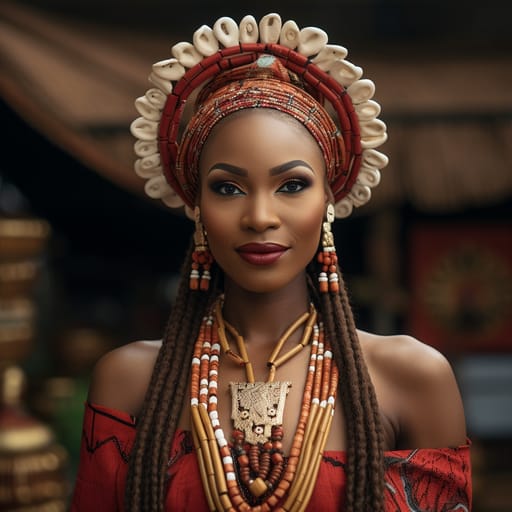
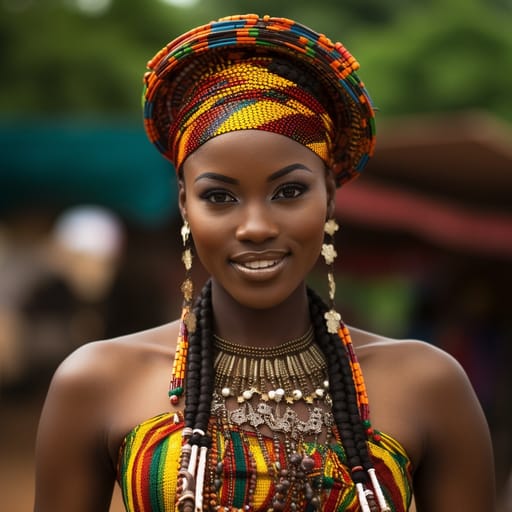
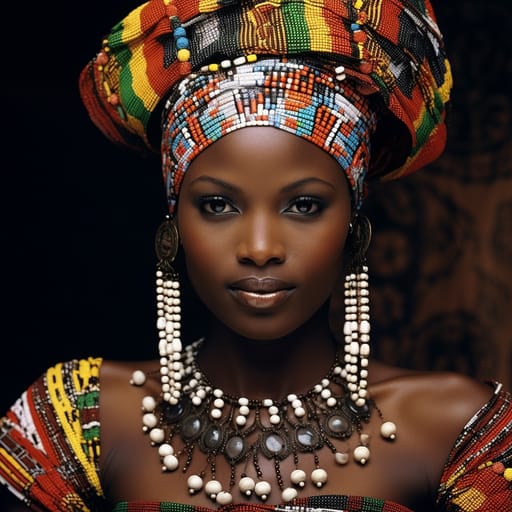
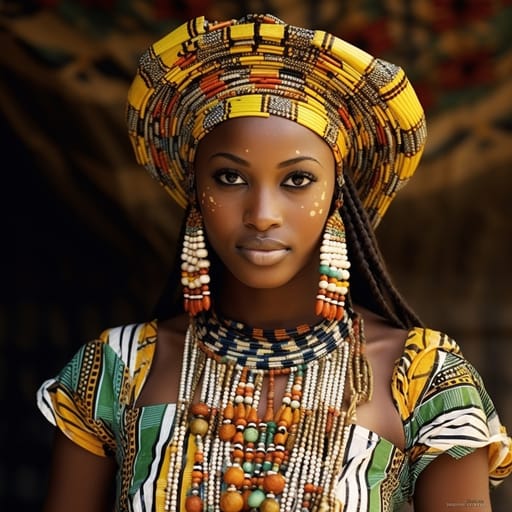
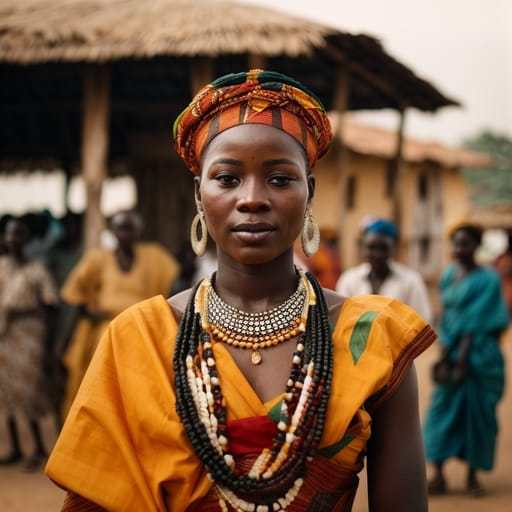
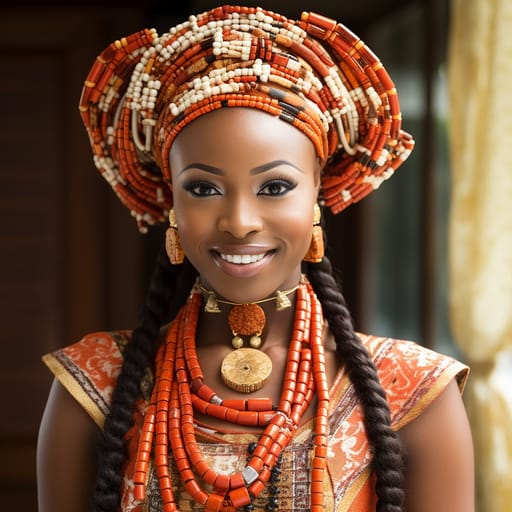
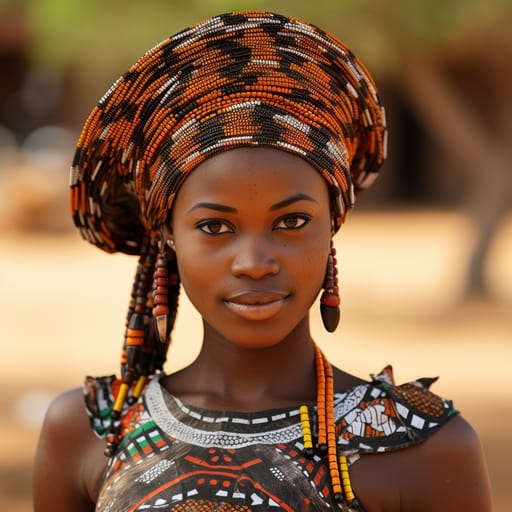
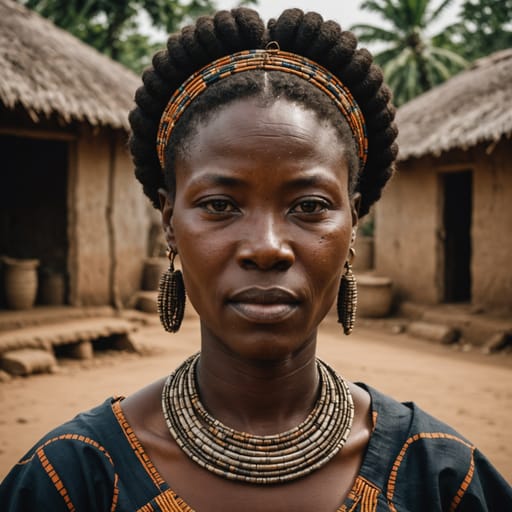
Typical Felups Phenotypes
Reference for AI generation: hair, eyes, skin, facial structure, build
Felups Body & Anatomy Reference
West African Niger-Congo phenotype: anatomy reference for AI nude generation
Felups Boobs & Breasts
The typical Felups bust is medium-to-large cup, full, projecting, in line with the wider West African Niger-Congo pattern. Areolas usually fall in the 35-50mm range, with deep-brown to near-black areolar pigmentation against the medium-to-deep-brown skin tone. Compared with the smaller conical Cushitic East African profile, Felups breasts sit forward and are generally fuller and more projecting than the East African norm. A faithful AI render of Felups tits keeps that shape and areola size.
Felups Ass & Hips
Butt shape among Felups women: wide-set, full, heavily projected glutes, over wide iliac crests, broad gynoid pelvic pattern, high glute-to-waist ratio. This follows West African Niger-Congo ancestry and looks quite unlike the slim narrow-hip Cushitic East African profile. An accurate Felups ass in adult AI imagery keeps both the silhouette and the overall build (mesomorph with strong gluteal-femoral fat distribution) instead of a generic average.
Felups Vagina & Pussy
Vulvar anatomy among Felups women: deep-brown to near-black labial pigmentation, fuller labia minora. Pubic hair tends to be tightly-coiled coarse texture, densely distributed, in the usual inverted-triangle pattern. Both follow West African Niger-Congo pigmentation, which is why Felups pussy renders should not fall back on a pale, sparse Western template.
Felups Dicks & Penis
The Felups cock profile, from West African Niger-Congo anthropometric data: regional mean ~14-15cm erect; above-average girth, ~13cm circumference; deep-brown-to-near-black shaft pigmentation. Pubic hair has a tightly-coiled coarse texture and forms the usual inverted-V pattern. Whether Felups men are circumcised follows religious and cultural practice rather than phenotype.
Felups Body, Curves & Build
Build and curves among Felups women follow the West African Niger-Congo pattern: mesomorph with strong gluteal-femoral fat distribution, mean adult female BMI 24-27. Proportions matter as much as skin tone, so Felups figures should keep their regional height and limb ratios.
Felups Skin Tone & Hair Texture
The Felups skin range is medium-brown to deep-brown (Fitzpatrick V-VI), and hair tends to be tight 4A-4C coil, often worn natural, braided, or relaxed. That combination marks the West African Niger-Congo phenotype, and skin tone is the trait AI generators most often get wrong for Felups women.
Explore phenotype categories
Structured taxonomy with peer-reviewed scales · 22 anatomical categories
Erotic Poses & Sex Positions
From the pose catalog: 219 named positions with reference skeletons
Frequently asked questions about Felups people
Where is the Felups homeland?
The Felups homeland is Northwestern Guinea-Bissau (São Domingos sector, around Suzana and Varela) and the neighboring Oussouye area of Lower Casamance, Senegal in Western Africa.
What language do Felups people speak?
Felups people primarily speak Ejamat in Guinea-Bissau and Kasa Jola dialects in Senegal (Jola, Bak branch of Atlantic, Niger-Congo); also Guinea-Bissau Creole, French and Wolof.
What religion do Felups people practice?
The predominant religion among Felups people is Mostly traditional Jola religion (awasena) centered on spirit shrines, with Catholic and smaller Muslim minorities.






Make your own Felups images
Five a day, free, no credits to buy. The studio starts from this group's phenotype data, so you can set body type, pose and style and keep the traits accurate.
Start with Felups