Help us get this right
Does this portrait look right for Efé?
Nobody has judged this one yet. You would be the first.
Efé Erotic
Ituri Rainforest of the northeastern Democratic Republic of the Congo, living alongside Lese farming villages, including in the Okapi Wildlife Reserve area
Efe, closely related to Lese (Central Sudanic)
Traditional beliefs centered on the forest, including the forest deity Tore, alongside Christianity introduced through missions and neighboring villages
One of the Mbuti (Bambuti) forest peoples of the Ituri, alongside groups such as the Sua and Asua; long partnered with the Lese farmers
About Efé People
The Efé are forest people of the Ituri, the dense rainforest of the northeastern Democratic Republic of the Congo. The quickest way to tell them apart from their forest neighbors is the bow. Net-hunting groups elsewhere in the Ituri string long nets through the undergrowth and drive animals into them. Efé men hunt with bows and arrows instead, alone or in small parties, taking monkeys, duikers and other game. They are usually counted among the Mbuti, the collective name for the Ituri's hunter-gatherers. Still, they keep their own stretch of forest and a long, uneven partnership with the Lese, the farmers whose villages sit along its edges. That partnership shapes daily life. Efé families are often tied across generations to particular Lese households, trading meat, honey and field work for cassava, plantains and other crops. It shows in how they speak, too. The Efé speak a Central Sudanic language closely related to Lese, while other Mbuti groups speak the languages of their own farming partners, some of them Bantu. Marriage mostly runs one way. Efé women sometimes marry into Lese villages, but Lese women rarely marry Efé men, which says a good deal about who holds the upper hand.
Camps are small: a few related families in dome huts of bent saplings covered with broad leaves. They move when hunting thins out or the season changes. The high point of the year is honey season, when bands push deeper into the forest and honey can make up much of what they eat for weeks at a time. Children grow up in many hands. Researchers who followed Efé infants found that many people besides the mother held and soothed them from the first days of life, and other women sometimes nursed them. Belief has long centered on the forest itself. Older ethnographies record Tore, a forest deity linked to hunting and game, and Christianity has since arrived through missions and village neighbors. The last few decades have been hard. The wars that swept through Ituri from the late 1990s brought armed groups and displacement into the forest. Logging, gold digging and incoming settlers keep pressing on the land, including inside the Okapi Wildlife Reserve, where Efé camps still stand in protected forest.
Related ethnic groups
Groups that share Efé's homeland, region, language, or religious tradition. These are likely candidates for comparative phenotype reference.
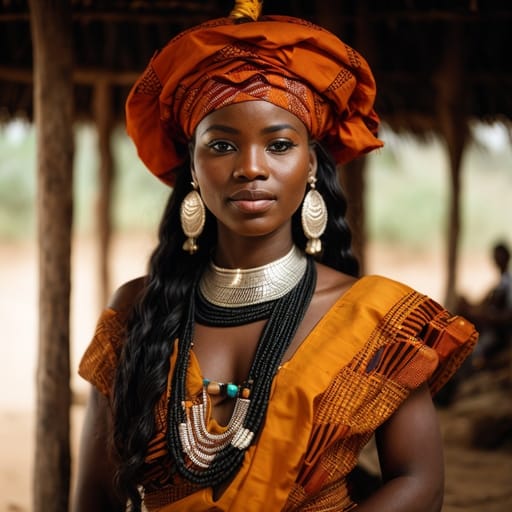
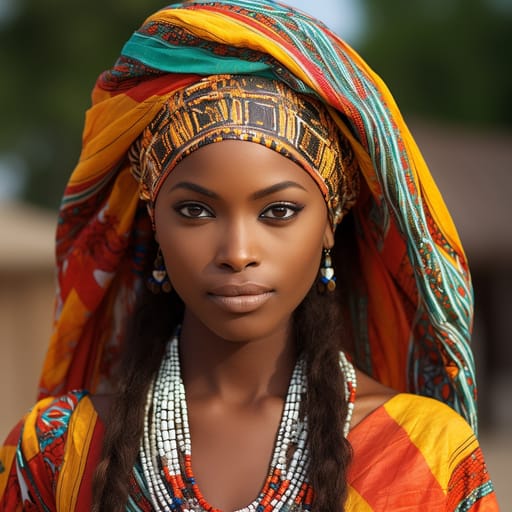
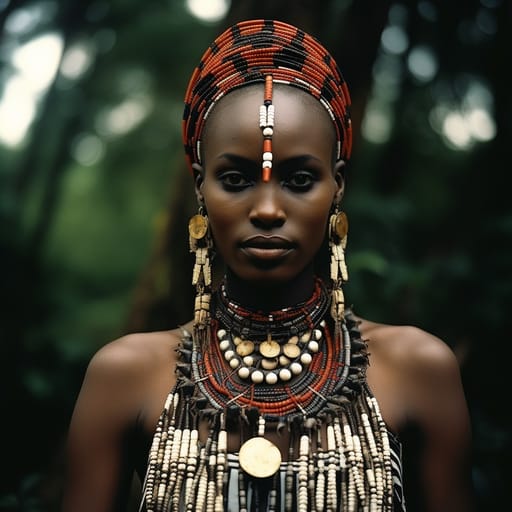
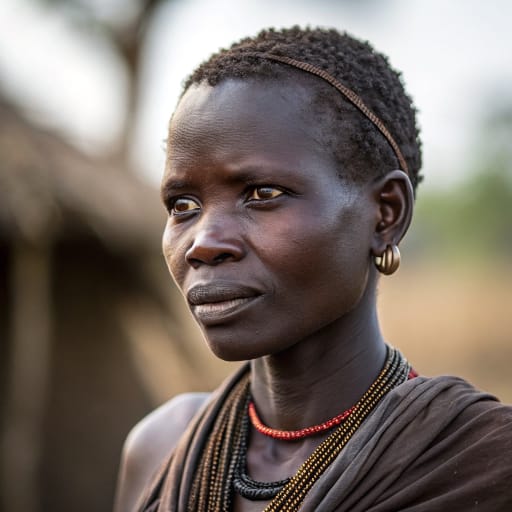
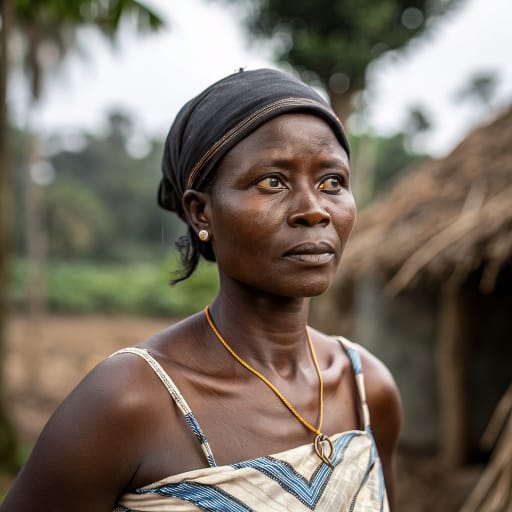
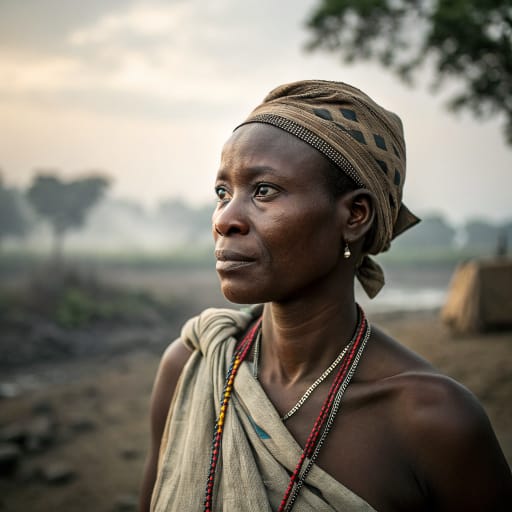
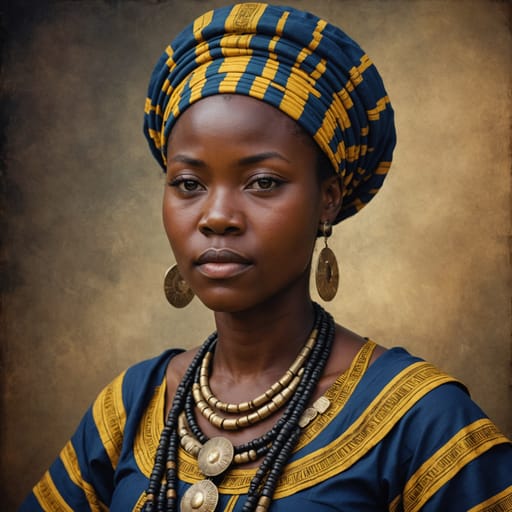
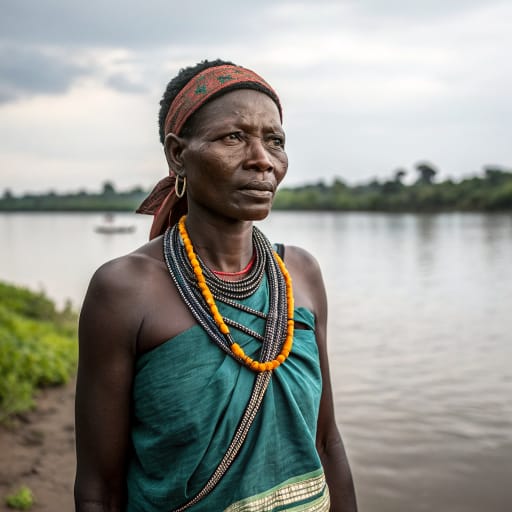
Typical Efé Phenotypes
Reference for AI generation: hair, eyes, skin, facial structure, build
Efé Body & Anatomy Reference
Anatomy by feature, Bantu / Central African Niger-Congo phenotype
Efé Boobs & Breasts
Efé boobs follow the Bantu / Central African Niger-Congo profile: medium-to-large cup, full, projecting. Areolar diameter is usually 32-48mm, and the coloring is deep-brown areolar pigmentation against the deep-brown skin tone. Breast shape tracks body composition (mesomorph with strong gluteal-femoral fat deposition, mean adult female BMI 23-26), so Efé breasts tend to be fuller projection than East African; comparable to West African norm. Expect a forward-set shape, not the smaller East African conical profile.
Efé Ass & Hips
Efé ass and hip morphology presents as full, projected, wide-set glutes, distinctly different from the slim narrow-hip Cushitic East African profile. The Efé pelvic profile shows broad iliac crests, gynoid pelvic pattern, anchored in the Bantu / Central African Niger-Congo skeletal pattern. Efé butt shots in adult AI imagery should render the full, projected, wide-set glutes silhouette with the overall build (mesomorph with strong gluteal-femoral fat deposition) and the fat distribution typical of the Bantu / Central African Niger-Congo phenotype.
Efé Vagina & Pussy
Efé pussy anatomy typically shows deep-brown labial pigmentation, fuller labia minora. Pubic hair is usually tightly-coiled coarse texture, dense distribution. In AI-generated Efé nudes, labial color should blend into the deep-brown skin with a gradual transition, and the hair should keep its tightly-coiled coarse texture.
Efé Dicks & Penis
Penis reference for Efé men: regional mean ~14cm erect, above-average girth. Coloring: deep-brown shaft pigmentation. An accurate Efé cock in AI imagery matches the surrounding deep-brown skin rather than a generic porn default. Circumcision depends on religion and custom, not ancestry.
Efé Body, Curves & Build
The Efé figure is generally mesomorph with strong gluteal-femoral fat deposition, with mean adult female BMI 23-26, characteristic of Bantu / Central African Niger-Congo ancestry. AI image tools tend to flatten regional body types into a few stock shapes; here the Efé build is kept as its own reference.
Efé Skin Tone & Hair Texture
Skin: deep-brown (Fitzpatrick VI). Hair: tight 4A-4C coil. Both are typical of Bantu / Central African Niger-Congo ancestry. The most common mistake in AI nudes of Efé women is a body rendered lighter than the face.
Explore phenotype categories
Structured taxonomy with peer-reviewed scales · 22 anatomical categories
Erotic Poses & Sex Positions
From the pose catalog: 219 named positions with reference skeletons
Frequently asked questions about Efé people
Where is the Efé homeland?
The Efé homeland is Ituri Rainforest of the northeastern Democratic Republic of the Congo, living alongside Lese farming villages, including in the Okapi Wildlife Reserve area in Central Africa.
What language do Efé people speak?
Efé people primarily speak Efe, closely related to Lese (Central Sudanic).
What religion do Efé people practice?
The predominant religion among Efé people is Traditional beliefs centered on the forest, including the forest deity Tore, alongside Christianity introduced through missions and neighboring villages.






Make your own Efé images
Five a day, free, no credits to buy. The studio starts from this group's phenotype data, so you can set body type, pose and style and keep the traits accurate.
Start with Efé