Help us get this right
Does this portrait look right for Cupeño?
Nobody has judged this one yet. You would be the first.
Cupeño Erotic
Originally the hot springs of Kupa (Warner Springs) and the nearby village of Wilakal in the San José Valley, northeastern San Diego County, California, United States; since 1903 mainly the Pala Reservation
Cupeño (Uto-Aztecan, Takic, Cupan), with no fluent speakers since 1987; English today
Roman Catholic, alongside traditional songs and ceremonies shared with neighboring Southern California peoples
Villages of Kupa and Wilakal; Coyote and Wildcat moieties; Cupan-speaking peoples with Cahuilla and Luiseño; enrolled today in the Pala Band of Mission Indians
About Cupeño People
The Cupeño are a people defined by a place they were made to leave. Their own name, Kuupangaxwichem, means the people of Kupa, the village at the hot springs in the high San José Valley of northeastern San Diego County. Along with a second village, Wilakal, their homeland measured roughly ten miles by five. That makes it one of the smallest territories held by any Native people in California. It was enough: oak groves for acorns, game in the surrounding mountains, and springs that ran hot all year.
Their language belongs to the Cupan group of the Takic branch of Uto-Aztecan. It is closest to Cahuilla and near kin to Luiseño, the neighbors on either side. Society was split into two halves, Coyote and Wildcat, with lineages passed down through the father and marriage expected across the divide. The last fluent speaker, Roscinda Nolasquez, died in 1987. Before that she worked with the linguist Jane Hill, and the stories they recorded were published as Mulu'wetam: The First People. That book is still a key record of Cupeño tradition told in the language itself.
Catholicism reached them through Mission San Luis Rey, and in 1844 the Mexican government granted their valley to Jonathan Trumbull Warner. The Cupeño became the workers of Warner's Ranch, a stop on the southern emigrant trail into California. In 1851 Antonio Garra, a Cupeño leader, led a revolt against county taxes on Indians. It collapsed, and he was executed in San Diego early the next year. The decisive loss came in court. In Barker v. Harvey (1901), the U.S. Supreme Court ruled that the Cupeño had lost their land by never filing a claim with the land commission created in 1851. In 1903 federal agents moved them west to Pala, in the San Luis Rey River valley.
Pala already had Luiseño families and an old mission chapel, and the Cupeño built a life there. Most are enrolled today in the Pala Band of Mission Indians alongside Luiseño relatives. Catholicism is widely practiced, next to older songs and ceremonies shared across the region. Every May, Cupa Days brings descendants and visitors together to mark the removal. The springs at Kupa now sit on private resort land, but the name of the lost village lives on in the people's name, their cultural center and the day they gather.
Related ethnic groups
Groups that share Cupeño's homeland, region, language, or religious tradition. These are likely candidates for comparative phenotype reference.
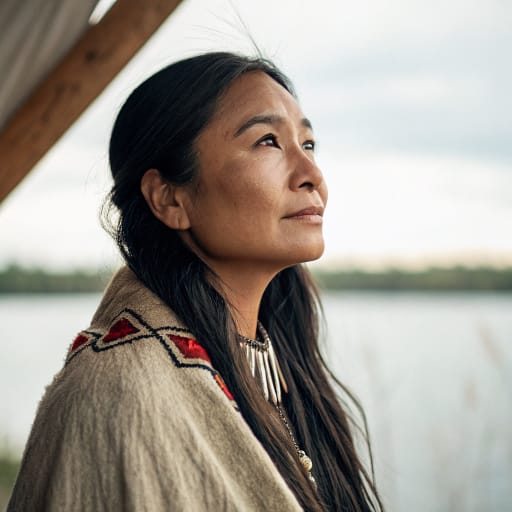
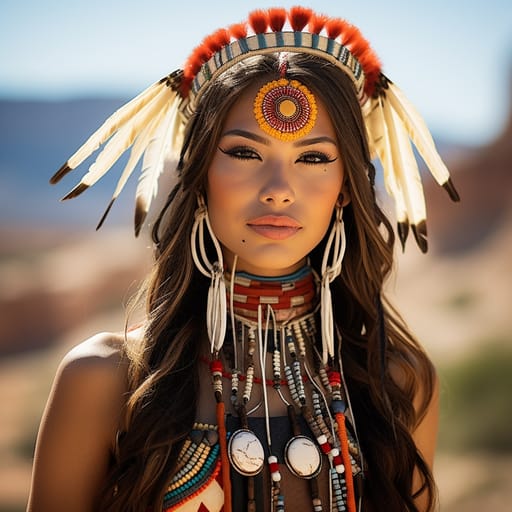
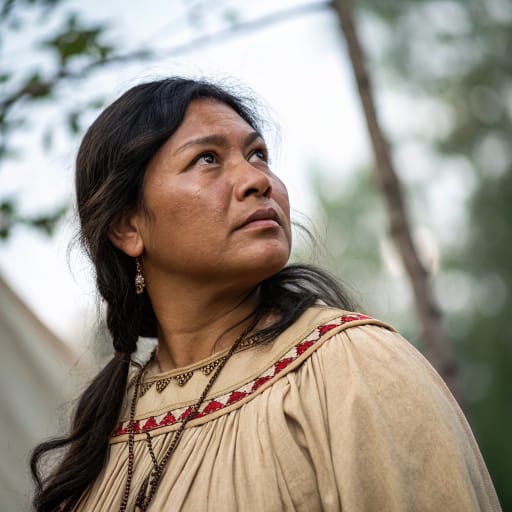
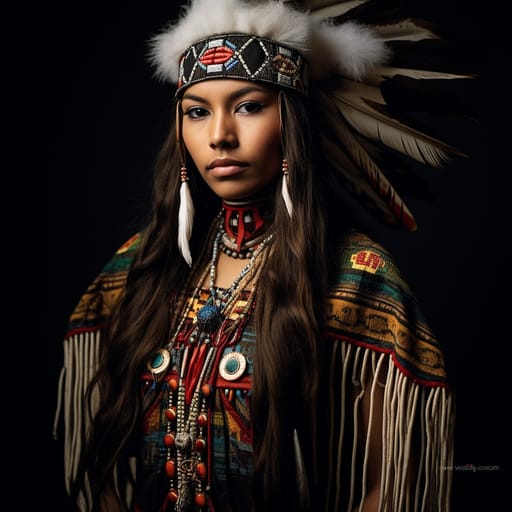
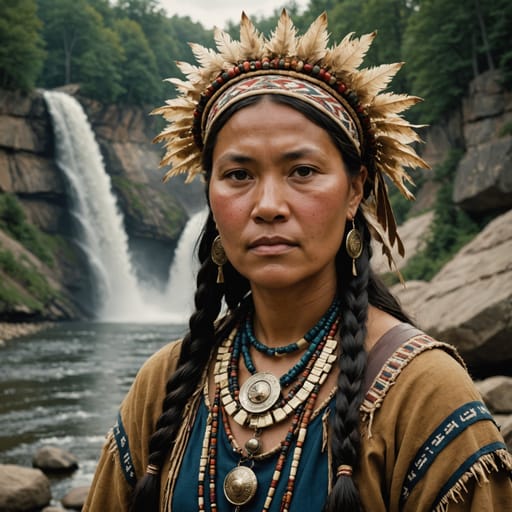

Typical Cupeño Phenotypes
Reference for AI generation: hair, eyes, skin, facial structure, build
Cupeño Body & Anatomy Reference
Per-feature anatomical profile for AI nude generation: Indigenous Northern American / Algonquian-Iroquoian phenotype
Cupeño Boobs & Breasts
The typical Cupeño bust is medium cup, moderate projection, in line with the wider Indigenous Northern American / Algonquian-Iroquoian pattern. Areolas usually fall in the 30-44mm range, with medium-brown areolar pigmentation against the copper-to-medium-brown skin tone. Compared with the smaller East Asian bust, Cupeño breasts sit forward and are generally full and moderate projection. A faithful AI render of Cupeño tits keeps that shape and areola size.
Cupeño Ass & Hips
Butt shape among Cupeño women: medium, moderate-to-full projection, over medium iliac crests. This follows Indigenous Northern American / Algonquian-Iroquoian ancestry and looks quite unlike the slim East Asian narrow-hip profile. An accurate Cupeño ass in adult AI imagery keeps both the silhouette and the overall build (mesomorph, broader frame in northern Indigenous populations) instead of a generic average.
Cupeño Vagina & Pussy
Vulvar anatomy among Cupeño women: medium-brown labial pigmentation. Pubic hair tends to be straight medium-coarse texture, in the usual inverted-triangle pattern. Both follow Indigenous Northern American / Algonquian-Iroquoian pigmentation, which is why Cupeño pussy renders should not fall back on a pale, sparse Western template.
Cupeño Dicks & Penis
The Cupeño cock profile, from Indigenous Northern American / Algonquian-Iroquoian anthropometric data: regional mean ~13cm erect; moderate girth; medium-brown shaft pigmentation. Pubic hair has a straight medium-coarse texture and forms the usual inverted-V pattern. Whether Cupeño men are circumcised follows religious and cultural practice rather than phenotype.
Cupeño Body, Curves & Build
Build and curves among Cupeño women follow the Indigenous Northern American / Algonquian-Iroquoian pattern: mesomorph, broader frame in northern Indigenous populations, mean adult female BMI 25-28. Proportions matter as much as skin tone, so Cupeño figures should keep their regional height and limb ratios.
Cupeño Skin Tone & Hair Texture
The Cupeño skin range is copper to medium-brown (Fitzpatrick III-V), and hair tends to be straight 1A, dark-brown to black, often thick and dense. That combination marks the Indigenous Northern American / Algonquian-Iroquoian phenotype, and skin tone is the trait AI generators most often get wrong for Cupeño women.
Explore phenotype categories
Structured taxonomy with peer-reviewed scales · 22 anatomical categories
Erotic Poses & Sex Positions
From the pose catalog: 219 named positions with reference skeletons
Frequently asked questions about Cupeño people
Where is the Cupeño homeland?
The Cupeño homeland is Originally the hot springs of Kupa (Warner Springs) and the nearby village of Wilakal in the San José Valley, northeastern San Diego County, California, United States; since 1903 mainly the Pala Reservation in North America.
What language do Cupeño people speak?
Cupeño people primarily speak Cupeño (Uto-Aztecan, Takic, Cupan), with no fluent speakers since 1987; English today.
What religion do Cupeño people practice?
The predominant religion among Cupeño people is Roman Catholic, alongside traditional songs and ceremonies shared with neighboring Southern California peoples.






Make your own Cupeño images
Five a day, free, no credits to buy. The studio starts from this group's phenotype data, so you can set body type, pose and style and keep the traits accurate.
Start with Cupeño