Help us get this right
Does this portrait look right for Chilula?
Nobody has judged this one yet. You would be the first.
Chilula Erotic
Lower Redwood Creek and the Bald Hills, Humboldt County, northwestern California, United States
Chilula dialect of Hupa (Athabaskan, Na-Dene), no longer spoken as a first language; English today
Traditional northwestern California world renewal religion; descendants today follow Christianity alongside Hupa ceremonial practice
Hupa-speaking Athabaskan people closely related to the Whilkut and Hupa; descendants absorbed into the Hoopa Valley Tribe
About Chilula People
The Chilula are the people of lower Redwood Creek and the Bald Hills, the open grassy ridges that break through the redwood forest in Humboldt County, in the far northwest of California. They did not choose the name. It comes from the Yurok, their neighbors toward the ocean, whose word for the people of the Bald Hills passed into English as Chilula. It fits, because the land shaped them. Their villages stood along the creek, and the prairies above were elk country, open ground for hunting and gathering in the middle of dense forest.
They spoke a dialect of Hupa, an Athabaskan language. It was nearly identical to the speech of the Whilkut farther up Redwood Creek, and the Hupa over the ridge in the Trinity River valley understood it easily. That places the Chilula among the scattered Athabaskan groups of northwestern California. They are distant relatives of Navajo, Apache and the Dene languages of Alaska and Canada, yet they lived right beside the Yurok, whose language belongs to the unrelated Algic family. Language drew one map of the region and culture drew another. In daily life the Chilula had far more in common with their Yurok and Hupa neighbors than with any Athabaskan relatives to the north or south.
That daily life ran on acorns, salmon, deer and elk. Families lived in houses of split redwood planks, and men gathered in sweathouses. Wealth was measured in strings of dentalium shell and in regalia such as woodpecker scalp headdresses and large obsidian blades. Religion followed the regional world renewal tradition, in which dances, spoken formulas and careful personal conduct kept the world in working order. Chilula ceremonial life was closely tied to that of the Hupa.
Everything changed with the gold rush. The pack trail from the Humboldt Bay towns to the Trinity River mines crossed the Bald Hills, and fighting along it grew into the Bald Hills War of 1858 to 1864. The Chilula suffered as badly as any people in the region. By the end they had been driven from Redwood Creek, and most survivors settled on the Hoopa Valley Reservation, where they became part of the Hupa community. In the early twentieth century the linguist Pliny Earle Goddard recorded their dialect, and his Chilula texts are still the fullest record of the language. Much of the old homeland now lies inside Redwood National Park, and families within the Hoopa Valley Tribe carry Chilula descent today.
Related ethnic groups
Groups that share Chilula's homeland, region, language, or religious tradition. These are likely candidates for comparative phenotype reference.
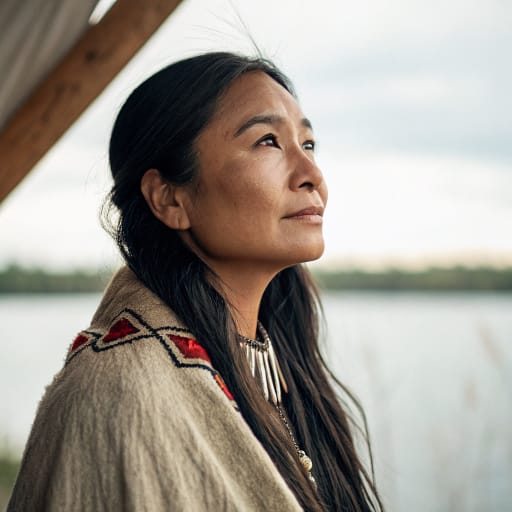
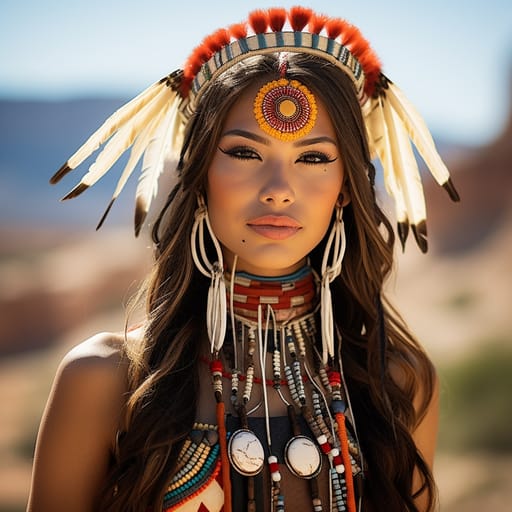
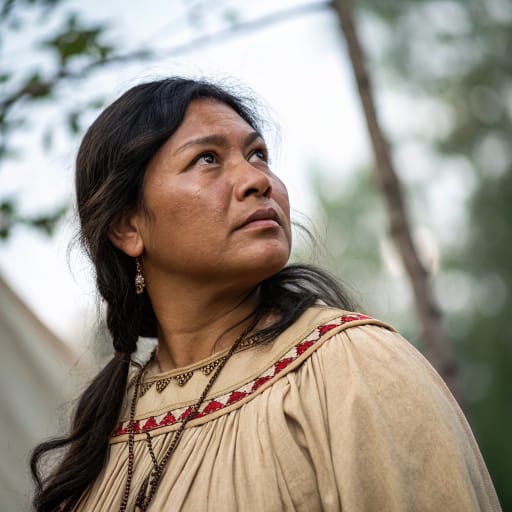
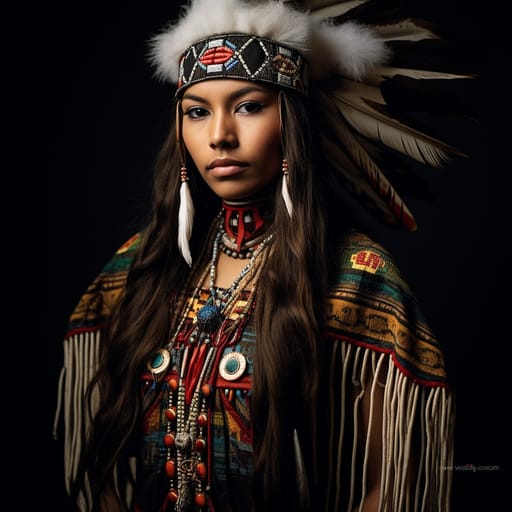
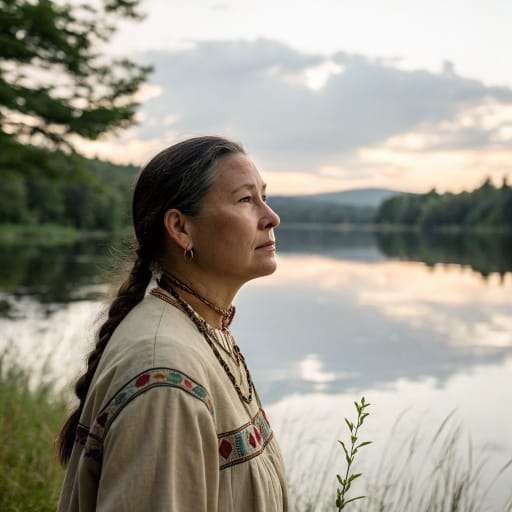
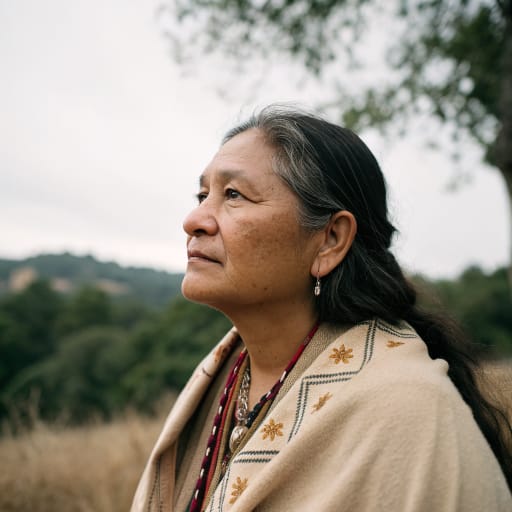
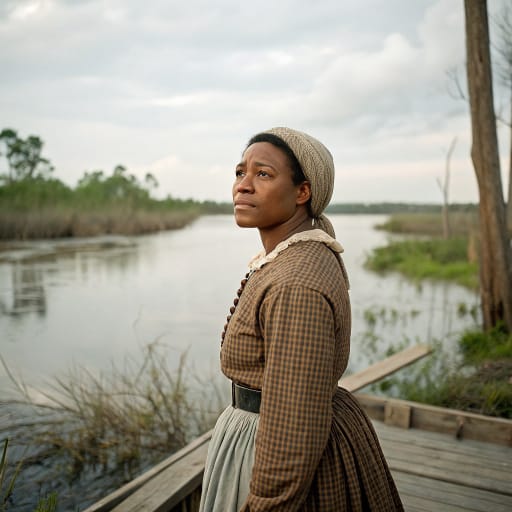
Typical Chilula Phenotypes
Reference for AI generation: hair, eyes, skin, facial structure, build
Chilula Body & Anatomy Reference
Per-feature anatomical profile for AI nude generation: Indigenous Northern American / Algonquian-Iroquoian phenotype
Chilula Boobs & Breasts
Chilula boobs follow the Indigenous Northern American / Algonquian-Iroquoian profile: medium cup, moderate projection. Areolar diameter is usually 30-44mm, and the coloring is medium-brown areolar pigmentation against the copper-to-medium-brown skin tone. Breast shape tracks body composition (mesomorph, broader frame in northern Indigenous populations, mean adult female BMI 25-28), so Chilula breasts tend to be full and moderate projection. Expect a forward-set shape, not the smaller East Asian bust.
Chilula Ass & Hips
Chilula ass and hip morphology presents as medium, moderate-to-full projection, distinctly different from the slim East Asian narrow-hip profile. The Chilula pelvic profile shows medium iliac crests, anchored in the Indigenous Northern American / Algonquian-Iroquoian skeletal pattern. Chilula butt shots in adult AI imagery should render the medium, moderate-to-full projection silhouette with the overall build (mesomorph, broader frame in northern Indigenous populations) and the fat distribution typical of the Indigenous Northern American / Algonquian-Iroquoian phenotype.
Chilula Vagina & Pussy
Chilula pussy anatomy typically shows medium-brown labial pigmentation. Pubic hair is usually straight medium-coarse texture. In AI-generated Chilula nudes, labial color should blend into the copper to medium-brown skin with a gradual transition, and the hair should keep its straight medium-coarse texture.
Chilula Dicks & Penis
Penis reference for Chilula men: regional mean ~13cm erect, moderate girth. Coloring: medium-brown shaft pigmentation. An accurate Chilula cock in AI imagery matches the surrounding copper to medium-brown skin rather than a generic porn default. Circumcision depends on religion and custom, not ancestry.
Chilula Body, Curves & Build
The Chilula figure is generally mesomorph, broader frame in northern Indigenous populations, with mean adult female BMI 25-28, characteristic of Indigenous Northern American / Algonquian-Iroquoian ancestry. AI image tools tend to flatten regional body types into a few stock shapes; here the Chilula build is kept as its own reference.
Chilula Skin Tone & Hair Texture
Skin: copper to medium-brown (Fitzpatrick III-V). Hair: straight 1A, dark-brown to black, often thick and dense. Both are typical of Indigenous Northern American / Algonquian-Iroquoian ancestry. The most common mistake in AI nudes of Chilula women is a body rendered lighter than the face.
Explore phenotype categories
Structured taxonomy with peer-reviewed scales · 22 anatomical categories
Erotic Poses & Sex Positions
From the pose catalog: 219 named positions with reference skeletons
Frequently asked questions about Chilula people
Where is the Chilula homeland?
The Chilula homeland is Lower Redwood Creek and the Bald Hills, Humboldt County, northwestern California, United States in North America.
What language do Chilula people speak?
Chilula people primarily speak Chilula dialect of Hupa (Athabaskan, Na-Dene), no longer spoken as a first language; English today.
What religion do Chilula people practice?
The predominant religion among Chilula people is Traditional northwestern California world renewal religion; descendants today follow Christianity alongside Hupa ceremonial practice.






Make your own Chilula images
Five a day, free, no credits to buy. The studio starts from this group's phenotype data, so you can set body type, pose and style and keep the traits accurate.
Start with Chilula