Help us get this right
Does this portrait look right for Chelamela?
Nobody has judged this one yet. You would be the first.
Chelamela Erotic
The Long Tom River drainage on the west side of the Willamette Valley, in present-day Lane and Benton counties, Oregon, United States
Central Kalapuya, Long Tom (Chelamela) dialect (Kalapuyan); later Chinuk Wawa and English at Grand Ronde
Traditional Kalapuya beliefs centered on guardian spirit quests and shamans; Catholic mission influence after removal to Grand Ronde
A band of the Central Kalapuya, one of the Kalapuya peoples of the Willamette Valley; descendants belong to the Confederated Tribes of Grand Ronde
About Chelamela People
The Chelamela were a Kalapuya band who lived along the Long Tom River, on the west side of Oregon's Willamette Valley, until treaty removal in the 1850s ended their life there. Their descendants are part of the Confederated Tribes of Grand Ronde today. English speakers called them the Long Tom band, after the slow, marshy river that runs out of the Coast Range foothills to the Willamette. That country is now crossed by Veneta and Junction City and partly flooded by Fern Ridge Reservoir.
What set the Chelamela apart from other Kalapuya was mostly where they lived and how they spoke. They had their own dialect of Central Kalapuya, one of three related languages in the small Kalapuyan family, which was spoken only in the Willamette and upper Umpqua drainages. Siuslaw and Alsea speakers lived across the Coast Range, the Molalla held the Cascade foothills to the east, and Chinookan territory began downriver near Willamette Falls. Inside the valley, Kalapuya bands married into each other, traded and lived in much the same way, but each band was tied to its own stream. Spiritual life happened in that same country: young people went off alone to seek a guardian spirit, and people turned to shamans for healing and feared them for the harm their power could do.
Fire was the basis of that way of life. Kalapuya families burned the valley floor in late summer. This kept the prairies open and the oak groves widely spaced, and it cleared the ground for harvesting camas bulbs, acorns and the oily seeds of tarweed, which were beaten from the singed plants into baskets. Camas was baked slowly in earth ovens, and deer drawn to the fresh growth were hunted in the open. When American emigrants arrived in the 1840s, they praised the parklike valley as a gift of nature. In fact, the landscape was the result of generations of deliberate burning.
By then the collapse had already begun. Malaria epidemics in the early 1830s, most likely spread along fur trade routes, killed most of the Kalapuya within a few years. The survivors then faced a wave of settlers claiming land. In 1855 the Kalapuya bands gave up the valley by treaty, and in 1856 the remaining Long Tom people were moved north to the Grand Ronde Reservation. There they lived alongside Molalla, Chinookan, Umpqua and Rogue River peoples. Chinuk Wawa, the regional trade language, became the common tongue of the reservation, and Central Kalapuya lost its last fluent speakers in the twentieth century. Congress terminated Grand Ronde in 1954, and the tribe won restoration in 1983. The Chelamela no longer exist as a separate band, but their descendants are enrolled at Grand Ronde, and the Long Tom River still marks the country that was theirs.
Related ethnic groups
Groups that share Chelamela's homeland, region, language, or religious tradition. These are likely candidates for comparative phenotype reference.
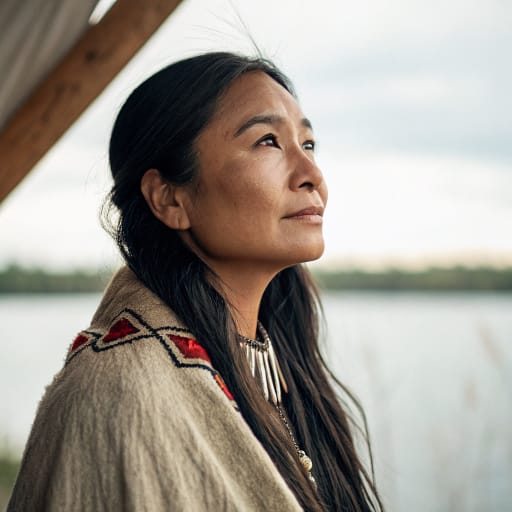
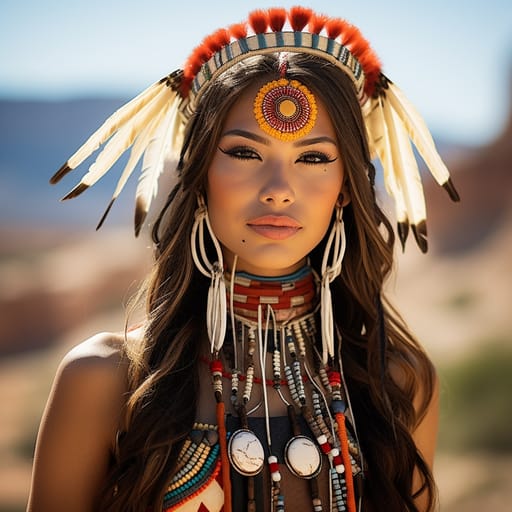
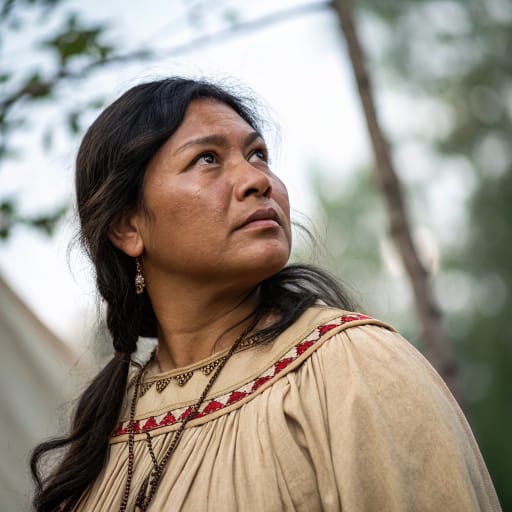
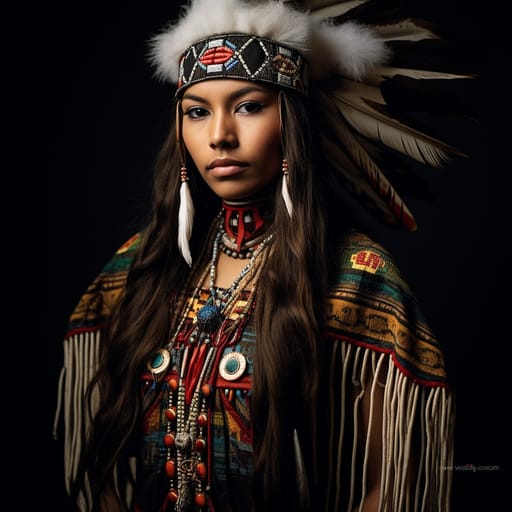
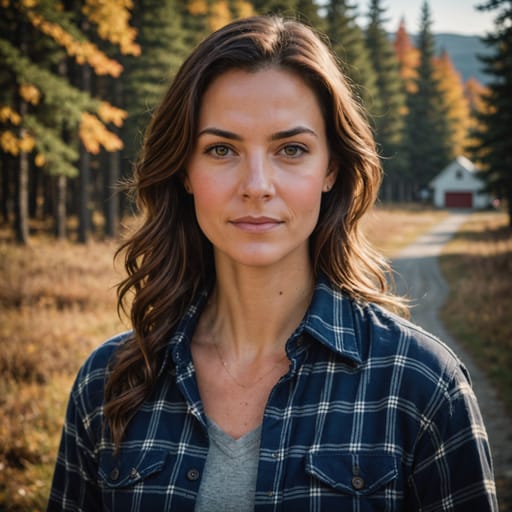
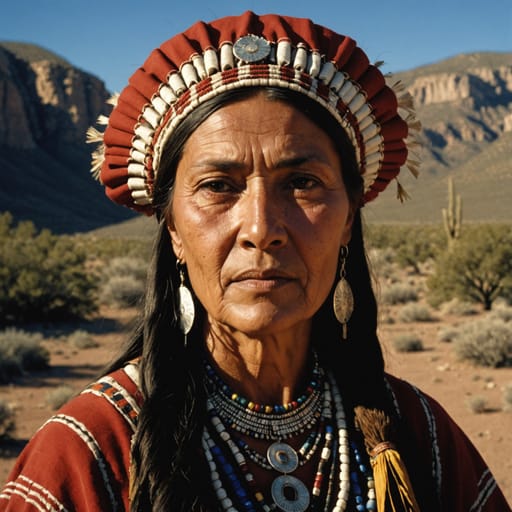
Typical Chelamela Phenotypes
Reference for AI generation: hair, eyes, skin, facial structure, build
Chelamela Body & Anatomy Reference
Per-feature anatomical profile for AI nude generation: Indigenous Northern American / Algonquian-Iroquoian phenotype
Chelamela Boobs & Breasts
Chelamela tits and boobs run medium cup, moderate projection, the classic Indigenous Northern American / Algonquian-Iroquoian bust profile. Chelamela nipples and areolas show medium-brown areolar pigmentation against the copper-to-medium-brown skin tone, with areolar diameter typically in the 30-44mm range and forward-set positioning rather than the smaller East Asian bust. Chelamela breasts trend full and moderate projection, a function of the mesomorph, broader frame in northern Indigenous populations body habitus and the mean adult female BMI 25-28. For anatomically accurate AI-generated Chelamela nudes the render preserves the medium cup, moderate projection shape, 30-44mm areolas with medium-brown pigmentation, and the torso proportions of the Indigenous Northern American / Algonquian-Iroquoian phenotype.
Chelamela Ass & Hips
Chelamela hips and butt usually read as medium, moderate-to-full projection. The skeletal base is medium iliac crests, the Indigenous Northern American / Algonquian-Iroquoian pattern. Set against the slim East Asian narrow-hip profile, the difference is easy to see, and the hip-to-waist ratio is often what identifies Chelamela women in photos.
Chelamela Vagina & Pussy
Expect medium-brown labial pigmentation on Chelamela women, in keeping with Indigenous Northern American / Algonquian-Iroquoian ancestry. The pubic hair is straight medium-coarse texture. Coloring should run evenly from the copper to medium-brown skin of the thighs to the labia, and Chelamela nude imagery should keep the hair's straight medium-coarse texture.
Chelamela Dicks & Penis
Chelamela dick and penile anatomy in adult AI generation should anchor on the regional reference data: regional mean ~13cm erect, moderate girth, and medium-brown shaft pigmentation. The Chelamela cock profile reflects the Indigenous Northern American / Algonquian-Iroquoian population's anthropometric measurements. The shaft pigmentation should track the surrounding copper to medium-brown skin tone, and the pubic hair should keep its straight medium-coarse texture in the typical inverted-V escutcheon.
Chelamela Body, Curves & Build
Chelamela body type: mesomorph, broader frame in northern Indigenous populations, with mean adult female BMI 25-28. This is the typical Indigenous Northern American / Algonquian-Iroquoian build. Height range, shoulder-to-hip ratio and fat distribution all follow from it, which is what an accurate Chelamela nude body should show.
Chelamela Skin Tone & Hair Texture
Chelamela skin tone falls in the copper to medium-brown (Fitzpatrick III-V) band, the surface signal most often miscalibrated by generic AI nude generators. Chelamela hair texture is typically straight 1A, dark-brown to black, often thick and dense, characteristic of the Indigenous Northern American / Algonquian-Iroquoian phenotype. In Chelamela nude renders the skin should hold that band consistently across the body.
Explore phenotype categories
Structured taxonomy with peer-reviewed scales · 22 anatomical categories
Erotic Poses & Sex Positions
From the pose catalog: 219 named positions with reference skeletons
Frequently asked questions about Chelamela people
Where is the Chelamela homeland?
The Chelamela homeland is The Long Tom River drainage on the west side of the Willamette Valley, in present-day Lane and Benton counties, Oregon, United States in North America.
What language do Chelamela people speak?
Chelamela people primarily speak Central Kalapuya, Long Tom (Chelamela) dialect (Kalapuyan); later Chinuk Wawa and English at Grand Ronde.
What religion do Chelamela people practice?
The predominant religion among Chelamela people is Traditional Kalapuya beliefs centered on guardian spirit quests and shamans; Catholic mission influence after removal to Grand Ronde.






Make your own Chelamela images
Five a day, free, no credits to buy. The studio starts from this group's phenotype data, so you can set body type, pose and style and keep the traits accurate.
Start with Chelamela