Help us get this right
Does this portrait look right for Bitterroot Salish?
Nobody has judged this one yet. You would be the first.
Bitterroot Salish Erotic
The Bitterroot Valley and much of western Montana, United States; today mainly the Flathead Indian Reservation in northwestern Montana.
Montana Salish, or Séliš (Salishan, Interior Salish branch); English
Catholic, practiced alongside older Salish ceremony and winter dances
Interior Salish; one of the three peoples of the Confederated Salish and Kootenai Tribes, with the Pend d'Oreille and the Ktunaxa
About Bitterroot Salish People
The Salish call themselves Séliš. Everyone else called them Flathead, a name pinned on them by outsiders and carried into the 1855 treaty that still bears it, though they never flattened anyone's head. Their country is the Bitterroot Valley of western Montana, a long corridor between the Sapphire Mountains and the Bitterroot Range, and from there the seasonal round ran east over the divide onto the plains for bison, and out to camas grounds and mountain fisheries the rest of the year. That position made them a hinge people: Plateau in language, kinship and root gathering, Plains in horses, tipis and warfare. Horses reached them early in the eighteenth century and stretched everything, the hunts, the range, and the reach of Blackfeet raiders who had guns from the fur trade well before the Salish did. Their language, Montana Salish, belongs to the Interior branch of Salishan and sits so close to Kalispel and Pend d'Oreille that speakers treat the three as dialects of one thing. It has no relation at all to Ktunaxa, spoken by the neighbors they now share a government with. Fluent speakers are few, and the immersion school at Arlee and the culture committee at St. Ignatius have spent decades holding the line, including a place names project that has recorded well over a thousand named sites across western Montana, a great many of them marking something Coyote did there. Those stories get told in winter, not in summer.
Catholicism came to them by invitation, which is rare enough to say plainly. Between 1831 and 1839 the Salish sent four delegations east to St. Louis asking for Jesuit priests, prompted in part by Iroquois Catholics who had married in and settled among them, and Pierre-Jean De Smet founded St. Mary's Mission in the Bitterroot in 1841. The faith took and held, layered over older practice rather than replacing it. What came after was not invited. The Hellgate Treaty was pushed through with interpretation so poor that a priest in the room judged that not a tenth of it had been understood, and it left the valley's future deliberately unsettled. Chief Victor would not sign the Bitterroot away. His son Charlo refused as well, and found his name on the 1872 agreement anyway, forged, a grievance he pressed for the rest of his life. In 1891 the last families were marched north to the Jocko. Today they are one of three peoples in the Confederated Salish and Kootenai Tribes, on a reservation that allotment broke into a checkerboard and left them a minority in their own home. They have been buying it back for decades. Each spring the bitterroot comes up, and the first roots are still blessed before anyone eats.
Related ethnic groups
Groups that share Bitterroot Salish's homeland, region, language, or religious tradition. These are likely candidates for comparative phenotype reference.
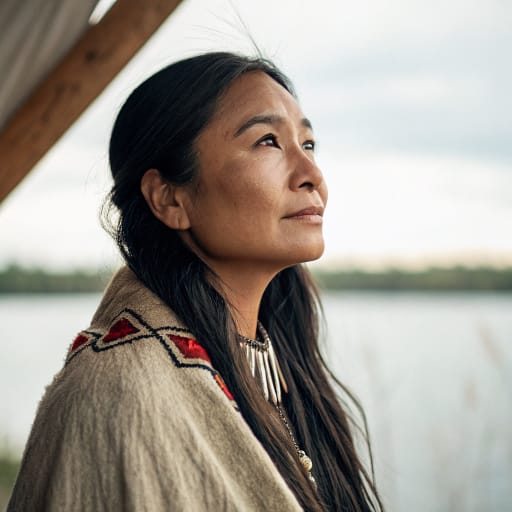
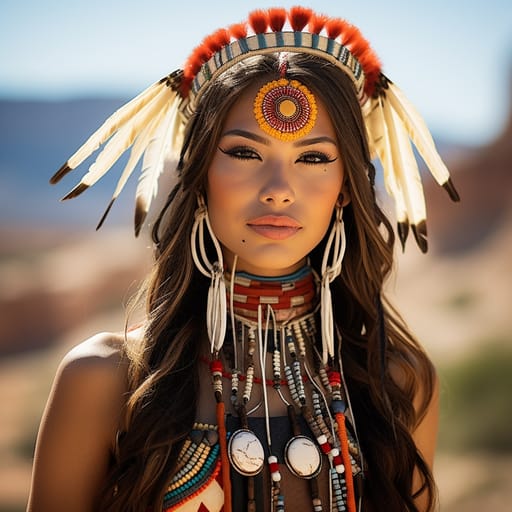
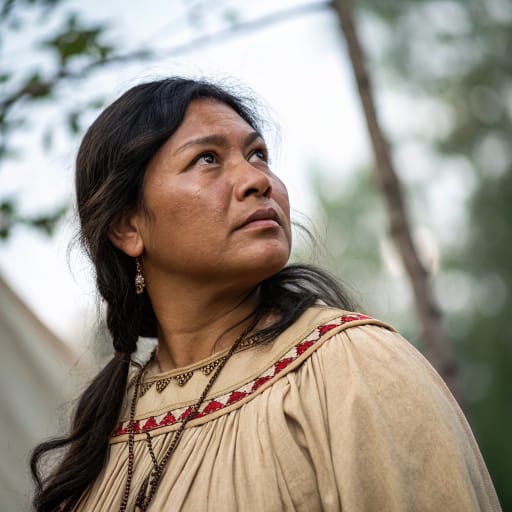
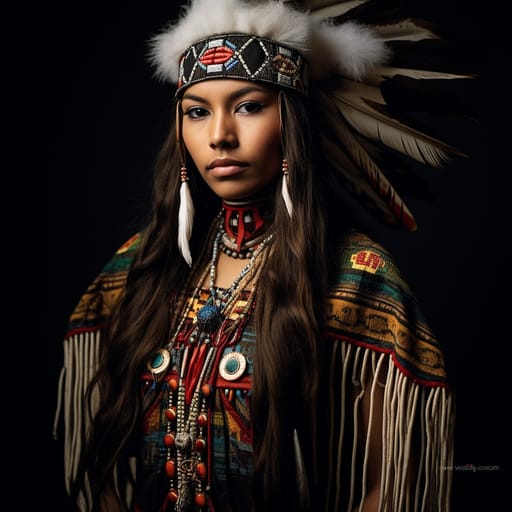

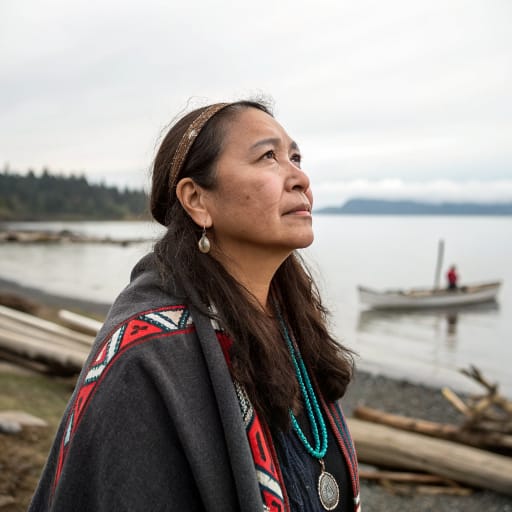
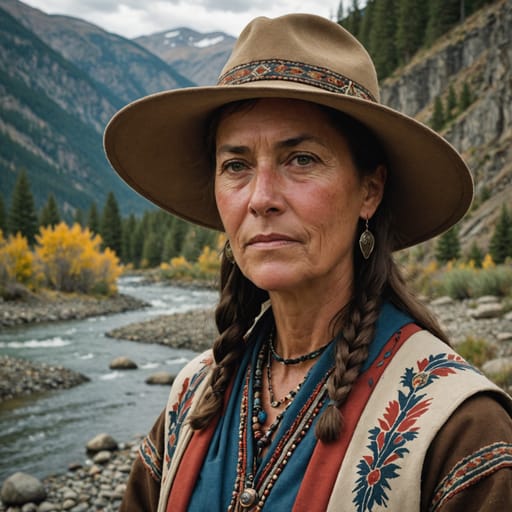
Typical Bitterroot Salish Phenotypes
Reference for AI generation: hair, eyes, skin, facial structure, build
Bitterroot Salish Body & Anatomy Reference
Anatomy by feature, Indigenous Northern American / Algonquian-Iroquoian phenotype
Bitterroot Salish Boobs & Breasts
Bitterroot Salish boobs follow the Indigenous Northern American / Algonquian-Iroquoian profile: medium cup, moderate projection. Areolar diameter is usually 30-44mm, and the coloring is medium-brown areolar pigmentation against the copper-to-medium-brown skin tone. Breast shape tracks body composition (mesomorph, broader frame in northern Indigenous populations, mean adult female BMI 25-28), so Bitterroot Salish breasts tend to be full and moderate projection. Expect a forward-set shape, not the smaller East Asian bust.
Bitterroot Salish Ass & Hips
Bitterroot Salish ass and hip morphology presents as medium, moderate-to-full projection, distinctly different from the slim East Asian narrow-hip profile. The Bitterroot Salish pelvic profile shows medium iliac crests, anchored in the Indigenous Northern American / Algonquian-Iroquoian skeletal pattern. Bitterroot Salish butt shots in adult AI imagery should render the medium, moderate-to-full projection silhouette with the overall build (mesomorph, broader frame in northern Indigenous populations) and the fat distribution typical of the Indigenous Northern American / Algonquian-Iroquoian phenotype.
Bitterroot Salish Vagina & Pussy
Bitterroot Salish pussy anatomy typically shows medium-brown labial pigmentation. Pubic hair is usually straight medium-coarse texture. In AI-generated Bitterroot Salish nudes, labial color should blend into the copper to medium-brown skin with a gradual transition, and the hair should keep its straight medium-coarse texture.
Bitterroot Salish Dicks & Penis
Penis reference for Bitterroot Salish men: regional mean ~13cm erect, moderate girth. Coloring: medium-brown shaft pigmentation. An accurate Bitterroot Salish cock in AI imagery matches the surrounding copper to medium-brown skin rather than a generic porn default. Circumcision depends on religion and custom, not ancestry.
Bitterroot Salish Body, Curves & Build
The Bitterroot Salish figure is generally mesomorph, broader frame in northern Indigenous populations, with mean adult female BMI 25-28, characteristic of Indigenous Northern American / Algonquian-Iroquoian ancestry. AI image tools tend to flatten regional body types into a few stock shapes; here the Bitterroot Salish build is kept as its own reference.
Bitterroot Salish Skin Tone & Hair Texture
Skin: copper to medium-brown (Fitzpatrick III-V). Hair: straight 1A, dark-brown to black, often thick and dense. Both are typical of Indigenous Northern American / Algonquian-Iroquoian ancestry. The most common mistake in AI nudes of Bitterroot Salish women is a body rendered lighter than the face.
Explore phenotype categories
Structured taxonomy with peer-reviewed scales · 22 anatomical categories
Erotic Poses & Sex Positions
From the pose catalog: 219 named positions with reference skeletons
Frequently asked questions about Bitterroot Salish people
Where is the Bitterroot Salish homeland?
The Bitterroot Salish homeland is The Bitterroot Valley and much of western Montana, United States; today mainly the Flathead Indian Reservation in northwestern Montana. in North America.
What language do Bitterroot Salish people speak?
Bitterroot Salish people primarily speak Montana Salish, or Séliš (Salishan, Interior Salish branch); English.
What religion do Bitterroot Salish people practice?
The predominant religion among Bitterroot Salish people is Catholic, practiced alongside older Salish ceremony and winter dances.






Make your own Bitterroot Salish images
Five a day, free, no credits to buy. The studio starts from this group's phenotype data, so you can set body type, pose and style and keep the traits accurate.
Start with Bitterroot Salish