Help us get this right
Does this portrait look right for Banjara?
One tap. It takes a second and it is recorded.
2 say it looks right, 0 say it looks off.
Banjara Erotic
India, chiefly Telangana, Andhra Pradesh, Karnataka and Maharashtra, with communities in Rajasthan, Gujarat, Madhya Pradesh and elsewhere; origins traced to Rajasthan
Gor Boli, also called Banjari, Lamani or Lambadi (Indo-Aryan, close to Rajasthani); most speakers also use Telugu, Kannada, Marathi or Hindi
Mostly Hindu, with devotion to Sevalal Maharaj and the goddess Jagadamba; Sikh and Muslim Banjara communities in north India
Regional branches known as Gor Banjara, Lambani, Lamana and Lambadi; clans such as Rathod, Chavan and Pawar; related trading communities such as the Labana
About Banjara People
For several centuries, if grain or salt was moving overland across the Indian interior, there was a fair chance a Banjara caravan was carrying it. The Banjara call themselves Gor and are known in different regions as Lambani, Lamana or Lambadi. They drove long trains of pack bullocks between markets and supplied armies from the Mughal period into the British campaigns of the late eighteenth century. That life on the road still shapes what sets them apart: settlements kept separate from neighboring villages, a language unlike the ones spoken around it, and clothing trimmed with mirrors, coins and cowrie shells that many women still wear.
The trade did not survive colonial rule. Roads and railways made the bullock trains obsolete. Colonial authorities also listed many Banjara groups under the Criminal Tribes Act, and the stigma lasted well beyond the law's repeal after independence. Families settled down but kept the tanda, the old caravan camp, as the pattern for village life, often with a headman known as the naik. The largest populations now live in Telangana, Andhra Pradesh, Karnataka and Maharashtra. Clan names such as Rathod, Chavan and Pawar still point back to Rajasthan, which Banjara tradition names as their place of origin. Hyderabad's Banjara Hills is named after them. Their official status differs from state to state: Scheduled Tribe in some, Scheduled Caste or a denotified nomadic category in others. That difference decides who qualifies for reserved jobs and school places.
Their language, Gor Boli, also called Banjari or Lamani, is Indo-Aryan and closest to the Rajasthani dialects. That makes it a small island surrounded by Telugu, Kannada and Marathi. Most speakers are bilingual, and the language has no script of its own, so it survives mainly in speech and song. Most Banjara are Hindu, but their worship centers on their own figures: the goddess Jagadamba and the eighteenth-century saint Sevalal Maharaj, whose shrine at Pohradevi in Maharashtra draws large pilgrim crowds. Sikh and Muslim communities in north India trace their roots to the same carrying trade.
Some customs are rarely seen by outsiders. During Teej, unmarried girls sow wheat in small baskets and tend the sprouts for days with songs. At weddings, the bride traditionally sings laments before leaving her family. The needlework on women's clothing has also found a second life: Sandur Lambani embroidery from Karnataka holds a geographical indication tag, which turns the caravan style into a recognized craft.
Related ethnic groups
Groups that share Banjara's homeland, region, language, or religious tradition. These are likely candidates for comparative phenotype reference.
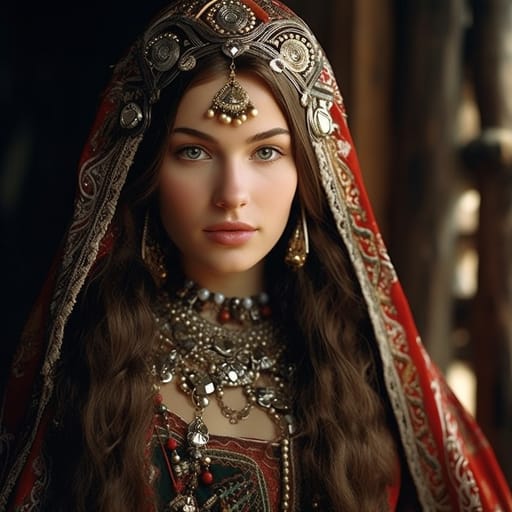
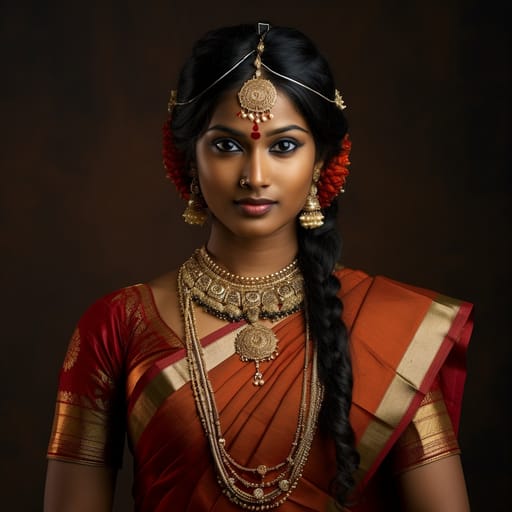
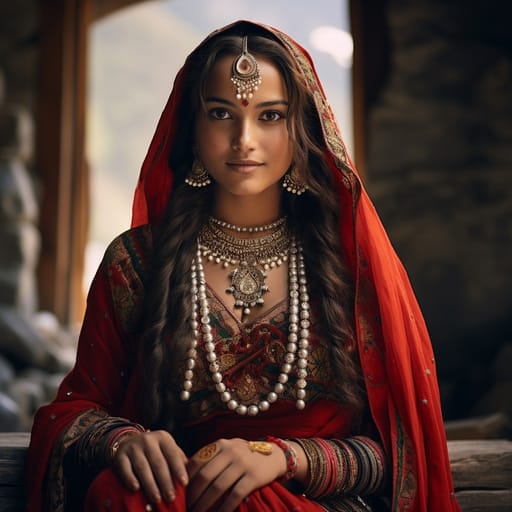
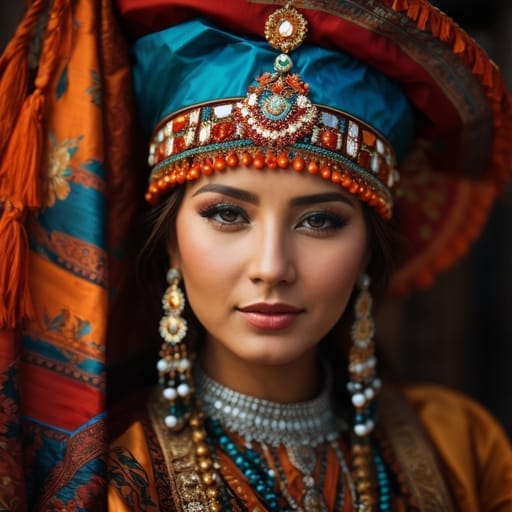
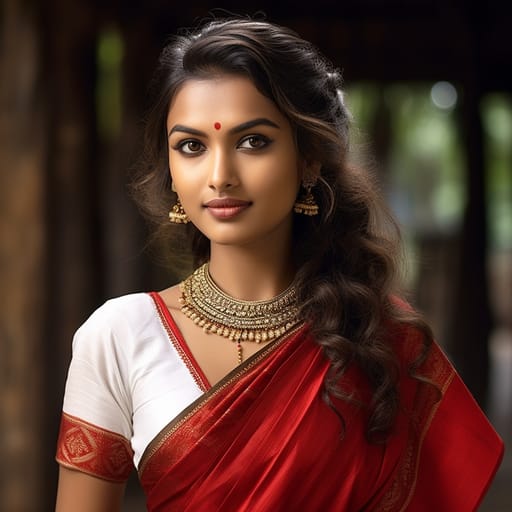
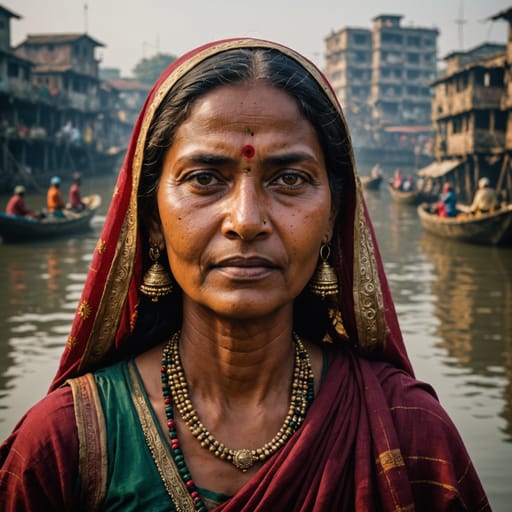
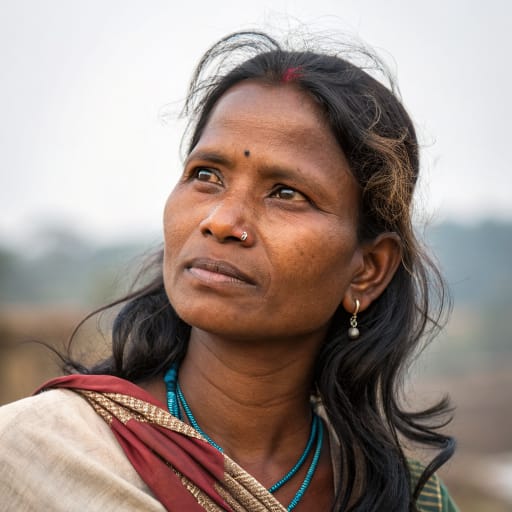
Typical Banjara Phenotypes
Reference for AI generation: hair, eyes, skin, facial structure, build
Banjara Body & Anatomy Reference
Anatomy by feature, Indo-Aryan / Dravidian South Asian phenotype
Banjara Boobs & Breasts
The typical Banjara bust is medium-to-large cup, moderate-to-full projection, in line with the wider Indo-Aryan / Dravidian South Asian pattern. Areolas usually fall in the 32-46mm range, with medium-brown to dark-brown areolar pigmentation against the wheatish-to-brown skin tone. Compared with the smaller East Asian bust profile, Banjara breasts sit forward and are generally full and soft, generally fuller than the East Asian norm. A faithful AI render of Banjara tits keeps that shape and areola size.
Banjara Ass & Hips
Butt shape among Banjara women: medium-to-full, moderate-to-high projection, classic curvy hip profile, over medium-to-wide iliac crests, full gluteal-femoral fat distribution. This follows Indo-Aryan / Dravidian South Asian ancestry and looks quite unlike the slim hip profile of East Asian women. An accurate Banjara ass in adult AI imagery keeps both the silhouette and the overall build (endomorph-to-mesomorph with fuller hip deposition) instead of a generic average.
Banjara Vagina & Pussy
Vulvar anatomy among Banjara women: medium-brown to dark-brown labial pigmentation, fuller labia minora projection. Pubic hair tends to be straight-to-wavy coarse texture, dense distribution, in the usual inverted-triangle pattern. Both follow Indo-Aryan / Dravidian South Asian pigmentation, which is why Banjara pussy renders should not fall back on a pale, sparse Western template.
Banjara Dicks & Penis
The Banjara cock profile, from Indo-Aryan / Dravidian South Asian anthropometric data: regional mean ~13cm erect; moderate girth; medium-brown shaft pigmentation. Pubic hair has a straight-to-wavy coarse texture and forms the usual inverted-V pattern. Whether Banjara men are circumcised follows religious and cultural practice rather than phenotype.
Banjara Body, Curves & Build
Build and curves among Banjara women follow the Indo-Aryan / Dravidian South Asian pattern: endomorph-to-mesomorph with fuller hip deposition, mean adult female BMI 22-25. Proportions matter as much as skin tone, so Banjara figures should keep their regional height and limb ratios.
Banjara Skin Tone & Hair Texture
The Banjara skin range is wheatish to brown (Fitzpatrick III-V), and hair tends to be straight-to-wavy 1A-2B, dense, dark-brown to black. That combination marks the Indo-Aryan / Dravidian South Asian phenotype, and skin tone is the trait AI generators most often get wrong for Banjara women.
Explore phenotype categories
Structured taxonomy with peer-reviewed scales · 22 anatomical categories
Erotic Poses & Sex Positions
From the pose catalog: 219 named positions with reference skeletons
Frequently asked questions about Banjara people
Where is the Banjara homeland?
The Banjara homeland is India, chiefly Telangana, Andhra Pradesh, Karnataka and Maharashtra, with communities in Rajasthan, Gujarat, Madhya Pradesh and elsewhere; origins traced to Rajasthan in Southern Asia.
What language do Banjara people speak?
Banjara people primarily speak Gor Boli, also called Banjari, Lamani or Lambadi (Indo-Aryan, close to Rajasthani); most speakers also use Telugu, Kannada, Marathi or Hindi.
What religion do Banjara people practice?
The predominant religion among Banjara people is Mostly Hindu, with devotion to Sevalal Maharaj and the goddess Jagadamba; Sikh and Muslim Banjara communities in north India.






Make your own Banjara images
Five a day, free, no credits to buy. The studio starts from this group's phenotype data, so you can set body type, pose and style and keep the traits accurate.
Start with Banjara